
DEBT IS EATING INTO EDUCATION AND HEALTHCARE” NIGERIA TELLS WORLD LEADERS AT UNGA
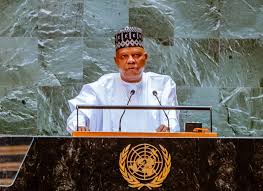
Nigeria has warned that inadequate financing and mounting debt servicing obligations are undermining sustainable development across developing countries, calling for major reforms to the global financial system during its address to the 81st United Nations General Assembly in New York.
Nigeria has warned world leaders that inadequate financing remains one of the biggest obstacles preventing developing countries from achieving sustainable growth, as rising debt servicing obligations consume resources that could otherwise be invested in education, healthcare and infrastructure.
Vice President Kashim Shettima delivered the message on Thursday while presenting Nigeria’s national statement at the 81st Session of the United Nations General Assembly on behalf of President Bola Tinubu.
“One of the greatest obstacles to sustainable development is inadequate financing,” Shettima told the General Assembly.
He said many developing economies were committing substantial financial resources to servicing debt at the expense of critical sectors needed to improve living standards and drive long term economic development.
Nigeria consequently called for reforms to the international financial architecture, arguing that developing countries require wider access to affordable financing and debt arrangements that recognise their development challenges.
The government also called for expanded access to concessional financing and debt sustainability frameworks that take developmental needs into consideration.
Nigeria’s intervention comes amid continuing international debate over the debt burden confronting developing economies, particularly in Africa, where governments must balance debt obligations against demands for infrastructure, education, healthcare, energy and other public services.
Shettima told the UN that addressing the financing gap would require more than conventional development assistance.
Nigeria backed innovative financing mechanisms involving private capital, blended finance, South South cooperation and strategic international partnerships.
The government said those resources could help finance sustainable development, climate adaptation and resilient infrastructure across developing economies.
Climate finance was another major part of Nigeria’s argument.
Shettima rejected what he described as a false choice between economic development and climate action, maintaining that developing countries must be allowed to industrialise, eradicate poverty and expand access to energy while transitioning towards lower carbon economies.
Nigeria argued that international climate financing should be based on equity and shared responsibility rather than charity.
It called for international commitments to be translated into financing mechanisms that are accessible, predictable and adequately funded.
Nigeria also used its UN address to push for greater African industrialisation.
Shettima said the continent must move beyond its historic role as an exporter of raw materials and increase domestic value addition, manufacturing and technological innovation.
The African Continental Free Trade Area was identified as one of the continent’s most important opportunities for expanding intra African commerce, developing regional value chains and attracting investment.
Nigeria also placed technology at the centre of its development agenda.
The Vice President said the country was investing in digital public infrastructure, broadband connectivity, innovation systems, research institutions and technology entrepreneurship.
He called for international cooperation that would enable artificial intelligence to improve healthcare, agriculture, governance and economic productivity rather than deepen global divisions.
Beyond financing and economic development, Nigeria renewed its demand for reform of the United Nations Security Council.
The country argued that Africa cannot continue to dominate issues discussed by the Security Council while remaining excluded from its permanent membership.
Nigeria called for at least two permanent African seats with the same rights and responsibilities available to existing permanent members, including veto powers for as long as the veto system remains.
Shettima also addressed global security challenges, saying terrorism, organised crime, cyberattacks and illicit finance increasingly operate across national borders.
Nigeria called for stronger intelligence sharing, disruption of terrorist financing and greater international cooperation to stop the movement of illegal weapons.
The Vice President said Nigeria’s experience confronting Boko Haram, ISWAP and other armed groups had demonstrated that military operations alone could not guarantee lasting security.
Education, economic opportunity, accountable government and protection of communities, he argued, must accompany security operations.
Nigeria’s broader message to the General Assembly centred on reforming international institutions to reflect contemporary economic and geopolitical realities.
For Abuja, that includes not only changing the structure of the Security Council but also reconsidering how developing economies obtain financing.
The government’s position is that countries struggling with debt and limited access to affordable capital cannot simultaneously be expected to fund infrastructure, expand social services, industrialise and meet international climate commitments without changes to the global financing system.
Nigeria therefore urged world leaders to treat development financing as a central component of international economic reform rather than simply an issue of foreign assistance.