DUMSOR TROUBLE HITS MAHAMA GOVERNMENT AS NDC OFFICIAL WARNS POWER OUTAGES ARE DAMAGING PUBLIC TRUST
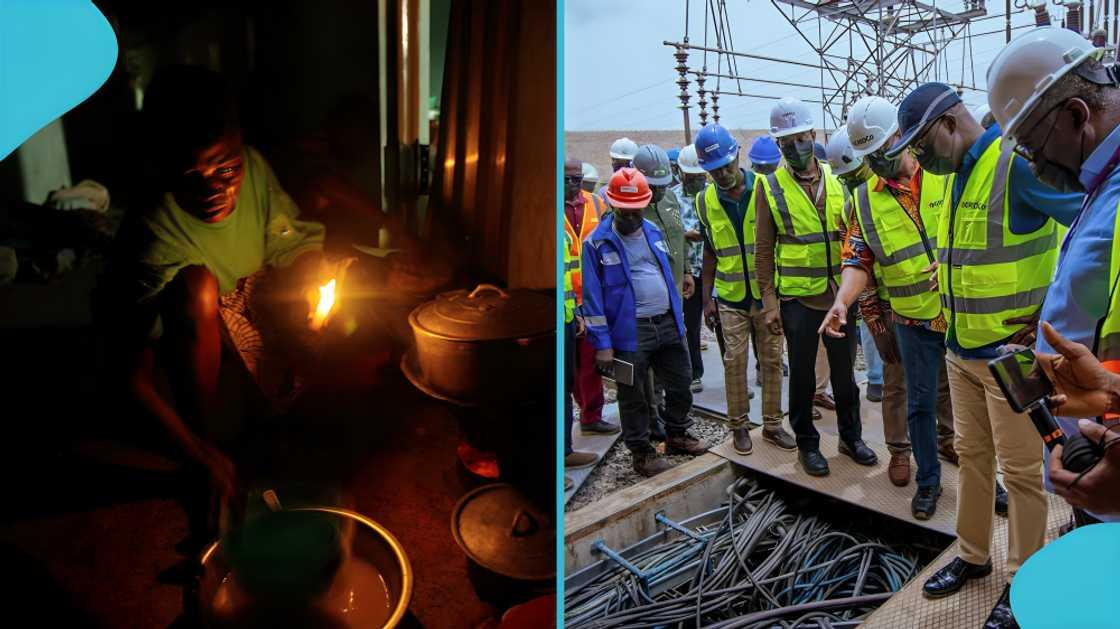
NDC Nwabiagya South Deputy Organiser Abdul Rasheed has warned that persistent electricity interruptions in the Ashanti Region could damage confidence in President John Mahama’s government. ECG has acknowledged that recent outages have resulted from equipment failures, cable faults and infrastructure upgrades, while GRIDCo and ECG are preparing additional planned interruptions from October 30 to November 29 as work continues on the Anwomaso–Ahodwo transmission-line upgrade.
A senior grassroots official of Ghana’s governing National Democratic Congress has warned that persistent power outages across parts of the Ashanti Region are beginning to threaten public confidence in President John Dramani Mahama’s administration, placing political pressure on energy-sector authorities to improve electricity reliability and communicate more clearly with households and businesses increasingly frustrated by repeated disruptions.
Abdul Rasheed, Deputy Organiser of the NDC in the Nwabiagya South Constituency, said the continuing interruptions, popularly described by many residents as dumsor, were becoming politically damaging for the government because ordinary citizens often judge administrations by the quality of essential services they experience every day. Speaking to 3News on Thursday, Rasheed urged the Electricity Company of Ghana, the Ghana Grid Company and other institutions in the power sector to treat the situation with greater urgency and ensure that communities affected by outages receive clear and timely explanations.
His comments are politically significant because they are coming from within the governing party rather than from opposition politicians. Rasheed’s warning reflects growing concern that repeated electricity interruptions could undermine goodwill toward the Mahama administration if residents begin to associate unreliable power supply directly with the government’s performance, regardless of whether individual outages are caused by faults, maintenance work or long-term infrastructure upgrades.
The Ashanti Region has experienced a series of planned and unplanned electricity interruptions in recent weeks, creating frustration among households, small businesses and commercial operators that depend heavily on reliable power. In October, ECG publicly acknowledged that some recent outages in the region were linked to equipment failures, underground cable faults and ongoing work on transmission and sub-transmission infrastructure.
The company made that explanation during a regulatory and reliability performance monitoring meeting involving the Public Utilities Regulatory Commission, where officials said multiple technical challenges had contributed to supply interruptions. ECG has maintained that the disruptions should not automatically be interpreted as a return to a national load-shedding programme, but residents experiencing repeated outages have continued to complain about the frequency and unpredictability of electricity supply.
The distinction between scheduled maintenance and uncontrolled power cuts has become increasingly important politically. Electricity consumers may accept temporary interruptions when they are informed in advance that engineers are carrying out essential maintenance, but unannounced outages can create the impression that the power system is unstable or that authorities are failing to manage supply effectively.
Rasheed said communication must therefore improve alongside technical work. His concern is that when residents lose electricity without knowing why it happened or when supply will return, frustration can quickly become directed at the government. That political effect can be particularly damaging in a region where the NDC has historically faced strong electoral competition and where the administration is attempting to strengthen public support.
Ashanti is Ghana’s most populous region and one of its most important economic centers. Kumasi and surrounding communities host manufacturers, traders, artisans, schools, hospitals, hotels, restaurants, transport businesses and thousands of small enterprises whose daily activities depend on reliable electricity. Even relatively short outages can interrupt production, damage equipment, increase operating costs and force businesses to rely on generators or alternative energy sources.
For small businesses operating on narrow margins, the consequences can be particularly severe. Barbers, cold-store operators, welders, restaurants, printing businesses, pharmacies and other enterprises can lose income whenever electricity supply is interrupted without sufficient warning. Repeated disruptions also increase fuel expenses for businesses that maintain generators and can shorten the lifespan of electrical equipment when power is restored unpredictably.
Households face similar problems. Electricity outages affect refrigeration, water pumping, internet connectivity, household businesses and the ability of students to study at night. In communities experiencing repeated interruptions, residents may eventually become less interested in technical explanations and more focused on whether government is capable of delivering stable electricity.
That is the political danger Rasheed appears to be highlighting. Governments may inherit aging infrastructure or face technical failures outside their immediate control, but voters often assess administrations based on outcomes rather than explanations. If electricity becomes unreliable for extended periods, public frustration can quickly become a broader judgment about competence and service delivery.
ECG has acknowledged the pressure and has announced measures intended to reduce the number of planned interruptions across the Ashanti Region. Earlier in October, the company said maintenance outages would be limited where possible to two days a week and that engineers would attempt to isolate only the sections of the network requiring work rather than shutting down entire feeders unnecessarily.
The initiative was intended to reduce disruption while allowing maintenance teams to continue repairing faults and strengthening the network. ECG officials said the company wanted customers to benefit from ongoing infrastructure upgrades without facing more power interruptions than necessary.
Those efforts are now being complicated by a major transmission upgrade involving the Anwomaso–Ahodwo line in Kumasi. GRIDCo said on October 29 that the project had reached approximately 70% completion and had entered a critical stage requiring the installation of new conductors on transmission towers.
Because engineers cannot safely carry out that work while affected sections remain energized, GRIDCo and ECG have announced planned interruptions beginning on Friday, October 30 and continuing through November 29. The outages are expected to occur between 9 a.m. and 5 p.m. on days when engineers are working along affected sections of the line, excluding weekends.
ECG is expected to publish a detailed schedule identifying the specific communities affected on particular days. Both companies have apologized for the inconvenience and asked customers to cooperate with the work, arguing that the temporary disruptions are necessary to improve long-term electricity reliability in Kumasi and surrounding communities.
The Anwomaso–Ahodwo project is designed to address weaknesses in an aging transmission corridor that has struggled to keep pace with population growth and increased commercial activity in the Ashanti Region. The Energy Ministry said earlier this year that Kumasi had relied for years on an aging 19-kilometre single-circuit transmission line connecting the Anwomaso and Ahodwo substations even as electricity demand increased significantly.
Upgrading that line is expected to provide stronger transmission capacity and reduce the vulnerability of the system to individual faults. Once completed, the project should improve the ability of GRIDCo to move electricity reliably into one of Ghana’s largest urban and commercial areas.
That longer-term benefit, however, does not remove the immediate political problem. Residents and businesses experiencing outages today are unlikely to be satisfied simply because infrastructure improvements are expected to produce better supply in the future. This creates a difficult balancing act for government and the power companies: maintenance and upgrades are necessary, but the interruptions caused by those projects can themselves generate public anger.
Rasheed’s warning therefore places particular emphasis on communication. If customers understand that an outage is planned, know exactly when it will begin and have a reliable estimate of when electricity will return, businesses and households can make preparations. When outages occur without warning, the same interruption can cause much greater frustration and economic damage.
The challenge is even greater because the word dumsor carries enormous political weight in Ghana. The term became nationally associated with the prolonged electricity crisis that affected the country during Mahama’s earlier presidency, when households and businesses endured years of power rationing and scheduled load shedding.
That history means any significant electricity disruption under the current Mahama administration can quickly revive political memories of the earlier crisis, even where the technical circumstances are very different. Opposition politicians and dissatisfied citizens can easily use the term dumsor to describe outages, while government officials may argue that current interruptions result from local faults, maintenance work or transmission upgrades rather than a nationwide shortage of generation capacity.
Earlier this year, ECG officials in the Ashanti Region explicitly rejected claims that the area was experiencing a return of dumsor. They said outages at the time were caused by specific technical problems rather than a deliberate load-shedding programme. That distinction remains part of the current debate.
From an engineering perspective, there is a major difference between a system-wide power shortage requiring scheduled rationing and local interruptions caused by damaged cables, transformer problems or maintenance. From the perspective of a customer sitting in darkness, however, the immediate experience can feel exactly the same.
That gap between technical reality and public perception is where the political risk emerges. Rasheed’s intervention suggests that members of the NDC at the constituency level are increasingly aware that government cannot rely solely on technical explanations if residents continue experiencing unreliable electricity.
The Mahama administration returned to office with expectations that it would improve public services and strengthen economic conditions after years of cost-of-living pressure. Electricity reliability forms an important part of those expectations because power affects almost every sector of the economy.
A prolonged period of unstable supply could create consequences far beyond political criticism. Manufacturers may experience production losses, traders may lose stock, hospitals and clinics may have to rely more heavily on backup systems and families may face additional household expenses.
The Ashanti Region is particularly sensitive because of the scale of its commercial economy. Kumasi serves as a major trading center not only for Ghana but also for parts of the wider West African subregion. Businesses operating in markets, industrial zones and commercial districts depend on electricity for refrigeration, machinery, electronic payments and communication.
Power interruptions therefore have a direct economic cost. That economic cost can eventually become political if businesses conclude that authorities are not responding quickly enough.
Energy-sector officials have repeatedly said infrastructure investment is necessary because some parts of Ghana’s transmission and distribution network are old and increasingly unable to meet demand. Rapid urban growth has increased electricity consumption in cities including Kumasi, while commercial and industrial expansion has placed additional pressure on existing substations and transmission lines.
The government has presented upgrades such as the Anwomaso–Ahodwo project as part of its response to those challenges. If completed on schedule by the end of November, the project could help strengthen electricity reliability and reduce future faults along the corridor.
The immediate test, however, will be how effectively the planned outages are managed between October 30 and November 29. ECG will need to publish clear schedules, ensure that announced restoration times are respected and respond quickly to faults that occur outside the planned maintenance windows.
Failure to do that could reinforce the perception that the region is experiencing uncontrolled power instability rather than temporary disruptions connected to infrastructure upgrades.
Rasheed’s public warning can therefore be interpreted as both criticism and political advice. He is not accusing the Mahama administration of deliberately creating power shortages. Instead, he is warning that the political consequences of unreliable electricity can become serious if agencies responsible for the sector fail to improve service and communication.
The fact that the warning comes from an NDC constituency official makes it more difficult for government to dismiss the concerns as partisan opposition. It suggests that complaints about electricity supply are reaching governing-party structures at the local level and that those officials are concerned about how residents are reacting.
For President Mahama, the issue also carries historical significance because electricity was one of the most politically damaging issues during his previous administration. The extended power crisis of that period became a defining public concern and contributed to intense criticism from businesses, households and political opponents.
The current situation has not reached anything approaching the scale of that nationwide crisis, and available evidence does not show a comparable national load-shedding programme. Nevertheless, the political memory remains strong enough that even local or regional outages can quickly trigger comparisons.
This makes transparency especially important. Government and power-sector agencies need to explain whether particular outages result from maintenance, faults, transmission problems or shortages, rather than allowing all interruptions to be grouped together under the same label.
The energy authorities must also demonstrate that announced infrastructure improvements are producing measurable results. Residents are more likely to tolerate temporary disruptions if they see that completed projects lead to fewer outages afterward.
If the Anwomaso–Ahodwo upgrade is completed by the end of November and supply reliability improves substantially, the current disruption may eventually be viewed as a temporary cost of necessary infrastructure work. If outages continue after the upgrade, however, public skepticism could deepen.
Businesses will be watching particularly closely because they are among the first to feel the financial consequences of unreliable electricity. Small firms without backup systems can lose an entire day’s income during a prolonged outage, while larger companies may spend significant amounts on diesel or alternative power sources.
Consumer frustration can also increase when planned interruptions overlap with unplanned faults. A customer who already expects to lose electricity for maintenance may become significantly more frustrated if additional outages occur outside the published schedule.
ECG’s operational challenge is therefore not simply reducing the number of outages but improving predictability. Reliability includes both keeping electricity available and informing customers accurately when interruptions are unavoidable.
The PURC is expected to continue monitoring service quality and reliability performance. Regulatory oversight becomes particularly important during periods of repeated interruptions because consumers need an institution capable of assessing whether utilities are complying with service standards and communicating properly.
The wider government will also face pressure to ensure that infrastructure projects are adequately financed and completed on schedule. Delayed transmission upgrades can prolong the very problems they are intended to solve.
Rasheed’s warning ultimately reflects a broader political reality. Essential services often shape public opinion more quickly than policy announcements. Citizens may hear about major investments and long-term reforms, but their immediate judgment of government can depend on whether electricity is available when they switch on a light, open a shop or operate machinery.
That reality makes the Ashanti power situation more than a technical matter for ECG and GRIDCo. It has become a political issue for the Mahama administration because residents associate electricity supply with government performance regardless of which agency is directly responsible for a particular fault.
The next month will therefore be important. GRIDCo and ECG are entering a period of additional planned interruptions as they attempt to complete a major transmission upgrade, while local frustration over existing outages is already high enough for an NDC official to publicly warn about the government’s credibility.
If communication improves and the infrastructure work is completed successfully, the administration may be able to contain the political damage and point to a stronger network as evidence that temporary disruption produced long-term improvement. If residents continue experiencing unpredictable outages without clear explanations, the issue could become increasingly difficult for the government to manage.
For now, the warning from within the NDC is clear. Persistent electricity interruptions in the Ashanti Region are no longer being treated only as an engineering problem. They are becoming a political liability, and energy authorities are being urged to restore confidence before public frustration turns into a wider judgment on the Mahama government’s ability to deliver reliable essential services.