ECOWAS RELEASES $250,000 FOR JUNE ACCRA FLOOD VICTIMS AS GHANA HANDS DISTRIBUTION TO INDEPENDENT RELIEF AGENCY
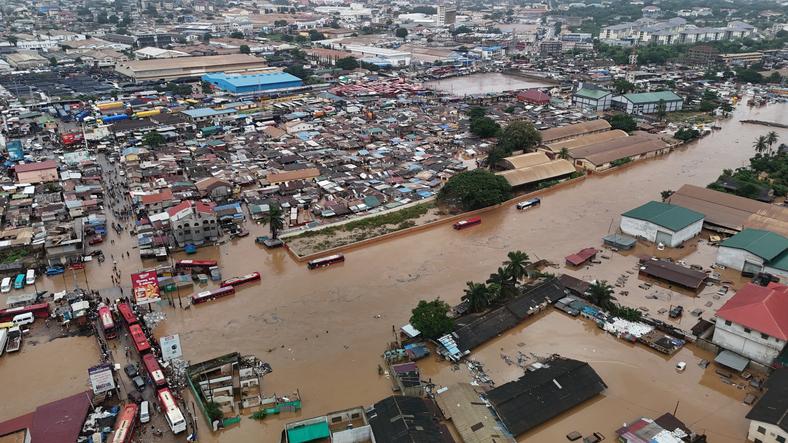
ECOWAS has released US$250,000, equivalent to approximately GH¢3 million, to support victims of Ghana’s devastating June floods. Foreign Affairs Minister Samuel Okudzeto Ablakwa says the entire amount has been transferred directly to the Adventist Development and Relief Agency, which will independently determine beneficiaries and administer the relief package. The June 29 floods affected more than 38,000 people across Greater Accra, displaced more than 7,700 households and killed at least 15 people. Government says it will not participate in choosing beneficiaries, a decision intended to protect the distribution process from political interference and strengthen transparency.
The Economic Community of West African States has released a $250,000 humanitarian relief package to support victims of the devastating June floods in Ghana, with the full amount transferred directly to the Adventist Development and Relief Agency for independent administration rather than being distributed by government officials. Foreign Affairs Minister Samuel Okudzeto Ablakwa announced that the money, equivalent to approximately GH¢3 million, had arrived and had already been paid into ADRA’s account after the Ministry of Foreign Affairs and the National Disaster Management Organization agreed that an independent humanitarian organization should oversee the selection of beneficiaries and distribution of assistance. The intervention is intended to support households whose homes, businesses and livelihoods were damaged during the June 29 flooding that affected tens of thousands of people across Greater Accra and left at least 15 people dead.
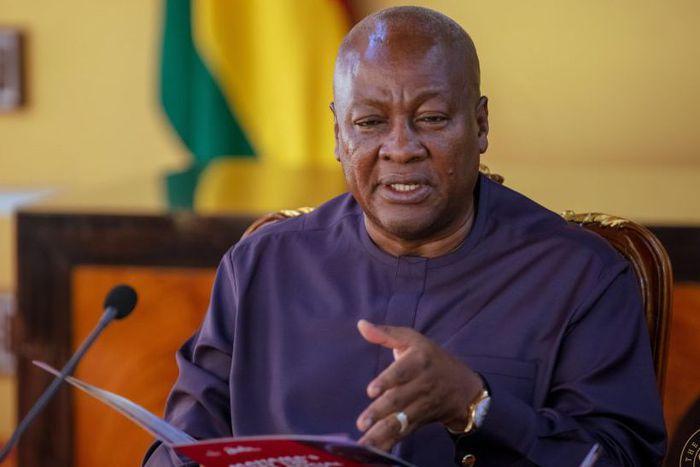
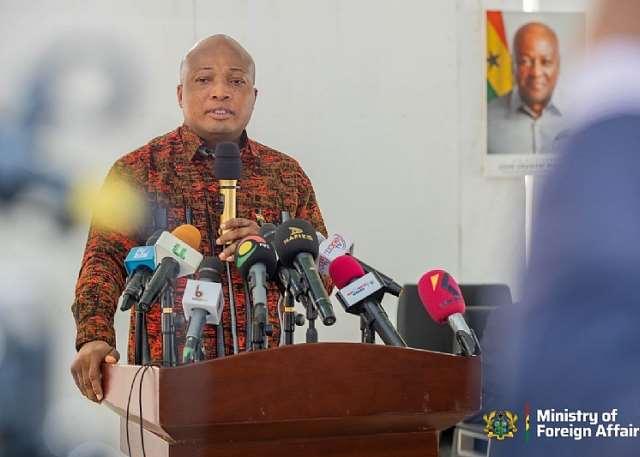
Ablakwa announced the arrival of the ECOWAS assistance during the inauguration of Ghana’s National Consultative Committee on Regional Integration, a body established to coordinate ECOWAS integration programmed and social interventions within Ghana. He said the decision to place the money directly under ADRA was deliberately designed to separate the humanitarian distribution process from political influence and ensure that affected people are selected independently. According to the minister, the government will not determine who qualifies for the package and will not be involved in choosing individual beneficiaries, leaving those decisions to ADRA under the agreed relief arrangement.
The announcement gives thousands of families affected by the June floods another source of assistance more than three months after torrential rainfall overwhelmed drains, roads, homes and businesses across several parts of the Greater Accra Region. Official figures reported after the disaster showed that 38,802 people were affected and 7,761 households were displaced, while 25 communities across 18 metropolitan, municipal and district assemblies suffered varying levels of damage. The scale of the disaster placed enormous pressure on emergency services and once again raised longstanding questions about drainage, unplanned development, waste management and Ghana’s ability to protect heavily populated urban communities from increasingly destructive flooding.
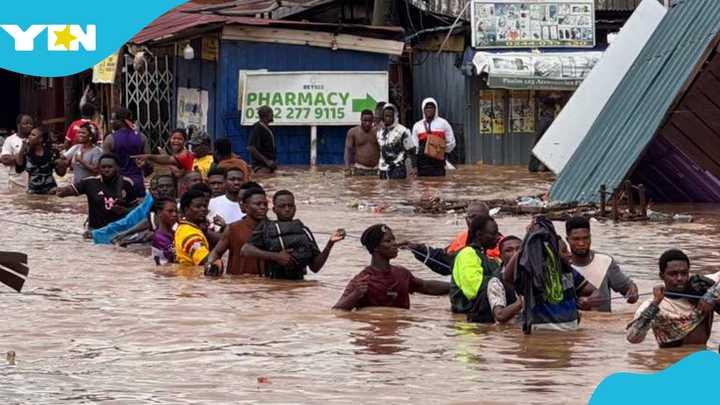
The flooding followed several hours of intense rainfall on June 29, turning major roads into rivers and trapping motorists, traders and residents in locations across Accra. Emergency teams from NADMO, the Ghana National Fire Service, Ghana Police Service and Ghana Armed Forces were deployed to rescue people from submerged communities while residents in some areas were forced to leave their homes with little more than the clothes they were wearing. Vehicles were stranded, businesses lost stock, household property was destroyed and traffic on several major routes was paralyzed as floodwaters moved through commercial and residential areas.
Communities around Mallam, Kaneshie, Odawna, Adabraka, Kwame Nkrumah Circle and other flood prone parts of the capital were among the locations affected. Some homes were filled with water within hours of the rainfall beginning, forcing families onto higher ground while emergency workers struggled to reach people trapped in neighborhoods where roads had become impassable. Videos and photographs from the disaster showed residents wading through waist deep water, vehicles almost submerged and rescue personnel using boats and improvised equipment to move people to safer locations.
The human cost became clearer as rescue operations continued. Initial official updates recorded 12 confirmed deaths and seven people missing, but subsequent reporting put the death toll at at least 15. The number of people affected also grew as authorities assessed the damage across the region. Ga East was among the worst hit areas, where officials reported thousands of displaced residents and multiple deaths and missing persons. The disaster therefore became one of the most serious flood emergencies recorded in Greater Accra in recent years.
The ECOWAS contribution is modest compared with the total financial losses created by the disaster, but it adds to a wider relief effort involving government institutions, humanitarian organizations, private companies and international partners. For households that lost furniture, food stocks, clothing, business equipment or income, relatively small amounts of targeted support can still make a meaningful difference during recovery. The key question will be how ADRA decides which communities and households receive assistance and what form that assistance will take.
Ablakwa did not announce individual payment amounts, the exact number of beneficiaries or a fixed distribution schedule when confirming that the money had arrived. That means ADRA will likely need to work with existing disaster assessment information from NADMO and affected local assemblies to identify the most vulnerable households. Those could include families whose homes were destroyed, people who lost their primary sources of income, elderly residents, people with disabilities and households still struggling to replace essential property.
The government’s decision to avoid direct beneficiary selection is politically significant because humanitarian assistance can become controversial when citizens suspect that distribution is influenced by party connections or local political relationships. By using an independent implementing partner, the Foreign Affairs Ministry and NADMO are attempting to reduce those concerns and provide a clearer separation between political officeholders and the people determining who receives support.
ADRA has extensive experience in humanitarian response, disaster relief and community development, both in Ghana and internationally. Its role in the ECOWAS package therefore gives the organization responsibility not only for distributing assistance but also for maintaining public confidence in how the money is used. The agency will be expected to demonstrate that beneficiaries genuinely suffered losses from the June disaster and that available resources are allocated according to need.
Transparency will be particularly important because the GH¢3 million package cannot fully compensate every household affected by the floods. More than 38,000 people were affected, meaning any attempt to divide the money equally among all victims would result in relatively small individual payments. Humanitarian organizations generally respond to such situations by prioritizing the most severely affected households or using assistance for specific needs such as food, temporary accommodation, household materials, sanitation, health services or livelihood recovery.
The ECOWAS donation also demonstrates the regional organization's humanitarian role beyond its better known political and security functions. ECOWAS is frequently associated with elections, coups, sanctions, peacekeeping and regional diplomacy, but its mandate also includes social and humanitarian interventions across member states. Supporting Ghana after a major flood therefore falls within the broader concept of regional solidarity that the organization has promoted since its establishment.
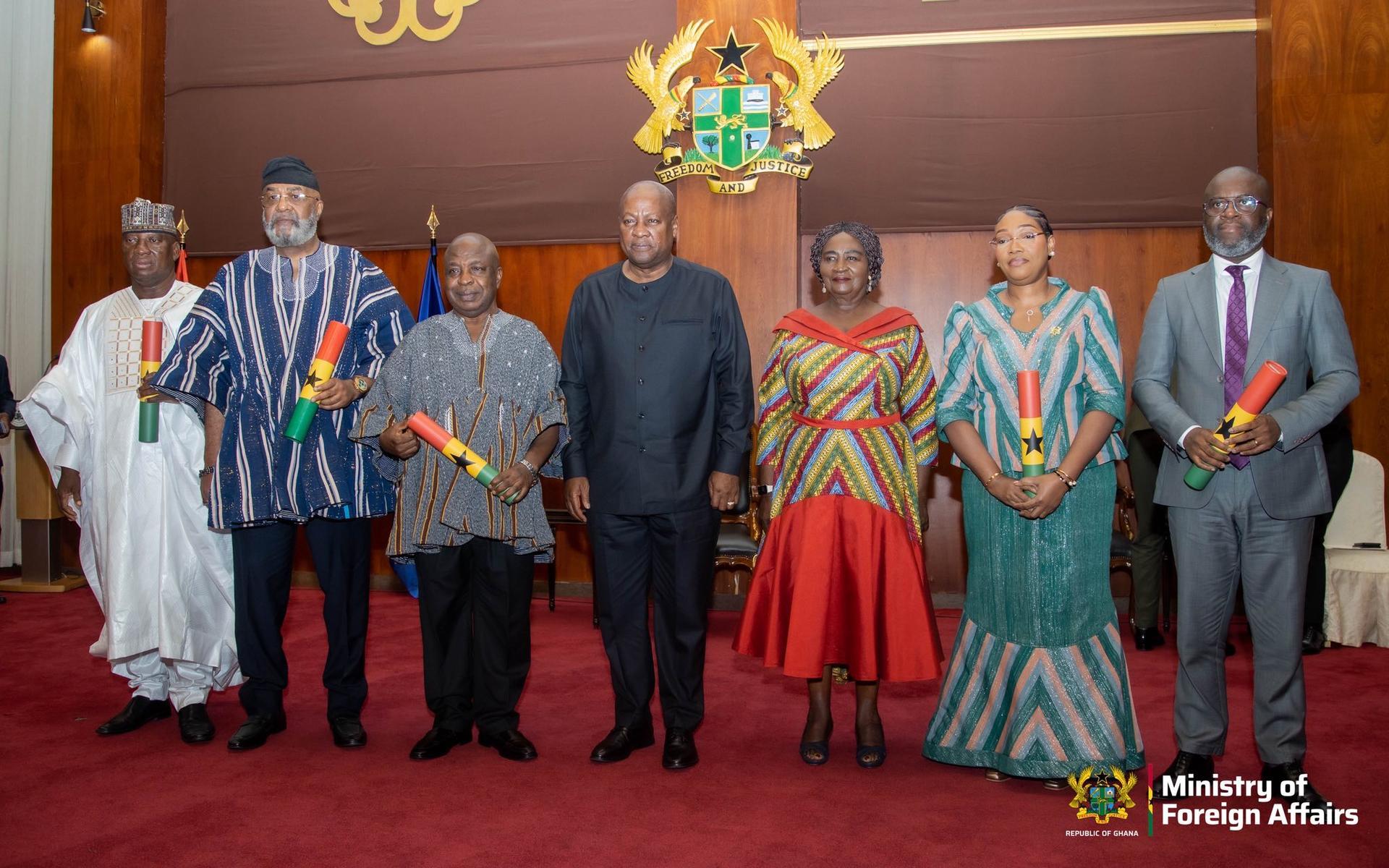
Ablakwa’s announcement came as he inaugurated the National Consultative Committee on Regional Integration of ECOWAS in Ghana. The committee is expected to oversee and coordinate regional integration initiatives and social intervention programmed, creating a national structure through which ECOWAS activities can be better connected to Ghanaian institutions. The flood donation provided an immediate example of how that cooperation can translate into direct assistance for citizens affected by disaster.
The timing of the contribution is also important because disaster recovery often receives the greatest attention during the first few days after flooding, when dramatic rescue images dominate the news. Families, however, can continue suffering for months after the water disappears. Household property must be replaced, damaged buildings repaired and businesses restarted. Some people may also remain in temporary accommodation while searching for the resources needed to return home.
For traders, the consequences can be especially severe. Many small businesses operate with limited insurance and depend on daily cash flow. When floodwater destroys stock, furniture or electrical equipment, owners can lose both their assets and their immediate ability to generate income. Recovering may require borrowing money or relying on relatives, and some businesses never reopen after major disasters.
The June floods therefore produced an economic shock that extended beyond the immediate emergency. Markets, transport services and local businesses were disrupted, while families who lost property suddenly faced additional expenses. The effects were particularly serious for low income households already struggling with living costs because replacing mattresses, cooking equipment, clothing, school materials and household appliances can represent months of income.
Flooding also creates significant health risks. Contaminated water can expose residents to disease, while stagnant water increases the risk of mosquito breeding. Damaged sanitation facilities can contaminate neighborhoods, and families displaced from their homes may face overcrowded or unsuitable temporary accommodation. Relief operations therefore require more than distributing food or money. Clean water, sanitation materials, medical support and temporary shelter can all become important parts of the response.
The recurring nature of Accra’s flooding has also intensified public debate over whether Ghana’s response remains too focused on relief after disasters instead of preventing disasters before they occur. Residents in flood prone communities have repeatedly demanded improved drains, enforcement against construction on waterways, better waste collection and more serious urban planning. Each major flood brings renewed promises to address those problems, but severe flooding continues to return during periods of intense rainfall.
Accra’s drainage system has struggled for decades with rapid urbanization, inadequate infrastructure, buildings placed in waterways and heavy accumulation of waste. In some neighborhoods, drains are too small to handle intense rainfall even when they are not blocked. In others, plastic waste and other debris substantially reduce water flow and cause drains to overflow quickly.
Construction in low lying areas adds another layer of risk. Wetlands and natural drainage channels that once absorbed or redirected rainwater have been reduced by development, meaning more water moves directly into roads and residential communities. Urban expansion has also covered large areas with concrete and asphalt, preventing rainfall from soaking naturally into the ground.
Climate variability is making these structural weaknesses more dangerous. Extremely heavy rainfall over a short period can overwhelm drainage infrastructure that might have coped with less intense storms in the past. This means flood prevention now requires planning not just for ordinary seasonal rain but for more severe rainfall events capable of dropping enormous volumes of water in only a few hours.
The June 29 disaster demonstrated that danger clearly. Rainfall overwhelmed important roads and commercial districts and created situations in which residents had very little time to move property or escape from rapidly rising water. Emergency responders had to operate in conditions where vehicles could not reach some locations and where strong currents created dangers for both residents and rescuers.
NADMO’s role in assessing affected households will remain important as ADRA prepares to distribute the ECOWAS package. Accurate records are needed to prevent duplication and ensure that the most vulnerable people are not overlooked. Coordination between humanitarian organizations and local authorities can also help identify families that may already have received substantial assistance from other sources and those that have received little or nothing.
The government has emphasized that it does not intend to interfere in ADRA’s beneficiary selection. That commitment will be tested when distribution begins because demand is likely to be far greater than the resources available. People who do not receive assistance may question the selection criteria, making clear communication essential.
ADRA will therefore need to explain how beneficiaries are identified, what assistance they receive and why particular households are prioritized. Transparency does not require exposing private information about individual victims, but publishing general criteria and overall distribution figures could help maintain trust.
The ECOWAS contribution also provides an opportunity to track how regional humanitarian assistance is used after delivery. Too often, donations are announced publicly but little information is later provided about who ultimately received the benefit. A clear accounting after distribution would allow both ECOWAS and the Ghanaian public to understand the impact of the package.
The Foreign Affairs Ministry’s decision to send the entire amount directly to ADRA rather than passing it through multiple government agencies also reduces the number of administrative stages between the donor and the final humanitarian intervention. Ablakwa presented that arrangement as part of the government’s commitment to integrity and transparency in public service.
However, independent management does not remove the need for public accountability. ADRA will still need appropriate financial controls, documentation and reporting because the money was provided as humanitarian assistance to Ghanaian citizens. The organization's reputation and experience make it a credible implementing partner, but the scale of public interest means people will expect evidence that the entire package was used for its stated purpose.
The donation comes at a time when Ghana continues to confront the wider challenge of disaster financing. Major floods often require emergency spending that was not originally included in local government budgets. Roads must be repaired, drains cleared, damaged public facilities restored and displaced households supported. International donations can help, but they cannot replace the need for a reliable national system capable of responding quickly when disaster occurs.
Long term flood resilience will require substantially more investment than the ECOWAS package provides. Drainage construction, retention basins, waste management, land use enforcement and improved weather warning systems require sustained funding over many years. The June disaster again demonstrated that emergency response alone cannot solve the problem.
Some of the worst effects of flooding are also linked to poverty. Wealthier households may be able to repair homes, replace vehicles or temporarily move elsewhere after a disaster. Poorer residents may have no savings, no insurance and nowhere else to go. They can therefore remain exposed to the same dangerous locations even after repeated flooding because relocation is financially impossible.
This is one reason targeted relief remains important even as authorities work on infrastructure. Families facing immediate hardship cannot wait years for new drains or urban redevelopment. They need food, shelter, sanitation, medicine and income support now. The challenge is ensuring that short term humanitarian assistance does not become a substitute for the structural changes needed to reduce future risk.
The June floods also caused wider disruption to education and employment because people who lost homes or possessions often had to miss work and school while dealing with the aftermath. Children may lose uniforms, books and other learning materials, while parents may lose the income needed to replace them. Relief packages that help households restore basic stability can therefore have effects beyond immediate survival.
For ECOWAS, the Ghana intervention demonstrates the practical side of regional integration. The organization's effectiveness is often judged through political crises, but citizens also experience regional cooperation through disaster support, health interventions and development programmed. A transparent and successful distribution in Ghana could strengthen public understanding of that role.
For the Mahama administration, the donation also offers an opportunity to show that international and regional partnerships can deliver direct benefits to communities. Ablakwa has increasingly emphasized Ghana’s engagement with ECOWAS and other international institutions as a way of securing cooperation and assistance while maintaining stronger transparency around external support.
The June floods remain a painful reminder, however, that Ghana’s disaster vulnerability cannot be solved through donations. Fifteen people lost their lives. Tens of thousands were affected. Thousands of households were displaced. Businesses and homes were damaged in communities where residents had experienced flooding before.
Each new rainy season therefore creates anxiety for people living in vulnerable areas. Residents know that another severe storm can destroy whatever they have managed to rebuild. Without significant improvement in drainage and land use enforcement, relief packages risk becoming part of a repetitive cycle in which communities are flooded, receive assistance, rebuild and then face the same danger again.
Authorities have repeatedly urged citizens not to build in waterways and not to dump refuse into drains, but individual behavior is only part of the problem. Effective urban flood management also depends on government planning, enforcement and infrastructure. Residents cannot construct major storm drains or redesign entire drainage basins on their own.
The disaster has therefore renewed pressure on assemblies and central government to take more comprehensive action. This includes identifying structures that obstruct waterways, improving the capacity of existing drains and protecting wetlands that play important roles in absorbing excess water.
Modern flood management increasingly depends on early warning as well. Weather forecasting can provide valuable time for communities to prepare when very heavy rainfall is expected. Alerts must be communicated quickly and clearly enough for residents to move vehicles, secure property and evacuate vulnerable locations before roads become impassable.
Emergency response capacity also matters. Rescue boats, protective equipment, communication systems and trained personnel can determine whether people trapped by rising water are reached in time. The deployment of NADMO, the military, police and fire service during the June flooding showed the importance of coordinated response when multiple communities are affected simultaneously.
The ECOWAS package will not rebuild Accra’s drainage infrastructure, but it can provide immediate assistance to people still trying to recover. That is why the decision on how it is distributed will attract attention. The funds represent regional solidarity, but their success will ultimately be measured at household level.
If a family that lost bedding, food and furniture is able to replace essential items, the assistance has practical meaning. If a small trader can restock after losing merchandise to floodwater, the intervention can help restore a livelihood. If displaced residents can return to a safer home with basic household supplies, the effect extends beyond the financial value of the package itself.
The exact composition of the assistance has not yet been publicly detailed. ADRA may decide to provide cash, relief items or a combination of interventions depending on the needs assessment. Cash assistance can give families flexibility to purchase what they need most, while direct distribution of essential items can ensure that specific humanitarian requirements are met.
Whichever method is chosen, the organization will face the challenge of stretching approximately GH¢3 million across a disaster that affected more than 38,000 people. Prioritization will therefore be unavoidable.
The government’s decision not to choose beneficiaries may help reduce accusations of political favoritism, but independent distribution must still be fair, transparent and well documented. Victims deserve to understand how decisions are made, and ECOWAS has an interest in knowing that its contribution reaches the communities for which it was intended.
The broader lesson from the June floods remains unchanged. Ghana can continue mobilizing emergency aid each time severe rains strike Accra, but relief will always be more expensive and painful than prevention.
For the families who lost loved ones, no financial intervention can reverse what happened. For people who lost homes, businesses and possessions, however, the ECOWAS contribution provides another opportunity to rebuild a small part of what was destroyed.
The $250,000 may not be enough to repair every loss caused by the June disaster, but the decision to place the entire package under an independent humanitarian organization creates a clear standard by which the intervention can now be judged.
The money has arrived.
The responsibility now is to make sure it reaches the people who need it most and that, long after the distribution is completed, Ghana does not lose sight of the much bigger task of preventing the next major Accra flood from producing the same devastation again.