EGYPT COURT ORDERS MADA MASR CLOSED, FINES EDITOR EGP3M AS LINA ATTALAH IS DETAINED
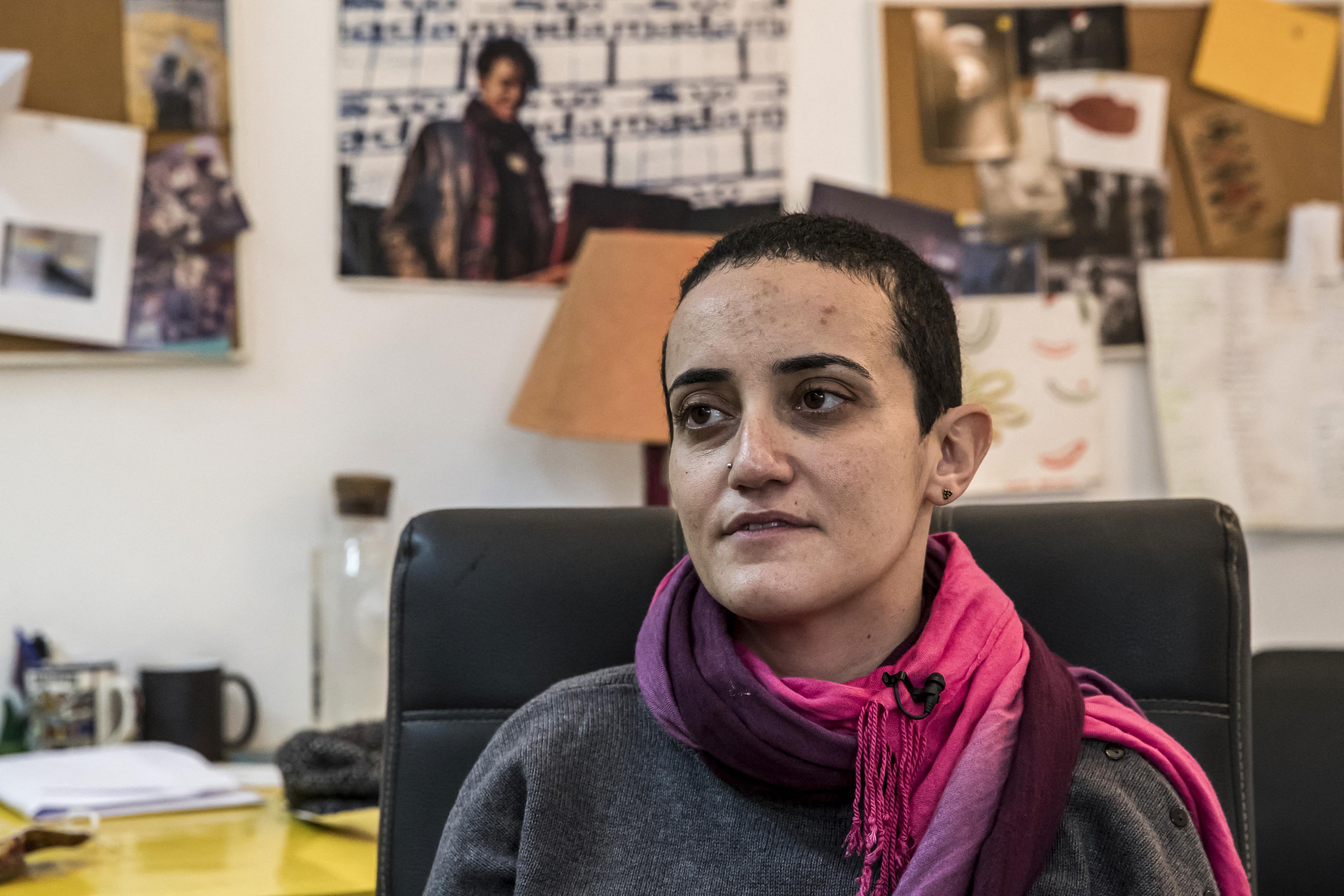
An Egyptian court has convicted Mada Masr Editor-in-Chief Lina Attalah of operating an unlicensed website, fined her EGP 3 million, ordered the independent outlet closed and directed that its equipment be confiscated. Attalah was taken into custody after Tuesday’s ruling and, according to her lawyers, remains detained pending payment of the fine. Mada Masr says it repeatedly sought a licence from Egyptian regulators beginning in 2018 and argues that the dispute should have been handled through administrative proceedings rather than criminal prosecution. Press-freedom groups including CPJ and Amnesty International have condemned the judgment and called for her immediate release.
An Egyptian court has ordered the closure of independent news outlet Mada Masr, fined its editor-in-chief Lina Attalah three million Egyptian pounds and ordered the confiscation of the organisation’s equipment after convicting her of operating a news website without a licence. Attalah was taken into custody immediately after the ruling at the New Cairo Misdemeanor Court on Tuesday, October 27, in a case that has drawn sharp criticism from press-freedom organisations and Egyptian rights groups. The ruling marks one of the most serious legal actions yet against one of Egypt’s best-known remaining independent news organisations.
The fine imposed by the court was EGP 3 million, equivalent to roughly US$54,000 at current exchange rates, rather than the approximately €850 figure carried in some early reporting. The amount represents the maximum financial penalty available under Article 105 of Egypt’s 2018 law regulating the press, media and Supreme Media Regulatory Council. The court also ordered the closure of Mada Masr and confiscation of equipment used by the organisation, significantly escalating a licensing dispute that has lasted for years.
Mada Masr said security personnel moved against Attalah immediately after the judgment was delivered. According to accounts from the outlet and rights advocates present in court, security officers surrounded her, physically removed her from the courtroom and placed her in custody. The Committee to Protect Journalists later said lawyers had confirmed that Attalah would remain detained until the financial penalty was paid, while Amnesty International similarly described her as being held pending payment of the EGP 3 million fine.
The case centred on accusations that Attalah had established, managed and operated a website without obtaining the licence required under Egyptian media law. Prosecutors had initially questioned her on both the licensing allegation and an accusation of publishing false news capable of disturbing public peace, but the false-news allegation was dropped from the formal trial referral. The licensing charge therefore became the central issue decided by the misdemeanour court on Tuesday.
Attalah’s lawyers had challenged the case on both procedural and constitutional grounds before the ruling was issued. The defence sought access to the full evidence file, documents connected to Mada Masr’s repeated licensing applications and official records showing whether and how the Supreme Media Regulatory Council had communicated its decisions to the organisation. Lawyers also sought permission to challenge the constitutionality of Articles 6 and 105 of the media law, arguing that the provisions conflict with several protections contained in Egypt’s Constitution.
Article 6 of Law 180 of 2018 provides that websites may not be established or managed in Egypt without a licence from the Supreme Media Regulatory Council. Article 105 allows fines ranging from EGP 1 million to EGP 3 million for violations and gives courts authority to order closure and confiscation of equipment. Mada Masr’s defence argued that applying those provisions criminally in the circumstances of the organisation’s licence dispute violated constitutional protections relating to freedom of expression, journalism, due process and the principle that criminal penalties must be clearly and fairly applied.
Mada Masr maintains that it has repeatedly attempted to obtain a licence since Egypt introduced the current media framework in 2018. The organisation says it submitted applications in 2018 and again in 2020 but did not receive formal responses at the time. Attalah was later informed during a prosecution interrogation in 2022 that the regulator had rejected the application, according to Mada Masr, even though the organisation says it had not previously been formally notified of that decision.
The outlet subsequently challenged the handling of the licensing process through the courts and continued attempting to regularise its status. Mada Masr says a later application and supporting material remained pending, while its lawyers argued that an unresolved or disputed administrative licensing process should have been addressed through administrative law rather than criminal prosecution. The Egyptian Journalists Syndicate supported that position before Tuesday’s hearing and submitted a memorandum questioning how the licensing process had been handled.
The Journalists Syndicate also sent representatives and lawyers to support Attalah during the proceedings. Syndicate President Khaled al-Balshy had argued that any dispute over a licensing decision should be capable of judicial review through the administrative courts and called for the existing licensing system itself to be reconsidered. That position reflects wider concern among independent journalists that a licensing regime can become a mechanism for restricting outlets that publish critical reporting if permits are denied or left unresolved.
Mada Masr is one of Egypt’s most prominent independent digital news organisations and has published reporting on politics, security, economics, human rights, prisons and regional affairs since its establishment in 2013. Its website has been blocked inside Egypt since 2017, but the newsroom has continued publishing Arabic and English journalism through alternative access methods. The organisation has developed an international reputation for investigative reporting while repeatedly facing interrogations, raids and legal cases involving its journalists.
The latest prosecution represents the sixth case involving Mada Masr, Attalah or the organisation’s journalists in approximately six years. Attalah had been summoned by the Supreme State Security Prosecution earlier this month and questioned for more than six hours over the organisation’s operations, licensing status and recent reporting about protests and conditions inside Egyptian prisons. She was released at that stage on EGP 100,000 bail before being referred to trial less than 24 hours later.
The speed of the trial became a major concern for the defence and rights groups. Attalah was referred to the New Cairo Misdemeanor Court on October 22 and appeared for her first hearing only five days later, on October 27. Lawyers described the accelerated timetable as unusual and argued that they required additional time to examine evidence, obtain regulatory documents and pursue constitutional challenges before a final ruling was issued.
Human-rights lawyer Hossam Bahgat, director of the Egyptian Initiative for Personal Rights, was among those present at the courthouse. Rights advocates said the judgment was delivered amid strong protests from defence lawyers, who argued that they had not been given a meaningful opportunity to present all requested evidence or call witnesses. Press-freedom groups have subsequently called for the ruling to be reversed and for Attalah to be released.
The Committee to Protect Journalists described the judgment as a major escalation against independent media and argued that prosecuting Mada Masr for operating without a licence was particularly troubling because the organisation had repeatedly sought regulatory approval. CPJ said licensing rules should not be used to suppress journalism and called on Egyptian authorities to reverse the conviction, allow the organisation to operate and release Attalah immediately.
Amnesty International also condemned the ruling, describing the shutdown order and EGP 3 million fine as a severe blow to media freedom in Egypt. The organisation argued that the prosecution forms part of a broader pattern in which independent journalists and news organisations face criminal investigations, prolonged detention, website blocking and restrictive media regulations. Amnesty similarly called for the judgment to be overturned and for Attalah to be released.
The ruling comes only weeks after another independent Egyptian journalism platform, Matsadaash, came under heavy pressure from authorities. Six journalists linked to the investigative and fact-checking outlet have been detained, with prosecutors accusing them of offences including publishing false information and alleged links to the Muslim Brotherhood. Rights organisations dispute the authorities’ characterisation of the outlet and have described the arrests as part of a wider campaign affecting independent journalism.
Egyptian authorities have frequently defended restrictive media and national-security laws as necessary to combat false information, terrorism, threats to national security and unlicensed operations. Officials have also argued in previous Mada Masr cases that all media organisations are legally required to comply with national licensing requirements. The government has not, in the reporting reviewed by VNTV, issued a detailed new public explanation addressing the specific due-process criticisms made following Tuesday’s judgment.
Mada Masr’s legal difficulties stretch back several years. Security forces raided the organisation’s Cairo newsroom in 2019 after it published politically sensitive reporting, temporarily detaining several staff members. Attalah herself has previously been detained and questioned, while other Mada Masr journalists have faced charges including spreading false information, defamation and using media platforms without the required authorisation.
Press-freedom organisations say these cases have had a cumulative effect on independent media in Egypt. Journalists operating outside large state-owned or government-aligned organisations face significant legal and financial risks, while websites can be blocked and reporters can be summoned under a combination of media, cybercrime, national-security and counterterrorism legislation. Critics argue that these overlapping legal tools create uncertainty over what independent outlets may publish without exposing their journalists to prosecution.
Egypt remains one of the world’s most difficult environments for independent journalism according to international press-freedom assessments. Reporters Without Borders ranked the country 169th out of 180 in its 2026 World Press Freedom Index, while the Committee to Protect Journalists has repeatedly listed Egypt among the countries imprisoning significant numbers of journalists. Rights groups differ slightly in their current counts, but all agree that dozens of journalists have been detained or prosecuted in relation to their work.
Egyptian authorities have rejected broader accusations that the country systematically suppresses legitimate journalism and have said cases against individual media workers are based on violations of domestic law rather than professional reporting itself. Supporters of the regulatory framework argue that news organisations must follow licensing requirements in the same manner as other regulated institutions. The dispute surrounding Mada Masr therefore sits at the intersection of press freedom, regulatory authority and the question of whether licensing requirements are applied neutrally in practice.
The legal history of the outlet complicates the government’s licensing argument because Mada Masr has documented multiple attempts to obtain formal approval. The organisation says it was not informed about the rejection of its earlier licence application until Attalah was questioned in a separate criminal case, while a later application remained unresolved. Its defence argues that criminally punishing the editor for operating without a licence under those circumstances transforms an administrative process into a tool capable of shutting down independent journalism.
The Egyptian Journalists Syndicate has similarly raised procedural objections. Its representatives argued before the trial that the dispute should have been resolved administratively and that the regulator’s handling of Mada Masr’s applications required examination before criminal responsibility could fairly be imposed. The Syndicate has also called for wider review of Egypt’s online media licensing procedures.
Tuesday’s judgment is particularly significant because previous investigations involving Mada Masr had not resulted in the complete closure of the publication through a criminal court ruling. The order therefore threatens the organisation’s ability to operate as an institution rather than affecting only an individual journalist. Confiscation of equipment could further impair reporting even if lawyers manage to challenge the closure through subsequent legal proceedings.
The outlet is expected to contest the ruling, although the precise appeals procedure and timing will become clearer as lawyers receive the full written judgment. Defence lawyers are also likely to continue challenging the constitutionality of the relevant media-law provisions and arguing that the licensing history should prevent criminal punishment. Until an appeal or other judicial intervention changes the decision, however, the closure order and fine remain legally operative.
Attalah’s detention adds urgency to that process. Her continued custody is tied to payment of the EGP 3 million penalty according to lawyers cited by press-freedom organisations, meaning the financial sanction has immediate consequences beyond the longer-term closure of the website. Rights organisations have argued that detention under those conditions places additional pressure on the journalist and the publication and risks turning a regulatory dispute into direct coercion against an editor.
The case has also attracted international attention because Attalah is widely known outside Egypt. She has been recognised for her journalism and was included in Time magazine’s 100 most influential people list in 2020, while Mada Masr has received international recognition for its independent reporting. Foreign media organisations and advocacy groups have repeatedly cited the newsroom as one of the few remaining outlets in Egypt publishing sustained investigative work outside the state-aligned media environment.
That international profile does not exempt the outlet from Egyptian law, but it means the ruling is likely to draw diplomatic and human-rights scrutiny beyond Cairo. Egypt is a major regional power and an important partner for the United States, European Union and Gulf governments, making its human-rights record a recurring issue in relations with foreign governments. Western governments have periodically raised concerns about the detention of journalists and activists while continuing security, economic and diplomatic cooperation with President Abdel Fattah el-Sisi’s administration.
The case may therefore become another test of whether international criticism produces any change in Egypt’s treatment of independent media. Previous appeals from foreign governments and rights organisations have sometimes led to releases or pardons, but many journalists and activists have remained detained despite sustained international attention. Domestic legal proceedings remain the immediate mechanism through which Attalah and Mada Masr can challenge the ruling.
The most important factual correction to the first reports concerns the size of the fine. The court imposed the statutory maximum of EGP 3 million, approximately US$54,000, and not a penalty of roughly €850. The figure is significant both because of its size for an independent newsroom and because it is directly connected to Attalah’s current custody according to her lawyers.
The court also went beyond a financial penalty by ordering the closure of Mada Masr and confiscation of its equipment. Those measures mean the ruling potentially removes an entire independent newsroom from Egypt’s already restricted media landscape rather than simply imposing a personal sanction on its editor. Press-freedom organisations therefore describe the judgment as one of the most consequential recent cases involving Egyptian journalism.
For now, Attalah remains in custody according to the latest reports reviewed by VNTV, and no subsequent announcement confirming her release had been published at the time of writing. Mada Masr and its lawyers are expected to continue challenging the ruling while domestic and international rights organisations press Egyptian authorities to reverse the closure and release her.
The case will now be watched closely for any appeal, payment of the fine, release of Attalah or implementation of the order to seize equipment and close the publication. What began as a disputed licensing process has developed into a direct challenge to the continued existence of one of Egypt’s most prominent independent newsrooms, making the next legal steps important not only for Mada Masr but for the broader future of independent digital journalism in the country.