ANOTHER TANZANIAN OPPOSITION LEADER FACES POSSIBLE DEATH PENALTY AS GOVERNMENT INTENSIFIES TREASON PROSECUTIONS
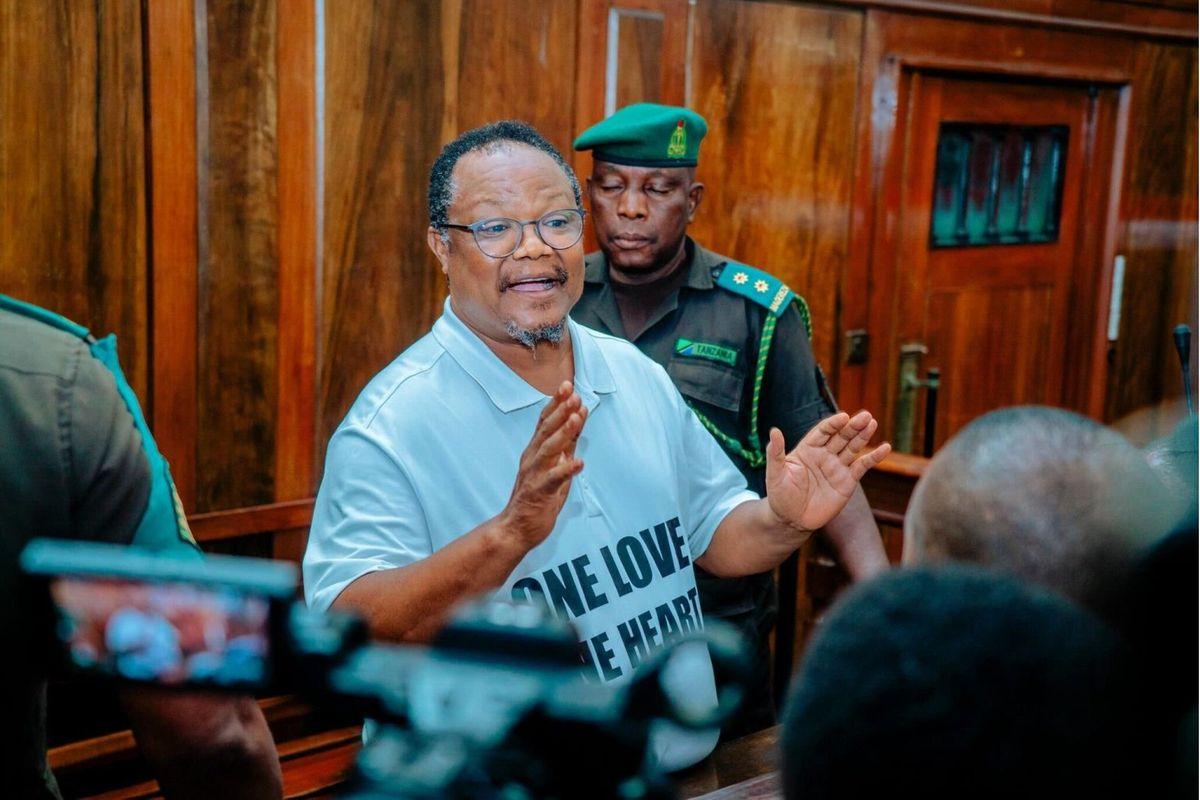
Senior Chadema official John Pambalu has been charged with treason over allegations that he sought to obstruct Tanzania’s 2025 general election and organise protests aimed at pressuring the executive. He becomes the second major Chadema figure to face the offence after party chairman Tundu Lissu, whose treason trial is awaiting a November 6 judgment. Treason can carry the death penalty in Tanzania, although prosecutors have argued in Lissu’s case that capital punishment is not automatically mandatory. The allegations against Pambalu remain unproven.
A second senior figure in Tanzania’s main opposition Chadema party has been charged with treason, adding a new and potentially explosive case to the country’s post-election political crisis as authorities continue prosecuting opposition leaders over activities connected to the disputed 2025 general election. John Justine Pambalu, a member of Chadema’s national council and the party’s director for organisation, training and elections, was brought before the Kisutu Resident Magistrate’s Court in Dar es Salaam on Wednesday and accused of conduct prosecutors say was intended to obstruct the 2025 election and intimidate the executive branch of government. Treason is among Tanzania’s most serious criminal offences and can carry the death penalty, although prosecutors in a separate case involving Chadema leader Tundu Lissu have argued that the sentence is not automatically mandatory.
The prosecution alleges that Pambalu sought to persuade members of the public to interfere with the conduct of the 2025 general election and organised or encouraged repeated protests for the purpose of putting pressure on Tanzania’s executive authorities. The wording attributed to the charge sheet accuses him of intending to persuade the public to cause obstruction of the election and of conducting what prosecutors described as continuing protests aimed at intimidating the executive of the United Republic of Tanzania. Those allegations have not been proven, and Pambalu has not been convicted of any offence.
The case immediately drew attention because Pambalu is not a minor party activist but a senior figure within Chadema’s national structure. He previously led the party’s youth wing, known as Bavicha, and has remained closely involved in organisational and election work. His prosecution therefore expands the use of treason charges from Chadema chairman Tundu Lissu to another figure directly connected to the party’s national mobilisation machinery.
Chadema deputy chairperson John Heche publicly confirmed that he had been informed of Pambalu’s treason charge and warned that he believed authorities might eventually bring a similar case against him. Heche said he would not leave Tanzania and insisted the party would continue its political activities despite the prosecutions. His remarks underline the degree to which Chadema now views the cases as part of a broader confrontation between the opposition and the government rather than isolated criminal proceedings against individual members.
The government and prosecutors have not accepted the opposition’s characterisation of the cases as political persecution. In the separate proceedings against Lissu, state lawyers have maintained that the issue before the court is whether specific statements and actions crossed the legal threshold into conduct threatening the government or obstructing the electoral process. They argue that political status does not place an individual above criminal law and that the courts, rather than political parties, must determine whether the evidence satisfies the elements of treason.
That legal distinction is now likely to become central to Pambalu’s case as well. Prosecutors will need to prove not merely that he participated in protests or opposed the election process but that his conduct satisfied the statutory elements of treason under Tanzanian law. The defence, in turn, is likely to argue that political mobilisation, public protest and opposition to an electoral process are protected political activities unless accompanied by conduct clearly meeting the much higher threshold required for a capital offence.
The prosecution of Pambalu comes at a particularly sensitive moment because Lissu’s own treason trial has already reached its final stage. The High Court in Dar es Salaam concluded final submissions in Lissu’s case in late September and has scheduled judgment for November 6, 2026. Lissu has pleaded not guilty and has argued throughout the proceedings that the prosecution failed to prove its case and that his statements were part of legitimate political campaigning against an election process he believed lacked necessary reforms.
Lissu was arrested in April 2025 after Chadema intensified its “No Reforms, No Election” campaign. Prosecutors accuse him of making statements on April 3, 2025, that allegedly encouraged the public to prevent the general election from taking place and to mobilise against the government. He has denied that his conduct amounted to treason and has repeatedly described the prosecution as politically motivated.
The High Court ruled in August that Lissu had a case to answer, allowing the trial to proceed into the defence stage. He later presented his own case and called witnesses before both sides delivered final submissions. The three-judge panel hearing the matter is now considering the evidence before issuing its verdict on November 6, making the next several weeks potentially decisive for both Chadema and Tanzania’s wider political environment.
The state’s position on punishment in the Lissu case is also important for understanding the significance of Pambalu’s charge. During final submissions, prosecutors argued that conviction for the relevant form of treason does not automatically require execution and that the wording of the law gives judges discretion when determining sentence. According to the prosecution’s interpretation, the court could impose a penalty below death depending on the circumstances. The offence nevertheless remains one that exposes a defendant to the possibility of the death penalty, giving the charge extraordinary legal and political weight.
Pambalu’s prosecution is directly connected to events surrounding Tanzania’s 2025 general election, which remains the subject of intense dispute between the government and opposition groups. Chadema was excluded from participation after failing to sign the electoral code of conduct, while Lissu was prevented from contesting the presidency. President Samia Suluhu Hassan subsequently won the election with nearly 98 per cent of the vote according to the official results.
The election period was accompanied by protests, security operations and serious allegations of violence. Opposition groups and rights organisations have accused security forces of killing large numbers of demonstrators during the post-election unrest. Those groups have cited figures reaching roughly 2,000 deaths, while an inquiry established by President Hassan reported a significantly lower figure of 518 deaths and did not identify individual responsibility for those deaths. The gap between those numbers remains politically contested, and there has been no universally accepted final account of the scale of the violence.
The government has faced criticism from opposition groups, international rights organisations and foreign observers over restrictions on political activity, arrests of critics and the handling of demonstrations. Chadema and other critics argue that the political environment has narrowed substantially and that criminal law is increasingly being used against opponents. The government has rejected accusations that it is abandoning democratic governance and has maintained that public order laws and criminal statutes apply regardless of political affiliation.
The treason cases have become particularly controversial because the offence historically carries an association with attempts to overthrow or violently threaten the state. Using such a charge in cases centred on political speech, election obstruction and protest raises difficult questions about where Tanzania’s courts will draw the line between unlawful attempts to destabilise government and legitimate political dissent. The Lissu judgment on November 6 may therefore influence not only his own fate but also how future cases, including Pambalu’s, are approached.
Pambalu’s charge sheet reportedly focuses on his alleged intention to persuade the public to obstruct the general election and on protests prosecutors say were designed to intimidate the executive. Those allegations appear similar in structure to parts of the state’s case against Lissu, suggesting prosecutors may be applying the same legal theory to multiple senior Chadema officials. If so, the outcome of Lissu’s case could become especially relevant to Pambalu’s defence.
Chadema has long argued that its opposition to the 2025 election was rooted in demands for reforms to the electoral system. The party wanted changes to institutions and procedures before participating and adopted the slogan “No Reforms, No Election” as part of its campaign. Government authorities, however, treated some statements associated with efforts to stop or disrupt the election as potentially criminal rather than simply political.
That disagreement sits at the heart of the present crisis. Opposition leaders maintain that threatening to boycott, protest or politically obstruct an election is part of democratic resistance. Prosecutors argue that certain language and actions can cross the boundary into attempts to threaten constitutional government. Tanzania’s courts are now being asked to determine where that boundary lies.
Pambalu’s history within Chadema gives his case additional significance. As a former chairman of the party’s youth wing, he was associated with mobilisation, rallies and demands for electoral reform well before the 2025 campaign. He publicly criticised restrictions on opposition political activities and previously called for changes to the electoral system. His later move into a national organisational role placed him even closer to the party’s core political strategy.
The charge therefore affects more than one individual. Removing senior organisers from active politics through detention or prolonged legal proceedings can have a practical impact on a political party’s ability to coordinate supporters, recruit candidates and operate nationally. Chadema’s leadership has argued that repeated arrests and prosecutions have weakened its ability to compete on equal terms with the ruling Chama Cha Mapinduzi.
The ruling party and government officials reject claims that opposition figures are being prosecuted simply because they belong to Chadema. They argue that political leaders remain subject to the same criminal laws as anyone else and that the seriousness of a charge should be assessed through court proceedings rather than political rhetoric. That position places increasing pressure on the judiciary because the courts are now responsible for determining cases carrying both extreme criminal penalties and major political consequences.
The Lissu trial has already attracted international attention partly because he is one of Tanzania’s most prominent opposition figures. He previously survived an assassination attempt in 2017 in which he was shot multiple times and later spent years outside the country before returning. No one has been convicted over that attack, and the incident remains one of the most widely cited examples in debates over political violence in Tanzania.
Lissu returned to active politics and eventually became Chadema chairman, taking a confrontational position on electoral reform ahead of the 2025 vote. His detention since April 2025 has made him a symbol for opposition supporters who believe the government is using the justice system to suppress political competition. Government supporters and prosecutors, by contrast, insist that his public profile does not exempt him from responsibility for statements they believe encouraged unlawful resistance to the state.
The addition of Pambalu to the list of senior opposition figures facing treason charges may intensify international scrutiny. Tanzania has historically been regarded as one of East Africa’s more stable states, and President Hassan initially received praise after taking office in 2021 for easing some of the political restrictions associated with her predecessor John Magufuli. Her administration reopened some political space, allowed previously banned opposition rallies and pursued diplomatic re-engagement with international partners.
That early reform image has weakened considerably amid subsequent arrests, disappearances, election disputes and allegations of violent repression. Opposition parties argue that the government has reverted to increasingly authoritarian methods, while authorities maintain that security measures have been necessary to preserve stability and prevent unlawful disorder. The competing narratives have become one of the defining political debates of Hassan’s presidency.
The 2025 election deepened that divide. Chadema’s exclusion removed the country’s largest opposition organisation from the presidential contest, leaving President Hassan to face candidates from smaller parties. Her overwhelming official victory was therefore achieved in an election from which the principal opposition force had been absent. Supporters of the government argue that Chadema’s failure to meet electoral requirements was of its own making, while the party says those requirements formed part of an unfair process.
Post-election violence made the dispute far more serious. Images and reports of demonstrations, security deployments and deaths generated condemnation and led to demands for accountability. The government eventually established an inquiry, but the opposition criticised the process and questioned whether it could independently investigate state agencies.
The new treason prosecution will inevitably be viewed against that background even though Pambalu’s guilt or innocence must be determined separately on the evidence. The timing means the case cannot be politically isolated from the wider dispute over the election, demonstrations and the treatment of Chadema.
Treason prosecutions are especially sensitive because they can keep defendants in custody for extended periods and involve complex High Court proceedings. In Lissu’s case, the process has already lasted well over a year from arrest to scheduled judgment. If Pambalu’s case follows a similar path, another senior Chadema official could remain entangled in litigation for a prolonged period regardless of the eventual verdict.
That prospect could reshape the opposition’s leadership structure. Chadema would need to redistribute organisational responsibilities if multiple senior figures are detained, restricted or occupied with court proceedings. Other officials may also become more cautious about public statements if they believe protest-related rhetoric could expose them to similar charges.
Heche’s warning that he expects the possibility of a case against himself illustrates that fear. His statement was not confirmation that prosecutors intend to charge him, and no such case should be treated as established without formal action. It nevertheless demonstrates how senior party officials perceive the current legal environment.
The government, on the other hand, faces the risk that expanding treason prosecutions could strengthen claims that ordinary criminal statutes are being stretched to manage political opposition. That is why transparent proceedings, clear evidence and judicial independence will be essential if the authorities want the cases to be regarded as legitimate rather than punitive.
The distinction between prosecution and conviction must also remain central to reporting. Pambalu has been charged, but the allegations have not been proven. Lissu has undergone a lengthy trial, but no verdict has yet been delivered. Neither man should be described as having committed treason unless a court reaches that conclusion after the legal process is completed.
The possibility of the death penalty also requires precision. Treason under Tanzanian law can expose a convicted person to capital punishment, but prosecutors in Lissu’s case have argued that the relevant provision gives judges sentencing discretion. It would therefore be inaccurate to say that conviction automatically means execution.
Tanzania retains the death penalty in law even though executions have not been commonly carried out in recent decades. The existence of capital punishment nonetheless gives the prosecutions symbolic and practical severity because defendants face the possibility of the country’s harshest legal sanction.
The international human rights debate around the cases is therefore likely to grow as Pambalu’s proceedings advance and Lissu approaches judgment. Rights groups have historically criticised the use of capital charges in cases involving political activity, while governments generally argue that their domestic courts should be allowed to apply national law without external interference.
For Chadema, the immediate political challenge is maintaining organisation and morale while senior officials face court cases. The party remains an important opposition force despite being excluded from the 2025 election, and its leaders continue to hold public meetings and challenge the government. The authorities’ response to those activities will help determine whether the political environment becomes more confrontational or whether tensions begin to ease.
For President Hassan’s administration, the legal cases carry reputational consequences domestically and internationally. Tanzania depends heavily on trade, tourism, foreign investment and development partnerships, all of which can be affected by perceptions of political stability and governance. Continued prosecutions of opposition leaders may therefore attract attention beyond the courtroom.
The government may argue that allowing attempts to obstruct elections or intimidate the executive to go unpunished would itself undermine constitutional order. The opposition argues that prosecuting political mobilisation as treason poses an even greater threat to democratic participation. Those competing claims will ultimately require legal interpretation grounded in evidence rather than political slogans.
The first major test will arrive on November 6 when the High Court is expected to deliver judgment in Lissu’s case. A conviction could strengthen prosecutors’ confidence in bringing similar charges and provide a judicial interpretation of the relevant treason provision. An acquittal could raise substantial questions about the legal basis of comparable prosecutions.
Pambalu’s case will proceed on its own facts, but the overlap in allegations means the courts may eventually confront many of the same questions. What kinds of political statements amount to an intention to threaten the government? When does organising protest become criminal obstruction of an election? How much evidence is required before political advocacy can support a treason conviction?
Those are unusually consequential questions for any democratic system because they determine the space available for opposition politics. Governments have a legitimate interest in preventing violence and protecting constitutional institutions, while opposition parties require the freedom to criticise, boycott and protest without automatically facing the most serious offences in the criminal code.
The present controversy therefore extends beyond the personalities involved. It concerns the balance Tanzania is striking between national security, electoral authority and political freedom after one of the most disputed election periods in its recent history.
The strongest confirmed development is that John Justine Pambalu, a senior Chadema official and former youth-wing leader, was charged with treason on October 21 over allegations connected to efforts to obstruct the 2025 general election and organise protests intended to pressure the executive. He is now the second prominent Chadema figure facing a treason case after party chairman Tundu Lissu.
Lissu’s trial has already concluded and judgment is scheduled for November 6. He denies wrongdoing, while prosecutors say they have established the legal elements of the offence. Pambalu’s allegations similarly remain unproven and will have to be tested through the judicial process.
For Tanzania, the next few weeks could therefore become another defining period in the relationship between the state and its largest opposition party. With one senior leader awaiting a treason verdict and another newly charged with the same class of offence, the country’s courts are increasingly becoming the arena in which the unresolved political conflict surrounding the 2025 election is being fought.