EGYPTIAN POUND HITS RECORD LOW OF 56 TO THE DOLLAR AS REGIONAL TENSIONS RATTLE MARKETS
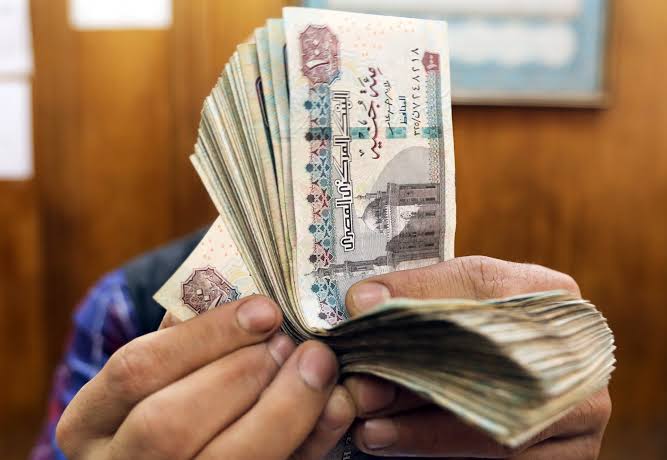
The Egyptian pound fell to a record low of around 56 per U.S. dollar on Monday as investors reacted to heightened Middle East tensions and broader economic pressures facing Egypt. The country’s benchmark EGX30 stock index initially dropped roughly 2% before recovering some ground. The move came as parliament prepared to consider possible defensive support for Saudi Arabia, although the pound’s weakness also reflects longer-running pressures including external debt, hard-currency demand, energy imports and regional risks affecting tourism and Suez Canal revenue.
The Egyptian pound fell to a record low of around 56 to the United States dollar on Monday, October 26, extending pressure on one of the Middle East and North Africa’s most closely watched currencies as investors assessed mounting regional geopolitical risks, Egypt’s external financing requirements and uncertainty surrounding the country’s possible involvement in defensive support for Saudi Arabia. Financial-market data cited by Reuters showed the pound weakening beyond previous lows during morning trading, while Egypt’s benchmark EGX30 stock index initially dropped by approximately 2% before recovering part of those losses, underscoring the nervous market reaction to rapidly changing security conditions across the Middle East.
The decline represents another significant milestone in the pound’s long depreciation and comes after years in which Egyptian authorities progressively moved away from tightly controlling the currency toward a more flexible exchange-rate system supported by the International Monetary Fund. Although the latest fall coincided with heightened regional tensions, the pound’s weakness cannot be attributed to a single political development. Egypt continues to face structural pressure from a large import bill, significant external debt obligations, strong demand for hard currency and the need to maintain sufficient foreign-exchange liquidity for businesses and government commitments.
Monday’s market reaction was nevertheless closely linked to the worsening security environment. Investors are watching Egypt’s parliament as lawmakers consider the question of possible defensive assistance to Saudi Arabia amid escalating missile and drone threats affecting the Gulf. Any Egyptian military involvement, even if limited to defensive cooperation, could raise concerns about additional fiscal costs, broader regional exposure and the risk that Egypt could become more directly entangled in a conflict already affecting energy markets, shipping routes and foreign investment across the region.
Reuters reported that the pound reached approximately 56 against the dollar in market trading, marking its weakest level on record. The movement adds to a prolonged decline that has transformed Egypt’s exchange-rate environment over the past several years and increased the domestic cost of imported goods. Because Egypt imports significant quantities of food, fuel, machinery, medicines and industrial inputs, a weaker pound can quickly feed through into consumer prices and business costs even when some sectors benefit from improved export competitiveness.
For Egyptian households, exchange-rate weakness is not an abstract financial-market event. Currency depreciation affects the prices of imported wheat, cooking oil, fuel, electronics, medicine and other everyday goods, meaning a sustained fall in the pound can worsen inflation and reduce purchasing power. Egypt has already experienced repeated periods of high inflation following previous devaluations, making the latest currency movement particularly sensitive politically.
The Central Bank of Egypt has spent several years attempting to rebuild confidence in the currency after earlier shortages of foreign exchange produced severe distortions between official and parallel-market rates. Under agreements with the IMF, authorities committed to allowing greater exchange-rate flexibility while pursuing tighter monetary and fiscal policies intended to reduce imbalances. The goal has been to create a market in which foreign currency is available through formal channels rather than being rationed or pushed into an unofficial market.
That transition has come at a substantial social cost. Each major depreciation has made imports more expensive and contributed to inflation, while interest-rate increases designed to control prices have raised borrowing costs for households and businesses. The government has therefore had to balance the demands of macroeconomic stabilization with pressure from citizens already dealing with higher food, transportation and housing expenses.
The latest fall to 56 pounds per dollar suggests that markets continue to see significant risk despite Egypt’s efforts to strengthen foreign-exchange reserves and attract international investment. Geopolitical instability can intensify those concerns by affecting tourism revenues, Suez Canal income, energy costs and capital flows, all of which are important sources of foreign currency for Egypt.
The Suez Canal has been particularly exposed to regional security developments. Attacks affecting Red Sea shipping and uncertainty around routes through the Bab el-Mandeb have previously caused international shipping companies to divert vessels around Africa, reducing traffic through one of Egypt’s most important foreign-currency earners. Lower canal revenues place additional pressure on the country’s balance of payments because the government loses dollars that would otherwise support imports, debt servicing and reserve accumulation.
Tourism is another major source of foreign exchange and is vulnerable to perceptions of regional instability even when Egypt itself remains relatively secure. International visitors may postpone or cancel travel to the wider Middle East when conflict intensifies, while airlines can adjust routes because of airspace restrictions. A prolonged escalation involving Saudi Arabia, Iran or other regional powers could therefore affect Egypt economically without any direct attack on Egyptian territory.
Energy prices create a further risk. Egypt imports petroleum products and liquefied natural gas during periods when domestic production is insufficient to meet demand. Higher global oil and gas prices increase the government’s import bill and can widen the current-account deficit, particularly if currency depreciation occurs at the same time. That combination can create a feedback loop in which geopolitical tension raises energy prices, higher import costs increase demand for dollars and the pound weakens further.
The Egyptian stock market reflected those concerns on Monday morning. The EGX30 benchmark initially fell by about 2% as investors reduced exposure to risk, although it later recovered some of the decline. Sharp early movements in equity markets often reflect uncertainty rather than a settled economic outlook, and the partial rebound suggests investors were reassessing the scale of the immediate threat rather than uniformly abandoning Egyptian assets.
Banking, construction, real-estate and consumer-sector shares are particularly sensitive to currency movements because depreciation can affect debt costs, imported inputs and consumer spending. Export-oriented companies may benefit from receiving revenue in foreign currency while paying some expenses in pounds, but those advantages can be offset if imported equipment or raw materials become more expensive.
Foreign investors also monitor the relationship between Egypt’s interest rates and exchange rate closely. A weaker currency can make Egyptian assets cheaper in dollar terms, potentially attracting investors if they believe the pound has reached a sustainable level and interest rates adequately compensate for inflation and currency risk. If investors expect further depreciation, however, high nominal yields may not be enough to persuade them to hold pound-denominated assets.
This dynamic has repeatedly shaped Egypt’s financial markets in recent years. International investors entered local debt markets when yields appeared attractive, withdrew when currency risk increased and returned when policy reforms restored confidence. That volatility can create large swings in capital flows, making government financing more sensitive to global sentiment.
The parliamentary discussion surrounding possible defensive support for Saudi Arabia therefore comes at a delicate moment. Saudi Arabia has historically been one of Egypt’s most important political and financial partners, providing deposits, investments and economic assistance during periods of stress. Cairo and Riyadh also maintain close security ties, making some level of cooperation during a regional crisis unsurprising.
The economic consequences would depend heavily on the nature of any assistance. Defensive intelligence cooperation, air-defense coordination or logistical support would carry different costs and risks from a large deployment of troops or direct participation in combat operations. At the time of the latest market moves, parliament had not completed the political process necessary to define the exact scope of any additional Egyptian role.
That uncertainty itself can affect markets. Investors often react not only to confirmed policy decisions but also to the range of plausible outcomes, particularly when conflict could influence public spending, energy prices or trade routes. The pound’s fall should therefore be understood as occurring against a background of multiple overlapping risks rather than as proof that parliament’s debate alone caused the currency to reach 56.
Egypt’s broader financial position remains central to the exchange-rate outlook. The country has substantial external debt obligations and must regularly obtain foreign currency to repay maturing loans and interest. When debt payments coincide with periods of weak export earnings or reduced investment inflows, pressure on the pound can increase.
The government has responded by pursuing privatization, asset sales and foreign direct investment, particularly from Gulf states. Large projects and investment agreements have periodically generated significant dollar inflows, helping strengthen reserves and easing short-term pressure on the currency. The sustainability of those inflows remains important because one-off deals cannot permanently substitute for stronger exports, tourism and productive investment.
Saudi Arabia, the United Arab Emirates and other Gulf countries have played a major role in that strategy. Their investments in Egyptian real estate, infrastructure, ports, energy and financial assets have helped provide hard currency while deepening economic ties between Cairo and Gulf capitals. That relationship adds another dimension to Egypt’s consideration of defensive cooperation with Saudi Arabia: the two countries are not simply military partners but deeply connected economically.
China and European states are also important investors and trading partners, while the United States remains a major source of military assistance. Egypt therefore has incentives to maintain regional stability and avoid becoming trapped in a confrontation that could threaten economic relationships with multiple partners.
The pound’s weakness also increases the cost of servicing foreign-currency debt when measured in local currency. If the government owes the equivalent of one billion dollars, a move from 50 pounds to 56 pounds per dollar means the local-currency value of that obligation rises substantially even if the dollar amount remains unchanged. That can complicate budget planning and increase pressure on government finances.
At the same time, depreciation can improve the competitiveness of certain Egyptian exports by making locally produced goods cheaper for foreign buyers. Tourism can also become more affordable for international visitors because their dollars or euros buy more pounds. The economic benefit depends on whether the country can increase export volumes enough to offset the higher cost of imported inputs and debt.
Egypt’s manufacturing sector faces exactly that tension. A weaker pound can make finished products more competitive abroad, but factories that depend on imported machinery, components or raw materials may see costs rise sharply. Companies capable of sourcing inputs locally are therefore better positioned to benefit from depreciation than those relying heavily on imports.
For consumers, the benefits are much less immediate. Households paid in pounds experience the decline primarily through higher prices, especially if wages do not increase at the same pace as inflation. That can reduce real incomes and force families to cut discretionary spending.
The government has attempted to protect vulnerable households through food subsidies, cash-transfer programs and other social-support measures, but maintaining those programs becomes more expensive when the price of imported commodities rises. Fiscal pressure can therefore intensify precisely when social needs are increasing.
The Central Bank faces a difficult policy tradeoff. Raising interest rates can help control inflation and support the currency by making pound-denominated assets more attractive, but high rates also slow credit growth and increase financing costs for businesses and the government. Allowing the currency to weaken can help correct external imbalances but risks another inflationary surge.
That balancing act becomes even more difficult during geopolitical crises because policymakers cannot control many of the forces affecting markets. Oil prices, shipping costs, tourism sentiment and foreign investor risk appetite are determined partly by events outside Egypt.
Regional tension around Saudi Arabia adds precisely that kind of external uncertainty. Missile and drone attacks affecting Gulf infrastructure have already pushed investors toward safer assets and raised concerns about energy supply. If the crisis expands, Egypt could face higher import costs even without changing its own economic policy.
The possibility of defensive cooperation with Saudi Arabia also has domestic political significance. Egyptian officials are likely to emphasize the strategic relationship between the two countries and the importance of regional security, while critics may question the cost of any military commitment at a time when households are dealing with currency weakness and high prices.
That debate could become more intense if the pound continues falling. Economic hardship can change how citizens perceive foreign-policy commitments, particularly if they believe public resources should be directed toward domestic priorities.
The government may counter that protecting Gulf stability is itself an economic interest because Egypt depends on remittances, investment, energy flows and trade involving Saudi Arabia and other Gulf states. Millions of Egyptians have historically worked across the Gulf, sending money home that supports households and provides foreign currency.
Remittances are one of Egypt’s most important external revenue sources. A major regional conflict that disrupted employment or financial transfers could therefore place additional pressure on the balance of payments, while stability in Saudi Arabia directly supports Egyptian household incomes.
This interconnectedness means that Egypt cannot easily separate its economic future from regional security. The same geopolitical shock that raises military questions can simultaneously affect the currency, stocks, tourism, shipping, remittances and energy costs.
Monday’s market moves should therefore be viewed as a warning about vulnerability rather than an indication that Egypt is facing an immediate financial collapse. The country continues to have substantial foreign-exchange reserves, international financing arrangements and support from major partners, while the Central Bank retains tools to manage liquidity and interest rates.
The record-low exchange rate nevertheless matters because it can influence expectations. Currency markets are partly driven by what businesses and households believe will happen next. If importers expect the pound to weaken further, they may seek dollars sooner, increasing demand. If exporters hold foreign currency in anticipation of better rates, supply can tighten.
Policymakers therefore place significant importance on credibility. Clear communication about fiscal policy, international financing, reserves and exchange-rate management can help prevent short-term volatility from becoming a self-reinforcing loss of confidence.
The IMF relationship remains central to that credibility. Egypt has repeatedly sought international financial support in exchange for commitments involving exchange-rate flexibility, reduced state involvement in parts of the economy, privatization and fiscal reforms. Implementation has sometimes been uneven, and investors watch IMF reviews closely for indications that future financing will continue.
Regional partners are equally important. Gulf investment can provide rapid foreign-currency inflows, and the political relationship with Saudi Arabia can affect both direct investment and broader confidence in Egypt’s regional position.
A decision to provide defensive support to Riyadh could therefore have contradictory market implications. It could reassure investors that Egypt and Saudi Arabia are strengthening regional security cooperation, but it could also raise concerns about additional military expenditure and exposure to retaliation. The impact would depend on the scale and duration of any commitment.
The EGX30’s partial recovery after its early decline illustrates that markets were still processing those competing possibilities Monday morning. Equity investors often react more quickly than official economic data, and intraday swings can therefore provide a real-time measure of changing risk perception.
The foreign-exchange market carries even greater importance because the pound affects every part of the economy. A sustained move around 56 to the dollar would influence import contracts, corporate budgets, government debt calculations and consumer prices.
Businesses that price goods based on replacement costs may adjust prices even before they purchase new inventory, particularly if they believe the currency will remain weak. That can accelerate inflation beyond the direct effect of higher import costs.
The Central Bank will therefore closely monitor whether Monday’s depreciation stabilizes or continues. A brief market reaction to geopolitical uncertainty would have different policy implications from a sustained slide driven by underlying shortages of foreign currency.
Egyptian authorities have generally resisted returning to a rigid exchange-rate peg because previous attempts created parallel-market distortions and shortages. The current policy framework is intended to allow the currency to adjust while using monetary policy and reserves to prevent disorderly market conditions.
That approach means record lows can occur even without a formal devaluation announcement. In a more flexible system, the exchange rate responds continuously to demand, supply and expectations.
The symbolic importance of 56 pounds per dollar should therefore not be confused with a government decision to set the currency at that level. It reflects market pricing under the current framework.
For ordinary Egyptians, however, the distinction may feel less important than what happens to prices. Consumers will judge the economic situation through the cost of bread, transport, medicine, rent and household goods rather than the technical mechanics of foreign-exchange policy.
That makes inflation the next indicator to watch. If the pound remains near record lows, imported inflation could strengthen again, complicating efforts to improve living standards and potentially forcing further policy tightening.
Government officials will also monitor whether foreign investment continues entering the market. Egypt needs sustained capital inflows to support growth, employment and hard-currency availability. Investors will want reassurance that regional tension will not disrupt major projects or undermine reform commitments.
The tourism industry will similarly watch developments around airspace and regional security. Egypt’s Red Sea resorts, archaeological sites and Mediterranean destinations depend heavily on international visitors, and perception can matter almost as much as actual security conditions.
A stable regional environment would therefore provide immediate economic benefits even without additional domestic reforms. Conversely, an expanded conflict could complicate an already difficult adjustment process.
Monday’s fall in the pound captures that vulnerability clearly. Egypt has made progress in rebuilding formal foreign-exchange markets and attracting external financing, but its economy remains highly exposed to global and regional shocks.
The parliamentary debate over support for Saudi Arabia adds a new layer of uncertainty at precisely the moment investors are seeking clarity about the future direction of the Middle East conflict.
The outcome of that debate, the evolution of regional security and the Central Bank’s response will all influence whether 56 becomes a temporary extreme or the beginning of another period of sustained depreciation.
For now, the facts are straightforward: the Egyptian pound has reached a new record low against the dollar, the EGX30 experienced a sharp early decline before recovering some ground, and investors are confronting another surge of regional political risk. The economic consequences will depend on how long that uncertainty lasts and whether it begins to materially affect Egypt’s tourism, shipping, energy costs, foreign investment and external financing.
What happens next will matter not only to traders in Cairo but to millions of Egyptians whose household budgets have already been reshaped by years of inflation and currency depreciation. A weaker pound can be managed as part of an economic adjustment strategy, but if geopolitical pressure keeps intensifying, the cost of that adjustment could become significantly harder for both government and citizens to absorb.