FCC DEMOCRAT ACCUSES TRUMP ADMINISTRATION OF PRESSURING BROADCASTERS OVER ELECTION COVERAGE
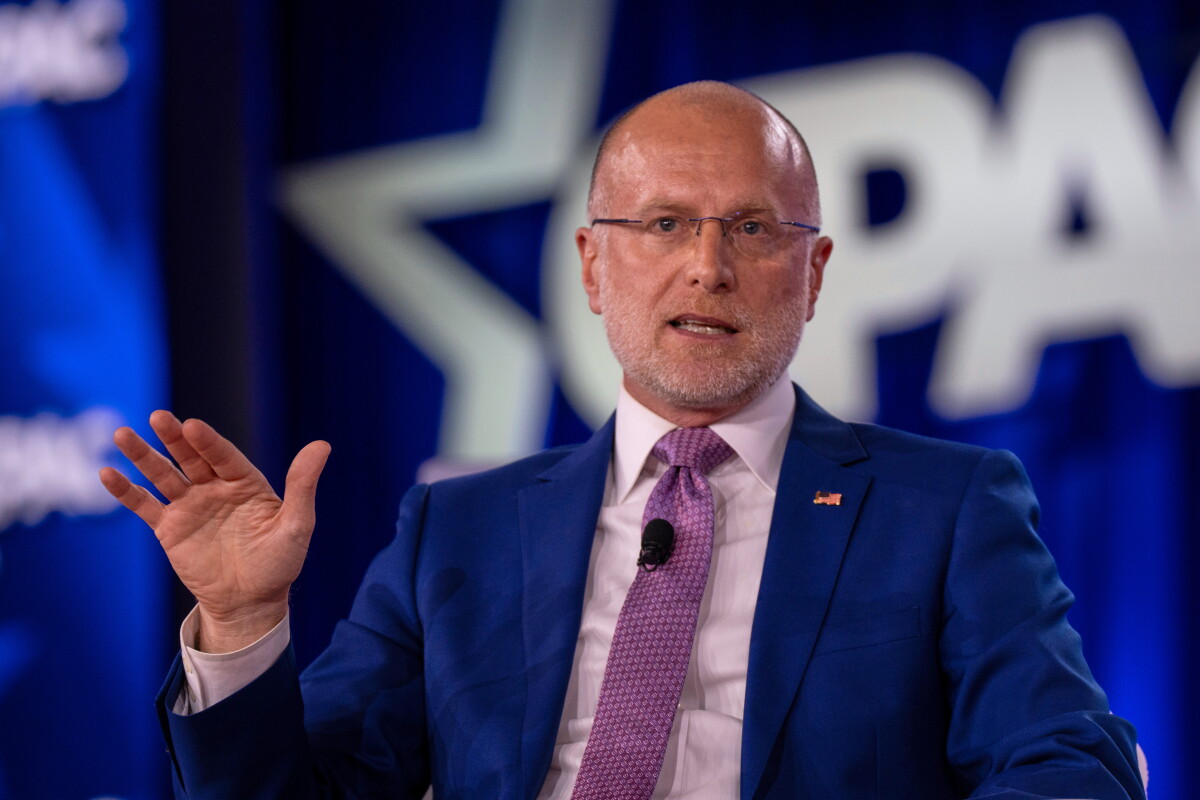
FCC Commissioner Anna Gomez, the agency’s sole Democratic member, has urged U.S. broadcasters to resist what she describes as growing political pressure from the Trump administration and FCC Chairman Brendan Carr. Her comments followed Carr’s warning that licensed broadcasters could face regulatory scrutiny if they deliberately air fabricated election polling. Gomez argues that such warnings could discourage networks from reporting polls unfavorable to the administration. The dispute also involves the FCC’s unusual early review of eight Disney-owned ABC television licenses, which the agency says stems from a regulatory investigation while Gomez says it is part of a broader pressure campaign.
A Democratic member of the United States Federal Communications Commission has urged television and radio broadcasters to resist what she described as escalating political pressure from the Trump administration, warning that threats of regulatory action over election polling and editorial decisions could discourage news organizations from airing information unfavorable to the government ahead of the November 3 congressional elections.
FCC Commissioner Anna Gomez, the agency’s only Democratic member, delivered the warning Friday during remarks to the National Association of Broadcasters, arguing that the industry has responded too cautiously to actions by FCC Chairman Brendan Carr and other administration officials that she says threaten broadcasters’ editorial independence and First Amendment protections.
Gomez focused particularly on Carr’s recent suggestion that licensed broadcasters could face regulatory scrutiny for airing polling he considers false or deliberately designed to influence voter behavior. Carr said Wednesday that networks could potentially violate their obligations under federal broadcast rules by airing what he described as “entirely fake polls” intended to suppress or distort political participation.
Carr did not identify a particular poll that he believed had been fabricated, nor did he publicly present evidence that a broadcaster had knowingly falsified polling data. His remarks instead raised the possibility that the FCC’s longstanding news-distortion policy could be applied if broadcasters deliberately aired manipulated information.
Gomez strongly disputed the suggestion that unfavorable or inaccurate polling would normally provide a legitimate basis for FCC enforcement. She argued that even flawed polling is not automatically equivalent to deliberate news distortion and warned that threatening broadcasters with government scrutiny could encourage networks and local stations to avoid legitimate reporting rather than risk regulatory consequences.
Her concern centers on the difference between an inaccurate prediction and intentional manipulation. Election polls routinely produce different results because of variations in methodology, sampling, timing and voter turnout assumptions. A poll that ultimately fails to predict an election accurately is not necessarily fraudulent, and Gomez argued that federal regulators should not treat ordinary disagreements about polling as potential licensing violations.
The dispute has emerged less than two weeks before the November 3 midterm elections, increasing the political sensitivity of the FCC chairman’s comments. Control of Congress is at stake, and polling remains one of the most closely watched forms of political coverage as broadcasters attempt to assess voter attitudes toward President Donald Trump, Republican candidates and the Democratic opposition.
Trump has repeatedly criticized opinion polls that show declining approval ratings or unfavorable results for Republican candidates and has publicly argued that some surveys are manipulated or politically motivated. He has also called for tougher action against news organizations and broadcasters that he accuses of unfair coverage.
Carr, a Trump appointee who became FCC chairman after the president returned to office, has taken a more aggressive approach toward broadcast regulation than several recent predecessors. His supporters argue that the agency is enforcing obligations that have long applied to companies using publicly licensed airwaves, while critics including Gomez contend that the FCC is increasingly using its regulatory authority in ways that risk influencing political speech.
The FCC occupies an unusual position in the American media system because traditional over-the-air television and radio stations operate under federal licenses. Unlike newspapers, cable television channels, streaming platforms and most online publishers, broadcasters use public spectrum allocated by the federal government and are therefore subject to specific FCC rules and public-interest obligations.
That regulatory framework gives the government authority over issues including technical operations, political advertising requirements, ownership rules and license renewals. It does not, however, give the FCC general authority to decide which political opinions broadcasters may express or which legitimate news stories they may report.
The First Amendment sharply limits government interference with editorial decisions. Courts have historically recognized that broadcasters can be regulated in certain ways because of their use of scarce public spectrum, but federal agencies cannot simply punish a television or radio station because officials dislike its political coverage.
The FCC’s news-distortion policy is similarly narrow. It is intended to address deliberate falsification or manipulation of significant news events rather than ordinary journalistic mistakes, editorial disagreement or reporting that government officials consider politically inconvenient.
Under longstanding FCC standards, allegations of news distortion generally require evidence that a broadcaster intentionally manipulated or falsified information and that the alleged misconduct involved management or employees responsible for the station’s news operations. The policy was not designed to allow regulators to evaluate every disputed news judgment or political prediction.
Gomez said Carr’s comments about election polling risk expanding that policy far beyond its traditional purpose. She argued that if broadcasters begin to believe their licenses could come under scrutiny simply for airing polls that later prove inaccurate or that the administration considers hostile, the result could be self-censorship.
Her concern is that the threat itself could influence editorial behavior even if the FCC never ultimately revokes a license or imposes a penalty. Television executives, station owners and journalists may decide that avoiding a politically controversial interview, poll or segment is safer than entering a prolonged regulatory dispute with an agency that controls broadcast licenses.
Gomez has made that argument repeatedly throughout 2026. In several public statements, she has accused the FCC leadership of creating what she calls a campaign of censorship and control over broadcasters. Those allegations represent Gomez’s assessment of the agency’s actions and are strongly disputed by Carr, who says the FCC is carrying out legitimate enforcement responsibilities.
The conflict has already extended beyond election polling.
In April, the FCC ordered The Walt Disney Company and its ABC subsidiaries to submit eight television-station licenses for early renewal, even though the stations would not ordinarily have faced renewal proceedings until 2028 or later.
The unusual step immediately attracted scrutiny because broadcast license renewals typically occur on predictable schedules. Calling licenses in early can impose additional legal costs and regulatory uncertainty on broadcasters, particularly if the review remains unresolved for an extended period.
Official FCC documents show that the agency said the early renewal process formed part of an investigation into whether Disney’s ABC stations had complied with federal law and agency rules, including antidiscrimination requirements. The FCC said it had been examining Disney’s employment practices and responses to agency information requests for more than a year.
Carr has rejected accusations that Disney was singled out because of its news coverage or political speech. In correspondence defending the agency’s actions, he said FCC staff had repeatedly requested information from Disney and believed some company responses were inadequate, nonresponsive or incomplete.
The chairman has also noted that the FCC has used early license-review procedures involving other broadcasters, arguing that the agency has not created a process exclusively for Disney.
Gomez sees the matter differently. She has publicly characterized the Disney proceeding as an example of government pressure on a media company and has welcomed Disney’s decision to challenge the FCC in court.
Her criticism became more intense after episodes involving political interviews on ABC and CBS programming. Gomez argued in separate statements that broadcasters had altered or withheld programming because companies feared regulatory consequences, although the precise motivations behind individual network decisions remain contested.
The broader dispute exposes a difficult question at the intersection of broadcast regulation and press freedom: when does legitimate government oversight of licensed stations become political interference in editorial decisions?
Carr and his supporters say broadcasters are different from newspapers or purely online media because television and radio stations receive valuable public spectrum licenses and must comply with federal rules. From that perspective, reminding stations of their regulatory obligations does not by itself violate the Constitution.
Gomez argues that the government cannot use those licensing powers as leverage over news coverage. She contends that a broadcaster’s dependence on an FCC license makes threats of investigations or unusual renewal proceedings particularly powerful because companies may choose to avoid confrontation even when their underlying journalism is legally protected.
The National Association of Broadcasters has increasingly found itself between those competing positions.
NAB President Curtis LeGeyt welcomed Gomez’s defense of broadcasters’ First Amendment rights and said the organization would continue working to protect television and radio stations from inappropriate government interference. At the same time, the association has historically maintained working relationships with FCC leadership from both political parties because the commission makes decisions affecting nearly every major aspect of the broadcast business.
The NAB previously expressed concern about the early review of Disney’s ABC licenses, warning that unpredictable licensing procedures could create instability for station owners. Broadcasters depend on license certainty for long-term investment, financing, employment and programming decisions.
A regulatory environment in which stations believe their licenses can be unexpectedly called for review could create consequences beyond political journalism. It could affect acquisitions, advertising, lending arrangements and the value of broadcast assets.
Gomez’s latest intervention was therefore also aimed at the industry’s institutional response. She urged broadcasters and their principal lobbying organization to challenge the FCC more aggressively rather than relying on quiet negotiations.
She argued that an industry whose core business depends on editorial freedom should not remain silent when regulators make statements that could be interpreted as threats tied to political coverage.
The tension surrounding election polls has added urgency to that argument.
Political polling is a routine part of American election journalism. Networks frequently commission their own surveys, partner with polling organizations or report surveys produced by universities, newspapers, research firms and political groups.
Polls vary in quality and methodology. Reputable news organizations typically disclose information such as sample size, margin of error, field dates and methodology so audiences can evaluate the results.
Disagreement about whether a poll is accurate is common, particularly in close elections. Campaigns routinely attack polls showing them behind while highlighting surveys that place them ahead.
That political tradition differs significantly from proving that a broadcaster deliberately falsified data.
Carr’s suggestion that knowingly fabricated or suppressive polling could potentially trigger FCC scrutiny therefore raises two separate issues. Few would dispute that a broadcaster intentionally inventing polling numbers while presenting them as genuine would raise serious journalistic concerns. The more difficult question is how regulators would distinguish intentional deception from ordinary methodological disagreements or unexpected election outcomes.
Gomez said that distinction must remain clear if broadcasters are to report political information without fearing that government officials will later judge their editorial choices based on whether they helped or hurt a particular administration.
The controversy also comes as the FCC has changed its approach to political broadcasting rules in other areas.
Earlier this year, the agency increased scrutiny of the longstanding “bona fide news interview” exemption that has allowed certain talk shows, late-night programs and daytime television programs to interview political candidates without automatically triggering equal-time obligations for their opponents.
Gomez objected to that shift as well, arguing that the commission was creating uncertainty around rules that broadcasters had relied on for decades.
Equal-time rules generally require licensed broadcasters that provide airtime to a legally qualified political candidate to offer comparable opportunities to opposing candidates. There are exemptions for bona fide newscasts, news interviews, documentaries and on-the-spot coverage of news events.
The FCC’s treatment of entertainment programs containing political interviews has historically depended on whether editorial decisions are based on genuine newsworthiness rather than an attempt to promote one candidate.
The current commission’s more skeptical treatment of some programming has prompted broadcasters to reassess political interviews on shows that combine news, entertainment and commentary.
Gomez argues that the combined effect of those actions, the Disney license review and the latest polling warnings creates a climate in which broadcasters may make editorial decisions based partly on fear of federal retaliation.
Carr has rejected similar accusations in the past.
He has said claims that the FCC threatened to revoke broadcast licenses over programming decisions have been exaggerated or false and has emphasized that broadcasters remain subject to laws and regulations enacted by Congress and implemented by the commission.
Carr has also argued that the public-interest obligations attached to broadcast licenses distinguish local television stations from cable channels, podcasts and internet platforms.
That legal distinction is real, but the extent to which it permits the FCC to investigate election-related content remains contested.
Any major enforcement action based on political polling would almost certainly face significant legal scrutiny, particularly if broadcasters argued that the agency was retaliating against constitutionally protected speech.
Courts could be asked to determine whether the FCC had applied its rules neutrally or whether government officials were using regulatory powers to influence political coverage.
The possibility of litigation is not hypothetical. Disney’s ABC has already challenged the FCC over the early license-review process, turning part of the broader dispute into a legal battle over agency authority and constitutional protections.
The outcome of that litigation could have consequences for broadcasters well beyond Disney because it may clarify how aggressively the FCC can use licensing proceedings when a network or station is also engaged in politically sensitive journalism.
The dispute also has implications for public confidence.
Americans increasingly receive political news through a fragmented media environment that includes broadcast networks, cable television, podcasts, social media, streaming platforms and independent online publishers.
Traditional broadcasters remain particularly important for local news and election coverage, however, especially in communities where local television stations remain the primary source of information about candidates, voting procedures and emergency developments.
Government actions that appear to threaten those stations can therefore raise broader concerns about whether viewers are receiving information shaped by independent editorial judgment or by fear of regulatory consequences.
At the same time, broadcasters face their own obligation to maintain professional standards. Polling should be presented with appropriate context, methodology and uncertainty, and news organizations can legitimately be criticized when they exaggerate unreliable surveys or fail to disclose important limitations.
The central issue raised by Gomez is whether those standards should be enforced primarily through journalism and public accountability or through threats from a federal licensing agency.
Her position is that the government should not become the arbiter of political polling or use broadcast licenses to influence editorial judgments.
Carr’s office did not immediately respond to Reuters’ request for comment on Gomez’s Friday remarks.
That leaves their existing public positions sharply opposed.
Gomez says the broadcast industry is facing an escalating pattern of government pressure capable of chilling protected journalism. Carr says the FCC is enforcing legal obligations that apply to licensed broadcasters and has rejected claims that his agency is improperly censoring networks.
The National Association of Broadcasters has signaled that it will defend broadcasters’ constitutional rights while continuing to engage with the commission on regulatory issues.
The debate is likely to remain especially intense through Election Day because television networks and local stations will continue broadcasting polls, candidate interviews, campaign advertising and political analysis.
Any FCC action against a broadcaster during that period would face heightened scrutiny over whether it was based on neutral application of the law or political disagreement with coverage.
For now, Carr has warned that intentionally fabricated election polling could raise regulatory concerns, but no specific broadcaster has been publicly accused by the chairman of deliberately manufacturing a poll, and no enforcement action based on such polling has been announced.
Gomez’s warning therefore concerns the potential chilling effect of the threat as much as any punishment already imposed.
The distinction is central to the dispute. The FCC does have regulatory authority over licensed broadcasters, and the agency has a longstanding news-distortion policy. But that authority exists alongside constitutional protections designed to prevent the government from controlling political journalism.
As Americans approach the November 3 elections, the argument inside the FCC is increasingly about where that boundary lies.
Gomez wants broadcasters to challenge the commission whenever they believe it is crossing into editorial interference. Carr maintains that broadcasters cannot invoke the First Amendment to escape legitimate regulatory obligations attached to their licenses.
The courts, Congress and the broadcast industry may ultimately have significant roles in resolving that conflict.
Until then, Gomez’s Friday remarks have transformed an internal disagreement at the federal communications regulator into a broader warning to the American media industry: she believes broadcasters should resist government pressure now rather than allow uncertainty over licenses and investigations to shape what voters see and hear before they cast their ballots.