FIVE SHOT, ONE DEAD IN WASHINGTON DC AS POLICE RESPOND TO ACTIVE SHOOTER NEAR LOGAN CIRCLE
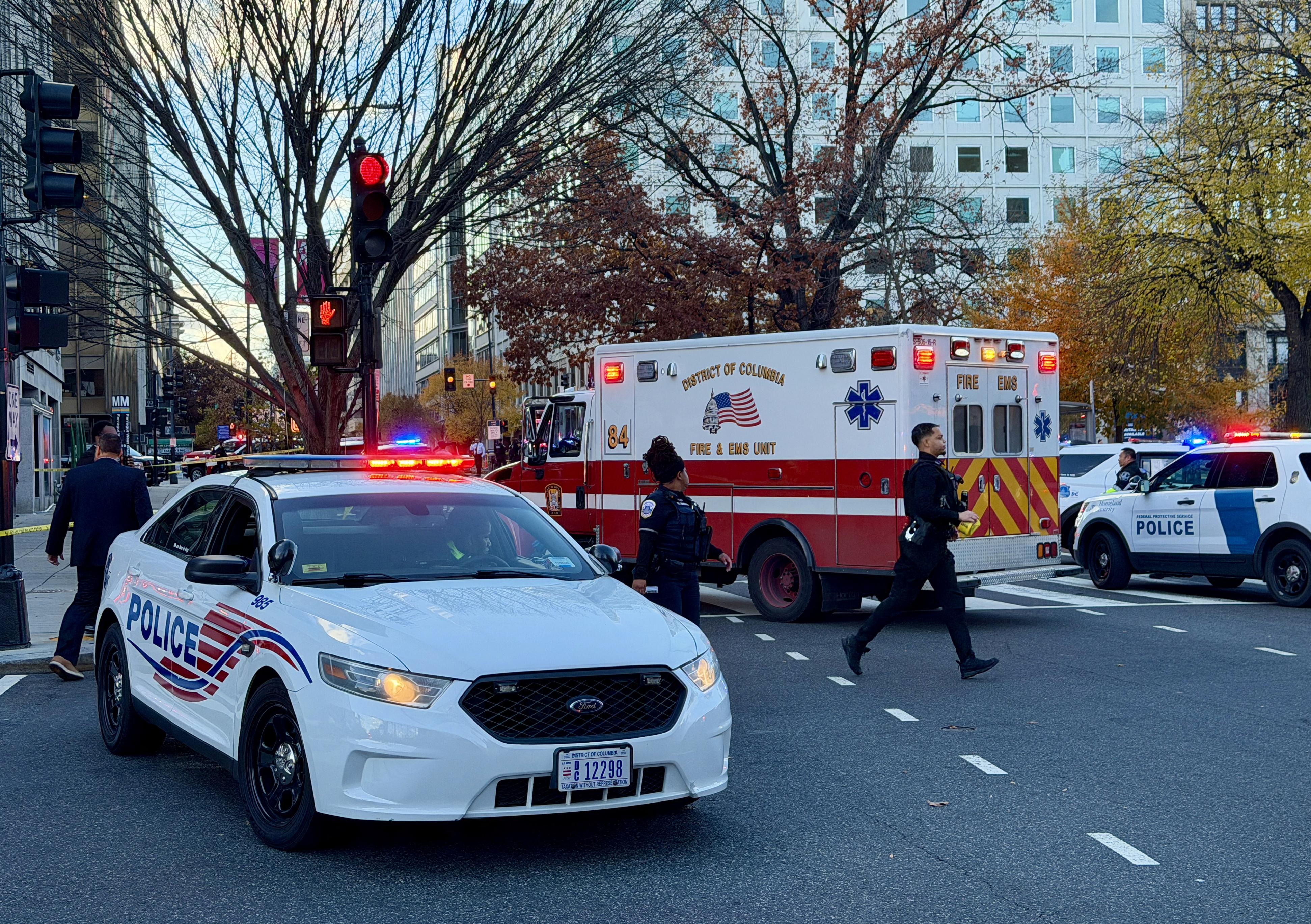
At least five people have been shot and one person has been reported dead after gunfire erupted near Logan Circle in central Washington, DC, during Thursday morning’s rush hour. Police said victims were found at multiple locations around 15th Street NW and P Street NW, including in or near a VIDA Fitness gym, while a suspected attacker was reported barricaded nearby. SWAT teams, the FBI and ATF joined the Metropolitan Police Department response as surrounding streets were closed and nearby schools placed on lockdown.
At least five people have been shot and one person has been reported dead after gunfire erupted Thursday morning in Washington, DC’s busy Logan Circle neighborhood, triggering a major police response, school lockdowns and emergency closures in an area located roughly a mile from the White House. The Metropolitan Police Department said officers were called shortly before 8 a.m. to the vicinity of 15th Street NW and P Street NW, where multiple victims were found at different locations as police began responding to what authorities described as an active shooting situation. The attack unfolded during the morning rush hour in one of central Washington’s most heavily used residential and commercial districts, sending residents, commuters and businesses scrambling for safety while heavily armed officers moved through the area.
Police initially confirmed that at least five people had been shot, although the conditions of the victims were not immediately released. Subsequent reporting from local authorities and witnesses indicated that at least one victim died from injuries sustained during the attack, while several others were taken for emergency medical treatment. The precise conditions of the remaining victims were still being clarified as hospitals, police and emergency responders worked to establish the full casualty count and notify relatives.
The shooting occurred near Logan Circle, an area known for apartments, restaurants, retail businesses, gyms and offices and located within walking distance of central Washington landmarks. Police said the first reports came from the 1500 block of 15th Street NW near the intersection with P Street NW, where officers encountered multiple shooting scenes rather than a single isolated location. That detail immediately complicated the initial response because investigators had to determine whether the victims had been shot by one attacker moving through the area or whether the incident involved several separate confrontations.
One of the victims was found inside or near VIDA Fitness, a prominent gym in the neighborhood, according to witnesses and reporting from the scene. A person inside the gym told the Associated Press that a man had been shot in the neck and later died, while gym users fled after hearing gunfire both inside and outside the building. Police had not immediately confirmed all details of the witness account, but the report provided the first indication that at least part of the violence occurred in or around the fitness centre rather than entirely on the street.
The broader scene quickly expanded as Metropolitan Police officers sealed off surrounding blocks and urged residents to remain indoors. Emergency alerts warned people to stay away from the 1500 block of 15th Street while officers searched buildings, rooftops and nearby streets. Local residents described hearing several loud bangs shortly before 8 a.m. and initially mistaking the sounds for construction before seeing a large police deployment and emergency vehicles converging on the area.
Police later reported that the suspected attacker had barricaded himself in the vicinity, prompting the deployment of tactical officers and specialised units. SWAT teams moved toward a nearby apartment building while heavily armed officers established security perimeters around the neighborhood. Authorities had not immediately announced that the suspect was in custody, meaning the situation remained active while officers attempted to determine his exact location and bring the confrontation to an end without further casualties.
The Metropolitan Police Department also circulated a preliminary description of a possible suspect during the early stages of the response. Authorities described the individual as a white man wearing gray shorts and carrying what appeared to be a gray and black firearm, although police had not yet publicly confirmed the suspect’s identity or whether the individual matching that description was responsible for all five shootings. Investigators were expected to use surveillance footage, witness accounts and evidence recovered from the scene to establish a clearer sequence of events.
The lack of an immediate motive added to the uncertainty surrounding the attack. Police had not announced whether the shooting was connected to a personal dispute, workplace conflict, targeted attack or random act of violence. Investigators were therefore treating the scene as an active criminal investigation while avoiding early conclusions about why the victims were targeted or whether the gunman knew any of them.
Federal law enforcement agencies joined the response because of the scale and location of the incident. Agents from the Bureau of Alcohol, Tobacco, Firearms and Explosives were deployed to assist local police, while the FBI’s Washington Field Office also provided support. Their involvement is common in serious shootings involving multiple victims, particularly where firearms tracing, tactical assistance or broader intelligence support may be required.
The proximity to the White House heightened public attention, although authorities had not indicated that the attack was connected to the president, the federal government or any political institution. Logan Circle is located approximately one mile from the White House, and the shooting unfolded in a part of the capital that contains government offices, embassies, residential buildings and major commercial corridors. Security around federal sites was therefore closely monitored while police handled the immediate threat.
Nearby schools were placed on lockdown as officers searched for the shooter and established containment zones. Administrators instructed students and staff to remain inside while police activity continued outside, and parents were advised not to approach affected buildings until authorities determined it was safe. School lockdowns in such situations are designed to reduce movement through an active crime scene and prevent civilians from entering areas where a suspect may still be armed.
Traffic was also disrupted across parts of central Washington as streets around Logan Circle were closed or restricted. Commuters approaching the area encountered police vehicles, barricades and emergency personnel while officers redirected motorists and pedestrians away from the shooting scene. Public transportation was affected as buses and other services adjusted routes around the police perimeter.
Witnesses described a chaotic morning in which emergency sirens and helicopters rapidly replaced the normal rush hour activity. Residents living near the scene said they watched officers move between buildings and establish firing positions while investigators attempted to determine whether the gunman remained inside a structure or was moving through the neighborhood. The uncertainty created an atmosphere of fear even among people several blocks away because police repeatedly warned residents not to leave their homes.
The shooting also renewed discussion about gun violence in the District of Columbia. Washington has experienced significant fluctuations in violent crime over recent years, with local officials and federal authorities frequently debating the effectiveness of policing strategies, gun enforcement and public safety measures. The city has recorded periods of sharp declines in some categories of violent crime while still experiencing high profile shootings capable of generating widespread concern.
Logan Circle itself is generally regarded as a busy mixed residential and commercial neighborhood rather than one of the District’s areas most commonly associated with persistent gun violence. That made the scale of Thursday’s attack particularly jarring for residents and workers who regularly use the area. The concentration of restaurants, shops, gyms and residential buildings means the streets are heavily populated during both morning and evening hours, increasing the potential danger whenever gunfire occurs in public.
The location around 15th and P Streets is also highly pedestrianised. People travel through the area on foot to nearby offices and Metro stations, while cyclists and buses use several major routes nearby. A shooting during the morning commute therefore created immediate risks not only for the intended victims but also for bystanders who could have been caught in crossfire.
Police were expected to examine surveillance cameras from businesses and residential buildings throughout the neighborhood. Logan Circle contains extensive private security infrastructure, and video from gyms, shops, apartment entrances and traffic systems could provide investigators with a detailed record of the suspect’s movements before and after the shooting. Such footage may prove especially important if the attack occurred across multiple locations.
Investigators will also need to determine whether a single firearm was used and how many shots were fired. Ballistic evidence collected from spent shell casings and recovered bullets can help establish whether all victims were struck by the same weapon and whether additional firearms may have been involved. That work is likely to continue after the immediate tactical operation concludes.
The identity of the deceased victim had not been publicly released at the time of early reporting. Authorities generally withhold names until relatives have been notified and investigators are satisfied that public identification will not interfere with the case. The identities of the surviving victims were also not immediately available, and police had not provided demographic details beyond the total number injured.
Medical teams transported victims to local hospitals while emergency personnel remained positioned near the crime scene in case additional casualties were discovered. Washington’s emergency medical services routinely coordinate with multiple trauma centres during mass casualty incidents, allowing patients to be distributed according to the severity of their injuries and available hospital capacity. The final condition of the wounded may therefore take time to establish as doctors complete examinations and emergency procedures.
The barricade situation became one of the most important developments because it suggested officers believed the suspected gunman remained armed and potentially capable of further violence. Negotiators and tactical teams are typically used in such incidents to establish communication, reduce the risk of additional gunfire and persuade a suspect to surrender. Authorities had not immediately disclosed whether they had made direct contact with the person believed to be barricaded.
The presence of nearby apartments further complicated the tactical response because police had to consider the safety of residents who might still be inside. Officers may need to evacuate adjoining units or instruct residents to shelter in place depending on the suspect’s location and the structure of the building. Those decisions are made carefully because moving civilians through an active shooting scene can sometimes create additional danger.
Federal agents were also expected to assist with firearms tracing once the weapon or weapons involved were recovered. ATF specialists can use serial numbers and transaction records to determine when a firearm was originally purchased and whether it was legally acquired, stolen or transferred through multiple owners. That information could become relevant if investigators discover that the shooter had previous criminal or legal restrictions involving firearms.
Authorities will also examine the suspect’s communications and digital history if a person is arrested. Phone records, social media activity and messages can sometimes help investigators identify motive, planning or connections to victims. However, no evidence had emerged in the initial hours suggesting that the shooting was politically motivated or connected to terrorism, and officials had not publicly characterised it in those terms.
The White House and federal security agencies were expected to monitor developments because of the location, but there was no indication that protective operations around the president had been directly affected. Washington routinely maintains heightened security around government buildings, and serious incidents within the central city can trigger additional precautions even when there is no known connection to federal officials.
The attack occurred against a broader backdrop of heightened public discussion about safety in the capital. President Donald Trump has repeatedly focused attention on crime in Washington, and federal law enforcement and National Guard personnel have maintained a visible presence in parts of the city following previous security deployments. Thursday’s shooting is likely to intensify that political debate, although investigators have not yet established facts that would support broader conclusions about why this specific attack occurred.
Local officials have generally emphasised that serious crimes should be evaluated through verified data and specific investigations rather than used to draw immediate conclusions about entire neighborhoods or the city as a whole. The priority for police on Thursday remained identifying the shooter, securing the scene, supporting victims and determining whether additional threats existed.
Residents around Logan Circle were advised to continue following emergency instructions until police announced that the area was secure. Businesses inside the perimeter were likely to remain closed or inaccessible while investigators documented evidence and tactical units completed their operation. Even after the suspect is captured or otherwise contained, the streets may remain blocked for hours while forensic teams process the scene.
The investigation is likely to involve several separate crime scenes because victims were found at multiple locations. Each area must be photographed, measured and searched for evidence before police can reopen the streets. Investigators will also interview witnesses separately to compare accounts and reconstruct the sequence of events.
Witness testimony may become especially important in determining whether the gunman appeared to target specific individuals. People inside the gym or standing near the street could have observed conversations, arguments or movements immediately before the shots were fired. Such details may help distinguish between a targeted attack and indiscriminate violence.
Police will also examine whether the suspect entered the gym intentionally or whether victims fled inside after being shot outside. Early witness accounts were still being reconciled, and the Metropolitan Police Department had not yet issued a complete timeline. That uncertainty is common during rapidly developing mass shooting investigations because initial reports from multiple locations can be incomplete or contradictory.
The number of victims could also change as authorities continue their work. Police initially reported four people shot before updating the figure to five, demonstrating how rapidly information evolved during the morning. Authorities may revise casualty numbers again if additional victims seek medical care independently or if investigators determine that some reports referred to the same individual.
For that reason, early casualty figures should be treated as provisional until police issue a final account. What is already confirmed is that at least five people were struck by gunfire and that the incident triggered a large tactical response involving local and federal agencies.
The shooting is likely to draw national attention because it occurred in the heart of the U.S. capital during the morning commute. Images of heavily armed officers and emergency vehicles in Logan Circle quickly circulated across news networks and social media, while residents shared videos showing streets blocked by police tape and tactical teams moving through the neighborhood.
Authorities urged the public not to share unverified information about the suspect’s movements because false reports can complicate active operations. During barricade and active shooter incidents, police depend on accurate communication to direct residents away from danger and avoid diverting resources toward incorrect locations.
The public was also advised not to approach the scene in an attempt to take photographs or videos. Large crowds can interfere with emergency vehicles and create additional risks if officers are still searching for an armed person.
The investigation will eventually turn toward the suspect’s background if police identify and apprehend him. Authorities will examine whether he had previous arrests, restraining orders, mental health contacts or known disputes with any of the victims, but such information should not be assumed before investigators make it public.
Questions will also arise about how the suspect obtained the firearm and whether any warning signs preceded the attack. Those issues frequently become part of the broader public debate after mass shootings, but meaningful answers depend on evidence rather than speculation in the hours immediately following an incident.
For the victims and their families, the priority remains medical treatment and notification. One family is already facing the reported death of a loved one, while others are awaiting information about relatives being treated for gunshot injuries. The emotional impact of such violence often extends far beyond those directly wounded, affecting witnesses, coworkers and residents who experienced the attack at close range.
The gym community is also likely to be deeply affected because a location associated with routine exercise and daily activity suddenly became part of an active shooting scene. Businesses that experience serious violence often remain closed while investigators work and may later provide counselling or support services for employees and customers.
Washington officials are expected to provide additional updates as investigators confirm the suspect’s status, motive and the victims’ conditions. Until then, the most important facts remain that five people were shot near Logan Circle, at least one person has died, police believe a suspect barricaded himself nearby and a major tactical operation is underway.
The incident remains a developing story, and details could change as the Metropolitan Police Department releases new information. The identity of the attacker, the motive, the relationship between the victims and the precise sequence of the shootings had not been established publicly in the initial hours.
What is already clear is that the shooting transformed a busy morning in central Washington into a major emergency within minutes. Streets normally filled with commuters were sealed off, schools locked down, businesses closed their doors and local and federal officers converged on the area as residents sheltered inside.
The attack also underscores how quickly an isolated act of gun violence can disrupt an entire urban district. Because Logan Circle sits near government offices, residential buildings, commercial centres and major transport routes, the effects spread well beyond the immediate crime scene.
As authorities work to secure the neighborhood and establish what happened, the focus will increasingly shift from the tactical response to the investigation. Police will need to determine why the gunman opened fire, whether the victims were deliberately targeted and whether anyone else assisted or knew about the attack in advance.
Those answers will take time, but the immediate human toll is already clear. At least five people were struck by gunfire during a morning when residents and workers were simply beginning their day, and at least one has lost their life. Washington now faces another difficult investigation as officials attempt to understand how violence erupted in one of the capital’s busiest central neighborhoods and whether any warning could have prevented it.