
GHANA AUDIT SERVICE LAUNCHES DIGITAL TRACKER AS GH¢280.5 MILLION IN SURCHARGES REMAINS UNPAID
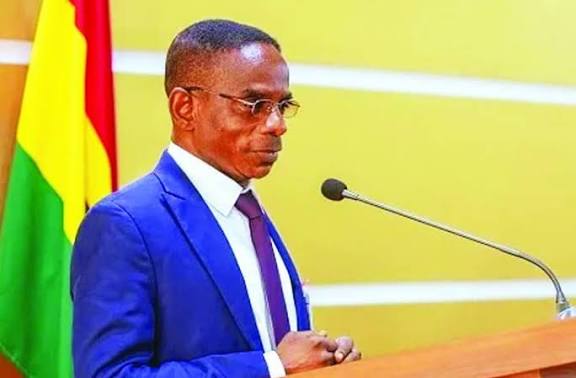
The Ghana Audit Service will launch a new online tracker in October to monitor the implementation of audit recommendations and recovery of public funds as GH¢280.5 million in surcharges remains unpaid. Auditor General Dr. Pamela Graham says the platform will expose outstanding recommendations, delays and amounts identified for recovery.
The Ghana Audit Service is preparing to launch a new online tracking platform as authorities intensify efforts to follow up on audit findings and recover millions of cedis owed to the state.
Auditor General Dr. Pamela Graham announced that the platform will become operational in October 2026 and will allow the Audit Service to monitor whether public institutions are implementing recommendations contained in audit reports.
The announcement comes as Abena Osei Asare, Chairperson of Parliament's Public Accounts Committee, disclosed that GH¢280.5 million in surcharges arising from audit reports remains uncollected.
According to Osei Asare, about GH¢57.2 million has been recovered through the Auditor General's recovery accounts since 2022 as of February 2026.
The figures underline a persistent challenge facing Ghana's public financial accountability system. Audit irregularities may be identified and reported, but recovering money and ensuring institutions implement corrective measures can take significantly longer.
NEW TRACKER WILL FOLLOW MONEY AND RECOMMENDATIONS
The digital platform was developed internally by the Ghana Audit Service and is intended to provide a clearer picture of what happens after an audit report is issued.
It will identify recommendations that have been implemented and those that remain outstanding.
Where recommendations have not been implemented, the system will also provide information explaining the delays.
Crucially, the platform will track recoverable amounts identified by auditors, amounts being pursued and money eventually recovered.
It will also provide information on corrective, administrative and disciplinary measures taken following audit findings.
Graham said the system should help identify weaknesses within public institutions that continue to expose state resources to financial risk.
She emphasized that producing an audit report should not represent the end of the accountability process.
GH¢280.5 MILLION STILL UNCOLLECTED
The scale of outstanding surcharges has increased attention on enforcement.
Osei Asare said information provided by the Audit Service showed that GH¢280.5 million in surcharges remains uncollected.
She argued that identifying financial irregularities and debating audit findings in Parliament are insufficient if authorities fail to follow through with recovery and enforcement.
The Public Accounts Committee plays an important role in examining Auditor General reports and questioning public institutions over financial irregularities.
The new tracking system could provide another mechanism for monitoring whether institutions and individuals actually respond to recommendations after those hearings.
AUDIT SERVICE SAYS GH¢17.6 BILLION RECOVERED
Graham also disclosed that the Audit Service has recovered GH¢17.6 billion and prevented approximately GH¢11.7 billion in wrongful payments.
The Service is planning additional changes to strengthen the country's auditing system.
These include conducting interim audits at selected institutions so problems can be identified earlier instead of accumulating until the end of the financial year.
The Audit Service also intends to expand the use of data analytics and forensic tools.
Artificial intelligence will also be incorporated under appropriate controls.
Where sufficient data is available, auditors could examine entire sets of transactions rather than relying primarily on smaller samples.
AUDITOR GENERAL PROMISES TO USE SURCHARGE POWERS
Graham said she intends to exercise the constitutional powers of the Auditor General to disallow expenditure and impose surcharges where public money has been spent contrary to law.
Under the process outlined by the Auditor General, a person facing a surcharge would first receive a notice of intention and have 14 days to respond.
If the response is considered unsatisfactory, a disallowance and surcharge certificate can be issued.
Copies would also be sent to the relevant institution and the Attorney General.
The affected person would then have 60 days to appeal the surcharge.
The combination of stronger enforcement and digital tracking could make it easier to determine whether money identified in audit reports is eventually recovered and whether institutions responsible for financial irregularities take corrective action.