GHANA INTENSIFIES SCRUTINY OF FOREIGN RECRUITMENT NETWORKS AND MAJOR INFRASTRUCTURE PARTNERSHIPS
Ghana is intensifying scrutiny of foreign partnerships as authorities investigate alleged recruitment networks that have drawn Ghanaians into Russia’s war in Ukraine while policymakers push for stronger oversight of major infrastructure and investment agreements. Government figures have indicated that 272 Ghanaians were reported recruited into the conflict, with the reported death toll later rising to 62 and 15 people missing. Russia denies deliberately conducting unlawful recruitment of African nationals. Separately, the IMF has urged Ghana to strengthen procurement compliance, independent project reviews and transparency around major infrastructure investments to limit fiscal and governance risks.
Ghana is facing renewed pressure to strengthen oversight of its relationships with foreign governments, companies and international partners as authorities attempt to dismantle alleged recruitment networks sending young Ghanaians into Russia’s war in Ukraine while policymakers and civil society groups simultaneously demand greater transparency over major infrastructure, industrial and investment agreements. The two issues involve very different legal and policy questions, but together they have intensified a broader national debate over how Ghana protects its citizens, evaluates foreign commitments and ensures that international partnerships produce measurable benefits without exposing the country to hidden security, financial or governance risks.
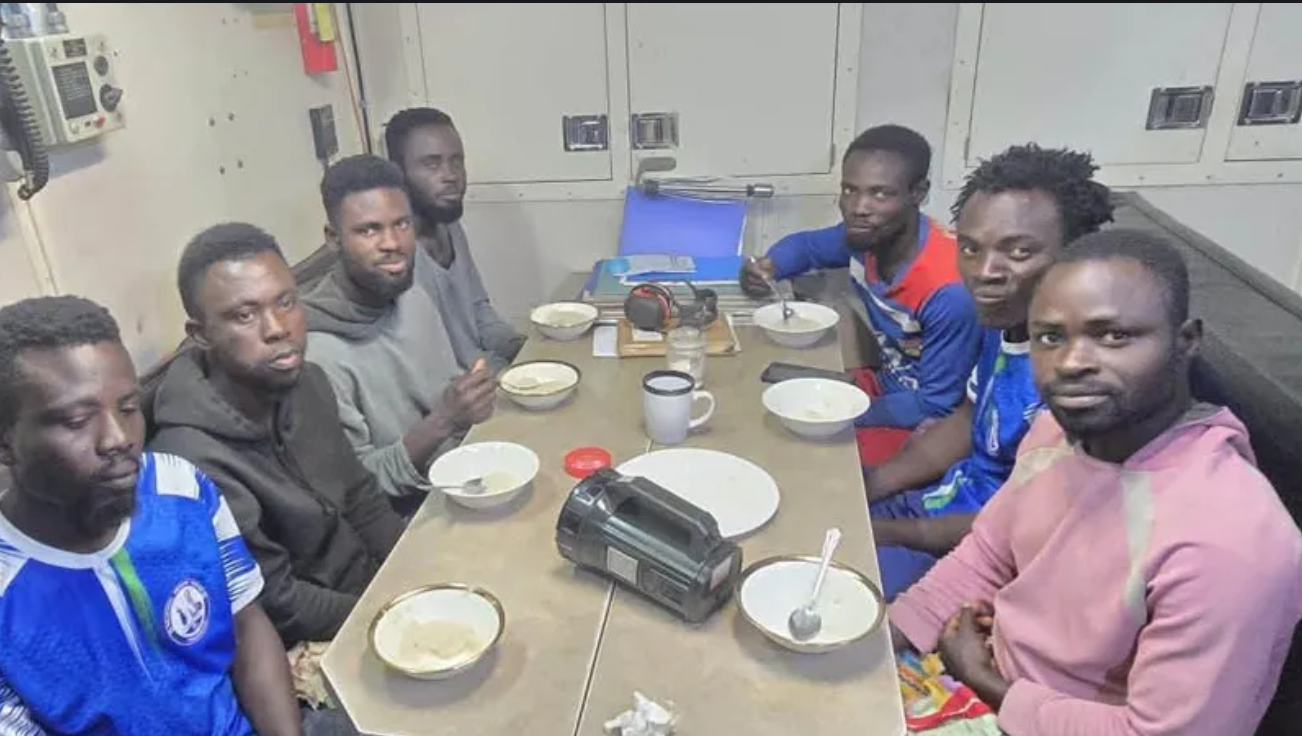
The most immediate security concern involves the reported recruitment of Ghanaian nationals into Russian military service through networks that Ghanaian authorities say have used misleading overseas employment offers and other deceptive methods. Foreign Affairs Minister Samuel Okudzeto Ablakwa said government investigations identified 272 Ghanaians believed to have been drawn into the Russia-Ukraine conflict, many after responding to advertisements promising civilian employment in areas such as construction, logistics, hospitality and security. By August, the government said the number of Ghanaian deaths associated with the conflict had risen to 62, while 15 other citizens remained missing.
Ghana has responded through a combination of domestic investigation, diplomatic engagement and public warnings. Security agencies have been tasked with identifying individuals and networks involved in recruiting Ghanaians, while the Foreign Ministry has engaged authorities in Russia and Ukraine to verify the identities and welfare of citizens caught in the conflict. Ablakwa has repeatedly said Ghana does not want its young people used as combatants in a war in which the country is not a participant and has called for coordinated action to prevent further recruitment.
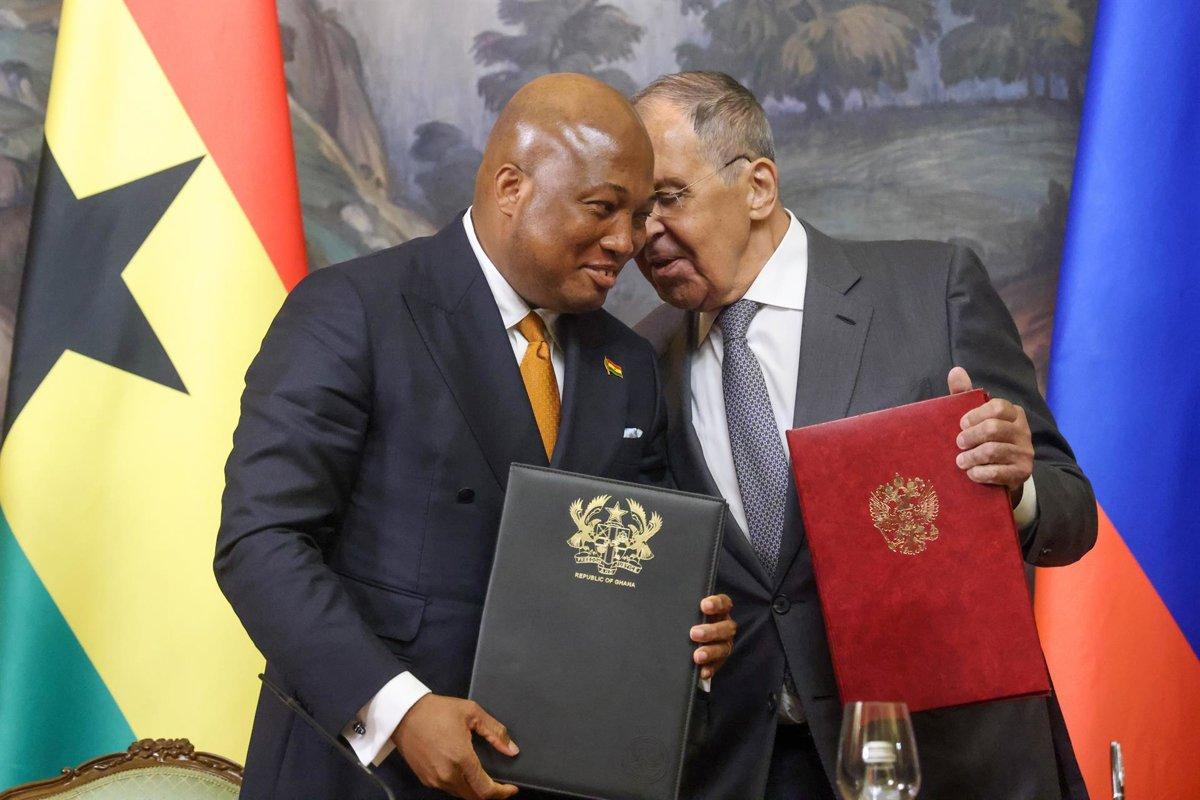
The issue featured prominently during Ablakwa’s August meeting in Moscow with Russian Foreign Minister Sergey Lavrov. Ghanaian officials said the two governments discussed the need to stop the illegal recruitment of Ghanaian citizens and improve cooperation in identifying affected nationals. The government said Russian authorities indicated a willingness to cooperate, although subsequent public discussion has focused heavily on whether diplomatic commitments will produce concrete action against recruitment networks operating online and through intermediaries.
Russia has rejected accusations that it deliberately conducts unlawful recruitment of African citizens. Russian Ambassador to Ghana Andrei Ordash said in October that Moscow does not engage in illegal enlistment of African nationals and maintained that Russian authorities would examine credible information about any Ghanaian who may have been unlawfully conscripted. The embassy’s position is that allegations of an organized Russian state policy deliberately targeting Africans through illegal recruitment are inaccurate, while Ghanaian officials and independent investigators distinguish between formal Russian government policy and networks or intermediaries alleged to be feeding foreign nationals into the Russian military.
That distinction remains important because investigations across Africa have uncovered different routes through which foreign nationals have ended up in Russian service. Some individuals reportedly understood they were signing military contracts, while others have said they were promised civilian jobs before finding themselves connected to military structures after arrival. Independent investigations have also identified online networks using temporary websites, social media advertising and employment offers to attract applicants from African, Asian and other countries.
Ghanaian authorities say many of the cases involving their citizens appear to fit the latter pattern. The government has warned young people to verify overseas employment offers before making travel arrangements, particularly where recruiters promise unusually high salaries, rapid visas or jobs requiring applicants to travel through intermediaries they cannot independently verify. The Foreign Ministry has described the problem as part of a wider challenge involving fraudulent recruitment, trafficking, forced labor and irregular migration.
The Ghanaian case is not isolated. Governments in Kenya, South Africa and other African countries have also investigated reports that citizens were deceived or recruited into military service connected to Russia’s war in Ukraine. Reuters reported earlier this year that African governments were increasingly confronting the issue but often doing so cautiously because many maintain important diplomatic, trade and security relationships with Moscow. Research groups monitoring foreign recruitment have documented hundreds of African nationals serving in Russian forces and significant numbers of deaths, although precise totals remain difficult to establish independently because battlefield records, private recruitment channels and military contracts are not fully transparent.
For Ghana, the issue has become particularly sensitive because of the number of reported casualties. What began primarily as a consular problem involving a small number of captured or stranded citizens developed into a wider national-security concern as authorities received information suggesting hundreds of Ghanaians may have entered the Russian military system. Government officials have said some recruitment activities appear to involve digital networks that are difficult to trace because websites and social-media profiles can be removed and replaced quickly.
The recruitment controversy has also prompted calls for stronger domestic regulation of overseas employment agencies and intermediaries. Ghana already has legal frameworks governing recruitment and labor migration, but enforcement becomes difficult when networks operate informally, use online platforms or move applicants through multiple jurisdictions before they reach their final destination. Security analysts have argued that a more effective response will require cooperation between immigration authorities, police, intelligence services, labor regulators, telecommunications companies and international partners.
Public education is another central part of the government’s response. Officials have urged prospective migrants to verify employment offers through legitimate channels and to avoid sending passports, money or personal information to recruiters whose identities cannot be independently confirmed. Families have also been encouraged to report suspicious recruitment activity early rather than waiting until relatives have already traveled and lost contact.
The government’s effort to dismantle the networks has become part of a broader conversation about Ghana’s relationships with major foreign powers. Russia, China, the European Union, the United States, Turkey, India and other international partners all maintain economic, diplomatic or security interests in Ghana, and successive governments have pursued investment and infrastructure agreements with a wide range of countries. Policy analysts increasingly argue that these partnerships should be judged by consistent standards rather than by geopolitical alignment.
That principle has become especially relevant in debates over foreign-backed infrastructure and industrial commitments. Ghana has signed or discussed numerous large-scale projects involving foreign financing, technology, engineering and state-to-state cooperation, but some have experienced delays, cost increases or implementation difficulties. This has strengthened calls for greater disclosure of project terms, clearer financing structures and more rigorous evaluation of whether promised investments ultimately materialize.
Recent criticism of Ghana-Russia relations has focused partly on previously announced Russian-linked proposals that have not progressed as originally anticipated. Public commentary has referenced a proposed nuclear power partnership, a Russian Export Centre financing facility and earlier railway proposals as examples of commitments whose implementation has attracted questions. These criticisms do not prove that all such agreements were improper or deceptive, but they have contributed to demands that major diplomatic announcements be evaluated against actual delivery rather than the scale of promises made at signing ceremonies.
Russia is not the only country subject to such scrutiny. Ghana has also experienced controversies surrounding infrastructure agreements involving Western governments, Chinese contractors, international lenders and multinational corporations. Projects involving roads, energy, ports, railways, mining and industrial development can carry significant long-term fiscal consequences, meaning questions about cost, procurement, local content, debt exposure and contract transparency apply regardless of the nationality of the foreign partner.
This broader governance issue has received attention from the International Monetary Fund. In its recent assessment of Ghana’s state-owned enterprise reforms, the Fund welcomed progress in improving governance but warned that weaknesses remain in financial sustainability, project planning and fiscal-risk management. The IMF specifically recommended stronger oversight of large infrastructure investments undertaken by state-owned enterprises, including independent reviews of project costs, expected benefits and implementation timelines.
The Fund also called for greater transparency through publication of annual investment plans by major infrastructure institutions and closer integration of project targets into performance-monitoring systems operated by the State Interests and Governance Authority and the Ministry of Finance. Such measures are intended to reduce the risk that ambitious infrastructure projects create hidden financial liabilities or continue absorbing public resources without adequate accountability.
The concerns are particularly important because Ghana’s state-owned enterprises collectively carry substantial liabilities. IMF analysis cited liabilities of about GH¢282 billion in 2024, with major institutions in the energy and agricultural sectors accounting for a significant share. Infrastructure projects linked to such entities can create broader fiscal risks when financing terms, government guarantees or operational losses ultimately become obligations for taxpayers.
Infrastructure remains essential to Ghana’s economic development, and recent investments have produced visible improvements in roads, electricity, ports, aviation and water access. The policy debate is therefore not about rejecting foreign investment or major construction projects. Instead, the central question is how Ghana can attract large-scale capital while ensuring that projects are economically justified, transparently procured and capable of producing the promised benefits.
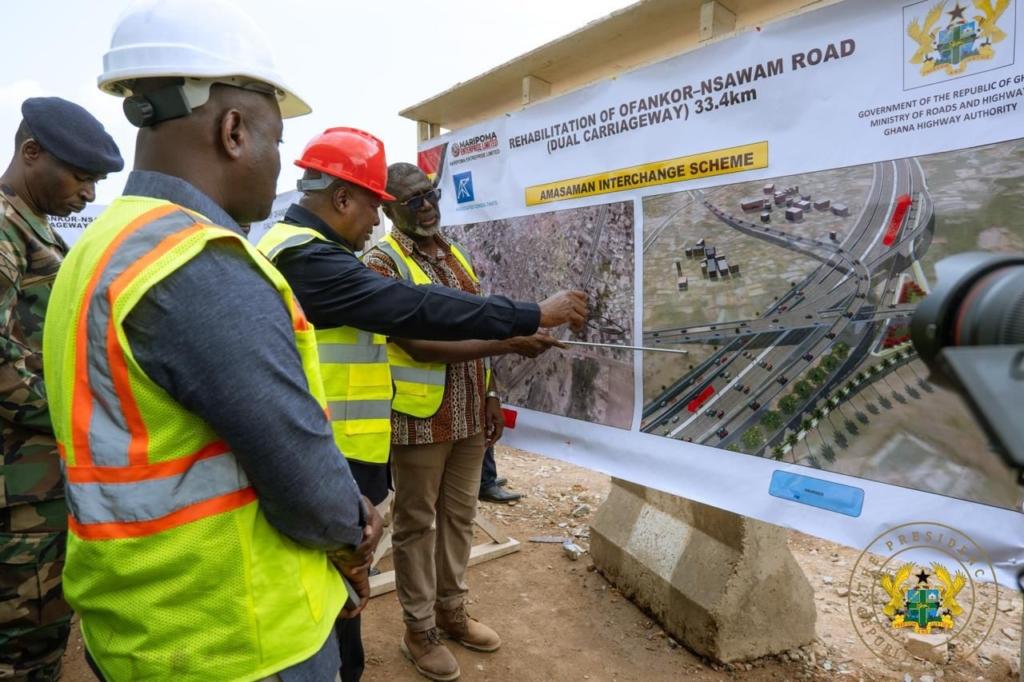
This distinction has also shaped debate around the government’s current road-development program. The Mahama administration has expanded work on major road corridors and launched the Big Push infrastructure program, while civil society organizations and investigative media have questioned aspects of procurement and contract allocation. In response to allegations of irregularities, the Presidency commissioned and later released an investigation into procurement practices within the Ministry of Roads and Highways.
The government’s report concluded that the ministry had operated within legal requirements and rejected claims that it had improperly relied on single-source procurement as a general practice. The Presidency argued that competitive tendering remained the dominant procurement method. The publication of the report itself, however, reflected the growing political expectation that large infrastructure programs must be accompanied by documentation explaining how contracts were awarded and how public money is being used.
Foreign-backed projects create an additional layer of scrutiny because financing arrangements can be complex. A project may involve a foreign government, export-credit agency, private contractor, commercial lender and Ghanaian state entity simultaneously. Such structures can make it difficult for citizens to determine who carries the financial risk, whether loans are sovereign obligations and what happens if expected revenue fails to materialize.
Policy experts have therefore called for stronger parliamentary and public scrutiny before major agreements become binding. Their recommendations generally include publication of feasibility studies, disclosure of debt and guarantee arrangements, competitive procurement where possible, local-content requirements and independent monitoring during construction.
Large foreign-financed projects can deliver substantial benefits when properly structured. Ghana’s transport network, electricity system and industrial base have all benefited from external financing and technical expertise over several decades. Japan-backed infrastructure around Tema, for example, has contributed to improvements around one of the country’s busiest transport corridors, while development institutions and bilateral partners continue to finance roads, bridges, water systems and energy facilities.
The challenge is ensuring that diplomatic relationships do not weaken normal standards of scrutiny. Analysts argue that Ghana should apply the same questions to every external partner: What is being promised? How will it be financed? What obligations does Ghana assume? How many local jobs will be created? Who owns the resulting infrastructure? What happens if the project fails? How transparent was procurement? And can the claimed economic benefits be measured after completion?
The Russian recruitment controversy has given those questions additional political weight because it touches directly on the protection of Ghanaian citizens. For critics of Moscow, the deaths of Ghanaians serving in Russian forces raise doubts about the depth of trust within the bilateral relationship. Russian officials reject claims that Moscow deliberately exploits African recruits and maintain that unlawful cases should be investigated individually rather than used to characterize the entire relationship.
Ghanaian authorities have so far avoided presenting the issue as a wholesale rejection of relations with Russia. Ablakwa has continued diplomatic engagement and has emphasized cooperation to stop recruitment rather than calling for a break in ties. Ghana has historically maintained a policy of engaging multiple international partners and avoiding rigid alignment with competing geopolitical blocs.
That approach allows Accra to seek investment, education, defense cooperation and trade opportunities from a wide range of countries, but it also increases the need for strong domestic institutions capable of evaluating competing offers. If Ghana is to maintain multiple strategic partnerships, analysts argue that each relationship should be governed primarily by national interest rather than political loyalty to any foreign power.
The same principle applies to security cooperation. Foreign military training, equipment purchases and defense agreements can strengthen Ghana’s capabilities, but they also require clear legal frameworks and oversight. The alleged recruitment of citizens into a foreign war sits outside normal state-to-state military cooperation and is precisely why officials have treated the reported networks as a security and trafficking problem rather than a legitimate defense arrangement.
Ghana has said repeatedly that it is not a party to the Russia-Ukraine war. Citizens who travel voluntarily to join foreign forces may face different legal circumstances from people who are deceived or trafficked, but the government has expressed particular concern about individuals who were allegedly promised civilian jobs and later found themselves in military service. Establishing the circumstances of each case remains part of the ongoing investigation.
The cases of Ghanaian prisoners of war captured by Ukrainian forces have illustrated the human cost behind the statistics. Ghanaian diplomatic officials have engaged Ukrainian authorities over citizens captured on the battlefield, while families at home have sought information about missing relatives. These cases have reinforced government warnings that seemingly attractive overseas opportunities can carry extreme risks when recruiters conceal the true nature of the employment.
The recruitment networks have also highlighted the role of digital platforms in modern trafficking and foreign military recruitment. Investigative groups have identified websites and social-media accounts advertising construction, security or other employment opportunities before redirecting applicants through recruitment processes connected to military service. Some domains reportedly disappear soon after attracting applicants, making enforcement difficult across national borders.
Combating such networks will therefore require more than conventional border controls. Ghanaian investigators may need cooperation from technology companies, payment providers, foreign governments and international law-enforcement bodies to identify recruiters and financial flows. Authorities will also have to distinguish between legitimate overseas recruitment businesses and criminal intermediaries using similar language and advertising methods.
For infrastructure and industrial partnerships, the oversight challenge is different but similarly dependent on information. Poor transparency can prevent citizens from understanding the financial obligations associated with a project until costs increase or repayment problems emerge. Publishing contracts, financing arrangements and project-performance data can reduce that uncertainty and help government agencies identify problems earlier.
The IMF’s call for independent reviews of major infrastructure investments reflects that concern. Evaluating projects before construction begins can help determine whether projected traffic, energy demand, industrial output or revenue assumptions are realistic. Reviewing them during implementation can identify delays or cost overruns before they become unmanageable.
Ghana’s infrastructure needs remain substantial, particularly in roads, transport, housing, water, energy and industrial logistics. The country therefore cannot realistically rely only on domestic public finances to fund every major project. Foreign capital will remain important, making stronger oversight a mechanism for attracting sustainable investment rather than an argument against external partnerships.
The issue increasingly confronting policymakers is how to combine openness to international investment with stronger institutional safeguards. That requires procurement systems capable of resisting political interference, parliamentary committees with access to detailed financial information and regulatory institutions able to enforce standards against powerful domestic and foreign actors alike.
The same principle underlies Ghana’s response to alleged Russian recruitment. Diplomatic relationships cannot replace responsibility to protect citizens, while security concerns should not automatically invalidate legitimate economic or cultural cooperation. Government must be able to maintain international relationships while confronting specific misconduct when credible evidence emerges.
Public discussion has consequently shifted away from whether Ghana should work with one foreign bloc or another and toward how the country should evaluate all partnerships. Western countries, China, Russia and other powers pursue their own strategic and commercial interests when operating in Africa. Ghana’s responsibility is to define and defend its own interests through transparent institutions rather than assume that any external partner will do so on its behalf.
The government’s investigation into recruitment networks remains active, and the final number of Ghanaians involved in the Russia-Ukraine conflict may change as authorities verify identities and obtain information from foreign governments. The reported figures of 272 recruits, 62 deaths and 15 missing persons reflect government disclosures at different stages of the investigation and should not be treated as a complete battlefield accounting.
Russia’s denial of unlawful state-directed recruitment also remains part of the record and will require continued investigation rather than assumption. Ghana has asked Moscow to cooperate in stopping recruitment and identifying citizens already in the system, while Russia says it is prepared to examine credible cases. The effectiveness of that cooperation will ultimately be measured by whether recruitment decreases, missing Ghanaians are accounted for and those responsible for fraudulent schemes face consequences.
On infrastructure, the test will similarly be based on results rather than announcements. Foreign-backed projects that are economically sound, transparently financed and completed on schedule can strengthen Ghana’s economy regardless of the nationality of the partner. Projects that remain stalled, accumulate hidden liabilities or fail to deliver promised benefits should face the same scrutiny whether they originate in Moscow, Beijing, Washington, Brussels or elsewhere.
The two debates therefore converge around a common principle of accountability. Ghana’s international relationships are most useful when they protect national interests, create measurable economic value and operate within clear legal and institutional safeguards. Diplomatic prestige or large headline figures cannot substitute for delivery, and foreign partnerships should not prevent authorities from investigating conduct that may harm Ghanaian citizens.
For Ghana, the coming months will test whether that principle can be translated into practical enforcement. Security agencies must identify and disrupt recruitment networks, diplomats must continue pressing foreign governments for information and cooperation, and policymakers must strengthen the transparency mechanisms governing major investments and infrastructure agreements. The country’s growing engagement with multiple global powers creates opportunities, but it also increases the importance of strong domestic oversight capable of determining which partnerships genuinely serve Ghana’s interests and which require correction, renegotiation or rejection.