
GHANA MOVES TO RING FENCE 2% OF GETFUND AS SCHOOL CRISES EXPOSE EMERGENCY FUNDING GAP
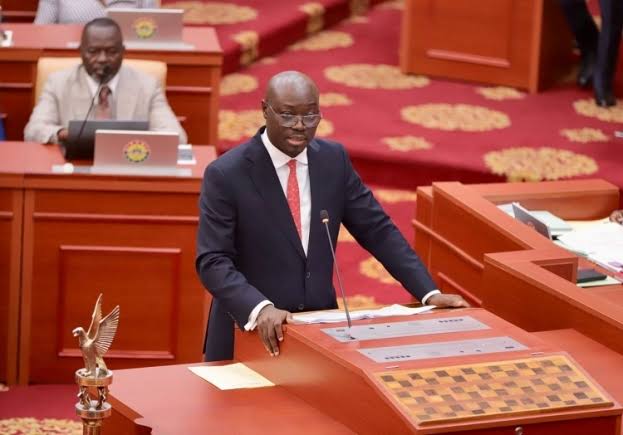
Ghana’s Education Ministry has proposed setting aside 2% of GETFund’s annual allocation as a dedicated emergency fund for schools and learners affected by floods, conflicts and other disasters. Education Minister Haruna Iddrisu says the proposal has the backing of Finance Minister Cassiel Ato Forson.
The Ministry of Education has proposed reserving 2% of the Ghana Education Trust Fund’s annual allocation for a dedicated emergency intervention fund as the government moves to strengthen its ability to keep schools functioning during floods, conflicts and other crises.
Education Minister Haruna Iddrisu said the proposed fund would give the ministry immediate access to resources when emergencies disrupt teaching and learning, reducing dependence on lengthy budgetary processes before assistance can reach affected schools and pupils.
The proposal has the backing of Finance Minister Dr Cassiel Ato Forson, according to Mr Iddrisu.
He announced the initiative during an engagement with Associates for Change, a Ghanaian research and consulting organisation, on September 24.
Under the proposal, 2% of GETFund’s annual allocation would be specifically reserved for emergency interventions in the education sector.
The money could be deployed when schools and learners are affected by flooding, communal conflict, climate-related disasters and other emergencies that force schools to close or disrupt normal teaching.
The proposal comes amid growing concern over the vulnerability of Ghana’s education system to emergencies.
Recent events have demonstrated how quickly disasters can disrupt schooling and leave education authorities scrambling for alternative facilities and resources.
The October 2023 Akosombo Dam spillage, for example, displaced tens of thousands of people in communities across parts of the Volta Region.
Schools were submerged in some affected communities, while others were converted into temporary shelters for displaced residents.
The disaster damaged school furniture, textbooks and other educational materials while disrupting lessons and examination preparations.
Communal conflicts have created another challenge.
Mr Iddrisu has previously pointed to insecurity in areas including Bawku as an example of how conflict can force teachers and families to leave communities, disrupting children's education for extended periods.
Flooding in northern Ghana, tidal waves and coastal erosion around communities such as Keta, and the effects of the annual Bagre Dam spillage have also demonstrated the range of emergencies capable of affecting schools.
The government argues that a dedicated emergency allocation could allow the Education Ministry to intervene more quickly when such events occur.
Instead of waiting for fresh budget approvals after every crisis, the ministry would already have a financial reserve specifically designed for emergency education needs.
Research presented by Associates for Change also highlighted the broader challenge facing West Africa.
The organisation said the region accounts for the largest proportion of out-of-school children on the African continent, with conflict and insecurity contributing to prolonged interruptions in education in several countries.
The consequences of those disruptions can extend beyond missed classroom time.
Education authorities have warned that prolonged school closures can increase dropout rates, deepen learning losses and expose vulnerable children to additional social risks.
The proposed GETFund allocation would therefore be intended not only to repair damaged infrastructure but also to help maintain continuity of learning when conventional schooling becomes difficult or impossible.
Attention is also being placed on teachers working in vulnerable communities.
Dr Leslie Casely-Hayford, Director and Founder of Associates for Change, stressed the importance of preparing teachers to work in areas repeatedly affected by flooding, climate-related emergencies and insecurity.
She also highlighted the need for teachers to be equipped to provide psychosocial support to children and colleagues affected by crises.
The proposed emergency allocation is expected to feature in broader discussions on how Ghana and other West African countries can build more resilient education systems.
Ghana is preparing to host the second High-Level Conference on Education in Emergencies in West Africa on September 29 and 30.
The conference is expected to bring together researchers, policymakers, financiers, academics and other stakeholders to examine ways of protecting education during emergencies and expanding interventions that have proven effective.
For Ghana, financing is emerging as a central part of that discussion.
GETFund already plays a major role in financing educational infrastructure and programmes across the country.
Setting aside 2% specifically for emergencies would create a dedicated financial buffer within that system.
The proposal, however, remains a government plan and should not yet be treated as an operational fund.
Its implementation would require the necessary approval and allocation arrangements before the Education Ministry could begin drawing on the dedicated resources.
If adopted, the government believes the mechanism could significantly shorten the time between a crisis occurring and assistance reaching affected schools.
For thousands of learners in communities vulnerable to floods, conflict and other emergencies, that difference could determine whether education is interrupted for days, weeks or significantly longer.