HOUTHIS CLAIM NEW ATTACKS ON SAUDI OIL FACILITIES AND RIYADH AIRPORT AS REGIONAL TENSIONS ESCALATE
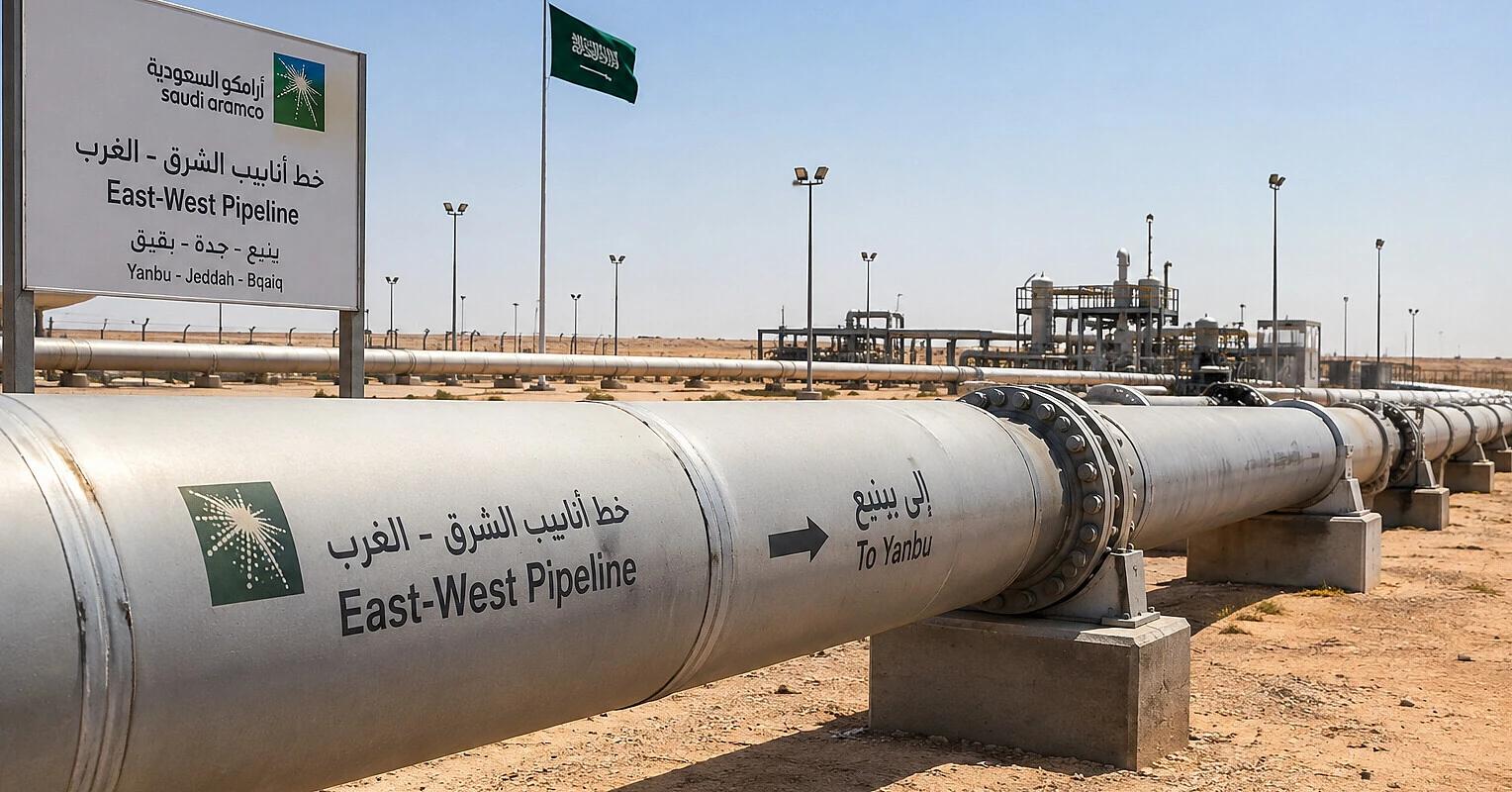
Yemen’s Houthi movement says it attacked Saudi Arabia’s East-West oil pumping stations and King Khalid International Airport in Riyadh on October 26, but Saudi authorities have not confirmed that either target was successfully struck. The Saudi-led coalition says air defences intercepted a ballistic missile launched toward Riyadh and later destroyed Houthi missile launchers and storage infrastructure in Yemen. The escalation comes amid severe aviation disruption, with Reuters reporting that 86% of scheduled flights at Riyadh’s main airport were cancelled between October 8 and 25. Oil markets are also closely monitoring the conflict because repeated attacks on Saudi energy infrastructure could threaten supply routes, although no confirmed production disruption from Monday’s claimed strike has been announced.
Yemen’s Houthi movement has claimed responsibility for a new round of attacks targeting Saudi Arabia’s East-West crude oil pumping stations and King Khalid International Airport in Riyadh, escalating a regional confrontation that is already disrupting international aviation, unsettling energy markets and drawing Saudi Arabia into an expanding military campaign against Houthi missile infrastructure in Yemen. The attacks were announced by the Houthis on Monday, October 26, although Saudi authorities had not independently confirmed that either the oil pumping facilities or Riyadh’s main international airport had been successfully struck. Saudi officials did, however, confirm that air defences intercepted and destroyed a ballistic missile launched toward Riyadh and later announced retaliatory strikes against Houthi missile launchers and storage infrastructure inside Yemen.
The Saudi-led coalition said the missile fired toward Riyadh was intercepted before reaching its target, while coalition spokesman Major General Turki Al-Malki later announced that two ballistic missile launchers had been destroyed in Sanaa. According to the coalition, one of those launchers was used to fire the missile toward the Saudi capital. The coalition subsequently announced a wider operation against Houthi military infrastructure, saying its forces destroyed five tunnels used to store ballistic missiles, four missile launchers and a missile-storage facility, while also targeting supply lines, fortifications and military equipment in Houthi-controlled areas. These claims represent the Saudi-led coalition’s official account of its military response and have not been independently verified in full.
The distinction between the Houthi claims and what Saudi authorities have confirmed is important. The Houthis say they attacked both the East-West pipeline pumping stations and King Khalid International Airport, but Saudi Arabia had not publicly confirmed damage to either of those specific targets at the time of the latest reporting. What is independently established is that a missile was launched toward Riyadh and intercepted, and that Saudi-led forces subsequently struck missile-related facilities in Yemen. It would therefore be inaccurate to report that Riyadh airport or the oil pumping stations were successfully hit unless additional evidence or official confirmation emerges.
The claimed attack on the East-West pipeline is especially significant because the network is one of Saudi Arabia’s most strategically important pieces of energy infrastructure. The pipeline, commonly known as Petroline, moves crude oil from production and processing centres in the kingdom’s eastern region across the country to the Red Sea port of Yanbu. Its importance lies in the fact that it provides Saudi Arabia with an alternative export route that can reduce the kingdom’s dependence on the Strait of Hormuz, the narrow waterway through which a major share of global oil shipments normally passes.
That strategic role has become even more important during the current regional crisis because energy markets are already dealing with heightened security risks in both the Persian Gulf and the Red Sea. Reuters reported that fighting involving the Houthis and Saudi Arabia is threatening important oil transportation routes at a time when the Strait of Hormuz has also been severely disrupted by the wider regional conflict. The possibility that Saudi infrastructure used to bypass vulnerable Gulf shipping lanes could itself come under sustained attack is one reason traders and governments are watching developments around the East-West pipeline closely.
No confirmed disruption to Saudi oil production or exports had been announced in connection with Monday’s Houthi claim. Saudi Aramco and the Saudi Energy Ministry had not reported that the East-West pipeline had been shut down or that crude flows had been materially reduced. The threat to international oil supplies is therefore real in strategic terms, but it should not yet be described as a confirmed supply interruption arising from Monday’s attack.
The Houthis have previously demonstrated an ability to threaten Saudi oil infrastructure. During earlier phases of the Yemen conflict, drones and missiles were used against pipelines, refineries and other energy assets, forcing temporary shutdowns and creating significant volatility in global oil markets. Those precedents mean that even an unsuccessful attack can increase risk premiums because investors know that repeated strikes against pipelines or processing facilities could eventually cause physical damage.
Oil prices were already trading near six-month highs on Monday amid concern about continued attacks on Saudi infrastructure and broader instability across the Middle East. Reuters reported Brent crude around $117 a barrel during the session, while U.S. West Texas Intermediate remained above $100. Analysts cited by Reuters said attacks on Saudi Arabia could limit significant declines in oil prices even if diplomacy succeeds in preventing a wider regional war, because traders remain concerned about the possibility of damage to production, refining or transport infrastructure.
Saudi Arabia’s ability to influence global oil markets makes those concerns particularly significant. The kingdom remains one of the world’s largest oil exporters and one of the few major producers with enough spare production capacity to influence international supply during periods of disruption. Repeated attacks on Saudi oil infrastructure therefore carry consequences that extend far beyond the immediate military confrontation with the Houthis.
At the same time, the Houthi claim involving King Khalid International Airport highlights the severe pressure already being placed on Saudi Arabia’s civilian aviation sector. Riyadh’s main airport has suffered extraordinary disruption during October as airlines cancel flights or avoid Saudi airspace because of repeated missile and drone threats. Reuters, citing aviation analytics company Cirium, reported that 4,071 of the 4,736 flights scheduled at King Khalid International Airport between October 8 and October 25 were cancelled, representing approximately 86 percent of all scheduled flights during that period.
That level of disruption is significant even without confirmation that Monday’s latest Houthi attack successfully struck the airport. Airlines make operational decisions based not only on whether a missile reaches its target but also on the overall level of security risk, the likelihood of future attacks, insurance considerations, crew safety and the availability of safe diversion routes. An airport can therefore suffer major economic consequences even when air defences intercept many incoming threats.
The disruption extends well beyond Riyadh. Reuters reported that more than 7,800 flights, representing about 45 percent of scheduled departures across Saudi Arabia, were cancelled between October 8 and October 25. Cancellation rates reportedly reached about 42 percent in Dammam and 46.7 percent in Abha, while all scheduled flights at Najran airport near the Yemeni border were cancelled during the period covered by the data.
The aviation crisis has already begun affecting Saudi Arabia’s wider economic activity. International airlines have suspended or reduced flights, major events have faced postponements and business travel has become increasingly difficult. Reuters reported that some foreign carriers had extended service suspensions into November, while Delta Air Lines postponed the planned launch of a new Saudi route until next year. The disruption has also affected major investment events and conferences in Riyadh, undermining the kingdom’s efforts to position the capital as a major international business hub.
The economic consequences are particularly sensitive for Saudi Arabia because the government has invested heavily in expanding aviation, tourism, entertainment and international business under its Vision 2030 programme. Riyadh is being developed as a regional commercial centre intended to compete more directly with Dubai, Doha and other Gulf hubs, while King Khalid International Airport is undergoing major expansion as part of the kingdom’s longer-term aviation strategy. Prolonged missile threats could therefore create reputational and commercial challenges even if airport infrastructure is repaired quickly after individual attacks.
Saudi authorities had partially reopened Riyadh airport before Monday’s latest claimed Houthi operation, allowing some domestic flights and limited international services to resume. The renewed claim of an attack immediately raised fresh questions about how quickly normal operations can be restored while missile threats remain active. The risk is that every new warning or attempted strike forces airlines to reconsider schedules, prolonging disruption even when air defences prevent direct damage.
Saudi air defences have intercepted numerous missiles and drones during the latest escalation, but successful interceptions do not completely eliminate risk to civilians. Debris from destroyed weapons can fall into populated areas and cause injuries or property damage. Saudi Civil Defense said two people were injured on October 25 after fragments from two intercepted ballistic missiles fell in Khamis Mushait and Ahad Rafidah, damaging three residential buildings and seven vehicles.
The Saudi-led coalition has responded by intensifying strikes on Houthi military infrastructure inside Yemen. Its October 26 statement said the latest operation was intended to neutralise missile and drone threats, reduce the movement of weapons and disrupt supply lines between Houthi-controlled areas. The coalition presented the strikes as defensive operations designed to protect Saudi civilians and infrastructure, while the Houthis have portrayed their own attacks as retaliation for Saudi military involvement in Yemen.
The renewed fighting represents a major deterioration from the relative calm that followed the United Nations-brokered truce first established in 2022. Although the formal truce eventually expired, large-scale fighting remained significantly reduced for several years, creating hopes that negotiations could eventually produce a durable political settlement to Yemen’s long-running war. The latest wave of missile attacks and retaliatory strikes threatens to reverse much of that progress.
The conflict in Yemen began as a domestic political struggle but evolved into a regional war after Houthi forces seized Sanaa and Saudi Arabia led a military intervention in 2015 in support of Yemen’s internationally recognised government. Years of fighting produced one of the world’s most severe humanitarian crises, leaving millions of people dependent on aid and damaging hospitals, roads, ports and other essential infrastructure.
The resurgence of heavy military activity now threatens to worsen conditions inside Yemen while also expanding the geographical reach of the conflict. The Houthis have increased long-range missile and drone attacks against Saudi territory, while Saudi-led forces have intensified operations against missile sites and military positions inside Yemen.
The fighting is also increasingly connected to regional maritime security. Saudi Arabia and allied forces are concerned about Houthi activity along Yemen’s Red Sea coast and around the Bab el-Mandeb Strait, a narrow waterway linking the Red Sea to the Gulf of Aden and the Indian Ocean. Reuters reported that Saudi military activity has intensified as Houthi forces advance along parts of the Red Sea coast toward this strategically important shipping route.
The Bab el-Mandeb is one of the world’s most important maritime chokepoints because commercial ships travelling between Asia, the Middle East and Europe pass through the strait before entering the Red Sea and Suez Canal. Disruption there can force vessels to divert thousands of kilometres around Africa, increasing shipping costs and delaying deliveries. When combined with instability around the Strait of Hormuz, simultaneous pressure on both routes could create significant problems for international energy and trade flows.
That broader context makes the claimed attack on Saudi Arabia’s East-West pipeline especially important. The pipeline provides an alternative route for Saudi crude that bypasses the Strait of Hormuz and moves oil toward the Red Sea. If the pipeline itself were seriously damaged at the same time that maritime routes were disrupted, Saudi Arabia would have fewer options for maintaining normal export volumes.
There is no evidence at present that such a scenario has occurred. The pipeline remains strategically threatened, but no confirmed shutdown resulting from Monday’s Houthi claim has been announced. Energy-market concern is therefore focused on the possibility of future disruption rather than a verified collapse in current Saudi exports.
The Houthis possess a significant arsenal of ballistic missiles, cruise missiles and long-range drones developed over years of conflict. Saudi Arabia and several Western governments accuse Iran of providing the movement with weapons technology, components and military support, while Tehran has consistently denied controlling individual Houthi operations and says the group makes its own decisions.
The degree of Iranian involvement remains a central geopolitical question because renewed Houthi attacks have coincided with wider tensions involving Iran, Israel, the United States and several Gulf states. Any escalation that directly links Houthi attacks to a broader confrontation with Tehran could increase the risk that Yemen’s conflict becomes integrated into a much larger regional war.
Diplomatic efforts are continuing alongside the military escalation. Reuters reported that officials from Saudi Arabia, Turkey and Pakistan were expected to hold talks with Iranian officials in Tehran as governments searched for ways to prevent the confrontation from expanding. Those discussions carry particular importance because Saudi Arabia and Iran restored diplomatic relations in 2023 after years of hostility, raising hopes that rivalry between the two powers could be managed through dialogue rather than proxy conflict.
The latest fighting now threatens that diplomatic progress. Repeated attacks on Saudi cities, airports and energy infrastructure create strong domestic pressure on Riyadh to respond militarily, while Saudi strikes in Yemen provide the Houthis with justification for further retaliation.
The result is a cycle in which each side presents its next operation as a defensive response to the previous one. That cycle can escalate quickly, especially if an attack causes large numbers of civilian casualties or seriously damages a major economic facility.
The information battle surrounding Monday’s events is also significant. The Houthis have an incentive to publicise claims of successful attacks because demonstrating an ability to strike high-value Saudi targets strengthens their political and military image. Saudi authorities, by contrast, emphasise successful interceptions and the destruction of Houthi launch capabilities.
Independent verification is therefore essential. Missile warfare frequently produces conflicting early accounts, and damage assessments can take time to confirm. Initial claims should not be treated as established fact simply because they are repeated widely on social media or by one side to the conflict.
That is why the current evidence supports a cautious formulation. The Houthis say they attacked Saudi oil pumping stations and King Khalid International Airport. Saudi authorities confirm an incoming ballistic missile toward Riyadh was intercepted but have not independently confirmed that Monday’s claimed targets were successfully hit. Saudi-led forces then retaliated against missile infrastructure in Yemen.
The situation at Riyadh airport, however, is already independently documented as severe. The cancellation of 86 percent of scheduled flights over more than two weeks represents a major disruption for a capital city that has become central to Saudi Arabia’s economic diversification strategy. Even if Monday’s specific strike failed, the continued threat environment is already producing real economic consequences.
Passengers, airlines and multinational companies face continued uncertainty about when normal operations will resume. Travellers have been advised to confirm flight schedules before heading to airports because timetables can change rapidly when security warnings are issued. Airlines must also reposition crews and aircraft after large numbers of cancellations, meaning that operational disruption can continue even after an airport physically reopens.
Cargo movements can be affected as well. Air freight is particularly important for pharmaceuticals, electronics, high-value industrial goods and urgent commercial shipments. Prolonged disruption at Riyadh could therefore affect supply chains in addition to tourism and business travel.
The oil sector faces a different but equally serious challenge. Markets can tolerate isolated unsuccessful attacks, but repeated strikes increase uncertainty and can push up insurance, security and shipping costs even without a major reduction in physical supply. Traders are therefore watching not only production figures but also the frequency and geographical reach of Houthi attacks.
Saudi Aramco’s infrastructure includes oil fields, processing plants, pipelines, export terminals and storage facilities spread across a vast territory. Protecting every asset against missiles and drones is difficult, which is why Saudi Arabia has invested heavily in layered air-defence systems.
The Houthis, meanwhile, have repeatedly demonstrated an ability to vary their methods and launch from concealed or mobile positions. The Saudi-led coalition’s October 26 announcement that it destroyed five missile-storage tunnels and four launchers illustrates the scale of the challenge facing military planners.
Destroying launch equipment can reduce immediate threats, but it does not necessarily eliminate the Houthis’ missile capability. The group has survived years of air strikes by dispersing weapons, using underground facilities and moving equipment between locations.
This means that the conflict is unlikely to be resolved purely through air defence and retaliatory bombing. A lasting end to missile attacks would probably require a broader political or diplomatic settlement addressing the underlying conflict in Yemen and its relationship with regional powers.
The humanitarian consequences of renewed escalation also cannot be ignored. Yemen’s population has endured years of war, economic collapse and food insecurity. Increased air strikes and ground fighting can displace more civilians, damage infrastructure and interfere with humanitarian operations.
The military confrontation therefore carries two very different sets of risks: direct economic and security threats to Saudi Arabia and renewed humanitarian suffering inside Yemen.
International governments will be attempting to manage both problems while also protecting global shipping and energy markets. That balancing act becomes more difficult if attacks expand geographically or if major oil facilities are damaged.
The Saudi leadership also faces domestic political pressure to demonstrate that the kingdom can defend critical infrastructure. The ability to protect Riyadh, airports and oil installations is central to public confidence and to Saudi Arabia’s international reputation as a stable economic centre.
Repeated air-raid warnings can undermine that confidence even when missiles are intercepted.
The Houthis appear to understand this vulnerability and have increasingly targeted infrastructure with economic and symbolic importance. Airports, pipelines and ports can generate effects much larger than the physical damage caused by an individual missile because they influence investor confidence, transportation networks and international media attention.
That strategic logic explains why a claimed attack on the East-West pipeline and Riyadh airport can move markets even before damage is confirmed.
Saudi Arabia’s military response follows a similar logic. By targeting missile launchers, tunnels and storage facilities, the coalition is attempting to demonstrate that attacks will carry significant costs and that the Houthis’ ability to launch future weapons can be degraded.
Whether that strategy succeeds will depend on how much missile infrastructure the Houthis retain and whether regional diplomacy can reduce their incentives to continue attacking.
The conflict is therefore entering a dangerous phase in which military pressure and diplomatic efforts are occurring simultaneously.
If negotiations involving Saudi Arabia, Iran, Turkey and Pakistan produce a framework for de-escalation, the current cycle of missile attacks and retaliatory strikes could slow.
If diplomacy fails and Houthi attacks continue, Saudi Arabia may expand military operations further inside Yemen.
That would increase the risk of more attacks against Saudi territory in return.
The consequences for global oil prices could become substantial if physical damage is eventually confirmed at major infrastructure. A prolonged shutdown of the East-West pipeline, a major refinery or an export terminal would be far more economically significant than an attempted strike intercepted before impact.
No such shutdown had been confirmed from Monday’s events.
Oil traders are therefore pricing risk rather than confirmed catastrophic loss.
This distinction is essential for accurate reporting. Dramatic headlines suggesting Saudi oil supplies have already been cut would go beyond the evidence. The accurate position is that critical infrastructure has been targeted according to Houthi claims, the Saudi military has confirmed missile interception and retaliation, and the risk to energy supplies has increased.
The aviation sector provides clearer evidence of direct disruption. The 86 percent cancellation rate at Riyadh’s main airport is already documented and demonstrates that the security crisis is affecting civilian economic activity on a major scale.
That disruption is likely to remain one of the most visible indicators of whether the situation is improving or deteriorating. A sustained return of commercial flights would suggest airlines believe the security risk is declining, while continued cancellations would show that the threat remains unacceptable.
Oil-market behaviour will provide another indicator. If crude prices rise sharply following confirmed infrastructure damage, that would signal growing concern about physical supply. If prices remain elevated but relatively stable, markets may be treating the conflict primarily as a geopolitical risk premium.
For now, the situation remains fluid.
The Houthis have claimed another significant attack against Saudi economic infrastructure, Saudi Arabia has confirmed an incoming missile toward Riyadh and launched retaliatory operations in Yemen, and civilian aviation remains severely disrupted.
What has not been established is that Monday’s Houthi attacks caused confirmed damage to the East-West pipeline pumping stations or King Khalid International Airport.
That distinction should remain central to coverage until additional information emerges.
The broader danger, however, is undeniable. Saudi Arabia is facing repeated long-range attacks while simultaneously trying to maintain oil exports, international aviation and economic activity. Yemen is sliding back toward more intensive warfare after years of relative calm, and important shipping routes around the Red Sea and Gulf are already under pressure.
If attacks remain limited and largely intercepted, the economic damage may remain manageable even though aviation disruption continues.
If a future strike succeeds against major oil infrastructure, the consequences could extend rapidly into global fuel prices, shipping costs and inflation.
The international community therefore has a strong interest in preventing the current confrontation from becoming a sustained infrastructure war.
Monday’s events illustrate just how close that risk has become. The Houthis are targeting assets with global economic importance, while Saudi Arabia is responding directly against the group’s missile network.
For the moment, Saudi Arabia has confirmed successful interception rather than confirmed destruction at the Houthi-claimed targets. That is the most important factual distinction in the story.
The next developments will depend on whether Saudi authorities release damage assessments, whether Aramco reports changes to pipeline operations, whether King Khalid International Airport can expand its partial reopening and whether the Houthis continue launching missiles at the current pace.
Until those answers emerge, the crisis should be understood as a serious escalation with potentially global economic consequences, but not yet as a confirmed shutdown of Saudi Arabia’s oil-export infrastructure.