ITALY DEPLOYS TROOPS AS PROTESTS GRIP CITIES WHILE 25,000 RALLY FOR PENSION REFORM IN MADRID
Italy and Spain experienced another weekend of major demonstrations as economic and political frustration continued across Europe. Italy deployed 500 additional army personnel to reinforce security in Milan after the previous weekend’s violence, although Saturday’s Milan protest remained largely peaceful; clashes were reported in Rome, Turin and Bologna. In Spain, about 25,000 demonstrators marched peacefully in Madrid demanding inflation-linked pensions and stronger retirement protections, while a separate anti-establishment protest in Barcelona descended into fires, looting and vandalism, resulting in around 100 arrests.
Italy and Spain have experienced another turbulent weekend of street demonstrations as governments across southern Europe confront growing public frustration over living costs, wages, housing, pensions, public services and political dissatisfaction, with Italian authorities deploying hundreds of soldiers to reinforce police in Milan while confrontations erupted between demonstrators and security forces in several cities. In Spain, the weekend produced two very different pictures of public anger: approximately 25,000 people gathered peacefully in Madrid to demand stronger protection for the state pension system, while Barcelona experienced serious disorder after an anti-establishment demonstration descended into fires, looting and clashes that resulted in about 100 arrests.
Italy entered the weekend under heightened security after violence during demonstrations on October 17 and 18 left shops looted, property damaged and police confronting groups of masked protesters in Milan and several other northern cities. Prime Minister Giorgia Meloni’s government responded by approving tougher public-order measures and authorizing the deployment of 500 additional army personnel to Milan through the end of 2026, placing soldiers alongside police around important transport hubs, public buildings and other locations considered vulnerable to further disorder. The deployment represented one of the clearest signs that the Italian government regards the current protest wave not simply as a political challenge but increasingly as a major public-security issue.
Soldiers were visible around central Milan as thousands of demonstrators returned to the streets on Saturday for protests focused on the rising cost of living, low wages, deteriorating public services and opposition to war. The authorities had feared a repeat of the previous weekend, when hooded groups smashed shop windows, looted retailers and clashed with riot police in the city center, prompting luxury businesses around Milan’s famous shopping districts to close early or board up their storefronts. This time, however, the main Milan demonstration remained largely peaceful, with approximately 10,000 people marching through the city under the observation of around 1,400 law-enforcement officers, armored vehicles and the newly strengthened military presence.
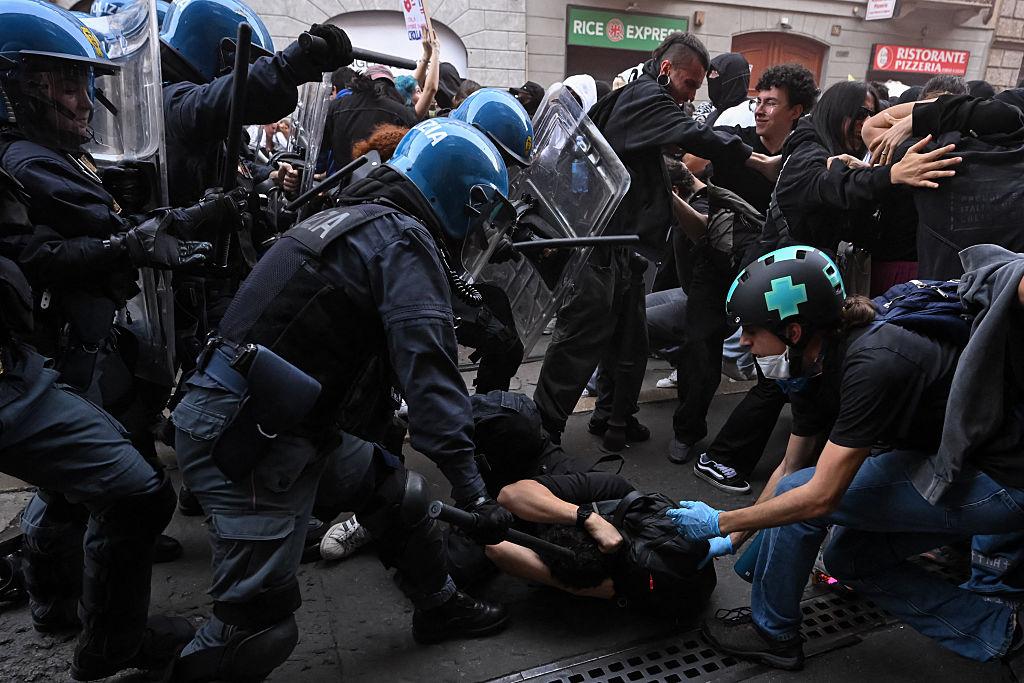
The relative calm in Milan contrasted with events elsewhere in Italy. In Rome, Turin and Bologna, demonstrators confronted riot police during protests that combined anger over household expenses and public services with opposition to military spending and Italy’s involvement in international conflicts. Protesters threw bottles, stones and firecrackers in some locations, while police moved to disperse groups and prevent demonstrations from reaching restricted areas. Reuters reported that the scale of violence was lower than the previous weekend and that there was no comparable wave of looting during Saturday’s protests, but the confrontations demonstrated that the tensions driving the unrest had not disappeared.
Rome became one of the focal points of the latest clashes after protesters gathered against the rising cost of living and attempted to advance beyond police restrictions. Images from the demonstration showed groups facing heavily equipped officers as authorities blocked sections of the march, while protesters voiced frustration over wages, household expenses and government priorities. The confrontation was part of a wider series of demonstrations across the country rather than a single centrally organized Italian movement, but participants repeatedly cited similar grievances involving living standards and what they described as deteriorating conditions for younger and working-class citizens.
Italy has experienced sustained economic pressure despite headline inflation easing from the extremes seen during the European energy crisis. Households continue to face the accumulated impact of higher rents, food prices, energy bills and transportation expenses, while wage growth has remained a particularly sensitive issue. Italy has historically experienced weak real-wage growth compared with several other major European economies, and younger workers frequently face temporary employment, difficulty securing affordable housing and uncertainty over whether earnings can support independent living.
Those structural problems have increasingly fed into a protest movement that includes students, workers, activists and groups opposed to Prime Minister Meloni’s political agenda. The demonstrations do not all share identical demands, and some of the weekend mobilizations included strong anti-war elements that cannot simply be reduced to cost-of-living protests. Nevertheless, economic dissatisfaction has provided an important common thread, particularly among younger people who say the costs of housing, transportation and basic necessities are rising faster than their opportunities.
The Meloni government has responded to the disorder primarily through an expansion of security powers. Following the violence in Milan earlier in October, the government approved measures creating tougher penalties for violent conduct during demonstrations, including prison sentences and financial penalties for groups whose actions threaten public safety. The legislation provides for higher penalties where demonstrators conceal their faces or injure people and allows authorities greater powers to detain some minors considered dangerous. Parents can also face financial liability for vandalism or looting committed by their children.
The government argues that peaceful protest remains protected and that the new measures target violence, vandalism and criminal behavior rather than legitimate political dissent. Meloni and senior ministers have condemned the destruction of shops and attacks on police as unacceptable, saying businesses and ordinary residents should not bear the financial consequences of demonstrations that become violent. Critics, however, say the repeated expansion of police powers risks addressing the symptoms of unrest without confronting the economic pressures contributing to public anger.
The decision to deploy the military in Milan has become especially controversial for that reason. Italy has previously used soldiers to support police in protecting sensitive sites under the long-running Operation Safe Streets program, meaning the presence of troops in civilian areas is not unprecedented. What is unusual is the direct connection between the current reinforcement and a wave of demonstrations driven by domestic economic and political grievances. Approximately 500 additional troops were assigned to Milan following the October unrest, substantially increasing the security presence in one of Italy’s most important commercial and financial centers.
Authorities say soldiers are not replacing police or being deployed as a conventional military force against demonstrators. Their role is primarily to guard strategic locations and allow police officers to focus on crowd control, investigations and public-order operations. The distinction matters because images of troops in city centers can create the impression that the government has militarized its response to protest even where soldiers are performing static security duties.
The pressure on Italy’s government is unlikely to disappear simply because one weekend produced less destruction than the previous one. Demonstrations have now occurred repeatedly across Milan, Rome, Turin, Bologna and other cities, and activists continue to use social media to mobilize supporters. The emergence of groups associated with the so-called October 17 Movement has also increased scrutiny of whether loosely connected protest networks are attempting to build a longer campaign against the government.
Police said they detained a person allegedly connected to organizing that movement ahead of Saturday’s protests in Milan. The individual was taken for questioning as authorities investigated the networks behind earlier unrest. No conclusion about criminal responsibility should be drawn merely from detention, but the move illustrates the increasingly intelligence-driven approach Italian security services are taking toward demonstrations that officials fear could again turn violent.
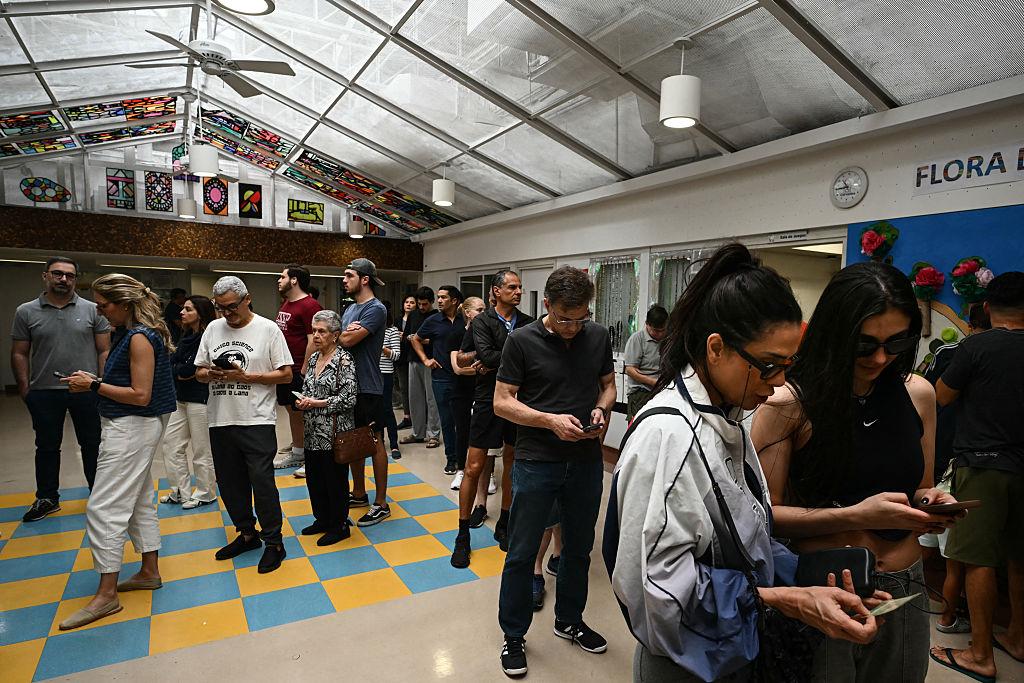
Spain, meanwhile, experienced its own weekend of demonstrations, but the situation there reflected at least two separate movements with very different objectives and behavior. In Madrid, approximately 25,000 people marched in support of the public pension system and demanded that retirement payments continue to rise with inflation, that minimum pensions provide a dignified standard of living and that the gender pension gap be reduced. The demonstration was large but overwhelmingly peaceful and should not be conflated with the violent scenes that occurred later in Barcelona.
Pensioners, labor activists and supporters filled central Madrid carrying banners demanding pensions linked to the real cost of living and opposing proposals they fear could weaken automatic inflation adjustments. The rally took place against the backdrop of Spain’s ongoing political debate over the sustainability of the pension system, public spending and the burden placed on younger workers by an aging population.
Spain has one of Europe’s largest pension systems, and maintaining retirees’ purchasing power has become an increasingly important political question as food, housing, utilities and healthcare costs rise. Demonstrators argue that pension payments should not lose value whenever consumer prices increase and that elderly citizens who spent decades working should not be pushed into poverty because retirement income fails to keep pace with household expenses.
Organizers also highlighted the gap between pensions received by men and women, a disparity influenced by historical differences in employment participation, salaries, part-time work and unpaid caring responsibilities. Campaigners want the government to accelerate efforts to eliminate that imbalance while ensuring that the lowest pensions remain sufficient to cover essential expenses.
Political representatives sympathetic to the demonstrators joined calls for stronger guarantees. Madrid regional politician Emilio Delgado of Más Madrid argued that no pension should fall below the minimum wage and said people who had worked throughout their lives were entitled to a dignified retirement. The rally was therefore closely connected to Spain’s wider political contest over welfare spending, taxation and how the country should finance social protections over the coming decades.
The Madrid demonstration took place only weeks before Spain’s November 29 snap election, increasing its political relevance. Pensioners form a large and highly active voting bloc, meaning any major disagreement over retirement income can have substantial electoral consequences. The competing political parties are therefore under pressure to explain how they would protect pension purchasing power while managing the long-term financial sustainability of the system.
The scenes in Barcelona were markedly different. Catalan authorities arrested approximately 100 people on Saturday evening after a demonstration promoted online under anti-establishment slogans descended into looting, vandalism and widespread fires around central Plaça de Catalunya. Catalonia’s Interior Minister Núria Parlon said about one-quarter of those arrested were minors, highlighting the prominent role of teenagers and younger protesters in the unrest.
The demonstration had been promoted through social-media posts using slogans including “against the system” and “Institut Indignats,” a Catalan-language adaptation inspired by the “Lycées Indignés” label associated with high-school demonstrations in France. The connection appears to demonstrate how protest language and tactics are moving rapidly across European borders through digital platforms even where the underlying national circumstances remain different.
Authorities said more than 30 fires were started in Barcelona and 14 shops were vandalized or looted in areas heavily frequented by tourists and weekend shoppers. Videos circulated online showing hooded groups smashing storefronts, entering businesses and carrying merchandise away, while some shoppers were temporarily trapped inside stores after security shutters were lowered to protect the buildings from intruders.
The scale of the disorder prompted a strong response from local officials. Barcelona Mayor Jaume Collboni said vandalism would not go unpunished and indicated that authorities would pursue legal consequences for those responsible. Catalan officials also said guardians of minors involved could face consequences under applicable law, reflecting growing concern over the number of young people participating in violent protest activity.
The Barcelona violence should not be characterized as simply an extension of the Madrid pension demonstration. The two events differed in their participants, objectives and tactics. Madrid’s rally was a conventional organized march centered on pensions and income protection, while Barcelona’s unrest emerged from a younger, anti-establishment mobilization that drew on broader anger over social conditions and quickly became associated with vandalism and looting.
Spain has nevertheless been facing overlapping pressures that help explain why several different protest movements are appearing simultaneously. Housing costs have risen sharply in cities such as Madrid and Barcelona, creating intense frustration among younger residents who struggle to afford rents or buy homes. Barcelona has already seen major housing demonstrations this month, including a separate October 5 march that drew thousands of people demanding action on rents and calling for stronger tenant protections.
Tourism has become part of the housing debate because residents in several Spanish cities argue that short-term holiday rentals and foreign investment have reduced the availability of long-term housing. Barcelona, one of Europe’s most heavily visited cities, has been particularly affected by tensions between the economic benefits of tourism and the pressure it places on rents, neighborhoods and public space.
These grievances overlap with dissatisfaction over wages, employment conditions and the quality of public services. Younger Spaniards may face relatively high housing costs compared with their earnings, while pensioners worry that inflation will erode retirement income. The result is not one unified movement but several forms of economic dissatisfaction operating at the same time.
The weekend therefore presented two contrasting images of Spanish social protest. Madrid showed tens of thousands of older citizens and supporters marching peacefully to demand specific reforms to the pension system, while Barcelona showed how more diffuse youth anger can produce unpredictable and destructive street disorder. Treating both as evidence of the same movement would obscure the important differences between them.
Italy presents a similarly complicated picture. The Milan march was largely peaceful despite an enormous security presence, while clashes occurred in Rome, Turin and Bologna. The government’s deployment of 500 soldiers is therefore not evidence that every Italian protest has become violent. It reflects authorities’ decision to prepare for the possibility of renewed disorder following the much more serious violence of the previous weekend.
That distinction is essential because the majority of demonstrators across Italy and Spain have not been involved in looting or attacks on police. Governments face the challenge of isolating individuals responsible for criminal acts without treating all political dissent as a security threat.
The use of military personnel and increasingly strict public-order legislation has nevertheless raised questions about whether European governments are shifting toward a harder response as protest movements become more persistent. France has also reinforced police with military personnel amid its own unrest, while authorities in several countries have expanded detention powers, imposed restrictions on demonstrations or increased surveillance.
Officials say such measures are necessary because recent protests have involved coordinated attacks on property, shop looting, arson and violence against police. Critics argue that security policy cannot substitute for economic policy and warn that social unrest will continue if underlying concerns about wages, housing, education and public services remain unaddressed.
The debate is particularly relevant in Italy, where economic growth has remained sluggish for many years and regional disparities remain significant. Young Italians continue to leave the country in search of employment elsewhere in Europe, while those remaining frequently struggle with low wages and insecure work. Demonstrations over household expenses therefore tap into much deeper concerns about whether younger generations can achieve the living standards experienced by their parents.
Spain has recorded stronger economic growth than several other large European economies in recent years, but that has not prevented widespread frustration because national growth figures do not automatically translate into affordable housing or secure household finances. A young worker in Madrid or Barcelona can live in a growing economy while still being unable to afford an apartment, just as a pensioner can see improving macroeconomic indicators while worrying that retirement income will not cover food and utilities.
Those differences between macroeconomic performance and lived experience are becoming increasingly important across Europe. Inflation may fall from earlier peaks, but the higher prices accumulated during the inflationary period remain. Unless wages and pensions rise sufficiently, households can continue feeling poorer even when government statistics show that the rate of price increases has slowed.
The protests in Italy and Spain therefore form part of a wider European political challenge. France is confronting hundreds of thousands of demonstrators over living costs and public services, Portugal is facing sustained housing protests, Albania has experienced anti-government unrest over corruption and education, and Belgium has seen clashes around demonstrations demanding better school conditions.
These movements remain nationally distinct, but their simultaneous emergence is creating a broader continental narrative about affordability, public services and generational insecurity. Social media is accelerating that process because protesters in one country can see tactics, slogans and images from demonstrations elsewhere almost instantly.
The “Institut Indignats” language used around the Barcelona demonstration is a clear example. It borrowed directly from terminology associated with French student protests, showing that European youth movements are increasingly aware of one another even when they do not share formal organizations.
That cross-border exchange can involve peaceful tactics such as marches, sit-ins and occupations, but it can also spread more confrontational behavior. Authorities are therefore monitoring online mobilization more closely, particularly where anonymous accounts encourage participants to conceal their identities or target commercial property.
Governments must be careful, however, not to assume that online coordination automatically proves centralized criminal organization. Modern protest movements are often decentralized, with participants responding to viral calls rather than receiving instructions from a conventional leadership structure.
This makes public-order management more complicated. Traditional trade-union demonstrations have recognized organizers who can negotiate routes and security arrangements with police. Looser youth movements may have no single representative capable of controlling what happens once thousands of people gather.
The Madrid pension march illustrates the advantages of more traditional organization. Protesters had clear objectives, recognizable organizations and a structured demonstration, allowing a large crowd to gather without the same level of confrontation seen in Barcelona.
The contrast may become increasingly important as European authorities determine how to respond to the wider protest wave. Governments are likely to differentiate between formally organized demonstrations and gatherings promoted anonymously through social media, particularly after the looting and fires in Barcelona and the earlier destruction in Milan.
Security policy alone, however, will not determine whether the demonstrations continue. Pensioners in Madrid are not demanding fewer police; they are demanding stronger financial protection. Peaceful protesters in Milan are raising living-cost and public-service concerns that soldiers guarding city centers cannot resolve.
The ultimate political question is therefore whether authorities can separate violence from legitimate grievance. Governments have a responsibility to prevent arson, looting and assaults, but they also face pressure to respond to the economic conditions driving large numbers of citizens to demonstrate.
Italy and Spain offer useful examples of that challenge because both countries experienced peaceful and violent protest activity during the same weekend. In Milan, thousands marched without the destruction authorities feared, even as soldiers and police filled the city center. In Rome and other Italian cities, smaller groups clashed with security forces. In Madrid, approximately 25,000 people peacefully demanded pension reform, while Barcelona later experienced serious disorder.
Reducing those separate events to a narrative of Europe simply descending into chaos would therefore be misleading. The more accurate picture is one of mounting social pressure producing several forms of protest, ranging from conventional peaceful demonstrations to destructive anti-establishment unrest.
For Italy, the immediate question is whether the reinforced security deployment can prevent further violence without becoming a permanent feature of political demonstrations. The government has said the additional soldiers will remain available through the end of the year, suggesting officials expect elevated security concerns to continue.
The decision also places greater scrutiny on Prime Minister Meloni’s law-and-order strategy. If violence decreases while peaceful protest continues, the government will argue its security measures are working. If unrest persists or expands, critics are likely to question whether tougher penalties and military deployments are addressing the real causes of dissatisfaction.
Spain faces a different combination of challenges. Madrid’s pension demonstrators will expect political commitments ahead of the November election, while Catalan authorities must deal with the immediate consequences of the Barcelona riots and determine whether organized groups were responsible for the destruction.
The high proportion of minors arrested in Barcelona is likely to produce additional debate about youth frustration, parental responsibility and whether schools and public institutions are adequately responding to social alienation. Government officials can prosecute vandalism, but preventing another generation of young people from entering violent protest movements may require broader political and social responses.
The pension question will remain equally important because Spain’s population is aging and retirement spending consumes a large share of public resources. Governments must balance the legitimate expectation that pensions maintain purchasing power with the need to keep the system financially sustainable as the ratio between workers and retirees changes.
These issues cannot be resolved during a single weekend of demonstrations. They represent long-term structural challenges involving taxation, employment, housing, demographics and the role of the welfare state.
What the protests are doing is forcing those issues into the streets rather than leaving them confined to parliament and economic policy debates.
The clearest lesson from Italy and Spain this weekend is therefore the diversity of the unrest. Soldiers guarded central Milan even as the city’s major march remained peaceful. Riot police confronted demonstrators in Rome and other Italian cities. Madrid hosted one of Spain’s largest pension rallies without major disorder. Barcelona, by contrast, saw fires, smashed shops, looting and 100 arrests.
Those scenes form part of the same broader moment of European dissatisfaction, but they are not interchangeable.
As governments prepare for further demonstrations, the distinction between peaceful social protest and violent disorder will become increasingly important both politically and legally. Authorities will face pressure to act decisively against people responsible for arson and looting while avoiding measures that unnecessarily restrict the much larger number of citizens using demonstrations to express legitimate economic and political grievances.
For now, the streets of Milan, Rome, Madrid and Barcelona illustrate the breadth of the challenge. Southern Europe is not experiencing one single rebellion, but governments are confronting overlapping pressures from citizens who are increasingly willing to leave their homes and take their frustrations into public spaces. Some are demanding higher pensions, some are protesting living costs and public services, some oppose war and government priorities, and others are expressing a broader rejection of the political system itself.
Whether those separate grievances eventually converge into a more sustained political movement remains uncertain. What is already clear is that another weekend of demonstrations has failed to extinguish the anger, and governments in both Italy and Spain are entering the coming weeks under growing pressure to prove that they can maintain public order while addressing the economic and social conditions driving people into the streets.