

HOW JENSEN HUANG’S 33-YEAR NVIDIA EMPIRE UNRAVELLED IN LESS THAN TWO WEEKS
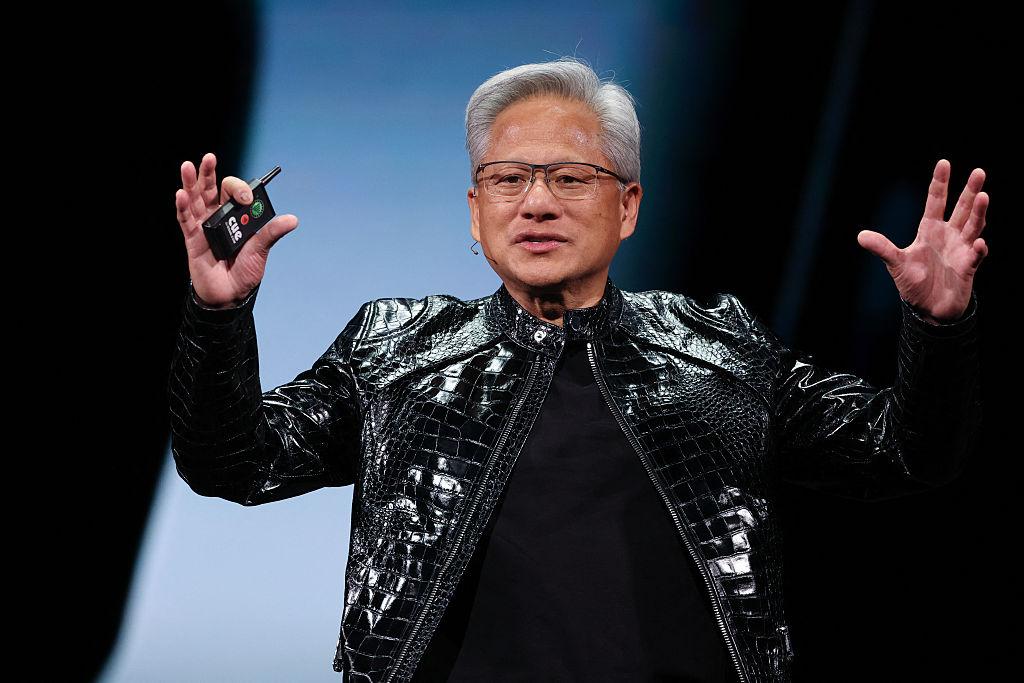
Jensen Huang spent 33 years transforming Nvidia from a specialist graphics-chip maker into the dominant hardware supplier of the global AI boom, with the company briefly reaching an intraday valuation of about $5.84 trillion in October 2026. His position unravelled rapidly after reports of an extramarital relationship involving a woman U.S. intelligence reportedly suspected of working for China, followed by his public admission of infidelity, an independent Nvidia board investigation and reports of a second alleged relationship with a subordinate. Huang resigned as president, CEO and board member on November 12, leaving longtime CFO Colette Kress as interim CEO while Nvidia searches for a permanent successor and attempts to reassure investors, customers and governments that its technological dominance can survive without its founder.
Jensen Huang spent more than three decades turning Nvidia from a little-known graphics chip company serving gamers and computer enthusiasts into the central hardware supplier of the artificial intelligence revolution, building an enterprise that briefly approached a valuation of $6 trillion and becoming one of the most influential executives in global technology. Yet the career that had survived semiconductor downturns, competitive threats, failed products, geopolitical pressure and repeated questions about whether the AI boom could last came to an abrupt end in November 2026 after a series of revelations involving his private life, corporate governance and national security. What began as reporting about an extramarital relationship developed in less than two weeks into an independent board investigation, FBI scrutiny, political pressure in Washington, a second alleged relationship involving a subordinate and ultimately Huang’s immediate resignation as president, chief executive and director of the company he had led since its creation in 1993.
The speed of the collapse was remarkable partly because Huang appeared nearly inseparable from Nvidia at the moment the crisis began. Only weeks earlier, the company’s shares had reached record territory, with Nvidia briefly valued at approximately $5.84 trillion during trading on October 6 as investors continued pouring money into companies associated with the global expansion of artificial intelligence infrastructure. Nvidia was no longer simply a semiconductor supplier. Its graphics processors, networking systems and CUDA software had become foundational technology for the training and operation of some of the world’s most advanced AI models, while Huang had become the person most closely associated with the belief that accelerated computing would transform virtually every major industry.
That extraordinary rise had been decades in the making. Huang founded Nvidia in 1993 with Chris Malachowsky and Curtis Priem at a time when the market for graphics processing was comparatively small and highly specialised. The company initially concentrated on chips designed to improve video game graphics, competing in an industry where numerous manufacturers appeared and disappeared as computer technology developed rapidly. Nvidia survived because it repeatedly adapted its products and eventually recognised that the parallel-processing architecture developed for graphics could be used for far more demanding computational tasks than rendering images on a screen.
The introduction and expansion of CUDA became one of the most important strategic decisions in Nvidia’s history because it allowed developers to use the company’s graphics processors for general-purpose computing. Scientists, researchers and engineers gradually discovered that GPUs could handle large numbers of mathematical operations simultaneously, making them particularly effective for machine learning. When deep learning accelerated during the 2010s and generative AI exploded into mainstream use in the early 2020s, Nvidia already possessed the hardware, software and developer ecosystem required to become the dominant supplier of computing power.
Huang personally shaped much of that strategy. Unlike many founders who eventually become distant chairmen or hand day-to-day operations to professional managers, he remained intensely involved in engineering decisions, customer relationships, product launches and corporate strategy. His management style created an unusually flat organisation with a large number of executives reporting directly to him, while his keynote presentations became major events for investors seeking clues about the future of AI spending.
As Nvidia’s value increased, Huang’s influence expanded well beyond Silicon Valley. He met presidents, prime ministers, sovereign wealth funds and technology executives around the world, promoting the idea that every country and major company would eventually need its own AI infrastructure. Governments began treating Nvidia processors as strategic economic assets, while the United States government increasingly viewed advanced GPUs as technologies with direct national security implications because of their potential uses in military systems, intelligence analysis, cyber operations and weapons research.
That geopolitical importance brought China increasingly into the centre of Nvidia’s business challenges. China remained an enormous technology market, but Washington repeatedly tightened controls on the export of the most advanced American AI processors. Huang publicly warned that restrictions that were too aggressive could drive Chinese customers toward local alternatives and ultimately weaken American technological leadership, placing him in the difficult position of advocating for commercial access to China while operating a company whose products had become central to the strategic rivalry between Washington and Beijing.
It was against that backdrop that the allegations involving Alice Huang became explosive. Reports identified her as a businesswoman connected to Singapore-based Megaspeed International and said U.S. intelligence officials suspected she had been gathering information for Beijing. The allegation was particularly sensitive because Megaspeed had already attracted scrutiny over transactions involving Nvidia processors and possible efforts to move advanced computing technology into China despite American export restrictions.
The critical issue was not simply that Jensen Huang had reportedly been involved in an extramarital relationship. If the matter had been confined entirely to his private life, the consequences for Nvidia might have been reputational rather than existential. The scandal became much more serious because the woman involved was reportedly suspected by U.S. intelligence agencies of acting on behalf of China, immediately creating questions about whether the chief executive of one of America’s most strategically important technology companies had been deliberately targeted through his personal relationship.
Nvidia responded initially by attempting to separate the personal conduct from the national security implications. On November 8, Huang sent a message to employees acknowledging that he had been unfaithful to his wife and apologising to his family, colleagues, board, partners and shareholders. He accepted responsibility for his actions, said he had fallen short of the standards expected of him and asked that his family be given privacy.
The message also directly addressed the emerging security concerns. Huang said Nvidia’s board had initiated an independent investigation and promised his full cooperation, while declaring his commitment to protecting the company and supporting U.S. national security. The apology represented an extraordinary public admission for an executive whose personal life had previously remained largely separate from the carefully managed corporate identity surrounding Nvidia.
On the same day, Nvidia’s board issued its own statement announcing that independent directors would investigate reports that Huang had been the target of a foreign intelligence effort. The board said outside independent counsel would assist the inquiry and emphasised that U.S. national and economic security were paramount to Nvidia and its shareholders. Importantly, directors said they had no reason at that stage to believe either national security or Nvidia’s confidential information had been compromised.
That qualification remains important because no public evidence has established that Huang knowingly provided sensitive information to China or intentionally helped circumvent U.S. export controls. The existence of an alleged intelligence effort and a personal relationship does not prove espionage, and Nvidia has continued to maintain that it has no evidence its secrets were compromised. China has also rejected allegations that the woman involved was acting as a spy.
Nevertheless, the investigation immediately raised serious governance questions. Legal and corporate experts began asking whether Huang had disclosed the relationship to Nvidia’s board, whether company compliance officials were aware of it and whether any commercial decisions involving businesses connected to the woman could create conflicts of interest. Nvidia’s own code of conduct identifies certain personal relationships as situations capable of creating actual or perceived conflicts, making disclosure an important part of the board’s inquiry.
The crisis became more serious because Nvidia had spent years operating under an unusually founder-centric governance model. Huang exercised enormous authority as chief executive, strategic visionary and public face of the business, while several board members had served alongside him for long periods. Reuters reported that the company’s board had no independent chair at the time the scandal erupted, creating questions about whether directors were sufficiently independent to investigate the person who had shaped the company for more than three decades.
The board attempted to address those concerns by retaining outside investigators, including former acting U.S. Attorney Joon H. Kim and the law firm Wachtell, Lipton, Rosen & Katz. Bringing in independent counsel was intended to give shareholders greater confidence that the inquiry would examine the facts without being influenced by Huang’s longstanding relationships with directors or his enormous importance to the company.
Political pressure also increased rapidly. President Donald Trump said publicly that the FBI was examining the matter, although he expressed confidence in Huang and suggested the executive would ultimately be fine. Members of Congress demanded additional information about potential national security risks and began asking whether Nvidia’s China business and U.S. export policy had been influenced by relationships that should have been disclosed.
Those questions extended beyond Huang personally because Nvidia had become deeply involved in Washington’s debate over semiconductor controls. The company repeatedly lobbied the federal government over what kinds of chips it should be allowed to sell to Chinese customers, while U.S. policymakers attempted to prevent Beijing from obtaining processors powerful enough to support advanced military and intelligence applications. Any suggestion that a foreign intelligence service had gained personal access to Nvidia’s chief executive therefore carried consequences far beyond an ordinary corporate scandal.
The Megaspeed connection made the situation even more difficult. Reports linked the Singapore-based company and associated entities to billions of dollars worth of Nvidia processor transactions and alleged that some shipments may have been connected to efforts to move technology into China. Separate reporting placed the value of scrutinised Nvidia-related shipments at several billion dollars, although the various figures described different transaction groups and should not be treated as one unified total.
Nvidia and businesses connected to the transactions have denied wrongdoing, while authorities in countries including Singapore and Malaysia have examined allegations concerning the movement of advanced chips. The investigations reflect the broader challenge faced by U.S. regulators because sophisticated technology can be purchased through distributors and data centres in third countries before ultimately being accessed by Chinese customers.
The scandal therefore created a dangerous convergence of personal conduct, geopolitics and corporate compliance. Huang was not merely being asked whether he had violated expectations within his marriage. Investigators were examining whether his private conduct had created an opening through which foreign intelligence could potentially gain access to information about Nvidia, U.S. technology policy or commercial relationships involving restricted processors.
Even then, Huang’s position did not appear immediately doomed. Nvidia’s board initially expressed confidence in him, and his November 8 message told employees that he remained fully committed to leading the company. Investors were shaken, but there was still a plausible path in which the investigation could conclude that his personal misconduct had no effect on company secrets or commercial decisions.
That path narrowed dramatically when a second alleged relationship emerged. Reports said Huang had also been involved with a woman inside Nvidia who reported within his organisational structure, shifting the scandal from an external intelligence concern into a direct corporate governance issue. An intimate relationship between a chief executive and a subordinate can raise questions involving workplace power, conflicts of interest, promotion decisions and whether company rules were properly followed.
The second allegation proved particularly damaging because it weakened the argument that the controversy involved one isolated personal mistake complicated by circumstances outside Huang’s control. Instead, directors now faced questions about a pattern of conduct and whether the company’s founder had repeatedly placed personal relationships in positions capable of creating professional conflicts.
The Financial Times reported that the second revelation became decisive in the final stages of the crisis. Directors were increasingly confronted with the possibility that maintaining Huang as chief executive could prolong uncertainty, expose the company to additional disclosures and undermine confidence in the investigation itself. What had initially been framed as an inquiry into whether a foreign intelligence operation had targeted Huang increasingly became a broader examination of his judgement and Nvidia’s governance culture.
The market reaction intensified alongside the disclosures. Nvidia shares fell sharply as investors attempted to estimate not only the reputational damage but also the operational consequences of losing the person who had directed the company’s strategy for 33 years. The stock had already fallen substantially from its early October peak before Huang resigned, and the leadership crisis erased hundreds of billions of dollars in additional market value.
On November 12, Nvidia announced the outcome that had appeared almost unthinkable days earlier. Huang resigned as president, chief executive and member of the board effective immediately. There was no lengthy transition period, no role as executive chair and no gradual handover designed to preserve continuity. The executive who had been synonymous with Nvidia since its creation was suddenly outside the formal leadership structure.
The board appointed longtime Chief Financial Officer Colette Kress as interim chief executive while beginning a search that will consider both internal and external candidates. Kress has been with Nvidia since 2013 and played a major role in managing the financial expansion that accompanied the company’s transformation into the dominant supplier of AI processors. Her appointment provided immediate institutional continuity, but it also made clear that the board had not identified a permanent successor before Huang’s departure.
Harvey C. Jones was simultaneously appointed Nvidia’s first-ever chair of the board. That decision was highly significant because it represented an immediate structural change in response to criticism that the company’s governance arrangements had concentrated too much authority around Huang. Establishing an independent chair potentially gives directors greater ability to oversee management and signals that the post-Huang Nvidia may operate under a more conventional corporate structure.
The absence of a clear succession plan nevertheless exposes one of the biggest weaknesses revealed by the scandal. Nvidia had become one of the largest and most strategically important companies in the world, yet its founder remained so central to decision-making that there was no obvious replacement capable of stepping directly into every aspect of his role. Huang was simultaneously chief technologist, salesman, political negotiator, supply-chain strategist and public evangelist for artificial intelligence.
Replacing a conventional chief executive is difficult. Replacing someone who has shaped the company’s architecture, culture and external relationships for more than three decades is substantially harder. Nvidia must now determine whether it can distribute Huang’s responsibilities across a stronger executive team rather than attempting to find one individual capable of replicating his unique role.
Kress will face the first test almost immediately because Nvidia is scheduled to report quarterly earnings on November 17. Analysts expect extraordinary financial results, with estimates suggesting revenue could exceed $100 billion for the quarter as demand for AI infrastructure remains intense. The numbers will therefore provide a striking contrast between the company’s operational strength and the governance crisis surrounding its leadership.
Investors will focus less on the historical results than on what management says about future orders, customer relationships and strategic continuity. Nvidia’s customers include Microsoft, Amazon, Google, Meta, Oracle, CoreWeave and numerous other companies spending hundreds of billions of dollars collectively on data centres and AI systems. Any indication that Huang’s departure is delaying purchasing decisions could become more damaging than the scandal itself.
The company’s biggest immediate advantage is that its technology does not disappear because its founder resigned. Nvidia remains the dominant provider of high-end AI accelerators, and its CUDA software ecosystem is deeply embedded throughout machine learning development. Customers that have built software, data centres and networking infrastructure around Nvidia products cannot simply shift overnight to another supplier without significant technical and financial costs.
The Blackwell generation and the coming Rubin platform are also the products of years of engineering work involving thousands of employees. Roadmaps for semiconductor manufacturing, high-bandwidth memory, advanced packaging, networking and server systems are planned years in advance. Those programmes therefore have significant institutional momentum independent of Huang’s personal involvement.
The problem is that Huang played a major role in coordinating those different pieces. Nvidia does not simply design chips. It works closely with Taiwan Semiconductor Manufacturing Company on fabrication, companies such as SK Hynix and Samsung on advanced memory, server manufacturers on complete systems, cloud providers on massive deployments and governments on national AI projects. Huang personally cultivated many of those relationships.
The successor must therefore reassure partners that Nvidia’s execution will remain disciplined. Suppliers need confidence that capacity forecasts remain reliable, customers need confidence that product schedules will be maintained and governments need confidence that the company can manage increasingly sensitive geopolitical responsibilities.
That requirement makes an internal candidate potentially attractive because senior Nvidia executives already understand the technology and organisational culture. However, an external candidate could offer a stronger break with the governance practices exposed by the scandal and may be better positioned to restructure management around clearer accountability.
Whoever receives the permanent appointment will also inherit a changed competitive environment. AMD continues investing heavily in AI accelerators, Broadcom is expanding custom chip partnerships and major cloud companies are designing proprietary processors to reduce their dependence on Nvidia. Google’s TPUs, Amazon’s Trainium systems and other custom silicon programmes represent increasingly serious alternatives for certain workloads.
Huawei is another strategic concern. U.S. restrictions on Nvidia sales to China were intended partly to slow Beijing’s access to advanced computing power, but they have also encouraged Chinese companies to accelerate development of domestic alternatives. Huang repeatedly warned Washington that excluding Nvidia from China could ultimately strengthen local competitors, and his departure may weaken the company’s ability to influence that policy debate.
The scandal itself could produce even tighter export restrictions. Lawmakers who were already sceptical of Nvidia’s China lobbying may argue that the reported intelligence concerns demonstrate why advanced AI processors require stronger controls and more aggressive end-user verification. That could reduce Nvidia’s ability to sell modified chips to Chinese customers and accelerate the fragmentation of the global semiconductor market.
The company also faces scrutiny over its increasingly complex financial relationships within the AI ecosystem. Nvidia has invested in or supported companies that also purchase large quantities of its hardware, creating what critics describe as circular financing. CoreWeave is one of the most prominent examples because the cloud company has bought enormous quantities of Nvidia GPUs while also receiving investment and strategic support from the chipmaker.
Those arrangements were attractive while investors believed AI demand would continue growing almost without limit. Huang’s departure has encouraged renewed examination of whether some infrastructure investment depends too heavily on Nvidia helping customers finance purchases of Nvidia products. If the company becomes more conservative under new leadership, weaker customers may struggle to maintain the same pace of spending.
That possibility helps explain why the leadership crisis affected other AI-related stocks rather than remaining isolated to Nvidia. The company has become the financial and technological centre of an ecosystem involving data centre operators, networking firms, power companies, semiconductor manufacturers and construction groups. Anything that slows Nvidia’s expansion could therefore affect capital spending far beyond the company itself.
The broader market environment is also less forgiving than it was during the strongest stages of the AI rally. Investors are questioning how quickly companies will generate profits from the hundreds of billions of dollars being spent on AI infrastructure, while higher interest rates and inflation make debt-funded data centre projects more expensive. Huang had been one of the most persuasive advocates for the idea that global computing infrastructure was undergoing a permanent transformation requiring trillions of dollars of investment.
Nvidia must now sell that vision without its most effective spokesperson. Kress can explain the finances, and the company has experienced engineering leaders capable of discussing technology, but Huang combined those roles in a way few executives can match. His appearances could move markets and influence government policy because investors treated him as both a corporate leader and an authority on the future direction of computing.
The cultural consequences inside Nvidia may be equally important. Employees joined and remained at the company partly because of the founder’s reputation and the extraordinary wealth created through Nvidia stock compensation. A prolonged leadership vacuum could create opportunities for competitors to recruit senior engineers and managers, particularly if employees become concerned that the company’s aggressive culture or product direction will change.
The board will therefore need to move carefully but cannot allow the search to become indefinite. Selecting a successor too quickly could produce a poor decision at the most sensitive moment in Nvidia’s history, while taking too long could create uncertainty across an organisation accustomed to highly centralised leadership.
There is also the unresolved question of what the independent investigation will discover. Huang’s resignation does not close the inquiry because directors still need to establish whether company rules were violated, whether any relevant relationships were concealed, whether commercial decisions were affected and whether sensitive information was exposed. Those findings could influence shareholder lawsuits, regulatory action and the company’s future governance arrangements.
If investigators conclude that no Nvidia secrets or national security information were compromised, the most serious damage may ultimately remain concentrated around governance, reputation and succession. That would still be a substantial crisis, but it would allow the company to focus primarily on rebuilding leadership and strengthening controls.
If evidence emerges that sensitive information was transferred, export restrictions were circumvented or commercial decisions were improperly influenced, the consequences could become far more severe. Federal regulators could impose penalties, Congress could pursue additional investigations and Washington could reconsider how much freedom Nvidia should have in negotiating technology access with foreign governments and customers.
The FBI’s involvement therefore keeps the national security component alive even after Huang’s resignation. Investigators may examine communications, business relationships and whether foreign intelligence personnel deliberately attempted to gain access to Nvidia through personal relationships. None of those questions has been resolved publicly, and they should not be treated as proof of criminal conduct.
China has denied the espionage allegations and is likely to view the controversy through the wider strategic competition with Washington. Beijing has long accused the United States of using national security as justification for limiting China’s technological development. Any new restrictions imposed on Nvidia could therefore become another point of confrontation between the two countries.
That geopolitical pressure creates a particularly difficult environment for the next CEO. Nvidia must satisfy Washington that it is protecting sensitive technology while simultaneously maintaining access to international markets large enough to support its extraordinary valuation. It must also reassure countries outside the United States and China that they will continue receiving technology needed for national AI infrastructure.
Another strategic question involves whether Nvidia should become less dependent on one charismatic leader. Huang’s management style was extraordinarily successful, but the crisis has exposed the risks associated with concentrating strategic authority, political relationships and corporate identity around a single individual. The appointment of an independent chair suggests the board recognises the need for a different balance.
A stronger post-Huang governance model could include clearer separation between the board and executive management, more formal succession planning, stronger compliance leadership and tighter procedures governing executive conflicts of interest and foreign contacts. Those changes could make Nvidia less founder-driven but potentially more resilient as a mature global corporation.
Some employees and investors may ultimately view that transition as healthy. Nvidia grew so rapidly during the AI boom that elements of its governance structure still resembled those of a founder-controlled technology company rather than a multinational enterprise whose products influence global economic and national security policy. Huang’s departure creates an opportunity to redesign those systems even though the circumstances forcing the change are deeply disruptive.
The risk is that reform could also reduce the speed that helped make Nvidia successful. Huang was known for bypassing conventional management layers and communicating directly with large numbers of employees, allowing him to move resources quickly when he believed technology was shifting. A more bureaucratic structure could improve oversight while slowing decision-making in an industry where product cycles and competitive threats move extremely quickly.
The board must therefore preserve the advantages of Nvidia’s engineering culture without reproducing the governance weaknesses exposed by the scandal. That balance may be the defining challenge of the next several years.
The company’s extraordinary financial strength gives it time. Nvidia generated $96.2 billion in revenue during its fiscal second quarter alone, more than double the figure from a year earlier, and has enormous cash flow available for research, investment and strategic deals. Demand for its processors remains strong enough that customers continue competing for access to supply.
Those fundamentals explain why some investors believe the selloff could eventually prove temporary. Nvidia’s competitive position rests on engineering, software, manufacturing relationships and customer dependence that cannot easily be replicated by a single rival. Even without Huang, the company still possesses many of the assets that created the AI boom.
Others argue that valuation itself is the danger. When a company is worth several trillion dollars, investors are already assuming extraordinary future growth. Leadership uncertainty, tighter China restrictions or slower AI spending therefore do not need to destroy Nvidia’s business to cause significant damage to its share price. Even a modest reduction in long-term expectations can erase hundreds of billions of dollars in market value.
That explains the violent trading following Huang’s resignation. Nvidia shares fell as much as roughly 14 percent during Thursday’s session before recovering part of those losses, while the stock remains dramatically below its early October high. The selloff reflects both the specific leadership crisis and a broader reassessment of how much investors should pay for companies tied to AI infrastructure.
The upcoming earnings report will be the first major opportunity for Kress to calm those concerns. Investors will want guidance on demand for Blackwell systems, the transition to Rubin, capital spending by cloud customers and Nvidia’s exposure to China. They will also listen carefully for any indication that employees, suppliers or major customers have reacted negatively to Huang’s departure.
The permanent CEO decision will follow as another crucial test. Nvidia could choose an experienced internal engineering or business leader, recruit from another semiconductor company or look for a broader technology executive capable of managing the company’s geopolitical role. Each option would send a different signal about whether the board wants continuity or cultural change.
Trump’s suggestion that former Apple chief Tim Cook could be considered illustrates how unusual the search may become, although there is no indication that Cook is a candidate or interested in the role. The scale of Nvidia means the board will inevitably consider executives with experience running extremely large global technology organisations.
Whoever takes over will inherit a company very different from the one Huang founded in 1993. Nvidia is now infrastructure for the AI economy, a major force in U.S. industrial policy, a crucial customer for Asian semiconductor manufacturers and a company whose stock movements can influence entire global equity indexes. Managing it requires not only technical expertise but also diplomatic, financial and political judgement.
The successor will also inherit Huang’s unfinished strategic bets. Nvidia is expanding beyond chips into networking, robotics, autonomous vehicles, enterprise AI platforms and complete data centre systems. Huang increasingly described the company not as a semiconductor manufacturer but as a provider of entire computing factories designed to produce artificial intelligence.
Whether the next chief executive continues that expansive strategy or concentrates more narrowly on Nvidia’s core hardware franchise could reshape the company. A more conservative leader might reduce investments in customers and speculative infrastructure projects, while a successor committed to Huang’s vision could continue spending aggressively to maintain Nvidia’s dominance across the AI stack.
The board’s decision therefore involves more than finding someone capable of running existing operations. It is effectively choosing what kind of company Nvidia will become after its founder.
Huang’s own future remains uncertain. His resignation removed him from formal leadership, but his historical importance, wealth, share ownership and relationships throughout the industry mean he is unlikely to disappear completely from the technology world. The extent to which he remains publicly involved may depend partly on the findings of the continuing investigations.
There has already been speculation that other technology companies could seek his expertise. Elon Musk publicly said it would be an honour to hire Huang after suggestions that he could join one of Musk’s businesses, although no formal offer or agreement has been announced. For the moment, any discussion of Huang’s next role remains speculative.
His legacy at Nvidia will also be complicated. Few executives in modern corporate history have created as much shareholder value or played such a central role in developing a transformative technology platform. Nvidia moved from producing graphics cards for gamers to becoming the company providing much of the computing infrastructure behind generative AI, and that achievement will remain central to any assessment of Huang’s career.
Yet the manner of his departure ensures that governance and personal judgement will now become part of that legacy. The fact that a company worth nearly $6 trillion could be thrown into a succession crisis because of revelations involving its founder highlights the risk of allowing corporate identity and authority to become too concentrated around one person.
The scandal also demonstrates that personal conduct can become a corporate issue when the executive involved controls strategically sensitive technology. A relationship that might have been treated primarily as private misconduct at another company became a potential national security concern at Nvidia because Huang had access to information affecting global semiconductor supply, U.S. export policy and government relationships.
That reality is unlikely to disappear after his resignation. Other technology companies involved in AI, defence, quantum computing and critical infrastructure may now review how they assess foreign contacts and personal relationships involving senior executives. Corporate security practices developed for traditional industrial espionage may need to adapt to an era in which executives themselves are valuable intelligence targets.
For Nvidia, however, there is little time for reflection. The company must report earnings, maintain product launches, reassure customers and choose a permanent leader while simultaneously cooperating with multiple investigations. Every one of those tasks would be difficult under normal circumstances, and they are now occurring at the same time.
The strongest argument for Nvidia’s resilience is that the technological ecosystem Huang built is larger than Huang himself. Tens of thousands of employees continue designing processors, software and networking systems, while customers have committed enormous capital to infrastructure built around those technologies. The company’s competitive advantage is embedded in products and software rather than existing solely in one executive’s reputation.
The strongest argument for caution is that Huang was the person who repeatedly anticipated technological shifts before competitors and was willing to make enormous bets when the outcome remained uncertain. Nvidia’s transformation from gaming graphics to AI computing was not inevitable, and much of the strategic conviction behind that transition came directly from him. Investors therefore cannot assume that future leadership will identify opportunities with the same accuracy.
The next era of Nvidia will ultimately answer that question. If Kress and the permanent successor maintain execution, preserve key engineering talent and navigate Washington and Beijing successfully, Huang’s departure may eventually become remembered as a dramatic governance crisis that the company survived. If product execution slows, customers diversify more rapidly or investigations produce deeper legal problems, November 2026 could instead be remembered as the moment Nvidia’s extraordinary rise began to fracture.
What is certain is how quickly the situation changed. On October 6, Nvidia was worth roughly $5.8 trillion and Huang appeared to be one of the most secure and powerful executives in global business. By November 8, he was publicly apologising for infidelity and cooperating with a board investigation into national security concerns. Four days later, he was gone.
Thirty-three years of corporate leadership ended in less than two weeks of escalating disclosures. The company he left behind remains extraordinarily profitable, technologically dominant and central to the global AI economy, but it now faces a question it had spent decades avoiding: whether Nvidia can remain Nvidia without Jensen Huang.
The answer will not be determined by one earnings report or a single share-price movement. It will depend on whether the company can transform itself from a founder-led technology empire into a durable institution with stronger governance, broader leadership and enough strategic confidence to keep ahead of rivals in one of the fastest-moving industries in the world.
That transformation may ultimately prove to be Huang’s final unintended test for the company he built. Nvidia survived technological revolutions because he repeatedly reinvented it before competitors could respond. It must now prove that the institution he created can reinvent itself once more, this time without him.