HUMAN RIGHTS WATCH ACCUSES MALI’S MILITARY AND RUSSIAN ALLIES OF DEADLY DRONE STRIKES AS CIVILIAN TOLL RISES DURING COUNTERINSURGENCY CAMPAIGN
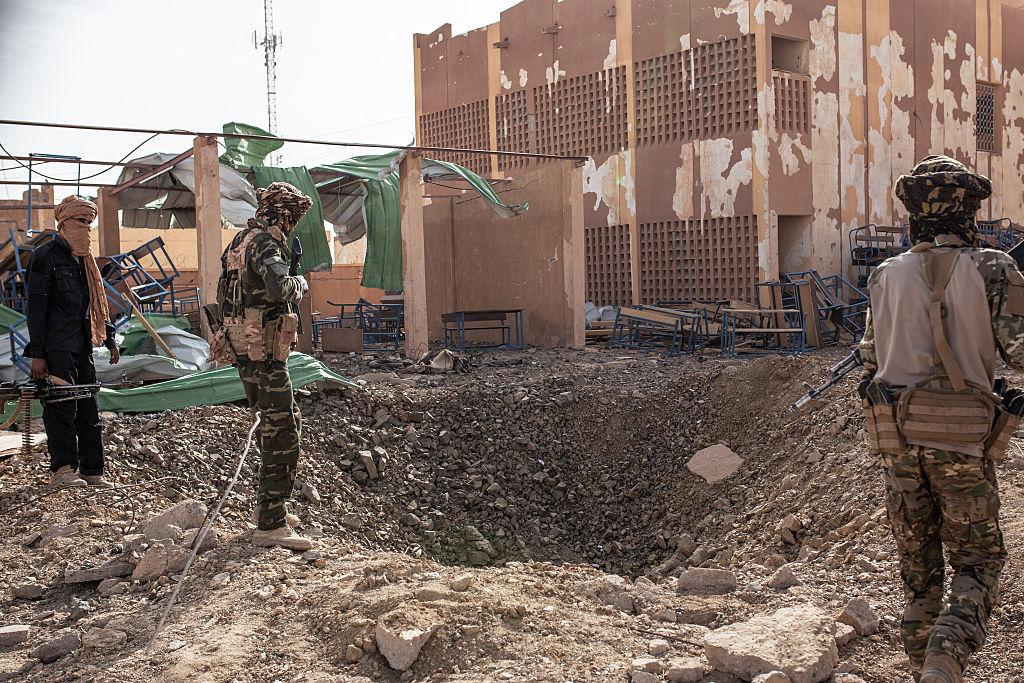
Human Rights Watch has accused Mali’s armed forces and their Russian Africa Corps allies of carrying out apparently indiscriminate drone strikes and other abuses during an intensified counterinsurgency campaign in central and northern Mali. Reuters reported that ACLED data showed 47 drone strikes killed 94 civilians between April and August 2026, more than double the 22 strikes and 44 civilian deaths recorded during the same period in 2025. HRW documented attacks on a cattle market and a health facility, as well as the alleged killing of five girls by Malian soldiers. The organisation also accused JNIM and Tuareg-led separatists of serious abuses, including the torture and execution of captured soldiers.
Human Rights Watch has accused Mali’s armed forces and their Russian military partners from the Africa Corps of carrying out drone strikes and other counterinsurgency operations that caused heavy civilian casualties across central and northern Mali during some of the country’s most intense fighting of 2026. In a report released on Monday, October 19, the organisation said civilians were killed and wounded in what it described as apparently indiscriminate attacks, while other alleged abuses included shootings and unlawful killings during ground operations. Reuters, citing conflict-monitoring data referenced in the report, said Malian forces and the Africa Corps carried out 47 drone strikes between April and August that resulted in 94 civilian deaths, more than double the number of strikes and civilian deaths recorded during the same five-month period in 2025.
The allegations come amid a major escalation in Mali’s long-running conflict involving the military government, al-Qaeda-linked Jama’at Nusrat al-Islam wal-Muslimin, commonly known as JNIM, and Tuareg-led separatist forces operating in the north. The situation deteriorated sharply after coordinated insurgent attacks on April 25 struck military positions, towns, infrastructure and Bamako’s main airport, killing Mali’s defence minister and exposing the continuing security challenges facing the authorities despite years of military operations and extensive Russian support. Human Rights Watch said the government’s subsequent counteroffensive relied heavily on air power, including armed drones, but that some operations failed to sufficiently distinguish between military targets and civilians.
Mali’s military government has increasingly turned to Russia for security assistance since the coups of 2020 and 2021, gradually reducing cooperation with Western partners while deepening ties with Russian military personnel and equipment suppliers. The Wagner Group initially became the most visible Russian force operating alongside Malian troops, but Russia later reorganised its overseas deployments under the Africa Corps structure. Human Rights Watch said Russian personnel working with Malian forces have participated in operations that resulted in civilian deaths, while Reuters reported that neither Mali’s armed forces nor the Russian embassy in Bamako provided immediate responses to the latest allegations.
The report documents several incidents that Human Rights Watch says illustrate the risks civilians face during the intensified counterinsurgency campaign. One of the most serious occurred on August 19 at a cattle market in Tombonkore village in Mali’s central Bandiagara region. Witnesses told Human Rights Watch that a military drone circled the village for an extended period before releasing a munition into the market, killing six men and injuring at least 20 other people. The strike also killed animals and destroyed market stalls and motorcycles, leaving survivors with severe injuries that in some cases required amputations.
Witnesses interviewed by the organisation said JNIM fighters controlled areas around Tombonkore but were not present inside the market when the strike occurred. Human Rights Watch said the drone reportedly remained above the village long enough to suggest that the location was being observed before the weapon was released. The organisation said this raised serious questions about whether those operating the aircraft took sufficient precautions to confirm that a military target was present before attacking a place where civilians had gathered for ordinary commercial activity.
Human Rights Watch could not independently determine the exact model of drone or munition used in the Tombonkore attack, but it said witness descriptions were consistent with larger military drones known to be operated by Malian forces and their Russian partners. Mali has acquired Turkish-made Bayraktar TB2 and Akinci drones in recent years, while Russia has also supplied aircraft and drone capabilities to forces supporting Bamako. The growing use of such systems has given the military greater ability to strike remote areas, but human rights organisations have repeatedly warned that expanded air operations have also increased the danger to civilians when targeting procedures are weak or when intelligence is inaccurate.
Another attack documented by Human Rights Watch occurred before dawn on July 29 in Talahandak village in the northern Kidal region, near Mali’s border with Algeria. The organisation said an apparent Malian military drone strike partially destroyed a health facility, raising concerns because medical buildings and civilians receiving treatment are protected under international humanitarian law unless those facilities are being used for military purposes. Human Rights Watch said it verified and geolocated video showing the damage and reviewed photographs of drone debris as part of its investigation.
The organisation said it conducted remote interviews with 30 people between late July and September, including witnesses to abuses, community leaders, journalists, human rights defenders and one Malian soldier. It also reviewed photographs and video material from several incidents and attempted to obtain responses from Malian authorities before publishing its findings. Human Rights Watch said it sent detailed questions to Mali’s defence minister in August but received no response before the report was released.
The drone allegations form only part of the wider pattern of abuse described in the report. Human Rights Watch also documented an incident on July 12 in the Ségou region in which Malian soldiers allegedly shot and killed five girls after mistaking them for attackers during a security operation. The organisation said the killings took place as military units were responding to insurgent activity and argued that the deaths demonstrated the dangers created when troops use lethal force without adequately identifying their targets.
Human Rights Watch also accused allied Dozo militia members of killing civilians in central Mali. Dozo hunters have sometimes fought alongside government forces against jihadist groups, but rights organisations have accused some militia units of carrying out retaliatory violence against communities suspected of supporting insurgents. The report said three civilians were killed by allied Dozo fighters in the Mopti region during July, adding to a broader pattern of abuse in which civilians can face threats not only from jihadists and separatists but also from forces claiming to protect them.
The findings underline the complicated nature of Mali’s conflict because violence is being committed by several sides rather than only by state forces. Human Rights Watch also accused JNIM and Tuareg-led separatist fighters from the Azawad Liberation Front of serious violations of the laws of war, including torture and execution of captured soldiers. The organisation said the two armed groups attacked a Malian military convoy in the Gao region on July 18 and later tortured and executed at least 19 soldiers who had been taken prisoner.
JNIM’s Sharia Committee acknowledged to Human Rights Watch that the killings occurred but denied that the executions had been authorised by the group’s leadership, saying such actions were not its policy. The Azawad Liberation Front separately denied responsibility for executing captured soldiers. Human Rights Watch nevertheless said the incident required investigation and stressed that captured fighters are protected under international humanitarian law and cannot lawfully be tortured or summarily executed.
The report therefore presents a picture of a conflict in which civilians and captured combatants face serious threats from multiple armed actors. Human Rights Watch called on the African Union Peace and Security Council to increase scrutiny of the situation and press all parties to stop violations, arguing that international institutions have not responded with sufficient urgency despite evidence of repeated abuses.
The organisation wants the African Union to hold a dedicated session on civilian protection in Mali and to press for independent investigations into alleged abuses committed by the military, Russia’s Africa Corps, allied militias, JNIM and separatist forces. Human Rights Watch also urged the Malian authorities to investigate specific incidents identified in the report and hold those responsible accountable where violations are established.
The civilian casualty figures cited in Reuters’ October 19 report underline the scale of the escalation. Reuters said data from the Armed Conflict Location & Event Data Project, known as ACLED, showed that Malian forces and the Africa Corps carried out 47 drone strikes between April and August 2026, resulting in 94 civilian deaths. During the same period in 2025, the monitoring group recorded 22 strikes and 44 civilian deaths, indicating that both the frequency of drone attacks and the number of civilians killed more than doubled within a year.
Human Rights Watch’s currently published webpage contains slightly different ACLED figures, listing 49 airstrikes and 89 civilian deaths for the April to August 2026 period. This discrepancy appears to reflect either an updated version of the underlying dataset or a difference in how incidents were classified between the Reuters report and the final Human Rights Watch publication. Because Reuters directly reported 47 strikes and 94 civilian deaths on October 19, those are the figures attached to the Reuters version of the story, while VNTV should note that Human Rights Watch’s own current online report gives 49 strikes and 89 civilian deaths. The difference does not alter the broader finding that civilian casualties and air operations increased sharply compared with the same period in 2025.
The increase in drone warfare reflects a broader change in Mali’s military strategy. The armed forces have struggled for more than a decade to contain jihadist groups that operate across large areas of the north and centre, often using rural terrain, cross-border routes and local networks to avoid conventional military confrontation. Drones give the government the ability to monitor and strike targets in areas that are difficult for ground forces to reach, but the technology also introduces risks when operators rely on incomplete intelligence or fail to distinguish fighters from civilians.
Mali’s military has previously denied accusations that it deliberately targets civilians and has defended its counterinsurgency operations as necessary responses to armed groups that have killed soldiers, government officials and civilians. The authorities have frequently accused rights organisations of exaggerating allegations or relying on information from communities under insurgent influence. Human Rights Watch, however, says the incidents it documented were supported by witness accounts, geolocation work, photographic analysis and other evidence.
The Africa Corps has become an increasingly important part of the security structure supporting Mali’s military government. The force emerged after Russia reduced the overseas role of the Wagner Group and moved many of its African military relationships under more direct state control. Russian personnel have provided combat support, training and equipment in Mali, and their presence has been promoted by the government as evidence that the country can pursue a security strategy independent of former colonial power France and other Western partners.
That geopolitical shift has been one of the defining features of Mali’s post-coup politics. French troops withdrew after relations with Bamako deteriorated, while the United Nations peacekeeping mission also ended its deployment. Mali then strengthened cooperation with Russia and developed closer security ties with neighbouring military-led governments in Burkina Faso and Niger.
Despite these changes, armed groups have remained capable of mounting significant attacks. The April 25 offensive demonstrated the continued reach of JNIM and Tuareg separatists when they attacked multiple locations across the country. Reuters reported that the attacks killed Mali’s defence minister and hit towns, cities and the main airport in Bamako, prompting an intensified government response.
The government’s difficulty in defeating insurgents has increased political pressure on the military leadership because improving security was one of the principal justifications given after the coups that removed the previous civilian government. Military authorities argued that the former leadership had failed to protect the country and promised a stronger response to jihadist violence, but insurgent operations have continued and in some areas expanded.
Civilian harm can also undermine the government’s own security objectives. When airstrikes kill traders, patients or children, affected communities may become more distrustful of state forces, creating grievances that insurgent groups can exploit. Counterinsurgency specialists have long warned that operations causing large numbers of civilian casualties can strengthen recruitment by armed groups rather than weaken them.
The Tombonkore cattle market attack illustrates that danger. Markets are central to rural economic life in Mali, bringing together traders, farmers, herders and families from surrounding villages. An attack on such a location can damage local livelihoods long after the immediate casualties have been counted, particularly if residents become afraid to gather for normal commercial activity.
The reported attack on the health centre in Talahandak creates similar concerns because access to medical care is already limited in many conflict-affected regions. Destroying or damaging a health facility can affect entire communities, especially where the nearest alternative may be many kilometres away.
International humanitarian law requires all parties to an armed conflict to distinguish between civilians and combatants and between civilian objects and military targets. Attacks must also avoid causing civilian harm that would be excessive in relation to the anticipated military advantage. Human Rights Watch says the incidents it documented raise questions about whether those standards were respected.
Describing a strike as apparently indiscriminate is a serious allegation because it suggests the attacker may have failed to direct the weapon at a specific military objective or used force in circumstances where civilians could not adequately be distinguished from fighters. Determining criminal responsibility, however, requires a full investigation into the intelligence available to commanders, the intended target and the precautions taken before the attack.
Human Rights Watch has therefore called for independent investigations rather than simply treating its own findings as a substitute for legal proceedings. The organisation wants Malian authorities to examine military conduct transparently and to cooperate with regional human rights mechanisms.
The government’s failure to respond publicly to the latest allegations leaves several questions unanswered. There has been no detailed military explanation of the Tombonkore or Talahandak strikes, and Reuters said a Malian army spokesperson did not respond to its request for comment. The Russian embassy in Bamako similarly did not immediately answer questions about the Africa Corps.
That absence of response does not itself prove the allegations, but it means the accusations currently stand without a detailed official rebuttal to the specific evidence presented by Human Rights Watch. Mali has previously denied that its security forces intentionally kill civilians during counterinsurgency operations.
The government has also accused jihadist groups of operating among civilian populations and using communities as cover, a tactic that can make targeting more difficult. Even where insurgents operate close to civilians, however, international law still requires armed forces to take feasible precautions to minimise civilian casualties.
JNIM’s own abuses remain a major part of the conflict. The al-Qaeda-linked organisation has carried out attacks on soldiers, government representatives, infrastructure and civilians while expanding influence across sections of the Sahel. Human Rights Watch data cited in its report indicate that JNIM forces killed 134 civilians between April and August 2026, reinforcing the fact that civilians face danger from multiple sides.
The execution of captured soldiers in Gao was one of the most serious abuses attributed to the insurgent camp in the new report. Human Rights Watch said at least 19 Malian troops who had surrendered were tortured and killed after the July 18 attack. Executing prisoners is prohibited under the laws of armed conflict regardless of allegations concerning the conduct of the opposing military.
The dispute over responsibility for those killings illustrates the difficulty of accountability in a conflict involving multiple armed organisations. JNIM acknowledged the executions but denied ordering them, while the Azawad Liberation Front denied carrying them out. Human Rights Watch says those denials do not eliminate the need for a credible investigation.
The Tuareg-led separatist movement has its own history and political objectives distinct from JNIM. Separatist organisations have long sought greater autonomy or independence for the northern region often referred to as Azawad, while jihadist organisations seek to impose their own ideological and political system. The two types of armed groups can sometimes cooperate tactically against the Malian military even though their long-term objectives differ significantly.
This makes northern Mali particularly difficult for the government to control. Forces may confront jihadists, separatists and criminal networks in the same geographic areas, while civilians frequently move through territory where control changes or remains contested.
Russian involvement has added another dimension to that conflict. Moscow’s partnership with Bamako provides the junta with weapons, personnel and diplomatic support, while Western governments and rights organisations have repeatedly raised concerns about civilian abuses associated with Russian-backed operations.
The Russian government has rejected many accusations directed at its security partners in Africa and presents the Africa Corps as part of legitimate state-to-state security cooperation. Mali similarly argues that it has the sovereign right to choose its military partners after years of frustration with Western-led security interventions.
The latest Human Rights Watch report does not challenge Mali’s right to fight armed insurgents or seek foreign military assistance. Its argument is that counterinsurgency operations must still comply with international humanitarian law and that civilian casualties should be investigated rather than dismissed as an unavoidable consequence of war.
This distinction is important because the government faces genuine security threats. JNIM and other armed organisations have killed soldiers and civilians, attacked cities and sought to expand territorial influence. The controversy centres not on whether Mali may respond militarily, but on how that response is conducted.
The report’s call for African Union involvement is also significant. Human Rights Watch argues that the deterioration in civilian protection deserves greater attention from African institutions rather than being treated primarily as a dispute between Mali and Western human rights organisations.
The African Union Peace and Security Council has mechanisms for addressing armed conflict and civilian protection, and Human Rights Watch wants it to use those tools more actively. The organisation has called for sustained monitoring, public reporting and support for investigations into violations committed by all sides.
Such an approach could potentially reduce claims that accountability efforts are politically selective. Investigating military abuses alongside executions committed by JNIM or separatist fighters would make clear that the same legal standards apply regardless of which side is responsible.
Mali’s military government has often been suspicious of international criticism, especially from former Western partners. Regional African scrutiny could therefore carry different political weight, although there is no guarantee that Bamako would accept outside investigations.
The report also arrives as humanitarian conditions remain difficult across parts of Mali. Years of conflict have displaced communities, disrupted schooling and healthcare and weakened local economies. Drone strikes and insurgent attacks add another layer of insecurity for civilians already dealing with food insecurity and limited access to government services.
The use of armed drones is likely to continue because they provide tactical advantages that the military is unlikely to abandon. The central question is whether targeting systems, intelligence and accountability can improve enough to reduce civilian harm.
That will require more than technological changes. Commanders need reliable information from the ground, clear rules of engagement and mechanisms for investigating mistakes. Communities also need safe ways to report civilian casualties without fearing retaliation.
Independent documentation is especially important in areas where journalists and international observers have limited access. Security restrictions and political pressure make it difficult to verify events quickly, which is why organisations such as Human Rights Watch increasingly rely on satellite imagery, videos, photographs and remote interviews.
Those methods can provide valuable evidence but also have limitations. Remote investigators may not have access to military records or classified intelligence explaining why a target was selected. This is another reason independent official investigations remain necessary.
The discrepancy between the figures reported by Reuters and those currently displayed by Human Rights Watch also shows how conflict data can change as new incidents are verified or reclassified. Reuters cited 47 drone strikes and 94 civilian deaths based on the information available in its October 19 report, while Human Rights Watch’s current webpage cites 49 airstrikes and 89 civilian deaths from ACLED for the same period.
VNTV should therefore avoid presenting either number as an unquestionable final total. The safest formulation is that monitoring data cited around the report show roughly 50 Malian and Africa Corps air or drone strikes between April and August, with close to 90 or more civilian deaths, while Reuters specifically reported 47 drone strikes and 94 civilian deaths.
What is not disputed between the available accounts is the trend. The number of air operations and civilian deaths increased sharply compared with the same period in 2025, when 22 strikes and 44 civilian deaths were recorded.
That trend is the most important statistical finding because it shows how rapidly the aerial campaign expanded after the April insurgent offensive.
The report also places those figures alongside broader casualty data. Human Rights Watch says ACLED recorded 268 civilians killed by Malian armed forces between April and August, while JNIM killed 134 civilians over the same period. Those figures cover more than drone strikes and demonstrate that civilian deaths occurred through multiple forms of violence.
Such numbers should be treated as conflict-monitoring estimates rather than official final death tolls. Different organisations may record casualties differently depending on available evidence, geographic access and definitions.
Nevertheless, the pattern is serious enough to warrant scrutiny. Civilians are being killed by state forces, allied militias and insurgent groups in a conflict that has now lasted well over a decade.
For Mali’s military authorities, the strategic challenge is proving that their partnership with Russia is improving security without replacing one form of instability with another. Civilian deaths from government operations can weaken public confidence even if military strikes also kill insurgent fighters.
For Russia, the allegations add to scrutiny of the Africa Corps and Moscow’s expanding security role across parts of Africa. The Kremlin has sought to present Russian partnerships as alternatives to Western influence, particularly in countries where governments are dissatisfied with French, European or American security assistance.
For Human Rights Watch, the central demand is accountability. The organisation says neither the state nor armed opposition groups should be permitted to justify unlawful killings simply because they are fighting an enemy accused of serious crimes.
That principle is especially important in a conflict where all sides accuse each other of atrocities. If every actor treats the opponent’s abuses as justification for its own violations, civilian protection can collapse entirely.
The report therefore calls on the African Union and other international actors to apply consistent pressure across the conflict. The Malian military and Africa Corps should be investigated for allegedly indiscriminate strikes and unlawful killings, while JNIM and separatist groups should be held accountable for torture, executions and other abuses against captured soldiers and civilians.
The October 19 findings do not amount to a court judgment, and Human Rights Watch does not possess judicial authority to determine criminal guilt. Its report documents allegations and evidence that it believes warrant formal investigation.
That distinction should remain clear in VNTV coverage. The organisation is accusing Malian and Russian forces of serious violations, while the government and Russian embassy had not responded to the specific allegations at the time Reuters published its report.
Mali’s previous denials of civilian killings provide context but do not directly answer the evidence relating to the latest incidents.
The strongest evidence presented publicly concerns specific attacks such as Tombonkore and Talahandak, where witnesses, video and photographic material were examined. Those cases provide concrete examples behind the broader statistics.
The cattle market attack is particularly difficult to dismiss as a purely abstract casualty figure because survivors described severe injuries and long delays before receiving medical care. One victim interviewed by Human Rights Watch later required an arm amputation, while another was awaiting the amputation of his leg.
Such injuries show how civilian harm extends beyond the number of people killed. Survivors may face permanent disability, loss of income and psychological trauma, while families and communities absorb the economic consequences.
The destruction of livestock and market stalls also affects people who were not physically injured. In rural Mali, cattle markets support entire networks of herders, traders and transporters, meaning one strike can disrupt livelihoods across several villages.
Damage to a health centre creates similar consequences because hospitals and clinics may serve thousands of residents in remote areas. Even a partial destruction can reduce already limited access to medical care.
This is why international humanitarian law gives special protection to civilian objects and medical facilities. Military forces must have compelling evidence that a protected site has lost that status before deliberately targeting it.
Human Rights Watch’s concern is that the documented strikes do not appear to meet that standard based on the available evidence.
The organisation’s findings will likely add pressure on Mali’s government to provide more transparent information about drone operations. Authorities rarely publish detailed post-strike assessments or civilian casualty investigations, making independent verification difficult.
Greater transparency could help distinguish lawful military actions from errors or unlawful strikes. It could also strengthen accountability by showing whether commanders investigate incidents when civilians are harmed.
Without such mechanisms, communities may assume that civilian deaths are being ignored, deepening distrust between residents and the state.
That distrust can become strategically dangerous because intelligence from local communities is often essential to successful counterinsurgency. Residents who fear the military may be less willing to provide information about insurgent movements.
Protecting civilians is therefore not only a legal obligation but also a potential security advantage.
The conflict in Mali has repeatedly demonstrated the limits of purely military solutions. French troops, UN peacekeepers, Malian forces, Russian personnel and regional security initiatives have all operated in the country at different stages, yet jihadist groups remain capable of major attacks.
Political grievances, weak state presence, local disputes and economic hardship continue to create conditions in which armed organisations can operate.
Aerial strikes may remove specific fighters or equipment, but they cannot by themselves resolve those underlying problems.
The Human Rights Watch report therefore arrives at an important moment. Mali’s military government wants to show that its new security partnerships are producing results, while insurgent groups continue demonstrating their ability to attack state forces.
Civilian communities remain trapped between those competing armed actors.
For VNTV, the most important conclusion is not that one side alone is responsible for Mali’s crisis. The evidence presented on October 19 points instead to a conflict in which government forces, Russian allies, jihadists and separatists all face allegations of serious abuses.
Human Rights Watch’s strongest criticism of the state side concerns the rapid expansion of aerial warfare and the apparent failure in some incidents to protect civilians.
Its criticism of the insurgent side concerns torture, executions and attacks that also violate the laws of war.
The report therefore presents a broader warning that escalation is eroding civilian protection regardless of which armed actor is responsible.
As fighting continues, the demand from Human Rights Watch is that Mali’s authorities investigate alleged violations, that Russia’s military partners be subject to scrutiny rather than operating without accountability, and that armed opposition groups stop abusing prisoners and civilians.
The African Union is being asked to play a more active role because Human Rights Watch argues that continued silence or limited engagement risks normalising abuses.
Whether those calls result in independent investigations remains uncertain.
What is already clear is that Mali’s expanded drone campaign has become one of the defining features of the 2026 conflict, while civilian casualties have risen sharply alongside it.
The October 19 report now places those deaths at the centre of a wider debate over whether the government’s increasingly aggressive counterinsurgency strategy is protecting Mali or exposing more of its civilians to danger.