INDONESIA GOLD MINE DISASTER: 13 DEAD AND 13 MISSING AS HEAVY RAIN HALTS RESCUE OPERATIONS
At least 13 people have died and another 13 remain missing after heavy rainfall flooded an illegal underground gold mine in Pongkor, Bogor district, Indonesia's West Java province, on November 23, 2026. Authorities confirmed that the workers became trapped approximately 100 meters underground after river water entered the mine, prompting a major search and rescue operation involving Indonesia's National Search and Rescue Agency, police, military personnel and regional disaster management authorities. West Java Police Chief Hengki confirmed that six of the recovered bodies had been formally identified. Renewed heavy rainfall forced rescuers to temporarily suspend their search on Thursday, prolonging uncertainty for affected families and renewing concerns about the safety of unauthorized mining operations across Indonesia.
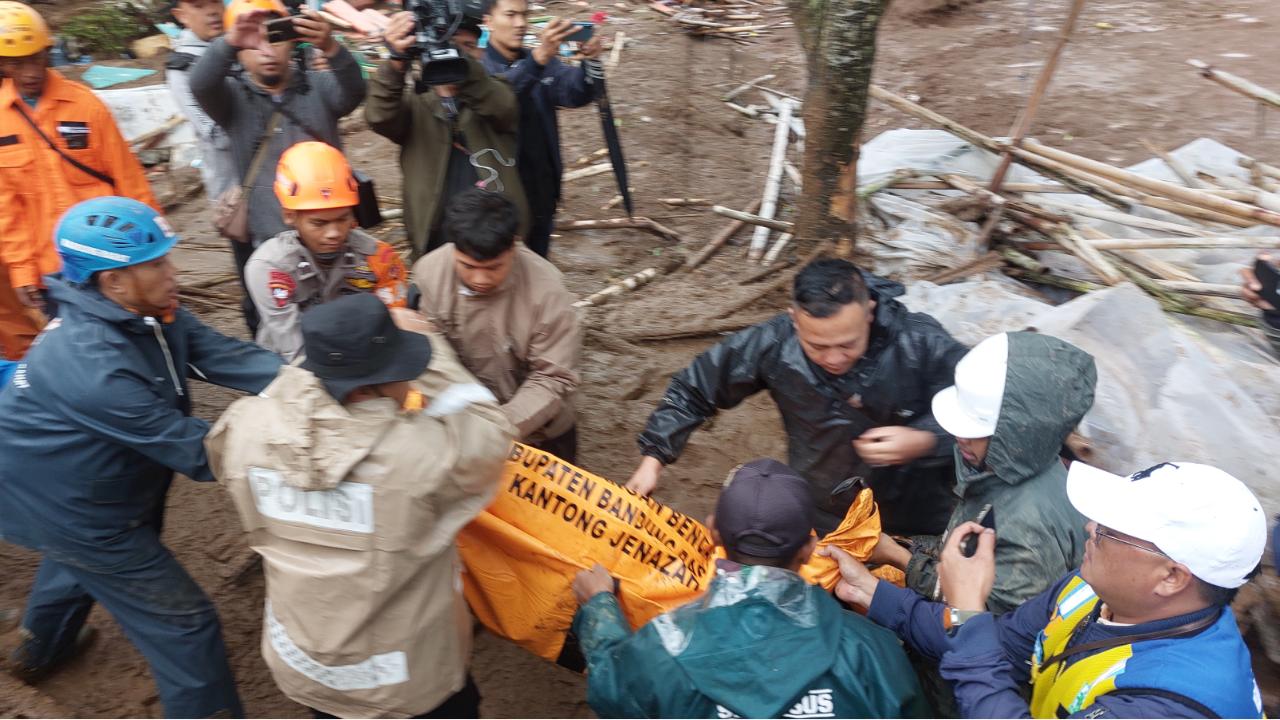
At least 13 people have died and another 13 remain missing after torrential rainfall flooded an illegal underground gold mine in Indonesia's West Java province, triggering a major emergency response and renewing concerns about the dangers of unauthorized mining operations across the Southeast Asian nation. Authorities confirmed on Thursday, November 26, 2026, that rescue workers had recovered 13 bodies from the mining site in the Pongkor area of Nanggung, Bogor district, following Monday's devastating flooding incident. The disaster occurred when heavy rainfall caused a river to overflow into the mine, trapping workers approximately 100 meters underground and severely complicating efforts to reach them. Renewed rainfall subsequently forced emergency personnel to temporarily suspend their search for the remaining miners, prolonging the uncertainty confronting families who have spent several days waiting for information about their missing relatives.
West Java Police Chief Hengki confirmed that six of the 13 recovered bodies had been formally identified by disaster victim identification specialists, while efforts continued to establish the identities of the remaining seven. Authorities compiled their initial list of missing individuals using reports submitted by 26 families who approached an emergency coordination center seeking assistance. The identification process involves comparing information provided by relatives with medical and forensic findings obtained from the recovered remains. While the recovery of additional bodies has provided some families with answers about the fate of their loved ones, relatives of the missing miners continue confronting considerable uncertainty as difficult weather conditions interrupt the operation.
The incident occurred on Monday, November 23, when intense rainfall caused water from a nearby river to enter the underground mining site. Authorities believe the workers became trapped within two separate mine openings, creating a complex emergency that required the deployment of personnel from several government agencies. Preliminary police estimates indicated that approximately 19 people were associated with one opening and seven with another, although the precise locations of those who remain missing have not been publicly established. The underground nature of the operation, combined with the continuing threat posed by heavy rainfall, has made it difficult for emergency personnel to determine when the remaining individuals can be reached safely.
Indonesia's National Search and Rescue Agency, commonly known as Basarnas, is coordinating the operation alongside regional disaster management authorities, police officers, military personnel, emergency medical responders and representatives of the mining company Antam. The combined response reflects the considerable logistical demands associated with reaching individuals trapped within flooded underground excavations. Rescue workers must contend with restricted access, accumulated water and potentially unstable ground conditions while attempting to establish whether any of the missing miners remain alive. Authorities have emphasized the importance of protecting emergency personnel from further danger, particularly because additional rainfall could rapidly worsen conditions at the affected site.
According to Reuters, renewed heavy rain on Thursday forced the rescue team to temporarily halt its search shortly after authorities confirmed the updated death toll. The suspension represents another setback in an operation that has already extended across several days, with weather conditions continuing to determine whether personnel can safely access affected sections of the mine. Officials have not established a definitive timetable for completing the search, and the operation remains dependent on improvements in environmental conditions. Although the passage of time has intensified concerns about the missing workers, authorities have not formally declared them dead.
The disaster victim identification team deployed by West Java Police has meanwhile continued its efforts to identify those whose bodies have already been recovered. The process requires investigators to examine available forensic information and compare it with records and personal details supplied by relatives. Establishing identities accurately is particularly important following incidents involving multiple fatalities because mistakes can create additional distress for bereaved families and complicate arrangements for returning the deceased to their communities. Authorities have also established coordination mechanisms through which relatives can provide information and receive updates concerning the progress of identification and recovery operations.
Local police have urged relatives and members of the public not to attempt independent searches inside the mining area. The appeal reflects concerns that individuals without specialized equipment or emergency training could become trapped themselves, potentially creating further casualties and complicating the existing rescue operation. Although the uncertainty surrounding missing relatives can create considerable pressure on families to take immediate action, the conditions inside flooded underground excavations can change rapidly and expose additional people to serious danger. Authorities have therefore emphasized that the search should remain under the coordination of Basarnas and other trained emergency responders.
The incident has once again drawn attention to Indonesia's widespread informal mining sector, where individuals frequently undertake mineral extraction outside established licensing and regulatory frameworks. Indonesia possesses substantial deposits of gold, coal, nickel, copper and other commercially valuable resources, making mining an important component of the national economy. Alongside large industrial operations, however, smaller unauthorized sites continue attracting workers seeking income from deposits that can be accessed with relatively limited equipment. The economic opportunities associated with informal mining can be particularly significant in communities where alternative employment is scarce, although the absence of adequate safety systems can expose workers to considerable risks.
Pongkor, where the latest disaster occurred, has long been associated with gold mining activities. The area contains operations connected to Indonesia's state-controlled mining company Antam, which manages licensed gold extraction activities, while unauthorized miners have also operated within the wider mining region. Earlier enforcement campaigns in the area have targeted illegal excavations and attempted to prevent individuals from entering locations considered unsafe or operating without authorization. The latest flooding incident demonstrates the continuing difficulty confronting authorities as they attempt to regulate mining activity across areas where commercially valuable deposits create strong incentives for unauthorized extraction.
In February 2026, Indonesian media reported that a joint enforcement operation had closed approximately 20 illegal mining openings in the Nanggung area. The operation involved police, military personnel, municipal authorities and representatives of Antam, reflecting longstanding concerns about unauthorized mining within the region. However, the available reporting does not establish that the openings involved in the November disaster were among those previously closed. Determining whether the affected site had been subject to earlier enforcement measures would require a separate examination of regulatory records and the circumstances surrounding its operation.
Underground mining presents significant occupational hazards even when conducted within formally regulated industrial environments. Established mining operations generally require extensive assessments of geological conditions, ventilation, structural stability, water management and emergency evacuation procedures. Unauthorized excavations may operate without equivalent engineering assessments, monitoring systems or emergency infrastructure, increasing the potential consequences when environmental conditions deteriorate. Flooding represents a particularly serious danger because water entering underground passages can obstruct access, damage supporting structures and prevent workers from reaching the surface.
The latest disaster also highlights the vulnerability of mining operations during Indonesia's rainy season, when intense precipitation can increase the likelihood of flooding, landslides and ground instability. The country's geographical conditions, tropical climate and mountainous terrain can create considerable challenges for communities operating near rivers, steep slopes and excavated areas. Where mining activities have altered natural drainage patterns or weakened surrounding soil, heavy rainfall can introduce additional environmental risks. Investigators have not yet released a comprehensive technical assessment establishing all the factors that contributed to the Pongkor disaster, making it premature to attribute the flooding to any specific engineering failure beyond the reported influx of river water.
For rescue personnel, underground emergencies involving flooding require careful coordination because the conditions responsible for the original incident may remain active throughout the operation. Additional rainfall can introduce further water into affected excavations, while prolonged saturation may undermine the stability of surrounding ground. Emergency responders must balance the urgency of reaching missing individuals with the need to avoid exposing rescue teams to unacceptable risks. Thursday's temporary suspension illustrates that difficulty, as authorities attempt to maintain the operation without allowing worsening environmental conditions to produce another tragedy.
The human consequences of the disaster extend beyond the immediate loss of life. Informal miners frequently depend on their earnings to support relatives and meet ordinary household expenses, meaning that the death or disappearance of a worker can create considerable financial hardship for surviving family members. Where employment occurs outside formal regulatory structures, affected households may also encounter difficulties obtaining insurance payments, workplace compensation or other benefits ordinarily associated with regulated employment. The precise employment arrangements of the miners involved in the Bogor incident have not been publicly established, and authorities have not announced comprehensive compensation measures for their families.
The circumstances surrounding the tragedy could also raise questions about responsibility for the operation and the enforcement of mining regulations. Authorities may need to determine who controlled the unauthorized site, whether individuals were employed through organized arrangements and whether previous warnings or restrictions had been issued concerning the affected excavations. Establishing those facts would be important in assessing whether additional legal proceedings or administrative measures are warranted. However, no publicly verified announcement has established that a particular operator, company representative or government official has been formally charged in connection with the disaster.
The broader challenge confronting Indonesia involves addressing the economic conditions that sustain informal mining while strengthening enforcement against activities that place workers and communities at risk. Closing unauthorized sites can reduce immediate exposure to hazardous conditions, but enforcement measures may have limited long-term effectiveness where individuals lack alternative sources of income. Efforts to improve mining safety consequently intersect with wider questions involving employment opportunities, local economic development, environmental protection and the accessibility of lawful mining arrangements. The effectiveness of government intervention will depend partly on whether those interconnected issues are addressed alongside regulatory enforcement.
Environmental considerations also remain central to the management of informal gold mining. Unauthorized excavation can contribute to land degradation, changes in natural water flows and the contamination of surrounding ecosystems, depending on the methods and materials involved. Communities located near mining areas may experience consequences extending beyond the immediate excavation sites, particularly where rivers provide important sources of water for domestic activities and agriculture. Although no specific environmental contamination assessment has been released in connection with the latest Bogor disaster, the incident reinforces the importance of evaluating mining operations within their wider environmental context.
Indonesia's government has repeatedly confronted the challenge of balancing the economic significance of its mineral resources with the need to protect workers and communities. Large-scale mining contributes to exports, industrial development and employment, while smaller operations support livelihoods across numerous regions. However, the benefits associated with mineral extraction can be undermined when activities proceed without adequate safety standards or environmental safeguards. The deaths at Pongkor have brought those concerns into renewed focus, demonstrating the potentially severe consequences when workers encounter dangerous conditions within unregulated underground sites.
The immediate priority for authorities remains locating the 13 people who have not been accounted for and completing the identification of the recovered victims. Officials must also maintain effective communication with affected families, providing accurate information about developments without creating unrealistic expectations concerning the progress of the operation. The changing weather conditions mean that updates issued during the rescue effort may be revised as personnel gain access to additional areas or receive new information. As of Thursday's latest reported assessment, the confirmed death toll remained at 13, while an equal number of individuals continued to be classified as missing.
The Bogor mining disaster has exposed the devastating human consequences of an emergency in which economic vulnerability, unauthorized excavation and extreme weather have converged. For the families awaiting news, the continuing search represents the possibility of receiving answers after several days of uncertainty, while the temporary suspension caused by renewed rainfall underscores the difficulties confronting emergency responders. Once the immediate operation has concluded, attention is expected to turn toward the circumstances that allowed the miners to become trapped and the adequacy of measures intended to prevent unsafe mining activities. Until then, the fate of the 13 missing workers remains unresolved, and the tragedy stands as another urgent reminder of the need for effective occupational safety, regulatory oversight and economic alternatives in communities dependent on informal mineral extraction.