INDONESIA VICE PRESIDENT GIBRAN RESIGNS AS EDUCATION QUALIFICATION CONTROVERSY DEEPENS
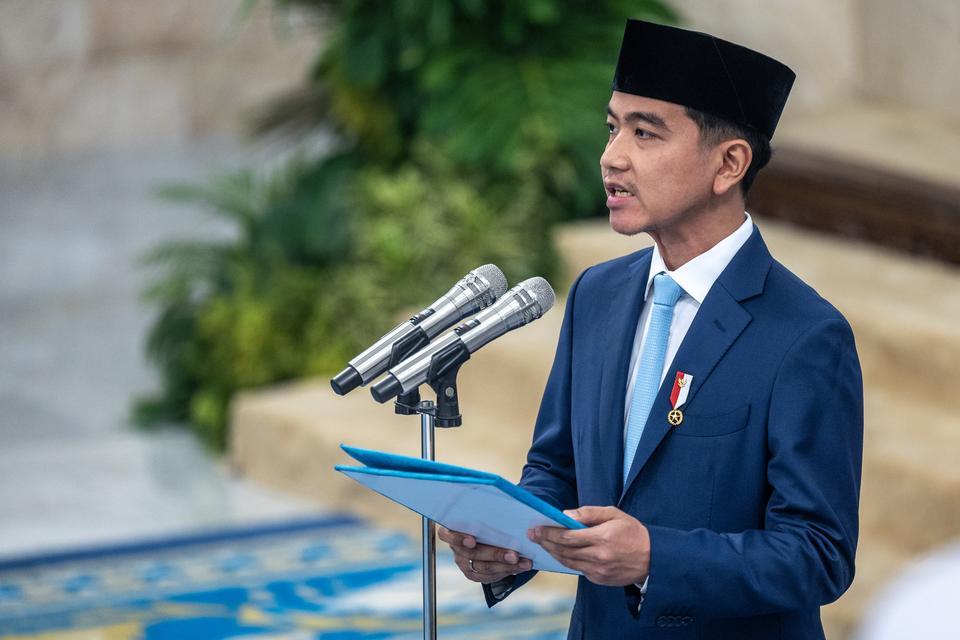
Indonesia’s Vice President Gibran Rakabuming Raka has submitted his resignation to President Prabowo Subianto amid mounting controversy over the educational documents used to establish his eligibility for the 2024 election. The Supreme Court annulled his education equivalency certificate after finding no evidence of a foreign diploma or certificate proving an equivalent senior high school qualification, while the Constitutional Court had raised similar concerns. More than 100 lawmakers were also supporting a parliamentary process that could have led to impeachment.
Indonesia’s Vice President Gibran Rakabuming Raka has submitted his resignation to President Prabowo Subianto after court rulings raised serious questions over whether the educational documents he used to qualify for the 2024 presidential election satisfied Indonesian law, bringing one of the country’s most politically sensitive controversies to a dramatic new stage. Gibran’s political aide Budi Arie Setiadi confirmed on Wednesday that the vice president had tendered his resignation, while parliamentary sources said the resignation would also have to move through Indonesia’s constitutional process before his departure from office becomes complete. The development came only a day after Gibran met Prabowo for more than two hours and expressed his intention to step down amid mounting pressure from lawmakers, court decisions and growing public demands for accountability.
The resignation follows weeks of controversy over Gibran’s educational qualifications and the documents used to establish his eligibility to contest as Prabowo’s running mate in 2024. Indonesian election rules require presidential and vice presidential candidates to have completed senior high school or possess an equivalent qualification. Because Gibran studied abroad, his eligibility was supported by an education equivalency certificate issued by Indonesian authorities, but recent court rulings questioned whether the evidence used to issue that certificate actually proved that he had completed an overseas qualification equivalent to senior high school.
Indonesia’s Supreme Court subsequently annulled the equivalency certificate and ordered the Education Ministry to withdraw it. In its ruling, the court said it found no evidence of a foreign diploma or certificate capable of serving as the basis for recognizing Gibran’s overseas education as equivalent to senior high school in Indonesia. The ruling did not simply question where he studied or whether he later attended university. Instead, it focused specifically on whether the documentation used to satisfy the formal eligibility requirement for the vice presidency had been properly supported.
That distinction is important because the controversy does not necessarily amount to a finding that Gibran never attended school or received higher education. He studied overseas and has argued that his subsequent university education demonstrates that he completed the necessary secondary education before entering higher education. The courts, however, focused on the documentary requirement imposed by election law and whether the certificate used during the 2024 nomination process had been issued on sufficient evidence.
The Constitutional Court had earlier raised similar concerns, finding that the available education documents did not adequately establish that Gibran’s foreign schooling met the relevant election qualification requirements. The court noted that no foreign diploma, certificate or comparable qualification had been produced to prove completion of at least senior high school level. It also said the issue ultimately fell within the responsibilities of the institutions authorized to determine whether presidential and vice presidential candidates meet constitutional and statutory requirements.
The controversy quickly spread from the courts to parliament. More than 100 Indonesian lawmakers from several political parties signed a petition stating that Gibran no longer satisfied the requirements associated with his candidacy because of the court rulings. The lawmakers planned to submit the petition to the leadership of the House of Representatives as part of a formal parliamentary process that could eventually have opened the way toward impeachment proceedings.
By Wednesday, the political pressure had intensified further. Reports indicated that 120 lawmakers from all eight parliamentary factions were supporting a motion of opinion concerning Gibran’s eligibility. That mechanism represents an important early step in Indonesia’s constitutional process for challenging a president or vice president and could have triggered a prolonged political confrontation had Gibran remained in office.
His decision to resign appears to have moved more quickly than that parliamentary process. Budi Arie confirmed that Gibran had submitted his resignation letter to Prabowo on Wednesday, while two sources in Indonesia’s upper house said he was expected to submit the necessary documentation to parliament on Thursday. The resignation therefore represents a major political decision but does not necessarily mean that every constitutional formality surrounding his departure has already been completed.
Prabowo had not immediately announced whether he had formally accepted the resignation at the time the news broke. Under Indonesia’s constitutional arrangements, the departure of a vice president involves parliament and can also trigger a process for selecting a replacement. The political attention is therefore likely to shift quickly from whether Gibran will leave office to who may replace him and what his departure means for the balance of power inside Prabowo’s governing coalition.
The resignation marks an extraordinary reversal for a politician whose rapid rise had already generated controversy before he became vice president. Gibran is the eldest son of former President Joko Widodo, widely known as Jokowi, who governed Indonesia for a decade and remained enormously influential after leaving office. Gibran previously served as mayor of Surakarta before emerging as Prabowo’s running mate in the 2024 presidential election.
His candidacy was controversial from the beginning because he was younger than the minimum age of 40 ordinarily required for presidential and vice presidential candidates. Gibran was 36 when he was selected as Prabowo’s running mate. A Constitutional Court ruling created an exception allowing candidates below 40 to run if they had previously held elected regional office, a decision that made Gibran eligible because of his service as mayor.
That ruling generated widespread criticism because the chief justice of the Constitutional Court at the time, Anwar Usman, was Gibran’s uncle by marriage. An ethics council later found that Anwar had committed serious ethical violations connected to the handling of the case, and he was removed from his position as chief justice. The ruling itself remained in effect, however, allowing Gibran to contest the election alongside Prabowo.
Prabowo and Gibran went on to win the 2024 presidential election convincingly, with Gibran becoming the youngest vice president in Indonesia’s history when the pair were inaugurated on October 20, 2024. His presence on the ticket was widely interpreted as an important part of the political alliance between Prabowo and Jokowi, whose popularity and political network helped strengthen the campaign.
That alliance was remarkable because Prabowo and Jokowi had once been fierce political rivals. Prabowo lost presidential elections to Jokowi in both 2014 and 2019 before joining his administration as defence minister. By the time of the 2024 election, the relationship had evolved into a political partnership, with Jokowi’s son joining Prabowo’s ticket despite Jokowi’s former party supporting a different presidential candidate.
Gibran’s resignation now threatens to reshape that alliance. Reports of tension between Prabowo and Jokowi have grown in recent months, and the education controversy has become another source of pressure. Political analysts have questioned whether the parliamentary push against Gibran could have reached such a scale without at least some acceptance from Prabowo’s political camp, although there has been no definitive public evidence that the president personally orchestrated the challenge to his vice president.
Prabowo’s handling of the situation will be watched particularly closely because removing or replacing Gibran could alter relations with Jokowi and the political network that supported their 2024 victory. Jokowi remains an influential figure with a substantial public following, and a breakdown in relations between his camp and the current president could affect coalition politics ahead of future elections and legislative contests.
The dispute also poses broader questions for Indonesia’s election institutions. If the documents used to establish Gibran’s eligibility were ultimately found inadequate, attention will turn toward how his candidacy was approved in the first place and what checks were carried out before the 2024 election. Election officials had previously maintained that the documents submitted at the time were sufficient under the applicable rules.
The courts’ later conclusions have therefore created an unusual constitutional situation. Gibran contested the election, won, took the oath of office and served as vice president for more than two years before the validity of an important part of his eligibility documentation became the subject of decisions serious enough to help trigger his resignation.
That sequence raises difficult questions about whether election qualification disputes should be conclusively resolved before candidates appear on the ballot. Indonesia’s democratic institutions will now face pressure to ensure similar controversies do not emerge only after an election has been completed and a candidate has already assumed office.
Gibran had sought an opportunity to defend his qualifications before deciding to resign. He argued that his university education should be considered evidence that he had necessarily completed the educational level required to enter higher education. His supporters also argued that the controversy placed excessive emphasis on technical documentation despite the fact that he had studied abroad and continued into tertiary education.
Opponents rejected that reasoning, saying eligibility requirements must be satisfied through the documents prescribed by law rather than assumptions based on later educational achievements. Their position was that the issue was not whether Gibran was intelligent or educated enough to serve but whether he complied with the formal legal qualifications required of every candidate.
The distinction is significant in a constitutional democracy because candidate eligibility rules are intended to apply equally regardless of political influence or family connections. Gibran’s critics have repeatedly argued that his family’s political influence allowed him to benefit from decisions and exceptions unavailable to ordinary candidates, beginning with the age ruling that permitted him to contest in 2024.
His supporters have rejected accusations that his rise was solely the result of his father’s influence and have pointed to his electoral victories and political popularity. Gibran won election as mayor before becoming vice president and has cultivated a public image that emphasizes younger voters, technology and a more informal style of political communication.
The education controversy nevertheless reopened criticism of political dynasties in Indonesia. Jokowi was once widely viewed as an outsider to the country’s traditional political elite, but opponents increasingly accused him of building a family political network during the final years of his presidency. Gibran’s rise to the vice presidency became the most visible example of that criticism.
The resignation also comes at a difficult moment for Prabowo’s administration. The government has faced criticism over the cost and implementation of its flagship free school meals program, which was one of Prabowo’s major campaign promises. The program is intended to provide nutritious meals to millions of children and pregnant women but has faced concerns over financing, logistics and implementation.
Environmental disputes and corruption allegations have also created pressure on the administration, while demonstrations have reflected public dissatisfaction over a range of economic and political concerns. The departure of the vice president therefore adds another layer of uncertainty at a time when Prabowo is seeking to maintain stability and confidence in his government.
Indonesia is Southeast Asia’s largest economy and one of the world’s largest democracies, making political instability at the top of government particularly significant for the region. Investors and neighboring governments are likely to watch closely how quickly the resignation process is completed and whether the selection of a replacement creates further conflict inside the governing coalition.
The immediate constitutional question concerns succession. Once Gibran’s resignation is formally processed, Indonesia will need to fill the vice presidency through the mechanism established in the constitution. The president is expected to nominate candidates, with parliament playing a central role in selecting a replacement.
That process could become a major test of Prabowo’s control over his coalition. Different parties may seek influence over the selection, while Jokowi’s allies may push for a candidate who preserves their political interests. The choice could reveal whether Prabowo intends to maintain the alliance that brought him to power or restructure the government around political forces more directly loyal to him.
Gibran’s own political future is equally uncertain. At 39, he remains young by the standards of national politics and could attempt a return later if the legal issues surrounding his qualifications are resolved. His association with Jokowi gives him access to a powerful political network, although the current controversy could significantly damage his reputation and complicate any attempt to seek national office again.
Much will depend on whether future legal proceedings produce additional findings concerning the equivalency certificate and whether authorities investigate how it was issued. The Supreme Court’s order to withdraw the certificate addresses its legal validity but does not automatically resolve every question surrounding the administrative process that produced it.
There may also be demands for accountability from officials who approved the documentation. If the certificate lacked the supporting evidence required under Indonesian law, critics are likely to ask why that weakness was not identified before Gibran was registered as a candidate and why it took more than two years after the election for the issue to produce such serious consequences.
For Prabowo, the resignation removes an immediate threat of a prolonged impeachment battle but creates a different political challenge. A parliamentary effort to remove a sitting vice president could have consumed months of political attention and deepened divisions within the coalition. A voluntary resignation allows the government to move more quickly toward succession, but it also confirms the seriousness of the crisis that had developed around Gibran.
The decision may also prevent the education controversy from dominating parliamentary proceedings for an extended period, although opposition lawmakers are unlikely to abandon questions about how the situation was allowed to occur. The controversy touches not only Gibran but also the credibility of election authorities, education officials and political institutions responsible for verifying candidate qualifications.
For Indonesians, the affair is another reminder of the importance of transparency in elections and public office. Gibran’s political rise was already shaped by a controversial legal exception involving the age requirement. The later dispute over his education documents has intensified scrutiny of the processes that allowed him to become vice president.
The resignation therefore represents more than the departure of one political figure. It is likely to reopen debates over political dynasties, judicial independence, candidate vetting and the relationship between powerful families and state institutions. Those arguments have followed Gibran since his nomination and are unlikely to disappear simply because he has chosen to leave office.
What happens next will depend on how quickly parliament completes the resignation process, whether Prabowo publicly accepts the decision and who emerges as the leading candidate to replace Gibran. The president will also have to manage the political consequences of the departure while maintaining stability within a coalition containing parties with different interests and ambitions.
For Gibran, the resignation closes a remarkable chapter that began with a controversial path onto the presidential ticket and ended little more than two years after he became Indonesia’s youngest vice president. He entered office as the political heir to one of the country’s most influential presidents and as an important bridge between Jokowi and Prabowo. He now leaves under pressure generated by questions about whether the documents that allowed him to contest the election should ever have been accepted.
The full consequences for Indonesia’s political system will take longer to emerge. The immediate facts are that Gibran has submitted his resignation, court rulings have undermined the education equivalency certificate used to satisfy his candidacy requirements, and lawmakers were preparing a formal challenge that could have led to impeachment. Indonesia must now move from the controversy over whether Gibran was qualified to serve toward the constitutional process of determining who will become the country’s next vice president.