ISRAELI STRIKE HITS NASSER MEDICAL COMPLEX IN GAZA KILLING AT LEAST SIX PALESTINIANS
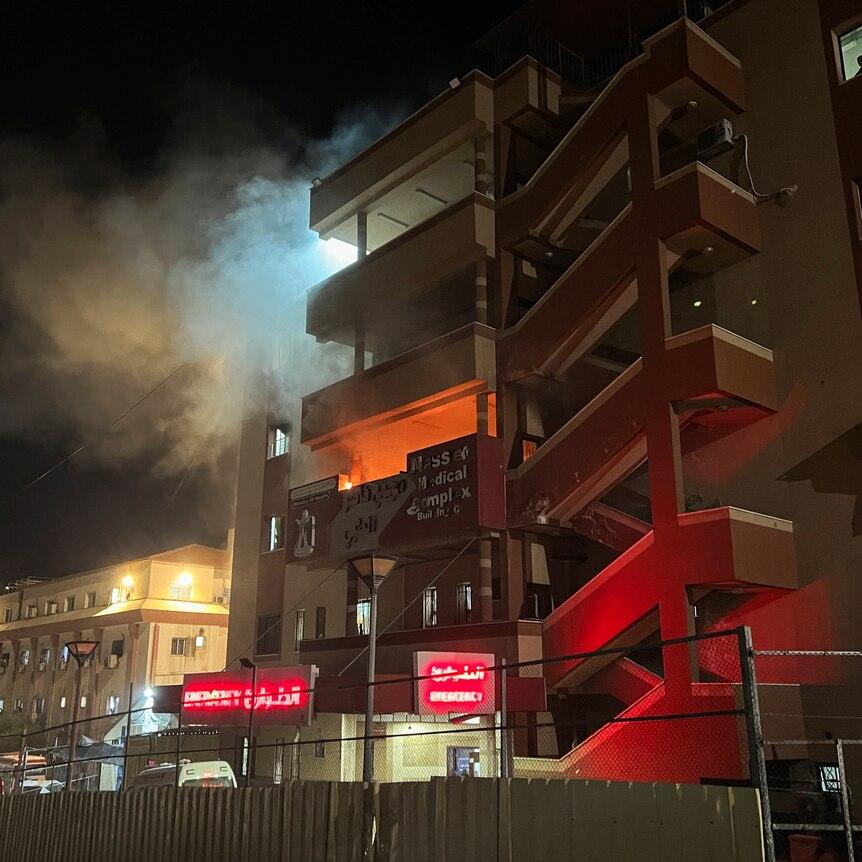
At least six Palestinians have been killed and more than 20 wounded after an Israeli air strike hit the Al Yasin building inside Nasser Medical Complex in Khan Younis. Gaza Civil Defence spokesperson Mahmoud Basal said the strike damaged surgical and intensive care areas, while medics identified surgeon Dr Rezik Abushira among those killed. Israel had not issued a detailed explanation at the time of the latest reporting, although Israeli Army Radio described the attack as an assassination operation.
At least six Palestinians have been killed and more than 20 others wounded after an Israeli air strike hit Nasser Medical Complex in Khan Younis in the southern Gaza Strip, according to Gaza’s Civil Defence, in another deadly attack on one of the territory’s most important remaining hospitals. The strike hit the second floor of the Al Yasin building inside the medical complex in the early hours of Thursday, causing extensive damage to surgical and intensive care areas and sending emergency workers rushing through damaged sections of the hospital to recover the dead and injured. Gaza Civil Defence spokesperson Mahmoud Basal initially reported four fatalities, but the toll later rose to six as rescue teams continued searching the affected section and hospital officials assessed the damage.
Among those killed was Dr Rezik Abushira, a surgeon working at Nasser Medical Complex, according to medics and Gaza emergency officials. The hospital said more than 20 people were wounded in the attack, including patients and medical personnel, while the strike caused severe damage to areas used for surgery and intensive care. The destruction has placed additional pressure on a health facility already operating under extreme conditions after years of war, repeated attacks, shortages of medicines and equipment, and the displacement of large numbers of Palestinians seeking medical treatment and shelter.
Basal said the Israeli strike directly hit the hospital’s surgical department and caused widespread destruction inside the building. Images and video from the complex showed damaged rooms, debris and emergency personnel moving through the hospital as relatives and staff searched for information about those caught in the attack. Nasser Medical Complex is one of the largest hospitals in southern Gaza and has repeatedly treated people wounded in Israeli military operations across Khan Younis and nearby areas.
The Israeli military had not issued a detailed public statement explaining the strike at the time of the latest Reuters reporting. Israeli Army Radio described the attack as an “assassination operation” but did not identify the intended target or provide evidence explaining why a building inside the hospital complex was struck. That leaves major questions over who Israel says it was targeting, what intelligence was used to authorize the operation and whether the military believed armed fighters were present inside or near the medical facility.
The absence of an immediate detailed explanation is significant because hospitals receive special protection under international humanitarian law, although that protection can be affected where medical facilities are used for acts harmful to an opposing force outside their humanitarian function. Even in those circumstances, attacking forces remain bound by rules governing distinction, proportionality and precautions intended to reduce harm to civilians. The circumstances surrounding Thursday’s strike have not yet been independently established, and Israel had not publicly released evidence showing that the targeted hospital section was being used for military purposes.
The strike comes during an already fragile period in Gaza following the ceasefire that took effect in October 2025. Israel and Hamas have repeatedly accused each other of violating that agreement, while Israeli forces have continued carrying out strikes in parts of the territory. Gaza health officials say more than 1,600 Palestinians have been killed in Israeli attacks since the ceasefire began, while Israel says several of its soldiers have also been killed during the same period.
Israel says Hamas has been attempting to regroup, rebuild its military infrastructure and replenish weapons despite the ceasefire. Israeli officials have used those allegations to justify continued operations against individuals and locations they say are connected to militant activity. Hamas says it remains committed to the agreement and accuses Israel of using repeated military strikes to weaken or ultimately collapse the ceasefire.
The latest hospital strike has intensified those competing accusations. Palestinian officials described the attack as another violation of the agreement and pointed to the location inside a functioning medical complex as evidence of the continuing vulnerability of civilians and healthcare workers. Israel had not responded in detail to those accusations at the time of publication.
Nasser Medical Complex has played a central role in Gaza’s health system throughout the conflict. Located in Khan Younis, the hospital has treated thousands of people wounded in Israeli strikes and ground operations and has at different stages become one of the primary referral centers for southern Gaza. Its importance increased as other hospitals were damaged, evacuated or forced to reduce services because of attacks, shortages and fighting.
The facility itself has been repeatedly affected by military operations. Israeli forces entered or surrounded the hospital during earlier phases of the war, saying Hamas fighters or infrastructure were operating in the area. Palestinian officials and international medical organizations repeatedly warned that fighting around the complex threatened patients, displaced families and healthcare workers.
Earlier Israeli strikes at Nasser Hospital have also drawn international scrutiny. In August 2025, Israeli strikes on the hospital killed journalists and other civilians, prompting widespread condemnation and questions about targeting procedures. Reuters later published an investigation examining evidence surrounding that attack and challenging parts of Israel’s initial public explanation. The history of previous strikes means Thursday’s attack will likely face particularly close scrutiny from international organizations and governments.
Hospitals in Gaza have operated under extraordinary pressure since the war began in October 2023. Medical workers have reported treating patients without adequate anesthesia, antibiotics, surgical equipment or electricity, while fuel shortages have repeatedly threatened generators used to power intensive care units and operating rooms. Many facilities have also been forced to accommodate displaced civilians seeking shelter in or around hospital grounds.
Damage to surgical and intensive care facilities can therefore have consequences beyond those killed or wounded in the immediate strike. Operating theaters, intensive care beds, diagnostic equipment and medical supplies are difficult to replace in Gaza because of restrictions on imports and the destruction of infrastructure. Even temporary closures can mean patients with serious injuries must be transferred to other hospitals that are already overwhelmed.
The World Health Organization and humanitarian agencies have repeatedly warned that Gaza’s health system remains severely degraded. Large numbers of hospitals and clinics have either been damaged or forced to operate at reduced capacity, while medical staff have been killed, injured or displaced. International organizations have called for sustained protection of healthcare facilities and unimpeded access for medical supplies.
Thursday’s strike occurred as Gaza also faces worsening humanitarian conditions caused by heavy rainfall and flooding. The United Nations has appealed for additional waterproof tents and shelter materials for displaced Palestinians, many of whom are living in makeshift camps vulnerable to winter weather. The combination of continued military strikes, damaged infrastructure and severe weather has increased the pressure on communities already living with limited access to housing, healthcare and basic services.
The strike on Nasser Medical Complex also came after a series of Israeli attacks elsewhere in Gaza. Palestinian officials reported additional deaths in Gaza City, the Bureij refugee camp and other locations in the hours before the hospital attack. Those incidents have contributed to renewed fears that the ceasefire is increasingly unable to prevent regular deadly exchanges.
Israel’s government maintains that military action remains necessary where Hamas or other armed groups are attempting to rebuild capabilities. Hamas and other Palestinian factions have accused Israel of using the ceasefire selectively while continuing attacks and restricting reconstruction. The repeated violence has made it difficult for civilians to believe that the agreement provides reliable protection from renewed fighting.
The wider conflict began after Hamas led fighters attacked southern Israel on October 7, 2023, killing about 1,200 people according to Israeli figures and taking hostages into Gaza. Israel responded with a massive military campaign across the territory. Palestinian authorities say more than 74,000 people have since been killed in Gaza, while much of the territory’s housing, hospitals, roads and other infrastructure has been destroyed or severely damaged.
Those figures remain politically contested, but the scale of destruction across Gaza is widely documented by international organizations, satellite imagery and humanitarian agencies. The conflict has displaced most of the territory’s population at least once and left many families living in temporary shelters with limited access to water, food and medical treatment.
Nasser Medical Complex has become one of the clearest symbols of that pressure because it has continued functioning despite repeated fighting in Khan Younis. Doctors there have treated civilians injured in strikes, malnourished children, chronic disease patients and people requiring emergency surgery even while the hospital itself has faced attacks and shortages.
The death of Dr Abushira in Thursday’s strike adds to the number of medical professionals killed during the conflict. Palestinian health authorities and international organizations have repeatedly warned that losing experienced doctors, nurses and specialists has long term consequences because training replacements can take years. In a health system already suffering from staff shortages, the death of a surgeon can affect hundreds of future patients beyond those injured in the immediate incident.
The attack is also likely to renew international debate over military operations involving hospitals. Israel has repeatedly accused Hamas of operating from civilian infrastructure, including hospitals, schools and residential buildings. Hamas has denied many of those claims or accused Israel of exaggerating them to justify attacks on protected sites.
International law does not provide absolute immunity to a medical facility if it is being used for military purposes, but any loss of protection is subject to strict conditions. Attacking forces must still consider civilian casualties, the military value of the target and whether less harmful alternatives are available. Those standards will be central to any assessment of Thursday’s strike once more information becomes available.
At the moment, the Israeli military has not publicly identified the person allegedly targeted in what Army Radio called an assassination operation. Without that information, it is impossible to independently evaluate the military justification for striking the hospital building or determine whether the target was present there.
The casualty count may also continue to change. Early reports listed four people killed before Civil Defence officials raised the figure to five and then six as rescue operations continued. More than 20 wounded people were reported, meaning some remain in serious condition and the toll could rise further.
For families inside the hospital, the immediate concern is treatment and safety. Medical teams must continue caring for existing patients while managing casualties from the strike and assessing whether damaged sections of the complex remain safe enough to operate. Any reduction in surgical or intensive care capacity could force transfers elsewhere in southern Gaza.
The strike also demonstrates how fragile Gaza’s healthcare infrastructure remains even under a ceasefire. Hospitals cannot function normally when staff must simultaneously provide medical care and prepare for the possibility that the facility itself could be hit. That uncertainty affects both workers and patients and creates additional psychological pressure on people seeking treatment.
International humanitarian organizations are likely to seek further information about the strike, including the intended target and the damage caused to medical infrastructure. Calls for an independent investigation may intensify if Israel does not provide a detailed explanation or supporting evidence for the attack.
Israel will also face questions over whether its military took adequate precautions to protect patients and healthcare workers. Those questions are particularly important because the strike hit a section of the hospital used for surgery and intensive care, where some patients may have been unable to move quickly or evacuate.
The Nasser Medical Complex attack therefore carries significance beyond the immediate death toll. It comes during a ceasefire that is already under strain, affects one of Gaza’s most important hospitals and raises renewed questions about the protection of medical facilities during military operations.
For Palestinians in Khan Younis, the attack adds another layer of uncertainty to daily life. A hospital that should represent a place of treatment and relative safety has once again become the site of death and destruction. For Israel, the pressure will now be to explain what it was targeting and why the military believed an air strike on the hospital complex was necessary.
Until that explanation emerges, the facts that can be independently established remain limited but serious. An Israeli air strike hit the Al Yasin building inside Nasser Medical Complex, at least six Palestinians were killed, more than 20 were wounded and significant damage was reported to surgical and intensive care areas. Gaza Civil Defence and hospital officials have confirmed the casualties, while Israel has yet to provide a full public account of the operation.
The coming hours will likely bring additional information about the identities of those killed, the condition of the wounded and Israel’s stated target. Any further escalation could also place the ceasefire under even greater pressure as both sides accuse one another of abandoning commitments that were meant to reduce the violence after more than two years of war.