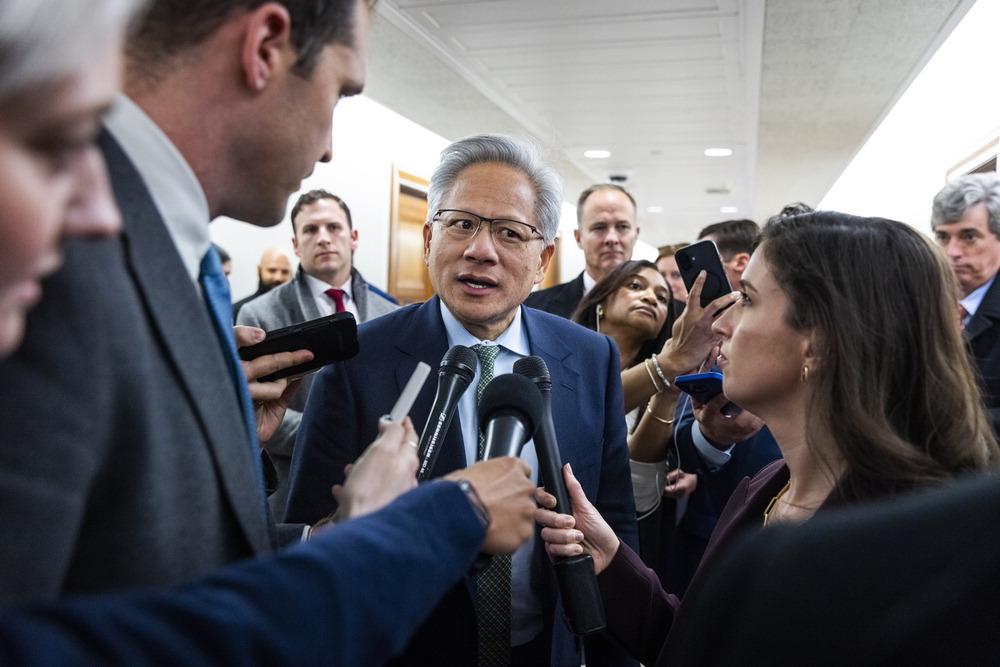
JENSEN HUANG RESIGNS AS NVIDIA CEO AS AFFAIR AND CHINA SECURITY CONTROVERSY SHAKES AI GIANT
Nvidia co-founder Jensen Huang has resigned as president, chief executive and a member of the board with immediate effect amid intensifying scrutiny surrounding two reported extramarital relationships, one of which has become linked to a wider U.S. national security investigation involving China. Nvidia has appointed longtime CFO Colette Kress as interim CEO and Harvey C. Jones as its first board chair while it searches for a permanent successor. Nvidia says it has no reason at present to believe company secrets or national security information were compromised, and investigations remain underway.
Jensen Huang has resigned as president and chief executive of Nvidia and stepped down from the company’s board with immediate effect, ending more than three decades of leadership by the co-founder who transformed the semiconductor company from a specialist graphics chipmaker into the dominant supplier of computing hardware powering the global artificial intelligence boom. Nvidia announced the leadership change on Thursday, November 12, 2026, naming longtime Chief Financial Officer Colette Kress as interim chief executive while the board begins the search for a permanent successor. The sudden departure follows days of intense scrutiny surrounding Huang’s acknowledged infidelity, reports of two extramarital relationships and a widening national security controversy involving China, advanced Nvidia processors and questions about whether one of the women involved may have been connected to a foreign intelligence effort.
Huang’s exit represents one of the most consequential leadership changes in the technology industry because few modern companies have been as closely identified with a single executive as Nvidia has been with its founder. Since establishing the company with Chris Malachowsky and Curtis Priem in 1993, Huang remained at the centre of its engineering strategy, product development, investor communications and relationships with customers, suppliers and governments around the world. Under his leadership, Nvidia moved from producing graphics processors primarily for video games into accelerated computing, data centres and artificial intelligence, eventually becoming one of the most valuable publicly traded companies in the world and a critical supplier to companies building generative AI systems.
Nvidia said Huang’s resignation as president, chief executive and board member took effect immediately, leaving no transitional period in which he will continue exercising formal executive authority. The board appointed Kress, who has served as Nvidia’s chief financial officer since 2013, to lead the company on an interim basis while directors consider candidates for the permanent role. At the same time, longtime director Harvey C. Jones was appointed Nvidia’s first independent chair, creating a separate board leadership position at a moment when the company’s governance arrangements are facing unusually intense scrutiny from investors, lawmakers and national security officials.
The company’s formal announcement confirmed Huang’s departure but did not state that the board had concluded he committed criminal wrongdoing or that the reported affairs were the sole reason for his resignation. His exit nevertheless follows a rapidly escalating series of disclosures that placed his private conduct, Nvidia’s internal controls and the company’s relationship with China under extraordinary public examination. Huang had already acknowledged that he had been unfaithful to his wife and apologised publicly to his family, employees, colleagues and shareholders, while saying he accepted responsibility for the harm caused by his conduct and would cooperate with an independent investigation launched by Nvidia’s board.
One of the reported relationships involved Alice Huang, a Chinese businesswoman associated with Singapore based technology company Megaspeed, a significant purchaser of Nvidia processors. U.S. intelligence officials reportedly believe she may have been gathering information for Beijing, an allegation that transformed what might otherwise have remained a private affair into a potential national security matter involving one of America’s most strategically important technology companies. Jensen Huang has acknowledged an intimate relationship, but there has been no public finding that he knowingly cooperated with Chinese intelligence, deliberately disclosed sensitive company information or intentionally helped transfer restricted technology in violation of United States law.
That distinction remains central to responsible reporting on the scandal because an intimate relationship with a person suspected of intelligence activity does not automatically establish espionage or complicity. Nvidia’s board said when it launched its independent investigation that it had no reason at that stage to believe either U.S. national security or company secrets had been compromised, while Huang said he supported the inquiry and would cooperate fully. President Donald Trump has also said the Federal Bureau of Investigation is examining the wider matter, but the existence of an investigation is not itself evidence that Huang committed a crime or knowingly participated in a foreign intelligence operation.
The controversy widened further after reports of a second extramarital relationship involving an Nvidia executive who reported within Huang’s corporate structure. That allegation raised a different category of questions concerning workplace conduct, executive accountability, conflicts of interest and whether the relationship should have been disclosed under company policies. Nvidia’s publicly available ethics framework does not simply make private relationships a criminal matter, but it warns employees and executives about personal circumstances that can create actual or perceived conflicts between individual interests and the interests of the company, making questions about disclosure and management of the relationship particularly important for the board.
The combination of the two reported relationships significantly increased the pressure on Nvidia’s directors because Huang was not merely another senior employee but the founder, chief executive, public face and dominant strategic figure of a company sitting at the centre of the global AI economy. The board had already formed a committee of independent directors supported by outside counsel to examine the intelligence related allegations, and reports emerged shortly afterward that directors were considering Huang’s future. His resignation has now resolved the immediate question of whether he will continue leading Nvidia, but it does not end the investigations into what occurred, what the company knew and whether any legal, regulatory or governance obligations were breached.
The national security dimensions of the controversy are particularly serious because Nvidia’s advanced graphics processors have become essential to the development of artificial intelligence systems used in commercial, scientific and military applications. The United States has progressively restricted China’s access to the most advanced processors because policymakers fear that high performance computing technology could strengthen Chinese military planning, surveillance, cyber capabilities and weapons development. Nvidia has repeatedly argued that overly broad restrictions could damage American companies and accelerate the growth of Chinese alternatives, but Washington has continued tightening controls as AI computing power becomes increasingly important to strategic competition between the two countries.
Alice Huang’s reported connection to Megaspeed has therefore attracted additional attention because the Singapore based company purchased more than $4.8 billion worth of Nvidia chips over a two year period, according to reporting on the controversy. Separate reports have examined at least $7.5 billion in broader Nvidia chip shipments connected to China, although those figures describe different groups of transactions and should not be treated as identical. Investigators and lawmakers are now interested in determining where processors were ultimately delivered, what export licences applied, whether intermediaries complied with restrictions and whether any personal relationships intersected with commercial decisions involving restricted technology.
Megaspeed has denied wrongdoing and has said it complies with United States export rules, while Singaporean authorities have also drawn scrutiny because the country plays an important role in global technology supply chains and can appear in billing or distribution arrangements involving customers located elsewhere. Nvidia has previously said that billing addresses do not necessarily indicate where its hardware is ultimately deployed, making the process of tracing end users more complicated than simply identifying the country listed on an invoice. The company will now face even greater pressure to demonstrate that its compliance systems can track sensitive processors and prevent unlawful diversion through third countries.
The political pressure in Washington has intensified alongside the corporate crisis. Democratic Senators Elizabeth Warren and Chris Coons have asked senior Trump administration officials to preserve records related to Nvidia’s China exports and the reported foreign intelligence operation, including communications involving the Commerce Department, State Department and White House. Their request seeks to establish whether government officials received counterintelligence warnings before approving export licences, whether those warnings influenced policy and whether national security recommendations were followed when Nvidia sought permission to supply advanced processors to Chinese customers.
Those inquiries could continue for months even though Huang has now resigned because Congress is examining a much wider set of questions than his personal conduct alone. Lawmakers may seek documents from Nvidia, require testimony from current and former executives, question officials responsible for export control decisions and examine whether existing laws are adequate to prevent sensitive AI technology from reaching restricted end users. The controversy could therefore contribute to another round of debate over whether Washington should tighten semiconductor export controls, strengthen end user verification or impose more demanding tracking requirements on advanced computing hardware.
The leadership transition has also shaken financial markets because investors have long viewed Huang as unusually important to Nvidia’s strategic success. Reuters reported that Nvidia shares dropped sharply after confirmation of his departure, while other AI related stocks also came under pressure as markets assessed what the loss of the industry’s most prominent semiconductor executive could mean for the wider technology sector. Nvidia had already lost hundreds of billions of dollars in market value as the scandal developed, illustrating the degree to which investors associated Huang personally with the company’s leadership, growth prospects and ability to execute its highly ambitious product roadmap.
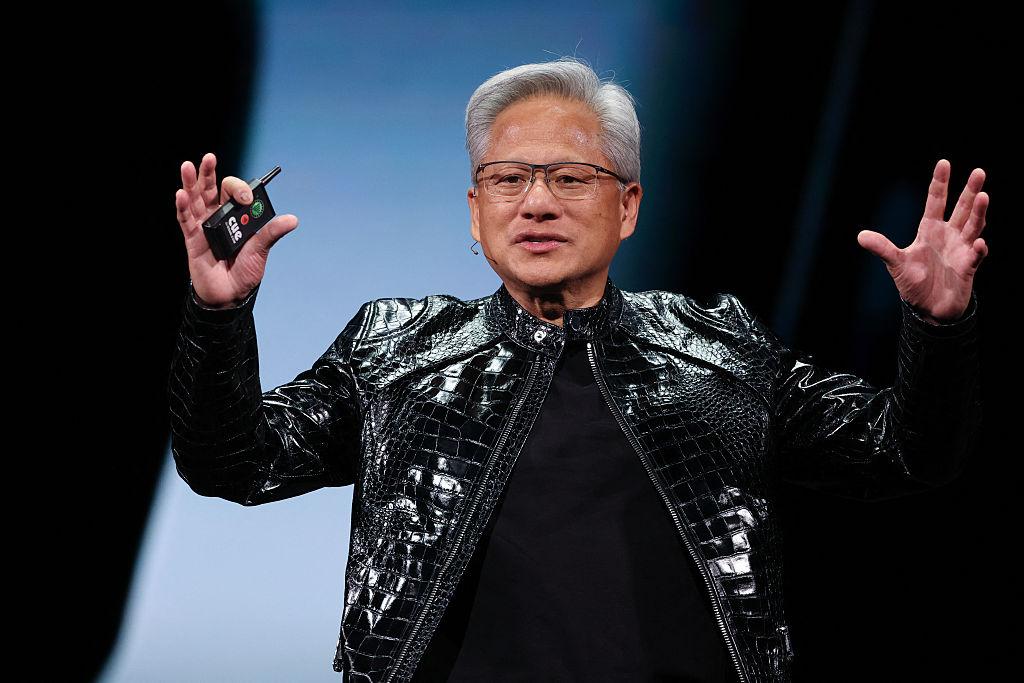
That market reaction reflects the unusual scale of Huang’s influence. He was deeply involved in product announcements, customer relationships, supply chain planning, capital investment and government engagement, while his public presentations became major events for investors and technology executives trying to understand the direction of the AI industry. His signature black leather jacket and lengthy keynote addresses became symbols of Nvidia’s rise, but behind the public image was an executive known for operating with an extremely hands on approach to engineering and organisational management.
Replacing that combination of technical authority, founder credibility and commercial influence will be difficult even for a company with Nvidia’s depth of management talent. Kress brings more than a decade of senior leadership experience and has worked closely with Huang through the company’s extraordinary expansion, making her a credible internal figure to provide stability during the transition. However, the board must eventually decide whether Nvidia’s permanent successor should come from inside the organisation, where executives understand its engineering culture and product roadmap, or from outside, where a new leader could potentially bring a stronger break with the governance practices now under examination.
The company’s technical roadmap will continue despite the leadership change because Nvidia’s major product generations are planned years in advance and depend on large engineering teams rather than the work of one individual. The Blackwell architecture and the transition toward Rubin and later systems involve long term commitments with semiconductor manufacturers, memory suppliers, server companies, cloud providers and major customers. Those plans give Nvidia institutional continuity, but the new leadership team must reassure customers that the departure of its founder will not delay products, disrupt supply agreements or weaken the company’s ability to deliver increasingly complex AI infrastructure.
Nvidia’s relationships with Taiwan Semiconductor Manufacturing Company, SK Hynix, Samsung and other critical Asian suppliers will be especially important during the transition because advanced AI processors depend on highly sophisticated manufacturing and packaging capacity. Huang spent years cultivating those relationships and regularly travelled throughout Asia to meet suppliers and partners. The interim leadership will therefore need to demonstrate that the commercial and operational partnerships supporting Nvidia’s product pipeline are institutional relationships rather than arrangements dependent primarily on Huang’s personal involvement.
The company must simultaneously maintain the confidence of major technology customers including Microsoft, Meta, Amazon, Google and numerous AI developers that are investing enormous amounts of money in data centres built around Nvidia technology. These companies plan infrastructure years in advance and cannot easily replace millions of GPUs without major changes to software and system architecture. Nvidia’s CUDA software ecosystem and networking technology give it substantial competitive protection, but leadership uncertainty could encourage customers to accelerate efforts to diversify toward processors from AMD, Broadcom or chips developed internally by cloud companies.
The geopolitical challenge facing the next permanent chief executive may be even more difficult than the operational one. Nvidia must continue serving customers around the world while operating under increasingly strict U.S. rules governing what technology can be sold to China. Huang had consistently argued that the Chinese market was strategically important and that eliminating American companies from it could strengthen Huawei and other domestic competitors, but that position sometimes placed him at odds with lawmakers who prioritised national security restrictions over commercial access.
The current scandal could strengthen those lawmakers because the controversy links executive conduct, China business relationships and questions about sensitive technology in a way Nvidia has never previously confronted. Even if investigators ultimately find that Huang never knowingly compromised national security or facilitated illegal exports, the episode may still lead regulators to examine whether companies controlling strategically important AI technology need stronger counterintelligence protections, stricter disclosure rules and more robust oversight of relationships involving senior executives.
The appointment of Harvey C. Jones as Nvidia’s first board chair is likely to be interpreted partly through that governance lens. Creating a clearly independent chair gives the board a stronger institutional leader separate from the chief executive and may help reassure investors that directors intend to exercise more visible oversight during the transition. The company may also review policies covering executive relationships, conflicts of interest, foreign contacts, security procedures and the handling of intelligence warnings as the independent investigation continues.
The legal implications remain uncertain. Reuters has reported that lawyers are examining whether Huang, Nvidia or members of the board could face liability if information connected to the affairs or national security concerns should have been disclosed to investors earlier. Public companies are required to disclose material information, but whether a private relationship becomes materially relevant depends on its connection to corporate decisions, regulatory exposure and the company’s financial prospects, making any eventual litigation highly dependent on facts that have not yet been established publicly.
Huang’s departure does not amount to an admission that he committed espionage, export control violations or any other criminal offence. Nvidia has not announced that classified information was compromised, the board has not publicly concluded that restricted technology was deliberately transferred through Huang’s relationships, and the investigations remain active. The strongest established facts are that Huang acknowledged being unfaithful, Nvidia opened an independent investigation into reports that he may have been targeted by a foreign intelligence effort, a second reported relationship intensified the governance crisis and the company has now announced his immediate resignation.
The personal consequences for Huang are substantial because the resignation dramatically changes the final chapter of one of the technology industry’s most remarkable careers. He built Nvidia over more than three decades, surviving periods when the company struggled for relevance before recognising that graphics processors could become general purpose computing engines capable of handling workloads far beyond video games. That strategic decision eventually positioned Nvidia to benefit from the rise of deep learning and generative AI, allowing the company to become the dominant supplier of computing hardware used to train large language models and other advanced systems.
The scale of that transformation made Huang one of the most influential executives in the world. Governments sought his advice on national AI strategies, technology companies competed for access to Nvidia hardware, and investors treated his comments about data centre demand as important signals for the entire semiconductor industry. His wealth and public profile rose alongside Nvidia’s valuation, but his resignation demonstrates how quickly leadership stability can become uncertain when personal conduct intersects with corporate governance and national security concerns.
His future is now unclear. Elon Musk publicly said it would be an “honor” to hire Huang after an X user suggested bringing him into one of Musk’s companies if he left Nvidia, but there has been no formal announcement of an employment offer or evidence that Huang is negotiating with Tesla, SpaceX, xAI or another company. Any future role is likely to attract intense scrutiny while investigations into the Nvidia controversy continue, particularly if regulators or lawmakers seek testimony from Huang after his departure.
For Nvidia, the more immediate priority is demonstrating that the company can continue executing without the founder who shaped nearly every stage of its development. Investors will watch whether customer orders remain stable, whether the product roadmap continues on schedule, whether major suppliers maintain confidence and whether the board can identify a permanent chief executive without triggering further disruption. Nvidia’s technological position remains powerful, but leadership uncertainty arrives at a time when competitors are aggressively investing in alternative AI processors and customers are looking for ways to reduce their dependence on a single supplier.
The wider AI market is also vulnerable to the consequences of the transition because Nvidia sits at the centre of a vast network of data centre developers, cloud companies, server manufacturers, semiconductor suppliers and technology startups. Reuters reported that AI related stocks fell alongside Nvidia after Huang’s resignation, reflecting concern that instability at the industry’s dominant chip supplier could affect investment throughout the sector. Nvidia’s enormous financial and commercial relationships with companies building AI infrastructure mean significant strategic changes could have consequences extending well beyond its own shareholders.
Despite those concerns, Nvidia remains far more than one executive. The company has tens of thousands of employees, one of the industry’s strongest engineering organisations, a deeply entrenched software platform and years of product development already underway. Its customers have made enormous investments in systems built around Nvidia hardware, and competitors cannot immediately replace the company’s capacity simply because its chief executive has departed.
That institutional strength gives Kress and the board room to manage the transition carefully, but it does not eliminate the challenge. A permanent successor must preserve the culture of aggressive innovation associated with Huang while also addressing the governance weaknesses exposed by the crisis. The new leadership will have to restore confidence among shareholders, employees, customers, government officials and strategic partners without appearing to dismiss the seriousness of the investigations still surrounding the company.
The board’s independent inquiry will therefore remain critical even after Huang’s resignation. Directors will need to establish what information was known internally, whether conflicts were properly disclosed, whether Nvidia’s security procedures functioned as intended and whether commercial decisions involving China complied fully with U.S. law. Clear answers will be necessary if the company wants to prevent the controversy from continuing to overshadow its technology strategy under new leadership.
For U.S. policymakers, the episode is likely to become part of a wider debate about how strategically important technology companies should be governed when their products have direct implications for national security. Nvidia is no longer simply a consumer electronics company selling graphics cards. Its processors are foundational infrastructure for artificial intelligence, scientific computing, autonomous systems and increasingly sensitive applications, giving the behaviour and security exposure of its senior executives a significance that extends beyond conventional corporate reputation.
China will also remain central to the story because Nvidia’s commercial interests and Washington’s strategic restrictions are increasingly difficult to reconcile. Chinese companies still want access to Nvidia computing power, U.S. officials remain concerned about military and intelligence applications, and domestic Chinese competitors are improving. The next Nvidia chief executive will inherit that geopolitical conflict without the decades of personal relationships Huang developed across Washington, Beijing and the global technology industry.
The transition therefore represents both an ending and a test. Huang leaves behind a company that helped define the modern AI era, but Nvidia must now demonstrate that the systems, people and technologies built during his tenure are strong enough to survive the sudden loss of the executive most closely associated with them. The company’s immediate market value may fluctuate as investors react to uncertainty, but its longer term performance will depend on whether the leadership transition preserves technological momentum while rebuilding confidence in governance and compliance.
For Huang, the resignation closes a remarkable tenure in circumstances few could have imagined only weeks earlier. He leaves after helping create one of the world’s most valuable companies and after becoming one of the most recognisable figures in global technology, yet he does so while investigations remain open and significant questions surrounding his relationships, China and Nvidia’s internal controls have not been fully answered. His business achievements remain substantial, but the final assessment of his departure will depend heavily on what those investigations eventually establish.
Nvidia now enters its first era without Jensen Huang at the helm since the company was founded in 1993. Colette Kress has assumed interim control, Harvey C. Jones is leading the board and directors must begin the difficult task of choosing a permanent successor capable of guiding a company whose technology has become essential to the global AI economy. The next few months will determine whether Nvidia can convert an abrupt and deeply disruptive leadership crisis into an orderly transition, while regulators, lawmakers, investors and competitors watch closely for any sign that the company’s extraordinary rise can continue without the founder who spent more than three decades building it.