KENYA CONFIRMS FOUR MORE EBOLA CASES AS THREE HEALTH WORKERS TEST POSITIVE, TOTAL RISES TO SEVEN
Kenya has confirmed four additional cases of Bundibugyo Ebola virus disease, bringing the national total to seven. The newly diagnosed patients include three healthcare workers who treated the country’s first Ebola patient and a close male relative of that patient. All four had already been placed in quarantine before developing symptoms, which authorities say has limited their opportunity to transmit the virus more widely. The Ministry of Health has traced and quarantined 128 of 130 identified contacts and says there is currently no evidence of sustained community transmission. Kenya’s outbreak is linked to the ongoing Ebola epidemic in the Democratic Republic of Congo.
Kenya has confirmed four additional cases of Bundibugyo Ebola virus disease, raising the country’s total number of confirmed infections to seven as health authorities intensify contact tracing, quarantine measures and infection prevention efforts around people linked to the country’s first patient. The Ministry of Health said the newly confirmed cases include three healthcare workers who treated the index patient during his hospital admission and a close male relative of the same patient. All four had already been identified as contacts and placed in quarantine before they developed symptoms, a development authorities say significantly reduces the risk that they could have unknowingly transmitted the virus more widely through the community. The government continues to maintain that there is no evidence of sustained community transmission and says the overall risk to the general public remains low, although officials have warned that additional infections could still emerge among people being monitored during the virus’s incubation period.
The latest cases were confirmed on Saturday, October 17, following laboratory testing by Kenya’s National Virology Reference Laboratory and the Kenya Medical Research Institute. According to Director General for Health Patrick Amoth, all four newly diagnosed patients initially developed fever before testing positive for the Bundibugyo strain of Ebola. The three infected health workers include two men and one woman, aged 29, 35 and 32, who cared for the first confirmed patient between October 3 and October 4. They had been placed in quarantine on October 9 as part of the government’s contact-tracing operation, while the newly infected male relative of the index patient had already been quarantined since October 6.
The fact that the new patients were already being monitored is central to the government’s assessment that Kenya is not currently experiencing uncontrolled community spread. Health authorities say quarantine allowed medical teams to identify symptoms quickly, isolate the patients and begin supportive treatment before they had substantial opportunities to expose family members, colleagues or members of the wider public. The ministry has described early detection as one of the most important factors in containing an Ebola outbreak, particularly because the disease spreads through direct contact with the blood or bodily fluids of an infected person rather than through ordinary airborne transmission.
The new infections nevertheless represent an important escalation because they confirm transmission inside Kenya for the first time. The original case was imported from the Democratic Republic of Congo, where a major Ebola outbreak involving the Bundibugyo strain has been under way. The subsequent infections among relatives and healthcare workers demonstrate that the virus was transmitted after the index patient arrived in Kenya, placing renewed attention on hospital infection-control procedures and the effectiveness of screening systems at airports and other entry points.
Kenya’s first patient was a 40-year-old Kenyan man who had spent time in the Democratic Republic of Congo, where he had reportedly been ill for several weeks before travelling back to Kenya through Uganda. He arrived in Nairobi on October 3 and later sought medical treatment before dying on October 5. Laboratory testing subsequently confirmed Bundibugyo Ebola virus disease, making the infection Kenya’s first confirmed Ebola case. His travel history immediately triggered a large-scale public health response because he had moved through several locations and interacted with relatives, transport workers, healthcare personnel and other individuals before his diagnosis.
Health authorities identified 130 people as contacts connected to the index patient. As of the latest update, 128 of those contacts, representing approximately 98.5 per cent, had been traced and placed under quarantine or close medical monitoring. The Ministry of Health says this exceeds the global contact-tracing benchmark it considers necessary to interrupt transmission chains. Efforts are continuing to locate the remaining two contacts, while teams are monitoring people already in quarantine for symptoms throughout the required observation period.
The government has warned that the rising case count does not necessarily mean containment efforts are failing. Ebola can take several days after exposure before symptoms become visible, meaning people who were infected before being placed in quarantine may still test positive during the 21-day monitoring period. Public health authorities therefore expect that additional cases could appear among known contacts even if there is no wider community transmission. The critical indicator will be whether new infections continue to arise almost exclusively among people already identified and monitored or begin appearing among individuals with no known connection to existing cases.
That distinction is crucial in outbreak management. When almost every newly confirmed patient can be connected to an existing case and has already been placed under observation, health authorities are in a stronger position to interrupt transmission. The situation becomes substantially more dangerous when infected people appear whose exposure cannot be explained, because that can indicate the virus is spreading through unrecognised chains in the wider population.
For now, Kenya says it has not found evidence of that scenario. Officials have maintained that the public should remain calm but vigilant, and the government has not introduced nationwide restrictions on travel, trade or public gatherings. Authorities have instead concentrated on targeted quarantine, hospital preparedness, border screening and public education in areas most likely to encounter travellers or contacts linked to the outbreak.
The infection of three healthcare workers is particularly serious because medical personnel have historically faced some of the greatest risks during Ebola outbreaks. Patients can initially present with symptoms resembling other illnesses, including fever, weakness, muscle pain, sore throat, vomiting or diarrhoea. Before Ebola is suspected and strict protective procedures are introduced, doctors, nurses and other staff can come into direct contact with infectious bodily fluids.
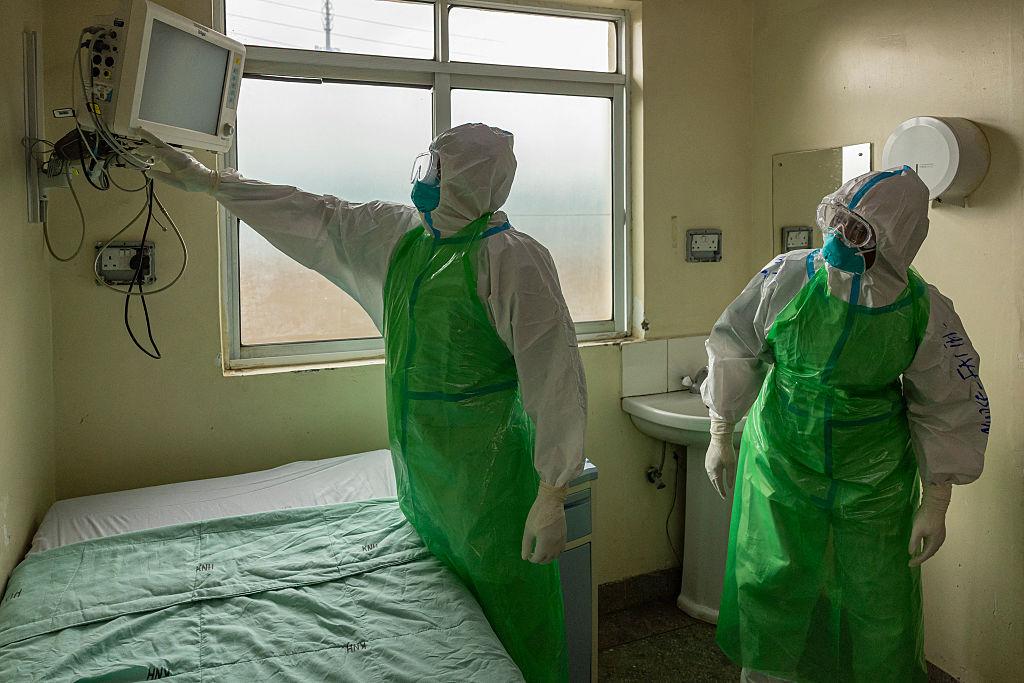
Healthcare workers must therefore use specialised personal protective equipment when treating suspected or confirmed patients, including gloves, gowns, eye protection and respiratory protection where clinically appropriate. Hospitals must also carefully manage contaminated bedding, medical instruments, waste and other materials that may have come into contact with infected bodily fluids. Even relatively small lapses in procedure can expose staff because Ebola can remain highly infectious once symptoms develop.
The three health workers now diagnosed had treated the index patient during the period before the full extent of his illness had been confirmed. Their infections will likely lead to a detailed review of exactly when and how exposure occurred, whether appropriate personal protective equipment was being used at every stage and whether any additional staff members require enhanced monitoring.
Kenya had already strengthened preparedness measures because of the serious outbreak in the Democratic Republic of Congo. Screening had been increased at airports and border points, and medical teams had received additional training in recognising suspected Ebola cases. The arrival of an infected traveller despite those measures has raised questions about the limitations of screening systems, particularly when infected people are in the incubation period or have symptoms that are not immediately recognised as Ebola.
Border screening can reduce risk but cannot guarantee that every infected person will be detected. Ebola’s incubation period can extend for up to 21 days, and people generally do not transmit the virus before symptoms begin. A traveller who has been exposed but is not yet visibly ill may therefore pass through temperature checks and symptom screening without triggering an alert.
In the case of Kenya’s index patient, authorities are examining how he travelled from the Democratic Republic of Congo through Uganda before reaching Nairobi and whether additional improvements are needed in information sharing between neighbouring countries. East African states maintain extensive cross-border movement for trade, employment and family connections, making regional cooperation particularly important during outbreaks.
The Democratic Republic of Congo outbreak remains the source of the infections detected in Kenya. The current epidemic has been described as the second-largest Ebola outbreak on record, with more than 9,000 cases and more than 4,000 deaths reported since it was identified in May. The scale of the outbreak has placed neighbouring countries on high alert and created pressure on health authorities across East Africa to detect imported cases quickly before they establish sustained local transmission.
The Bundibugyo strain presents an additional challenge because there is currently no approved vaccine specifically available for it and no approved antiviral treatment that directly cures the infection. Medical care therefore focuses on supportive treatment, including maintaining hydration, managing symptoms, correcting electrolyte imbalances and treating complications. Early identification and high-quality supportive care can improve a patient’s chances of survival, but the absence of a widely approved vaccine for the strain makes containment through contact tracing and infection control particularly important.
Research into possible vaccines against Bundibugyo Ebola is continuing, and experimental candidates are being studied. However, they are not yet available for broad routine deployment in the same way vaccines have been used against the Zaire strain during previous outbreaks. This leaves public health measures such as isolation, contact tracing and rapid laboratory testing as the most important tools currently available to Kenyan authorities.
The country’s existing cases illustrate how quickly a single imported infection can create multiple transmission chains. After the first patient died, a second case was confirmed in a close family member. A third infection was later identified in another relative who had already been under observation. The latest four cases have now brought the total to seven, including the deceased index patient.
Health officials have stressed that all of the additional cases identified so far are epidemiologically linked to that first patient. That is an important difference from an outbreak in which unrelated cases begin appearing in different towns or neighbourhoods. Kenya’s response is therefore focused on completely surrounding the known transmission chain with testing, quarantine and medical supervision.
The Ministry of Health is also closely monitoring four family members of the deceased patient as well as all medical personnel known to have cared for him. People in quarantine are receiving regular health checks and psychosocial support while waiting to complete the monitoring period. Quarantine can place significant emotional pressure on individuals who are separated from family, worried about their health and uncertain whether they may develop symptoms, making psychological support an important part of outbreak management.
Authorities have also established communication channels for members of the public who believe they may have been exposed or who develop symptoms associated with Ebola. The government has encouraged people to seek medical advice quickly rather than hiding symptoms because early reporting protects both the patient and the people around them.
Ebola is transmitted through direct contact with blood, vomit, diarrhoea, saliva, semen and other bodily fluids from a person who is ill, as well as through objects and surfaces contaminated with infectious fluids. It does not spread through casual airborne transmission in the way influenza or some respiratory viruses do. That distinction is important because fear and misinformation can spread rapidly during outbreaks and lead to unnecessary panic or discrimination against patients, healthcare workers or communities associated with cases.
People become substantially more infectious after developing symptoms, which is why rapid isolation can be effective. If contacts are already under observation before symptoms appear, health teams can move them into treatment quickly and substantially reduce opportunities for further spread.
The latest Kenyan cases provide a practical example of this strategy. All four newly confirmed patients had already been placed in quarantine before diagnosis. That allowed health authorities to monitor them for fever and other signs of disease rather than waiting for them to seek medical care independently after becoming ill.
The health workers are currently receiving supportive treatment at designated facilities, and authorities say earlier confirmed patients who survived the initial stages of infection remain clinically stable. The government has not released extensive personal details about the patients, in line with medical confidentiality.
Infection among healthcare workers will nevertheless be watched closely because hospitals can become major amplification points during Ebola outbreaks if protective procedures fail. During previous outbreaks in West and Central Africa, health workers were disproportionately affected, particularly before the disease was recognised and proper isolation procedures were introduced.
Kenyan hospitals are therefore reviewing infection-prevention measures, including procedures for putting on and removing protective equipment. Removing contaminated equipment can itself create risk if the process is not performed correctly, which is why specialised training and supervision are essential.
Isolation units in Nairobi have increased readiness, and healthcare workers have conducted Ebola preparedness exercises involving simulated patients, protective equipment and controlled entry and exit procedures. These drills are designed to ensure that staff do not have to learn protocols for the first time while treating a real infectious patient.
The government has also intensified screening at airports and land borders. Port health teams are checking travellers arriving from affected countries, collecting health information and advising travellers about symptoms that may develop after arrival. The effectiveness of those measures depends heavily on accurate travel histories and cooperation from passengers.
Regional information sharing will be particularly important because Kenya’s index patient travelled through Uganda after leaving the Democratic Republic of Congo. Health authorities in neighbouring countries need to exchange information rapidly when an infected traveller may have crossed borders so contacts can be identified before transmission spreads.
The East African Community has dealt with Ebola threats repeatedly because Uganda and the Democratic Republic of Congo have experienced previous outbreaks. Kenya had managed to avoid confirmed cases until the current episode, meaning the public health system is now confronting its first confirmed domestic transmission linked to Ebola.
That does not mean the country entered the crisis without experience. Kenyan laboratories, epidemiologists and medical teams have participated in regional disease surveillance for years, while health workers have prepared for the possibility that Ebola could eventually cross the border.
The current outbreak will test those preparations under real conditions. Contact tracing on paper is different from locating more than a hundred people across a major city, persuading them to remain in quarantine and ensuring they are monitored every day. Missing even a small number of high-risk contacts can allow a transmission chain to continue unnoticed.
The fact that 128 of 130 identified contacts have reportedly been traced is therefore encouraging from a containment perspective, but the remaining two contacts still matter. Health officials will continue trying to locate them because even one infected person moving freely while symptomatic could expose relatives, transport passengers, healthcare workers or others.
Authorities must also remain alert to the possibility that some contacts have not yet been identified. The accuracy of contact lists depends on the index patient’s movements being reconstructed correctly and on relatives, hospitals, transport providers and other witnesses providing complete information.
This is where public cooperation becomes essential. People who believe they encountered a confirmed patient should report that information honestly and quickly rather than waiting to develop symptoms. Early identification does not automatically mean a person is infected, but it allows medical teams to monitor them safely until the incubation period passes.
The government has repeatedly warned against stigmatising people placed in quarantine. Most contacts will not necessarily develop Ebola, and quarantine is a preventive measure rather than proof that someone is infected. Social stigma can make outbreak control harder if people begin hiding contact histories because they fear how their families or communities will react.
The outbreak has also revived debate over preparedness at Kenyan hospitals. Protecting doctors and nurses requires consistent access to protective equipment, infection-control supplies, trained personnel and isolation facilities. These resources must be available not only at major hospitals in Nairobi but also at facilities that could encounter travellers elsewhere in the country.
The cost of maintaining that readiness can be substantial. Protective equipment must often be discarded after use, isolation wards require specialised staffing and laboratories must process samples under strict biological safety conditions. Outbreak containment therefore requires continuous funding even when case numbers remain relatively small.
Kenya’s government has so far resisted broader restrictions because there is no evidence of community transmission. That approach is consistent with the principle that public health measures should be proportionate to the known risk. Blanket restrictions can carry serious economic and social consequences, especially when targeted contact tracing remains effective.
Airlines, tourism businesses and cross-border traders will nevertheless be watching the situation closely. Kenya is a major regional transport and tourism hub, and any perception that the outbreak is spreading uncontrollably could affect travel decisions. The government therefore has a strong incentive to provide transparent and frequent updates so international partners can distinguish between a contained cluster and widespread transmission.
Transparency will also matter domestically. Public confidence can deteriorate quickly if official case counts appear inconsistent or if rumours spread faster than verified information. The Ministry of Health has been issuing regular updates and has asked the public to rely on official channels rather than unverified social-media claims.
The Bundibugyo outbreak in Congo makes communication more difficult because the numbers there are already extremely high. News that thousands have been infected in a neighbouring region can understandably cause fear in Kenya, even though the epidemiological situation inside Kenya remains much more limited.
Public health experts therefore emphasise the importance of distinguishing between the source outbreak and Kenya’s current cluster. Kenya has seven confirmed cases, all linked to the same imported infection. That is a serious development but not the same as thousands of unconnected cases circulating nationally.
The infection of three health workers also demonstrates why occupational protection must remain a priority. Medical personnel cannot refuse to treat infectious patients simply because a disease is dangerous, so the health system has an obligation to ensure they have the equipment and training required to work safely.
The circumstances of their exposure may eventually provide important lessons. Investigators will examine whether the index patient was suspected of having Ebola when the workers first encountered him, what protective equipment was used, how waste was handled and whether any procedures need to be changed.
Those findings could help prevent additional hospital-related infections. The goal is not merely to identify what happened but to strengthen protocols before another suspected patient arrives.
The relative who tested positive also reinforces the vulnerability of households caring for sick family members before diagnosis. Family members may clean vomit, wash clothing, help a patient to the bathroom or provide other close physical care without realising that the illness is Ebola. Once a diagnosis is confirmed, those household contacts become some of the highest priority individuals for monitoring.
Traditional funeral practices can create another transmission risk if people touch or wash the body of someone who died from Ebola. The virus can remain highly infectious after death, which is why trained teams normally use specialised safe burial procedures for confirmed cases. Authorities have not reported widespread funeral-linked transmission in Kenya’s current cluster, but safe handling remains part of the containment response.
The public health challenge is therefore to interrupt every possible path by which bodily fluids from an infected person could reach someone else. This requires cooperation between hospitals, laboratories, families, community leaders, transport authorities and border officials rather than relying on any single institution.
Kenya’s latest figures show that the outbreak has grown, but they also show that the country’s surveillance system is detecting cases among known contacts rather than discovering unexplained infections in the community. That is why officials continue to describe the immediate public risk as low while acknowledging that the situation can still change.
The next two to three weeks will be particularly important because contacts will continue moving through the incubation period. If the country reaches the end of those monitoring windows without unexplained cases appearing, confidence that the transmission chain has been contained will increase substantially.
If new infections emerge outside quarantine or without clear links to existing patients, the response would need to expand rapidly. Additional contacts would have to be traced, more isolation capacity prepared and public health measures reconsidered based on the evidence.
For now, the government is maintaining targeted controls rather than nationwide restrictions. The country remains open for travel and trade, and authorities have not prohibited large public gatherings.
That policy could change if the epidemiological picture deteriorates, but officials say there is currently no justification for broader measures. Their immediate priority remains locating the final identified contacts, monitoring those already quarantined and preventing hospital or household transmission.
The latest increase from three cases to seven will understandably attract concern, particularly because three of the newly infected patients are health workers. However, the circumstances under which the cases were detected matter just as much as the number itself.
All four new patients were already isolated from the wider public.
All are linked directly to the original imported case.
Nearly every known contact has been traced.
And health officials say there is still no evidence that Ebola is circulating independently through Kenyan communities.
Those facts do not mean the outbreak is over. They mean Kenya still has an opportunity to stop it before the seven confirmed infections develop into a much larger emergency.
The coming days will show whether the country’s quarantine, contact tracing and hospital infection-control systems can successfully close the remaining transmission chains. For a virus as dangerous as Ebola, that distinction between a contained cluster and community spread could determine whether Kenya records a limited outbreak linked to one traveler or faces a far more serious national public health crisis.