KENYAN DOOMSDAY PREACHER PAUL MACKENZIE AND 28 OTHERS CONVICTED OVER MURDER OF 190 CHILDREN AND ONE ADULT IN SHAKAHOLA CULT CASE
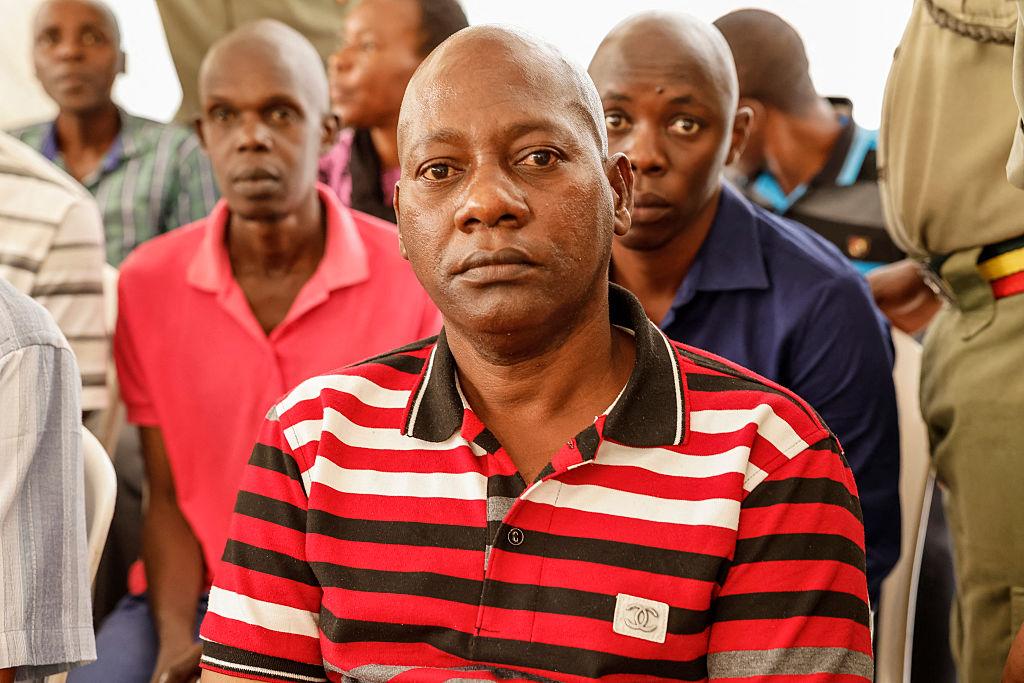
Kenyan doomsday preacher Paul Nthenge Mackenzie and 28 others have been convicted over the murders of 191 people in the Shakahola starvation cult case, including 190 children and one adult. The High Court rejected arguments that the victims voluntarily chose to fast and found that followers of Mackenzie’s Good News International Church were subjected to an organised system of religious indoctrination and enforced starvation. More than 400 bodies have been recovered from the wider Shakahola area since mass graves were discovered in 2023, although Monday’s judgment dealt specifically with 191 deaths. Sentencing is scheduled for November 6, 2026.
A Kenyan High Court has convicted self-proclaimed preacher Paul Nthenge Mackenzie and 28 other defendants over the murders of 191 people in the Shakahola starvation cult case, delivering one of the most consequential criminal judgments to emerge from Kenya in recent years. The victims covered by Monday’s verdict were 190 children and one adult, and the court found that the prosecution had proved that Mackenzie and members of the hierarchy surrounding his Good News International Church were responsible for an organised system in which followers were subjected to deadly fasting inside the isolated Shakahola forest community. The judgment brings a major part of the sprawling case closer to conclusion more than three years after the discovery of mass graves shocked Kenya and drew international attention to the scale of deaths associated with Mackenzie’s teachings.
Justice Diana Kavedza Mochache delivered the judgment on Monday, October 19, after a trial that examined how followers of Mackenzie’s church were drawn away from normal family and community life, encouraged to abandon education and medical treatment and eventually moved into an isolated settlement in Shakahola Forest in Kilifi County. The judge rejected the defence argument that the victims had simply chosen to fast voluntarily, finding that the evidence established a structured system of religious radicalization and enforced fasting in which children were among the first people deprived of food. Sentencing is scheduled for November 6, 2026, after the court considers mitigation submissions and pre-sentence reports concerning those convicted.
The ruling involved 191 separate murder counts and focused overwhelmingly on child victims. Evidence presented during the trial showed that children were deliberately subjected to fasting and that parents were instructed not to feed them because followers had been taught that death through fasting would allow them to meet Jesus in heaven before an expected apocalypse. The court heard evidence that some children were isolated, guarded and prevented from accessing food, while survivors described severe punishment for those who attempted to break the fasting regime or escape from the settlement. The prosecution’s case portrayed the deaths not as a collection of independent religious choices but as the result of a system organized and enforced through Mackenzie’s authority and the people working around him.
The scale of the judgment is even more disturbing because the 191 deaths represent only part of the wider Shakahola tragedy. More than 400 bodies have been recovered from the forest and surrounding areas since police began exhuming shallow graves in 2023, making the case one of the deadliest known cult-related disasters in recent history. Many of the recovered remains were badly decomposed, creating enormous difficulties for investigators attempting to determine identities and exact causes of death. Investigations and separate criminal proceedings relating to other victims have continued alongside the 191-count murder case, meaning Monday’s verdict does not represent the end of every prosecution connected with Shakahola.
Mackenzie, the founder of the Good News International Church, denied responsibility for the murders and maintained that he did not force followers to starve. The High Court rejected that position after considering testimony from survivors, relatives, investigators, forensic specialists and other witnesses who described the internal structure of the Shakahola community and the way fasting was enforced. The prosecution argued that Mackenzie’s religious authority was central to the programme and that his followers had been subjected to years of teachings portraying ordinary institutions such as schools, hospitals and government systems as evil or incompatible with salvation.
Witnesses described a community in which the gradual rejection of education, medical treatment and wider society eventually developed into a deadly system of isolation. Some families withdrew children from school, sold property, abandoned employment and relocated to the forest after accepting Mackenzie’s teachings. The settlement itself was divided into areas given biblical names, creating a closed religious environment separated from normal public institutions and making it increasingly difficult for vulnerable followers to seek outside assistance.
Evidence previously documented by Kenya’s Directorate of Criminal Investigations showed that Mackenzie referred to followers as chosen people while those outside the group were treated as belonging to a different world. Survivors told investigators and courts that members were taught that conventional education was evil and that medical treatment should be rejected. This isolation became particularly dangerous when the instruction to fast until death was introduced because followers had already been separated psychologically and, in many cases, physically from the institutions that might otherwise have intervened.
The court heard that the deadly fasting programme began in January 2021 and continued for more than two years before authorities fully exposed what was happening. Witnesses testified that children were intended to die first, followed by young people, women and then men, while Mackenzie positioned himself to die later. The significance of that sequence was central to the prosecution’s argument that the deaths followed an organized plan rather than spontaneous individual decisions by followers acting independently.
Some survivors described attempting to steal food because they could no longer withstand hunger, only to be punished when discovered. Others said people trying to escape were intercepted by guards and returned to the settlement. The use of guards became particularly important to the prosecution’s case because it undermined the argument that everyone inside Shakahola remained completely free to leave or abandon the fasting programme whenever they wished.
The deaths of children were especially important to Monday’s ruling because the court rejected any suggestion that minors could lawfully or meaningfully consent to being starved to death. Justice Kavedza concluded that the evidence established criminal responsibility for the deaths of 190 children and one adult and convicted the defendants on the murder counts before the court. The judgment followed years of investigation and a lengthy prosecution involving extensive documentary, forensic and witness evidence.
Reports differ slightly in how they describe the number of defendants because of changes during the proceedings, but the clearest current accounts say 29 people in total have been convicted in relation to the 191 murder counts, including Mackenzie. One defendant had earlier pleaded guilty, while the others were convicted following the trial. Two people who had originally been among those facing proceedings died before the case was completed. It is therefore more accurate to describe the verdict as involving Mackenzie and 28 others, rather than Mackenzie and 29 co-accused.
The prosecution called more than 120 witnesses during the trial, including survivors and children who had lived within the sect. Their evidence helped reconstruct life in the forest and the gradual process through which followers became dependent on Mackenzie’s teachings. Some witnesses described families destroying or abandoning identification and educational documents before relocating, reinforcing the prosecution’s argument that the group was deliberately separating itself from ordinary civic life.
The testimony of children who survived the forest was among the most disturbing evidence presented during the wider proceedings. Kenya’s Directorate of Criminal Investigations previously reported that one protected witness described children being tied with ropes and physically punished when they disobeyed fasting instructions. Another described how his family had left ordinary life after becoming deeply influenced by Mackenzie’s preaching, only for him eventually to escape after enduring severe hunger and witnessing deaths around him.
The Shakahola case first became a national emergency in 2023 after authorities received information about people starving inside the forest. What initially appeared to be a relatively limited investigation quickly expanded as police discovered graves across the vast property occupied by Mackenzie and his followers. Excavations revealed body after body, eventually forcing the government to establish a large operation involving police, forensic experts, pathologists and other agencies.
The discovery shocked Kenya not only because of the number of deaths but because Mackenzie had already attracted the attention of authorities years before the mass graves were found. Police had previously investigated his preaching, including allegations that children associated with his movement had been removed from school. His church was eventually shut down, after which Mackenzie and followers moved deeper into the Shakahola area. The ability of the organization to continue operating despite those earlier encounters with law enforcement became one of the most controversial questions raised by the tragedy.
President William Ruto later acknowledged failures by state institutions to prevent the deaths, while Kenyan human rights bodies questioned how warning signs had been missed. The disaster triggered national debate about the regulation of religious organisations and how authorities should intervene when religious teachings appear to place followers, particularly children, at serious risk.
The case has also forced Kenya to confront the difficult balance between freedom of religion and the responsibility of the state to protect citizens from abuse. Kenya has a large and diverse religious community, and freedom of worship is constitutionally protected. The Shakahola deaths, however, demonstrated how religious authority can become dangerous when leaders exercise extreme control over followers and when institutions fail to respond quickly enough to evidence of abuse.
The debate is not about criminalizing unconventional religious beliefs simply because they are unusual. Instead, the Shakahola case centres on conduct that crossed into serious criminal allegations, including murder, child cruelty, torture, terrorism-related offences and other charges being handled through different proceedings. The challenge for Kenyan policymakers is developing safeguards that identify dangerous organizations without allowing regulation to become a tool for unfairly restricting legitimate religious practice.
The murder convictions represent only one part of Mackenzie’s legal problems. He has faced other prosecutions linked to terrorism, radicalization, child cruelty and related offences arising from the operation of the Good News International Church. Investigators have also continued examining additional deaths discovered outside the group of 191 victims covered by Monday’s murder judgment.
More recent investigations have examined deaths discovered at Kwa Binzaro, another location associated with allegations involving Mackenzie’s network. Those cases remain separate and should not be confused with Monday’s conviction. The fact that further investigations continue demonstrates the extraordinary scale and complexity of the criminal inquiry surrounding the movement.
The Shakahola forest became the physical centre of Mackenzie’s organization after he left his earlier church premises and moved followers into the isolated area. The remoteness of the settlement helped reduce outside scrutiny and made it easier for the community to develop its own internal rules. Families lived in basic structures spread across the property, while movement and access to information were heavily influenced by the group’s leadership.
Investigators eventually learned that followers had travelled to Shakahola from different parts of Kenya after watching Mackenzie’s sermons or being introduced to the church through relatives and friends. Some families abandoned stable homes and employment, believing that conventional life was spiritually dangerous and that the end of the world was approaching.
Mackenzie’s opposition to education became one of the defining aspects of his preaching. Witnesses said followers were told that schools were connected to evil systems and that children should not participate in formal education. Similar claims were made about hospitals and modern medicine, leaving people increasingly dependent on the church for guidance about fundamental decisions involving their health and children.
This rejection of outside institutions created conditions in which extreme fasting could become much harder to challenge. Once followers had been persuaded that schools, hospitals and government structures were spiritually dangerous, seeking help from those institutions could itself be portrayed as an act of disobedience.
The prosecution argued that the hierarchy surrounding Mackenzie helped enforce this system. The trial was therefore not focused solely on the preacher as an individual but also on people accused of participating in the organization, guarding followers and helping maintain the conditions that allowed the fasting deaths to continue.
Justice Kavedza’s verdict found the prosecution evidence sufficient to establish responsibility beyond reasonable doubt. The defendants will now proceed to the sentencing stage, where individual circumstances can be considered before penalties are imposed.
Kenyan law allows severe punishment for murder. Although the death penalty technically remains available in the country, Kenya has not carried out an execution since 1987, and a 2017 Supreme Court decision ended the automatic imposition of capital punishment for murder. Courts therefore consider sentencing circumstances rather than treating a death sentence as mandatory.
The defendants could face lengthy prison terms, potentially including life imprisonment, when they return to court on November 6. Before then, the court has scheduled further proceedings involving mitigation and pre-sentence material. Probation officers have been directed to prepare individual reports for the convicted defendants so that the judge has information relevant to sentencing.
Victim impact statements will also form part of the process. Families who lost relatives in Shakahola have lived with the consequences of the tragedy for more than three years, including the difficulty of identifying remains and determining exactly what happened to loved ones who disappeared into the forest.
For some relatives, Monday’s conviction represents the first substantial judicial answer after years of waiting. Francis Wanje, who lost several members of his family including grandchildren, described the psychological burden the case had placed on his family while waiting for the court’s decision. His experience reflects the wider pain of families who spent months or years searching for relatives only to learn that they may have been buried in Shakahola.
Identification has been one of the most difficult parts of the investigation because many bodies had decomposed severely before they were recovered. DNA testing has therefore played a major role in attempts to return remains to relatives. Even with modern forensic techniques, identification has been impossible in many cases, leaving some families without definitive answers.
This also explains why the total number of bodies recovered from Shakahola is substantially larger than the number of deaths covered by the 191-count murder prosecution. Prosecutors must prove individual criminal charges to a demanding legal standard, and the condition of some remains has made it extremely difficult to establish identity, cause of death and responsibility for every recovered body.
Monday’s verdict therefore concerns the 191 cases for which prosecutors brought murder charges supported by evidence that the High Court accepted. It should not be interpreted as meaning that only 191 people died in the wider Shakahola tragedy.
More than 400 bodies have been recovered, and authorities continue investigating deaths outside the scope of the completed murder trial. Some victims died primarily from starvation, while post-mortem examinations in the broader investigation have also raised evidence of suffocation, injuries and other causes in certain cases.
The possibility that some followers who resisted the fasting programme may have been assaulted or killed intensified the criminal investigation. Survivors told authorities about punishment and violence inside the settlement, creating a picture in which religious indoctrination was reinforced by physical control.
Forensic evidence and witness testimony gradually allowed prosecutors to construct a detailed account of how the group operated. The trial required the court to assess not simply whether Mackenzie preached fasting but whether he and the other accused bore criminal responsibility for deaths that followed.
The guilty verdict shows that the High Court accepted the prosecution’s central case. Mackenzie’s insistence that followers made their own decisions did not create reasonable doubt in the court’s assessment of the evidence.
The verdict will likely have consequences beyond the defendants because Shakahola has already changed the national conversation around religious accountability in Kenya. Government officials, lawmakers and civil society organizations have debated whether existing registration and oversight systems are adequate for organizations whose leaders exercise enormous influence over vulnerable followers.
Any new regulation will need to avoid treating mainstream and lawful churches as criminal simply because authorities fear another Shakahola. At the same time, the scale of the deaths has created pressure for mechanisms that allow authorities to intervene when children are being removed from school, denied healthcare or exposed to teachings that directly threaten their lives.
Child protection may become one of the most important lessons from the case. Adults may have broad freedom to make personal religious decisions, but the state has a stronger responsibility when parents or religious leaders impose dangerous practices on children who cannot legally consent to serious harm.
The murder of 190 children makes that issue unavoidable. Monday’s judgment established criminal responsibility for deaths involving children who, according to the court, could not be treated as independent participants voluntarily choosing fatal starvation.
The case also raises questions about community reporting and institutional response. Mackenzie had encountered authorities before 2023, yet the full scale of the situation inside Shakahola was not uncovered until reports of starvation prompted police action. Understanding why previous warnings did not trigger a more effective intervention will remain important even after sentencing.
Police, child protection officers, courts and religious regulators all had pieces of information at different stages. The failure to connect those warning signs quickly enough allowed the situation to grow into a catastrophe.
President Ruto’s acknowledgement of state failures was therefore important because criminal responsibility for the defendants does not eliminate questions about institutional accountability. The murder convictions punish those the court found responsible for the deaths, but preventing a similar tragedy requires addressing weaknesses that allowed the organization to operate for so long.
The Shakahola case has attracted international attention partly because of its scale and partly because the methods involved were extraordinarily disturbing. Followers were not killed in a single violent event. Instead, prosecutors described a prolonged system in which people were persuaded and, in some cases, forced to stop eating while living in an isolated environment controlled by religious leaders.
This slow progression made the tragedy harder to detect from outside and increased the importance of testimony from survivors. Many people disappeared gradually into the forest rather than becoming victims of one immediately visible mass attack.
The case therefore demonstrates how coercive control can operate without conventional imprisonment. Followers may initially enter such communities voluntarily but gradually lose the practical ability to make independent decisions because of isolation, fear, religious pressure and physical enforcement.
The High Court’s judgment addressed this issue directly by rejecting the argument that the fasting deaths should be treated simply as voluntary religious choices. The prosecution’s evidence established a system in which children were deprived of food and followers attempting to escape or break the fasting rules faced intervention.
The coming sentencing hearing will now determine how the court punishes those convicted. Mitigation allows defense lawyers to present individual circumstances that they believe should influence the sentence, while victim impact material allows the court to consider the harm caused to families and communities.
Mackenzie and the other defendants may also pursue appeals after sentencing, meaning the legal process could continue even after the November 6 decision. A conviction in the High Court does not prevent defendants from challenging findings or sentences through Kenya’s appellate system.
For families of the victims, however, Monday’s judgment represents a major milestone after years of investigation and court proceedings. The court has now formally rejected the central defense that the deaths were the result of voluntary fasting and has found criminal responsibility for the deaths of 190 children and one adult.
That finding carries enormous significance because Shakahola had become not only a criminal case but a national symbol of institutional failure, religious exploitation and the vulnerability of children inside closed communities.
The verdict may also send a wider message to religious leaders who use spiritual authority to justify conduct that violates criminal law. Freedom of religion protects belief and worship, but it does not provide immunity for murder, abuse or the deliberate endangerment of children.
Kenya’s challenge after sentencing will be ensuring that the lessons of Shakahola are not forgotten once the immediate court proceedings end. Stronger child protection, quicker investigation of credible abuse allegations and better coordination among law-enforcement agencies could help prevent similar situations from developing unnoticed.
The government will also need to consider how to monitor organizations that deliberately isolate followers from schools, healthcare and government systems. Such behavior does not automatically prove criminal activity, but when combined with reports of violence, missing people or extreme physical deprivation it can provide an important warning sign.
For the wider African continent, the Shakahola tragedy has become one of the most disturbing examples of how charismatic religious authority can be exploited when oversight fails and followers become isolated from outside institutions. The scale of the deaths and the overwhelming number of children among the victims have made the case particularly difficult to comprehend.
Monday’s conviction does not bring back those who died, identify every body recovered from the forest or conclude every investigation connected to Mackenzie’s network. What it does provide is a judicial determination that the deaths covered by the 191 murder counts were crimes for which Mackenzie and the other convicted defendants bear responsibility.
The judgment therefore marks a decisive moment in a case that has haunted Kenya since 2023. A preacher who claimed that followers could reach heaven through fasting has now been convicted alongside 28 others in connection with the deaths of 190 children and one adult, while hundreds of additional deaths linked to the wider Shakahola disaster continue to form part of separate investigations and legal proceedings.
Attention will now turn to November 6, when the High Court is scheduled to pronounce sentence. Whatever penalties are imposed, the Shakahola case is likely to remain one of the most consequential criminal and social tragedies in modern Kenyan history, both because of the extraordinary number of lives lost and because of the questions it has forced the country to confront about religious extremism, child protection and the responsibility of public institutions to act before warning signs become mass graves.