KUMASI CENTRAL PRISON CRAMMED WITH 1,600 INMATES IN FACILITY BUILT FOR JUST 500
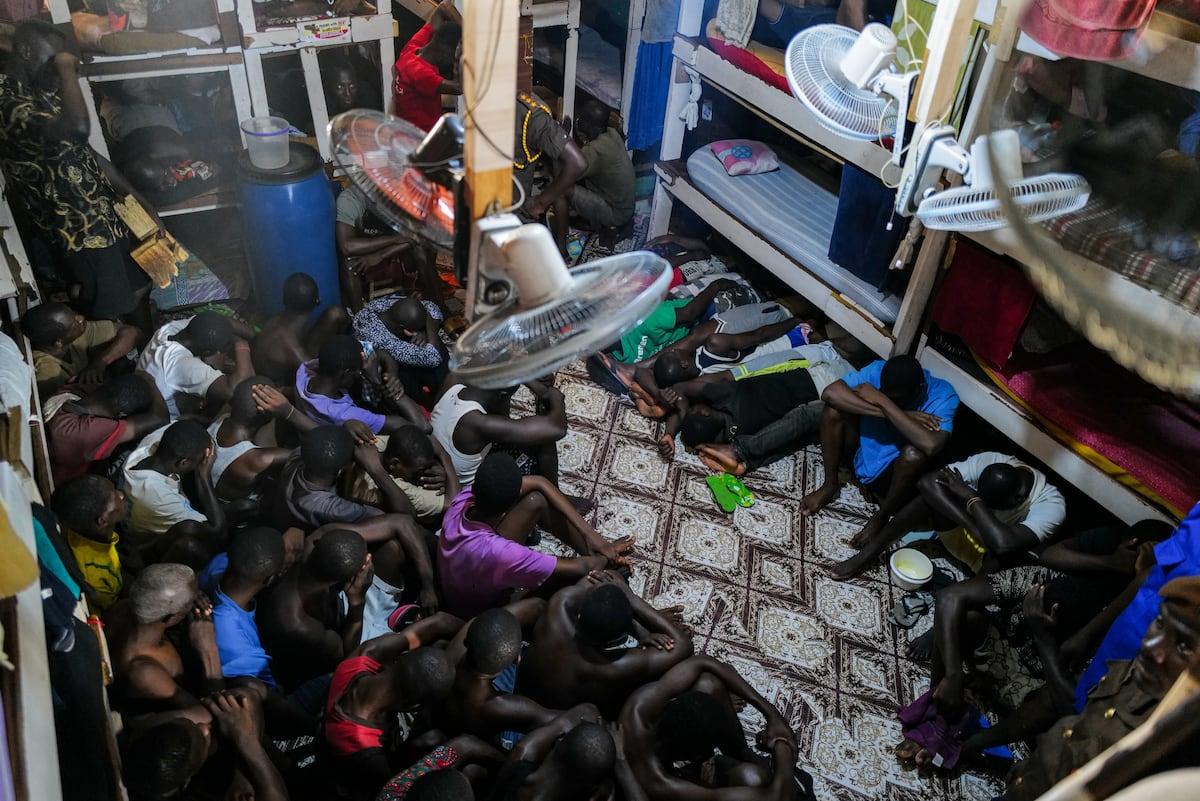
Kumasi Central Prison currently houses about 1,600 inmates despite an authorised capacity of 500, according to the Ashanti Regional Prison Command. CSP Richard Bukari says overcrowding, inadequate feeding support, healthcare challenges and limited space continue to affect the facility. The prison has responded partly through rehabilitation and revenue-generating programmes including commercial water production, vegetable cultivation, pig farming and other livestock projects, while calling for non-custodial sentencing, presidential amnesty, better management of remand prisoners and transfers of suitable low-risk inmates.
Kumasi Central Prison is holding approximately 1,600 inmates in a facility originally designed to accommodate only 500 people, leaving the historic correctional institution operating at more than three times its authorised capacity and intensifying renewed calls for reforms to Ghana’s prison and criminal justice system. The Ashanti Regional Prison Command says the level of congestion is placing enormous pressure on feeding, healthcare, rehabilitation programmes, sanitation, security and the physical infrastructure of a facility that was constructed more than a century ago and was never designed to accommodate the number of prisoners currently being held there.
CSP Richard Bukari, Head of Public Relations for the Ashanti Regional Prison Command, disclosed the latest figures while speaking on Akoma 87.9FM in Kumasi on Thursday, October 29. He said Kumasi Central Prison currently houses around 1,600 inmates despite having an authorised capacity of only 500, meaning the population is more than three times the number the facility was originally intended to hold. The overcrowding problem has existed for years, but the latest figures again demonstrate the scale of the pressure facing one of Ghana’s oldest and most important correctional institutions.
Kumasi Central Prison was established in 1901 during the colonial era and later expanded, but its authorised capacity remains 500 inmates. More than a century later, the prison continues to operate from the same central Kumasi location while the number of people passing through Ghana’s criminal justice system has increased significantly. The result is a facility struggling to accommodate a population far beyond its original design, with prison authorities forced to manage overcrowded cells while still attempting to provide food, healthcare, security, education and rehabilitation.
Bukari said overcrowding is one of several major challenges confronting the institution. He also identified inadequate feeding allowances, healthcare difficulties and insufficient office space for senior prison officials as problems affecting daily operations. The pressure created by congestion affects almost every part of prison management because more inmates must share the same cells, sanitation facilities, kitchens, workshops and medical services.
The overcrowding is particularly concerning because correctional facilities are expected not only to keep convicted persons securely in custody but also to prepare inmates for eventual reintegration into society. When prisons become severely congested, however, rehabilitation programmes can become more difficult to operate because limited facilities must serve significantly larger numbers of people than intended.
Bukari said the Ghana Prisons Service believes reducing the number of inmates held unnecessarily in congested facilities must form part of the solution. He called for stronger engagement among stakeholders in the criminal justice system, particularly in relation to remand prisoners who may spend extended periods in custody while awaiting trial or the completion of court proceedings.
The command has proposed transferring suitable low-risk prisoners from heavily congested central facilities to agricultural prison establishments where they can participate in productive work and vocational programmes. Such transfers could reduce pressure on Kumasi Central Prison while simultaneously giving inmates opportunities to acquire farming and agricultural skills before completing their sentences.
Bukari also called for the continued use of presidential amnesty in appropriate cases and wider implementation of non-custodial sentencing options. Ghanaian prison officials have repeatedly argued that not every offender necessarily needs to be kept inside a traditional prison, particularly where the offence is minor, the individual poses limited risk to the public or alternative sanctions could achieve the same purpose.
Non-custodial sentences can include community service and other legally approved alternatives to incarceration. Supporters of such reforms argue that they can reduce prison congestion, lower the financial burden on the state and allow correctional facilities to focus more resources on serious offenders who require secure custody.
The overcrowding problem also places significant pressure on inmate feeding. Bukari said the government’s daily feeding allocation stands at GH¢5 per inmate, forcing prison authorities to find additional ways to support food provision. With roughly 1,600 inmates in Kumasi Central Prison alone, feeding becomes a substantial daily operational responsibility even before other costs such as healthcare, clothing, sanitation, utilities and rehabilitation are considered.
Rather than depending entirely on government allocations, the Ashanti Regional Prison Command has been developing agricultural and commercial projects intended to supplement resources. The prison currently operates vegetable farms throughout the year, using part of the produce to support inmate meals while selling additional produce to generate revenue.
The facility has also developed pig farming and other livestock activities. Bukari said the piggery programme has benefited from food waste generated inside the prison because leftover food can be used as part of animal feeding, reducing waste while supporting an agricultural project capable of generating additional food and income.
The Ghana Prisons Service is also working with the Ministry of Food and Agriculture to expand agricultural activities at prison facilities with available land. In the Ashanti Region, the service has acquired large areas of land at Sakora Wonoo in the Kwabre Municipality for commercial farming, with authorities hoping the project will eventually increase food production and help reduce reliance on direct government funding.
Prison officials say agriculture has a dual purpose within the correctional system. It can help produce food and generate revenue, but it can also provide inmates with practical skills that can be used after release. An inmate who learns commercial farming, livestock management or food production while in custody may have a better opportunity to earn a legitimate income after completing a sentence.
The Kumasi facility has adopted a similar approach through its water-production operation. The prison now commercially produces both sachet and bottled drinking water from a facility located within the Central Prison Barracks in Adum. The production operation has received approval from the Food and Drugs Authority and is capable of producing water for sale to the general public.
Inmates work in the water-production facility under the supervision of prison officers, allowing them to develop practical experience in production, hygiene, packaging and basic commercial operations. Prison authorities say proceeds from the project are reinvested into the institution and can help expand rehabilitation activities.
The initiative is part of a broader attempt to transform prisons from institutions focused almost entirely on custody into facilities capable of developing useful skills among inmates. Bukari stressed that rehabilitation and successful reintegration are essential because releasing inmates without employable skills can increase the risk that some return to criminal activity.
The prison currently provides vocational programmes including tailoring, carpentry, electrical work, welding and fabrication, tie-and-dye production, soap and detergent manufacturing, kente weaving, shoemaking, bead making and formal education. The aim is to give inmates practical skills they can use to rebuild their lives after release.
Despite the wide range of programmes, only about 10% of inmates are currently participating in formal vocational training, according to Bukari. The command hopes to increase that figure to approximately 15% in the near future, but expansion requires additional equipment, space and financial support.
Bukari appealed to philanthropists, businesses and organisations to support the prison with information and communication technology equipment and other resources capable of increasing the number of inmates receiving training. Access to computers and modern technology could provide inmates with additional skills relevant to employment outside the prison system.
The rehabilitation challenge is closely connected to overcrowding because a prison holding three times its designed population has limited ability to provide each inmate with meaningful access to training facilities. Workshops, classrooms and vocational centres can only accommodate a certain number of people at any one time.
This means that reducing congestion could improve rehabilitation even without immediately constructing entirely new training centres. Fewer inmates competing for limited resources would allow prison authorities to provide more meaningful programmes to a larger percentage of the population.
The overcrowding problem at Kumasi Central Prison is not new. In March 2025, Ashanti Regional Commander of Prisons James B. Mwinyelle said the facility was holding 1,563 inmates, already more than three times its authorised capacity. The latest estimate of about 1,600 suggests that the population remains persistently high rather than showing a meaningful reduction.
That long-term pattern has raised concerns about whether Ghana’s prison infrastructure has kept pace with changes in population, crime, policing and prosecution. Many correctional facilities across the country were built decades ago, with some dating back to the colonial era, but they continue to hold increasing numbers of inmates within largely unchanged physical structures.
Overcrowding can also create serious health concerns. When large numbers of people are confined within limited spaces, contagious illnesses can spread more easily and access to medical treatment becomes more difficult. Prison authorities must also manage sanitation, ventilation and sleeping arrangements under conditions that were never intended for such large populations.
Healthcare limitations therefore become more serious as inmate numbers rise. A medical facility designed to serve hundreds of inmates may struggle when the actual population reaches more than a thousand, particularly when some prisoners require treatment for chronic illnesses or emergency conditions.
The Ghana Prisons Service has recently faced broader calls for dedicated healthcare infrastructure. Prison officials and other stakeholders have argued that the service should have access to specialised medical facilities capable of treating inmates and officers without depending entirely on outside hospitals.
Overcrowding also places additional pressure on prison officers. More inmates require more supervision, security monitoring and administrative work, but staffing and physical resources do not necessarily increase at the same rate as the prisoner population.
This can create difficult working conditions for officers who must maintain security while also supporting rehabilitation, healthcare referrals, family visits and other essential responsibilities.
The prison command has therefore argued that solving overcrowding requires action beyond the Ghana Prisons Service itself. Courts, prosecutors, police, policymakers and lawmakers all influence how many people enter prison and how long they remain there.
Remand prisoners are a particularly important part of that discussion. Individuals awaiting trial may remain in custody for extended periods because of court delays, difficulties obtaining legal representation or challenges in completing cases. Reducing unnecessary delays could lower the number of people held in congested facilities without compromising public safety.
The Ghana Prisons Service Council has recently been examining ways to improve access to legal assistance for inmates, particularly those facing difficulties obtaining court records or legal representation for appeals. Improving legal access could help resolve cases that otherwise remain stalled for long periods.
The need for legal reform also extends to sentencing. Prison authorities have repeatedly supported expanded use of alternatives to incarceration for appropriate offences, arguing that imprisonment should not automatically be the only punishment available to courts.
Such reforms could allow individuals convicted of lower-level offences to serve community-based sentences while reserving prison accommodation for offenders who pose greater risks or require more secure supervision.
Presidential amnesty has also been used periodically to reduce prison populations by releasing selected inmates who meet specific criteria. While amnesty cannot permanently solve structural overcrowding, it can provide temporary relief and allow authorities to prioritise inmates who remain in custody.
Kumasi Central Prison’s agricultural programmes offer another potential approach by allowing low-risk inmates to be transferred to camp prisons or agricultural facilities where accommodation may be less congested and prisoners can participate in productive work.
The Ashanti Regional Prisons Command oversees several other facilities, including Amanfrom Camp Prison, Ahinsan Camp Prison, Manhyia Local Prison, Obuasi Local Prison, Ejura Camp Prison and Kumasi Female Prison. Some of these facilities operate below their authorised capacity, creating opportunities for authorities to examine whether carefully managed transfers could reduce pressure on Kumasi Central.
Any transfer programme, however, must consider security classification, sentence length, health, behaviour and the suitability of each inmate for a less restrictive facility. Prison authorities cannot simply redistribute prisoners without considering these factors.
The wider objective is therefore to create a correctional system in which inmates are classified more effectively and placed in facilities appropriate to their level of risk and rehabilitation needs.
For Kumasi Central Prison, the current population remains the clearest illustration of why reform is needed. A prison designed for 500 people is being asked to manage around 1,600, meaning every major resource must stretch far beyond what the original infrastructure was intended to support.
Despite those pressures, the command says it is attempting to generate its own resources rather than relying completely on state funding. The water-production plant, vegetable farms and livestock projects demonstrate an effort to turn rehabilitation into economically useful activity while also supplementing food and operational costs.
Those projects may help reduce some financial pressure, but they cannot solve the structural problem of overcrowding on their own. Selling water or vegetables can provide additional revenue, yet it does not create additional cell space or reduce the number of people entering custody.
That is why Bukari’s call focuses heavily on broader criminal justice reforms. Reducing unnecessary remand, expanding non-custodial sentencing, transferring suitable inmates, using amnesty where appropriate and improving reintegration could collectively reduce pressure on central prisons.
Reintegration remains especially important because a correctional system that releases people without skills, employment prospects or community support can contribute to repeat offending. Bukari said effective reintegration should therefore be considered part of crime prevention rather than simply a social welfare programme.
Vocational training, agriculture and small-scale manufacturing can give inmates a foundation for earning income after release. However, expanding these programmes requires investment from both government and private organisations.
The prison command’s appeal to philanthropists reflects the gap between what the facility wants to provide and what existing budgets can support. Equipment for ICT training, workshops, farming and manufacturing can be expensive, particularly when a prison is already struggling to feed and house far more inmates than intended.
The success of Kumasi Central Prison’s commercial water operation demonstrates that rehabilitation projects can develop into functioning businesses when investment and regulatory approval are available. The facility has already obtained FDA approval for water production and sells its products publicly, creating both training and revenue opportunities.
Agricultural expansion could follow a similar path if the Ghana Prisons Service receives sufficient equipment and technical support. The service has access to land and inmate labour, but larger-scale farming requires machinery, irrigation, inputs and professional management.
If properly developed, prison farms could produce food for correctional facilities, reduce government feeding costs and provide inmates with transferable agricultural skills. Surplus produce could also be sold commercially to generate additional income.
The challenge is ensuring that such programmes remain genuinely rehabilitative and operate with proper safeguards for inmate welfare. Prison labour should not become a substitute for the state’s responsibility to provide adequate funding and humane conditions.
The central concern remains that Kumasi Central Prison is operating far beyond the limits for which it was designed. Commercial initiatives can improve conditions at the margins, but overcrowding requires policy decisions affecting sentencing, remand management, infrastructure and funding.
Ghana has increasingly discussed prison reform as part of wider criminal justice reform, but the latest figures from Kumasi show that the need remains urgent. Holding more than three times the intended population in a single facility places continuing pressure on inmates, officers and the institution itself.
The current situation also raises questions about whether Ghana should invest in new correctional infrastructure or focus first on reducing the number of people being sent to prison. In practice, both approaches may be necessary because even substantial reductions in remand populations may not completely eliminate overcrowding in older facilities.
Modern prisons also require different designs from colonial-era facilities. Rehabilitation workshops, healthcare units, educational spaces and proper inmate classification all require physical infrastructure that many older prisons were never constructed to provide.
For now, Kumasi Central Prison continues to manage approximately 1,600 inmates within a facility officially designed for 500. The prison command is attempting to supplement limited resources through commercial water production, farming and livestock projects while expanding vocational training and rehabilitation.
Those initiatives show that the institution is trying to adapt, but they also highlight the scale of the challenge. A prison can produce water, cultivate vegetables and raise livestock, but without broader reform it will continue trying to rehabilitate hundreds of people inside infrastructure built for a fraction of the current population.
Bukari’s message is therefore both operational and policy-focused. The prison service is attempting to become more productive and self-supporting, but lasting improvement will depend on reforms outside the prison walls as much as innovation within them.
Reducing remand populations, expanding alternatives to incarceration, strengthening legal aid, increasing vocational opportunities and investing in modern correctional infrastructure could collectively relieve some of the pressure.
Until those reforms begin producing measurable results, Kumasi Central Prison will remain one of the clearest examples of the overcrowding problem confronting Ghana’s correctional system, with roughly 1,600 people being held in a facility built for just 500.