MACKY SALL QUITS UN CHIEF RACE AFTER SECURITY COUNCIL VETO BLOW, SAYS EXIT COULD HELP CLEAR PATH FOR CONSENSUS CANDIDATE
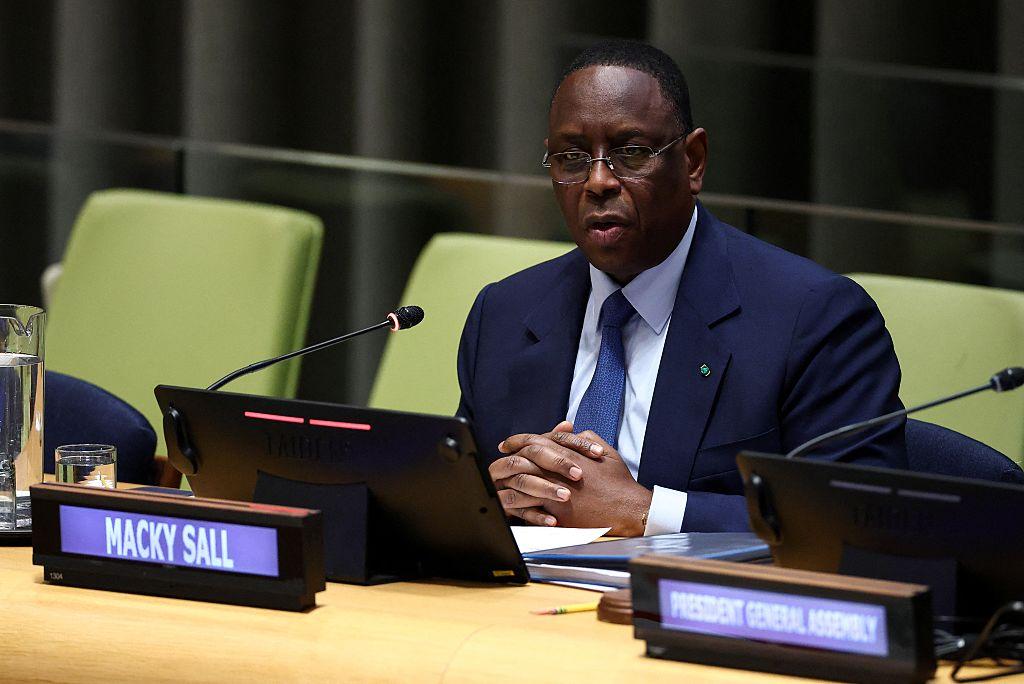
Former Senegalese President Macky Sall has withdrawn from the race to become the next United Nations Secretary General after the latest Security Council straw poll showed strong resistance to his candidacy. Sall received five encourage votes and ten discourage votes in the October 16 ballot, while every candidate in the race faced opposition from at least one permanent member of the Council. Sall said he hoped his withdrawal would help create room for the emergence of a consensus candidate. His departure leaves Uganda’s Olara Otunnu as the only African candidate formally remaining in the contest.
Former Senegalese President Macky Sall has withdrawn from the race to become the next Secretary General of the United Nations after an informal Security Council ballot exposed significant opposition to his candidacy and showed that none of the seven contenders currently in the field has secured the backing needed to move toward final selection. Sall announced his withdrawal on Saturday, October 17, saying he hoped stepping aside would help create room for the emergence of a consensus candidate capable of winning the support of the Security Council’s permanent members. His decision came one day after the Council held another secret straw poll in which every candidate received at least one discouraging vote from a veto wielding permanent member, leaving the succession battle deeply unsettled less than three months before António Guterres is due to leave office.
The October 16 poll was particularly important because it used coloured ballots to distinguish votes cast by the five permanent members of the Security Council from those cast by the ten elected members. That procedure allows diplomats to see whether opposition to a particular candidate comes from one of the countries capable of blocking a formal recommendation. China, France, Russia, the United Kingdom and the United States all possess veto power, meaning a candidate can receive broad support across the Council and still fail if one of those five governments decides not to support the nomination. The latest round therefore gave candidates a much clearer indication of whether their campaigns faced ordinary resistance that might be overcome through negotiation or opposition from a permanent member capable of ending their chances entirely.
Sall’s position after the vote was especially difficult. According to reported figures from the sixth straw poll, the former Senegalese president received five encourage votes and ten discourage votes, placing him among the weakest performing candidates in the field. The result suggested that his candidacy had failed to gain the momentum required to remain competitive and that opposition was not confined to a small number of elected Council members. Although informal straw polls are not binding and governments can change their positions between rounds, the size of the resistance made it increasingly unlikely that Sall could reach the minimum threshold required for a Security Council recommendation.
Under the UN selection system, the Secretary General is not simply chosen by the candidate with the highest number of votes in an informal poll. The Security Council must formally recommend a candidate to the General Assembly, and that requires at least nine votes in favour without a veto from any of the five permanent members. The General Assembly then formally appoints the recommended candidate. This means the real contest takes place largely inside the Security Council, where major powers exercise enormous influence over who eventually becomes the organisation’s chief diplomat.
Sall’s withdrawal therefore reflects the political reality of the process rather than simply the raw numbers from one ballot. Remaining in the race would have allowed him to continue lobbying governments and hoping that some states changed their positions, but the latest results indicated that his path had become extremely narrow. By leaving at this stage, the former Senegalese leader is presenting his decision as an attempt to reduce fragmentation within the field and encourage negotiations around a candidate capable of commanding much broader agreement.
In his statement, Sall said he hoped the decision would contribute to the emergence of a consensus choice. The language was diplomatic and carefully measured, avoiding criticism of the permanent members or suggestions that the process had been unfair. That approach is consistent with the way candidates for the Secretary General position usually handle setbacks because the governments casting discouraging votes remain major international actors whose cooperation can matter long after the selection contest ends.
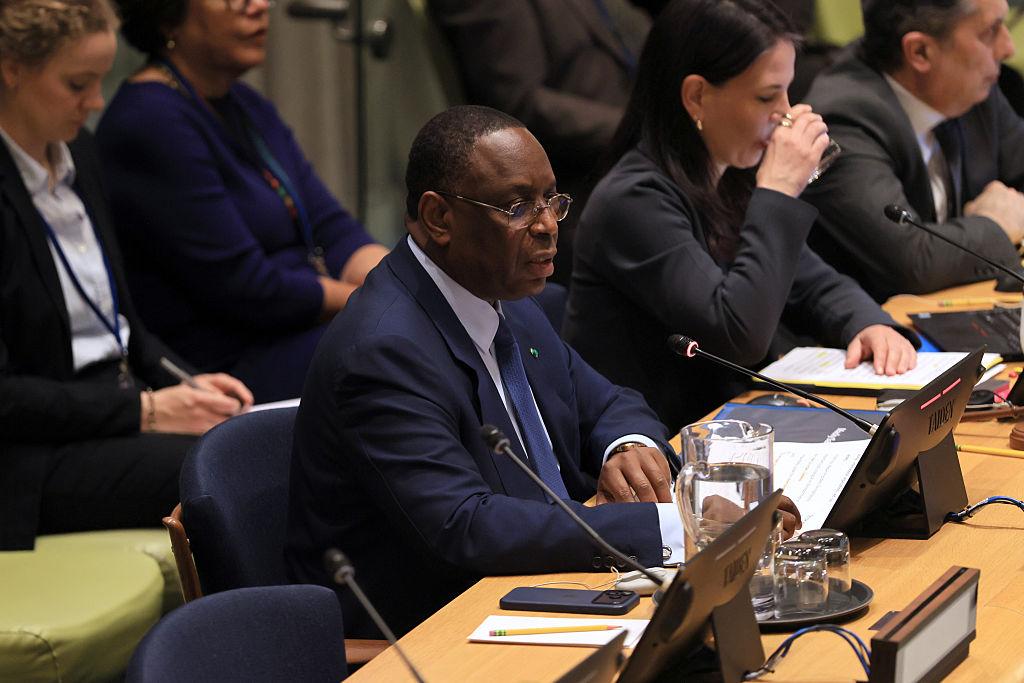
His departure also significantly changes the African dimension of the race. Sall had been one of only two African candidates seeking the position, and his exit leaves former Ugandan diplomat Olara Otunnu as the only African contender still formally in the competition. Otunnu has also struggled to attract strong support in the Security Council, reportedly receiving only three encourage votes and 12 discourage votes in the latest round. The weak performance of both African candidates has reinforced expectations that the next Secretary General may come from Latin America and the Caribbean, the region many diplomats believe is next in line under the UN’s informal tradition of geographic rotation.
Regional rotation is not written into the United Nations Charter and does not legally prevent a candidate from another region from winning the office. It has nevertheless become an important political convention in the selection process. António Guterres is Portuguese and therefore represents Western Europe, while previous secretaries general have come from Africa, Asia, Latin America and other regions. Many governments have argued that Latin America and the Caribbean should now receive priority, particularly because the region has not held the post since Javier Pérez de Cuéllar of Peru left office in 1991.
That regional expectation has strengthened the position of several Latin American candidates. Costa Rica’s Rebeca Grynspan has emerged as the numerical frontrunner in the straw polls and received nine encourage votes, five discourage votes and one no opinion in the October 16 round. Her total means she has reached the minimum numerical threshold for a Security Council recommendation, but she reportedly received opposition from two permanent members, meaning she still cannot move forward unless at least some of that resistance is removed.
Guyana’s Carolyn Rodrigues Birkett and Argentina’s Rafael Grossi have also remained competitive. Rodrigues Birkett has diplomatic experience at both national and international level, while Grossi is internationally known through his role as Director General of the International Atomic Energy Agency. Ecuador is represented by María Fernanda Espinosa, a former president of the UN General Assembly, and Ivonne A Baki, another veteran diplomat. Together, those candidates have kept Latin America at the centre of the succession debate even though none has yet achieved the full combination of votes and permanent member support required.
The problem confronting the Security Council is that Friday’s ballot did not produce a candidate capable of uniting the major powers. Every contender received discouraging votes from permanent members, revealing that the race remains blocked at the highest diplomatic level. Rather than identifying a clear successor to Guterres, the coloured ballot exposed how fragmented the permanent members remain and increased speculation that additional candidates may be introduced before the process reaches its final stages.
The possibility of new nominations has already been raised publicly. United States Ambassador to the United Nations Mike Waltz has indicated that governments remain free to introduce additional names, while Russian Ambassador Vassily Nebenzia has also acknowledged that the field could still change. Those comments are significant because they suggest some permanent members may be dissatisfied enough with the current candidates to consider backing a completely new figure rather than negotiating around one of the seven people already competing.
Sall’s withdrawal may encourage that process. Removing a candidate who faced broad opposition slightly reduces the complexity of negotiations, but it does not solve the underlying deadlock. The remaining candidates still face veto barriers, and the Council must eventually identify someone who can satisfy governments with sharply different geopolitical interests. That becomes particularly difficult when Washington, Beijing, Moscow, London and Paris disagree on wars, sanctions, peacekeeping, international justice and the future direction of the United Nations itself.
The former Senegalese president entered the race with considerable executive and diplomatic experience. Sall led Senegal from 2012 until 2024 and also served as chairperson of the African Union, giving him direct experience dealing with regional security, development and international negotiations. His supporters argued that his years in office and his familiarity with African and global institutions made him capable of managing the complex political environment surrounding the UN.
His candidacy, however, began under unusual circumstances because Burundi initially nominated him rather than Senegal. President Évariste Ndayishimiye formally placed Sall’s name forward while the government that succeeded him in Dakar had not yet publicly endorsed his bid. That situation reflected the complicated political relationship between Sall and Senegal’s new leadership following the 2024 presidential election.
President Bassirou Diomaye Faye eventually endorsed Sall’s candidacy in July after meeting the former president, allowing Senegal to formally support its own former leader despite domestic political differences. The move was presented as a matter of national interest and demonstrated that rivals at home could still cooperate around an international appointment. Even with Senegalese backing, however, Sall never developed enough Security Council support to become one of the strongest candidates.
His domestic political record may also have shaped perceptions of his candidacy, although the Security Council does not publicly explain the reasons behind individual votes. Sall was praised during parts of his presidency for economic management, diplomacy and Senegal’s relative political stability, but the final years of his administration were marked by intense disputes with opposition figures, violent protests and controversy surrounding the presidential succession. Questions over whether he would seek another term created significant political tension before he ultimately stepped aside.
Those domestic controversies were not formal disqualifications, but candidates for Secretary General are judged across their entire political and diplomatic record. The position requires someone capable of mediating between governments, responding to human rights crises and speaking credibly on questions of democracy and international law. Every aspect of a candidate’s previous leadership can therefore become relevant in the private discussions conducted by Security Council members.
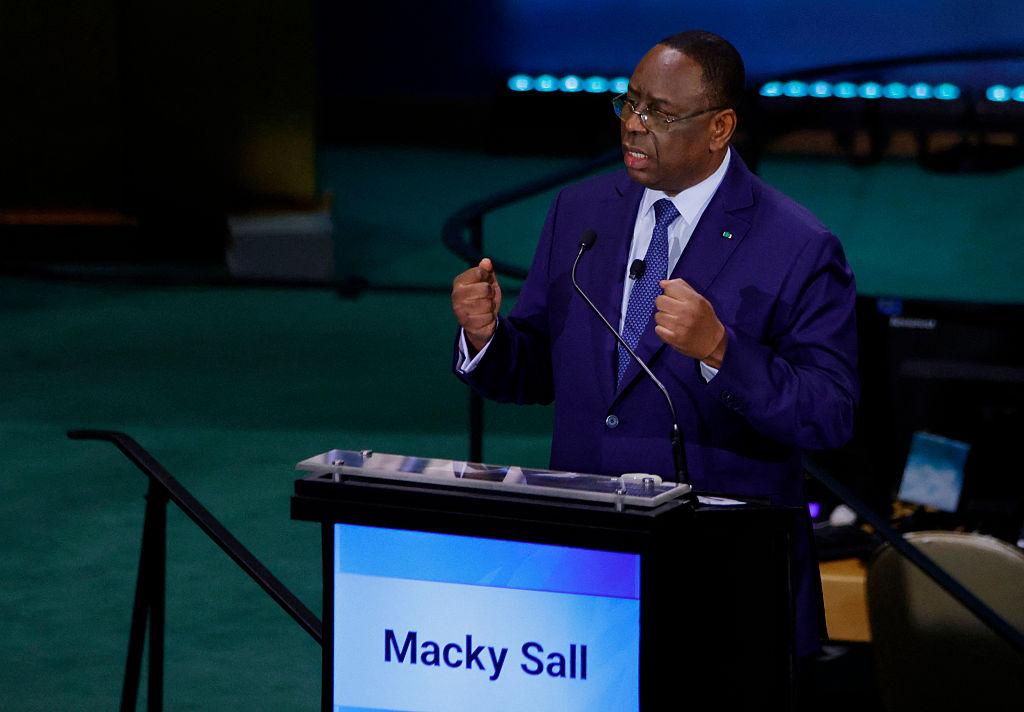
The office Sall sought is one of the most politically difficult positions in international diplomacy. The Secretary General is the chief administrative officer of the United Nations but is also expected to act as a mediator, moral voice and diplomatic bridge between countries that may be at war with one another. The role carries enormous international visibility but limited independent power because the organization remains dependent on member states for funding, military contributions and implementation of Security Council decisions.
The next Secretary General will inherit a particularly difficult global environment. Ongoing conflicts, humanitarian emergencies, competition between major powers, climate change, migration pressures, artificial intelligence governance and financial problems within the UN system are all expected to dominate the new leader’s agenda. The organization is also facing growing questions over bureaucracy, efficiency and whether existing institutions are capable of responding quickly enough to international crises.
The United States has been particularly vocal about the need for institutional reform. Washington has signaled that it wants a Secretary General prepared to make the organization more efficient and focused, especially on peace and security. That position matters enormously because the United States is both a permanent member of the Security Council and one of the largest financial contributors to the UN system.
Russia and China have their own priorities and are unlikely to support a candidate simply because Washington considers that person acceptable. Moscow has repeatedly criticized what it sees as Western dominance of international institutions, while Beijing continues to push for greater influence for developing countries within global governance structures. France and the United Kingdom also possess veto power and have independent foreign policy considerations when evaluating candidates.
The selection process therefore becomes an exercise in finding someone acceptable to governments that disagree on many of the world’s most important issues. A candidate considered too closely aligned with one bloc may struggle to gain support from another. This is why the strongest candidate on paper does not necessarily become Secretary General and why private negotiations among permanent members can become more decisive than public campaigning.
Friday’s ballot exposed that challenge clearly. Grynspan performed best numerically but still faced veto opposition. Rodrigues Birkett and Grosse also demonstrated substantial support but were unable to secure full permanent member acceptance. Sall and Otunnu performed much more weakly, while other candidates remained trapped somewhere between broad support and decisive opposition.
The deadlock has revived debate about whether the UN selection process is sufficiently transparent. Critics have long argued that the permanent members exercise disproportionate influence behind closed doors and that the General Assembly plays only a limited role despite representing nearly every recognized state in the world. Although candidate hearings and public statements have made the process more open than in previous decades, the decisive bargaining still takes place privately within the Security Council.
Straw polls themselves are secret. Council members mark candidates as encourage, discourage or no opinion, but governments do not publicly declare their individual choices. The introduction of coloured ballots adds more information because it shows whether a permanent member is responsible for a negative vote, yet it still does not reveal which permanent member cast it. Candidates are therefore forced to conduct diplomatic negotiations without always knowing exactly which government they need to persuade.
That uncertainty can sometimes prolong a candidacy because a candidate receiving one permanent member objection may believe the issue can be resolved. Historical examples show that this is possible. Kofi Annan initially faced French opposition during the 1996 selection process but eventually won support and went on to serve two terms as Secretary General. Guterres also went through multiple straw polls before emerging as the unanimous Security Council choice in 2016.
Sall could have chosen to remain in the race and hope for a similar turnaround, but the scale of his opposition made that strategy far less attractive. Ten discourage votes out of 15 suggested that his problem went well beyond one permanent member objection. Even if a veto wielding country changed its position, he would still have needed several elected members to reverse their votes before reaching the necessary threshold.
The withdrawal therefore represents a practical recognition of the numbers. It also allows Sall to retain diplomatic dignity rather than continuing through additional rounds that might further weaken his position. By framing the decision around consensus, he can present himself as prioritizing the institutional interests of the United Nations over his personal ambition.
His departure leaves Otunnu carrying Africa’s remaining presence in the formal race, but the Ugandan candidate’s own numbers suggest the continent currently has little realistic momentum in the selection. That may frustrate African governments that believe the continent remains underrepresented in international leadership positions, even though Africa has produced two previous UN Secretaries General in Boutros Boutros Ghali of Egypt and Kofi Annan of Ghana.
The weakness of the African candidates also illustrates the difficulty of entering a contest when regional diplomatic expectations already favor another part of the world. Sall and Otunnu were always competing not only against individual candidates but against a broader expectation that Latin America should finally return to the office after several decades.
Another powerful issue shaping the contest is gender. Every UN Secretary General since the organization was founded has been a man, creating growing pressure for the next appointment to produce the first woman in the role. Several of the leading candidates are women, and advocacy groups have argued that the current contest provides an opportunity to address that historic imbalance.
Gender, however, does not override the Security Council’s voting rules. A female candidate still needs nine Council votes and no permanent member veto. The current straw poll results demonstrate that broad symbolic support cannot substitute for geopolitical consensus.
The next phase of the race is therefore likely to involve intense diplomatic bargaining. Governments supporting existing candidates will attempt to identify which permanent members are blocking them and whether those objections can be negotiated away. At the same time, states dissatisfied with the current field may begin searching for new names capable of attracting broader support.
That possibility increases the importance of late entry. A candidate introduced after several rounds of deadlock can sometimes benefit from having avoided earlier conflicts and from being presented as a compromise figure. Such a person may not have led previous straw polls but could emerge quickly if the permanent members decide that no existing candidate can win.
The Council faces time pressure because Guterres’ second term ends on December 31. The United Nations needs a successor ready to take office on January 1, and the General Assembly requires enough time to formally act on the Security Council’s recommendation. This means the current deadlock cannot continue indefinitely.
Sall’s withdrawal modestly reduces the number of candidates but does not eliminate the fundamental problem. The Council still lacks agreement around anyone currently in the race. Another straw poll may reveal whether support begins consolidating or whether permanent members remain divided.
The former Senegalese leader is unlikely to disappear from international diplomacy because of this defeat. His twelve years as president, experience chairing the African Union and relationships with political leaders across Africa, Europe, the Middle East and other regions give him a continuing international profile. He may still play diplomatic or institutional roles even without securing the UN’s highest office.
For Senegal, his withdrawal ends a politically unusual campaign in which a former president was eventually endorsed by the government that replaced him despite significant tensions surrounding the country’s recent political transition. That endorsement allowed Senegal to present a united position internationally even as Sall and his successors remained political opponents domestically.
For the African continent, his exit is more disappointing because it removes one of its most internationally experienced candidates from the competition. Whether another African government decides to nominate a fresh candidate remains possible, but there is currently no indication that the continent is preparing a coordinated replacement.
The broader focus now returns to the permanent members and the leading Latin American contenders. Grynspan remains ahead numerically, but her candidacy cannot advance while two permanent members continue to discourage her. Similar obstacles confront Rodrigues Birkett, Grossi and other contenders.
The current situation demonstrates why the Secretary General selection process often lasts longer than outsiders expect. It is not enough to be qualified, internationally respected or popular with most Council members. The eventual winner must occupy a rare political space in which no permanent member considers the person unacceptable.
That standard can encourage compromise but can also produce frustration because one government can block a candidate supported by nearly everyone else. Critics say this gives too much influence to the geopolitical interests of the five permanent powers, while defenders argue that a Secretary General who lacks their confidence would struggle to function effectively in office.
Sall has now accepted that his candidacy is unlikely to meet that standard. Rather than fighting through another series of votes, he has chosen to remove himself and publicly encourage the search for someone who can.
His withdrawal does not determine who will become the next Secretary General, but it marks an important turning point in the race. The field is beginning to narrow, veto lines are becoming clearer and pressure is increasing on the Security Council to move beyond testing candidates and toward an actual agreement.
For the remaining contenders, the message from Friday’s vote is uncomfortable but unmistakable. Broad support is not enough, regional backing is not enough and even reaching nine encourage votes is not enough when a permanent member remains opposed.
For Macky Sall, that reality has brought the campaign to an end. After months of diplomatic outreach and repeated Security Council ballots, the former Senegalese president has stepped aside in the hope that removing his name will help the United Nations move closer to the consensus it still has not found.