MAHAMA VISITS FORMER PRESIDENT KUFUOR AT PEDUASE AS TWO STATESMEN DISCUSS GHANA AND INTERNATIONAL AFFAIRS
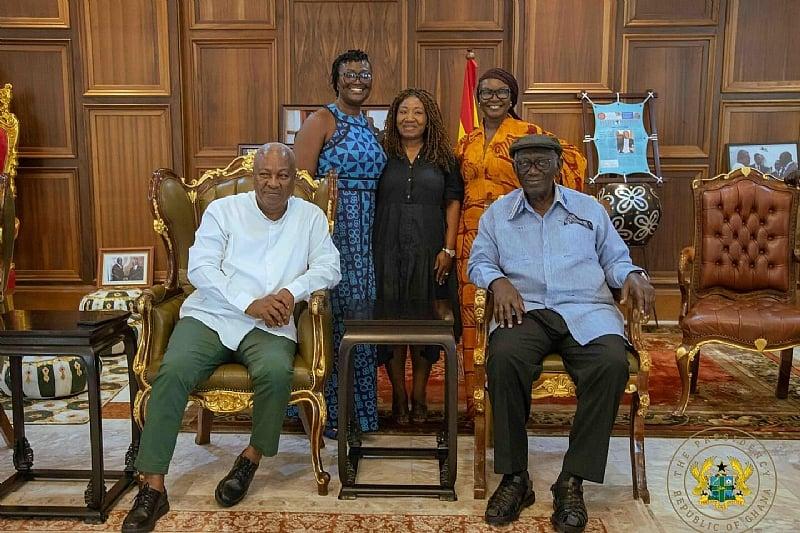
President John Dramani Mahama paid a courtesy call on former President John Agyekum Kufuor at his Peduase residence on Monday, October 19, to check on his well-being and exchange views on national and international affairs. The specific issues discussed were not publicly disclosed, but the engagement brought together two experienced statesmen from Ghana’s main rival political traditions and highlighted the continuing role of dialogue between current and former leaders. Kufuor governed Ghana from 2001 to 2009, while Mahama returned to the presidency in January 2025 after winning the 2024 election.
President John Dramani Mahama paid a courtesy call on former President John Agyekum Kufuor at his residence at Peduase in the Eastern Region on Monday, October 19, 2026, in a meeting that brought together two of Ghana’s most experienced political leaders for discussions on national and international affairs. Mahama said the visit was also intended to check on the well-being of the former President, who led Ghana from January 2001 to January 2009. Although neither side released a detailed account of the issues discussed privately, the meeting has attracted attention because it brought together the sitting President and one of the most influential elder statesmen associated with the opposition New Patriotic Party at a time when Ghana is navigating significant economic, political and international challenges.
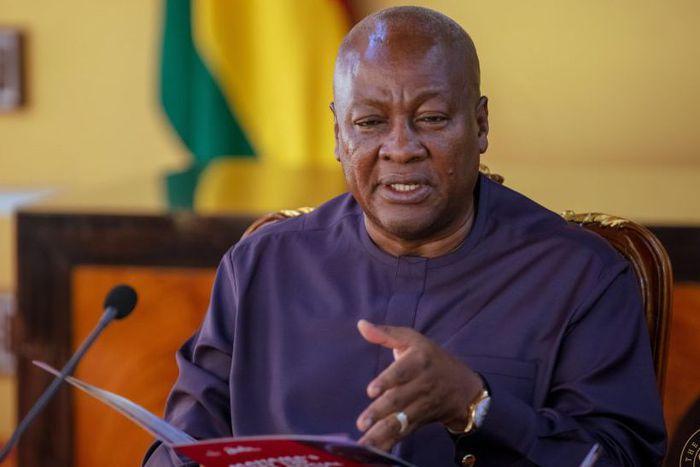
President Mahama disclosed the visit himself after leaving Kufuor’s residence, explaining that he had passed by to find out how the former President was doing and to exchange views with him on matters affecting Ghana and the wider international community. Photographs accompanying the announcement showed the two leaders sitting together and appearing relaxed during their interaction, reinforcing the character of the engagement as both a personal courtesy visit and a conversation between two men who have spent decades at the centre of Ghanaian public life. The Presidency did not issue a formal policy communique after the meeting, and there was no announcement of any political agreement or government initiative emerging from the discussions.
The absence of a detailed agenda means that the visit should not be interpreted as confirmation that the two leaders discussed any specific government programme unless additional information is released. Ghana is currently dealing with several major policy issues, including fiscal consolidation, preparations for the 2027 Budget, energy sector debts, banking reforms, illegal mining, mineral processing and the country’s wider economic recovery. Those issues form the political and economic environment in which the meeting took place, but there is no public evidence that every one of them was specifically raised during the private conversation between Mahama and Kufuor.
What has been confirmed is that the discussion covered national and international issues in broad terms, giving the two leaders an opportunity to exchange views outside the formal environment of Cabinet meetings, Parliament, party headquarters or official state functions. For Ghana, where political competition between the NDC and NPP can become highly confrontational, such meetings also demonstrate that senior political figures from rival traditions can maintain communication even when their parties remain sharply divided on government policy, economic management and electoral strategy.
Kufuor occupies a particularly important position in Ghana’s modern democratic history because his election in December 2000 led to the first peaceful transfer of political power between rival parties under the Fourth Republic. After eight years of National Democratic Congress government under Jerry John Rawlings, Kufuor and the New Patriotic Party assumed office in January 2001 following an election in which the incumbent party accepted defeat. That transition became one of the defining moments in Ghana’s democratic development because it demonstrated that political power could change hands through elections without undermining constitutional order.
Kufuor later completed two terms and handed power to the late President John Evans Atta Mills of the NDC in January 2009 after another closely contested election. Mahama served as Mills’ Vice President during that administration before becoming President following Mills’ death in 2012. Mahama later won the December 2012 presidential election, lost the 2016 election to Nana Addo Dankwa Akufo-Addo and peacefully handed over power in January 2017 before returning to the presidency after winning the 2024 election. The two men therefore have personal experience of both holding executive power and participating in democratic transitions between Ghana’s major political parties.
That shared history gives Monday’s meeting a wider symbolic importance. Both Kufuor and Mahama have occupied the presidency during different political and economic eras, and both have experienced the intense pressures associated with governing Ghana, dealing with international partners and responding to competing domestic expectations. Their political parties remain rivals, but the institution of the presidency and the accumulated experience of former leaders continue beyond individual election cycles.
Kufuor remains a respected figure within the NPP and has continued to participate periodically in public debates since leaving office. Although he is no longer involved in the daily management of party affairs, his views on governance, democracy, development and national unity still attract significant attention. He has received politicians, diplomats, traditional leaders, civil society figures and other national personalities at his residence on numerous occasions, and his Peduase home has become one of the locations where major political and civic figures consult the former President.
Mahama’s latest visit therefore fits within a broader pattern of engagement with a former leader who continues to command respect across significant sections of Ghanaian public life. It was not the first time Mahama had visited Kufuor at Peduase, and their previous interactions have often been presented as examples of personal respect between political leaders who came through opposing party traditions. The current visit continues that relationship at a time when the Mahama administration is trying to consolidate the economy and advance a number of long-term national reforms.
Economic policy remains one of the most important challenges facing the current government. Ghana has recently concluded its previous IMF Extended Credit Facility arrangement and moved into a non-financing Policy Coordination Instrument designed to preserve fiscal discipline and macroeconomic stability. Government is also preparing for the 2027 Budget and is under pressure to ensure that improvements in inflation, debt management and foreign exchange conditions translate into better employment opportunities and improved living standards for ordinary citizens.
Those challenges are particularly relevant to any broader discussion about national development because both Mahama and Kufuor governed Ghana during periods when economic reform, international financial relationships and development policy were central political issues. Kufuor’s administration benefited from debt relief under international initiatives and pursued policies centered on private sector development, social intervention and integration with international development institutions. Mahama’s current administration is operating in a different economic environment following debt restructuring and a recent IMF-supported stabilization programme, but the underlying challenge of combining fiscal discipline with development remains familiar.
Kufuor’s administration is remembered for major social interventions including the National Health Insurance Scheme and the Ghana School Feeding Programme, as well as broader economic and infrastructure policies undertaken during his eight years in office. Supporters of his administration frequently point to those programmes as examples of long-term policy initiatives that survived changes of government, demonstrating that some national projects can continue even when political power changes hands.
That experience is relevant to Ghana’s current policy environment because several programmes being pursued by Mahama will require continuity beyond a single presidential term if they are to achieve their full objectives. The government’s plan to phase out raw mineral exports by 2030, for example, will require investment, legislation, energy infrastructure and processing capacity that cannot be completed overnight. The same is true of efforts to rehabilitate land destroyed by illegal mining, strengthen the energy sector, reform state institutions and maintain debt sustainability.
This is one reason conversations between current and former presidents can have value even when they do not produce formal agreements. Former leaders possess institutional memory and practical experience that can help illuminate the political and administrative difficulties associated with implementing major national policies. That does not mean a sitting President is required to adopt the advice of a predecessor, but it allows national leadership experience to remain available rather than disappearing immediately after an election.
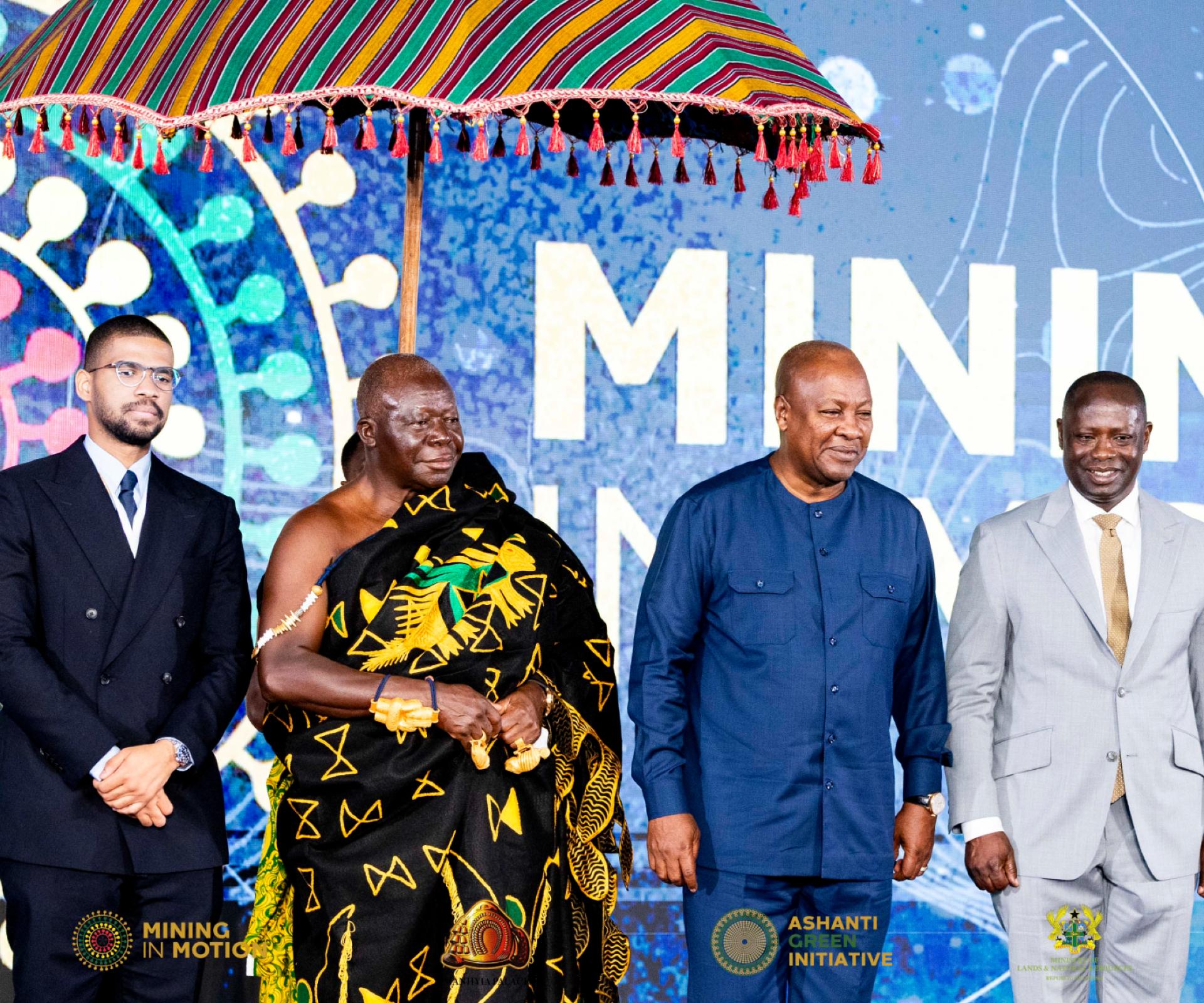
Mahama’s visit also came during a busy period of policy announcements and international engagements. On the same day, the President addressed the Mining in Motion Conference, where he discussed Ghana’s mineral policy, efforts to increase local processing, environmental protection and the fight against illegal mining. His administration has also been seeking stronger international partnerships as Ghana tries to attract investment, expand industrial production and diversify its economy.
The international aspect of Mahama’s conversation with Kufuor is therefore equally important. Kufuor maintained strong diplomatic relationships during his presidency and continued participating in international organizations and global development discussions after leaving office. He has been involved in initiatives dealing with governance, agriculture, public health and African development, giving him extensive exposure to international policy and diplomatic networks.
Mahama has similarly played an active role in regional and international diplomacy throughout his political career. His current presidency has continued Ghana’s engagement with the African Union, ECOWAS and major international partners while also exploring new economic relationships and stronger South-South cooperation. Conversations between the two leaders on international affairs could therefore draw on substantial experience accumulated over decades, even though the specific subjects they discussed have not been disclosed.
The meeting is also significant because Ghana’s political climate remains highly competitive. The NDC currently controls the executive branch under Mahama, while the NPP remains the main opposition party and is preparing for future electoral contests. Political disagreements between the two parties continue over economic performance, governance, public spending and the direction of the country.
A meeting between Mahama and Kufuor does not remove those disagreements, and it should not be interpreted as an endorsement of the current government by the former President. Kufuor remains historically associated with the NPP, while Mahama remains one of the most important figures in the NDC. Their discussion represents dialogue between senior statesmen rather than evidence that the political differences between their parties have disappeared.
That distinction is important because meetings involving major political figures can quickly generate speculation. In Ghana, private political engagements are often interpreted through the lens of party strategy, potential alliances and future elections. There is currently no evidence that Monday’s meeting was connected to negotiations over party politics, appointments or electoral arrangements.
Mahama himself described the purpose simply as checking on Kufuor and discussing national and international issues. That is the strongest publicly available explanation, and any suggestion of a more complicated political arrangement would require evidence that has not been presented.
The President’s decision to enquire about Kufuor’s well-being also gives the meeting a personal dimension. Kufuor is now an elder statesman, and visits from national leaders can naturally attract speculation about his health. However, no statement from Mahama, Kufuor or their representatives indicated that the former President was experiencing a new medical emergency.
Photographs released from the meeting showed both leaders interacting warmly, and reports described the visit as a courtesy call. It would therefore be inappropriate to interpret Mahama’s concern for Kufuor’s well-being as evidence of a serious undisclosed illness. The most accurate account is simply that the President checked on the former leader as part of the visit.
This personal respect between current and former presidents contributes to Ghana’s political culture. In many democracies, the relationship between former and serving leaders can become tense, particularly when they represent opposing parties. Ghana has also experienced periods of political hostility, but former presidents have continued to meet, appear together at national ceremonies and participate in public discussions.
Such interactions do not eliminate political competition but can help reinforce the principle that national institutions are larger than individual parties. Presidents serve for limited periods, while the state and its constitutional system continue across administrations.
Ghana’s Fourth Republic has now lasted for more than three decades, and peaceful political transitions have become one of the country’s most important democratic achievements. The system has survived highly competitive elections, legal challenges and changes of government without a return to military rule.
Kufuor played a major role in consolidating that culture when he accepted the responsibility of leading the first opposition party to take power from an incumbent government under the Fourth Republic. His administration later demonstrated the same principle by handing power back to the NDC after the 2008 election.
Mahama has also contributed to that tradition. His concession after losing the 2016 election and subsequent return through the ballot box in 2024 reinforced the idea that political defeat does not necessarily mark the end of a public career and that democratic institutions provide a peaceful route for parties seeking to return to power.
The two men therefore represent different chapters of the same democratic history. A conversation between them carries meaning beyond the immediate issues discussed because both understand personally what it means to exercise presidential authority and later watch another political party take control of government.
That experience may be particularly relevant as Ghana prepares for another period of significant economic and institutional change. The country is trying to rebuild public confidence after a difficult economic crisis while maintaining fiscal discipline and addressing long-standing problems in sectors such as energy, mining and public finance.
Political consensus will not be possible on every policy, but there are areas where long-term continuity could benefit the country. Debt sustainability, environmental protection, infrastructure development and institutional reform all require strategies that may extend beyond the life of one government.
Former presidents can contribute to that conversation by sharing lessons from policies that succeeded or failed during their own administrations. They can also help reduce political tension by demonstrating publicly that national dialogue does not require political opponents to abandon their differences.
Kufuor’s experience with international financial institutions and development partners may also provide useful historical perspective as Ghana attempts to move beyond direct IMF financing. His administration governed during a period when Ghana benefited from significant international debt relief and sought to position the country as an attractive destination for investment.
Mahama’s government now faces the challenge of rebuilding similar confidence after a period of debt restructuring and economic instability. The circumstances are different, but the need to balance domestic development priorities with international financial credibility remains familiar.
The current administration is also trying to deepen industrialization by increasing local processing of Ghana’s natural resources. Mahama recently announced that Ghana intends to phase out exports of unprocessed mineral ores by 2030, arguing that the country must retain more value from its bauxite, manganese, iron, lithium and gold.
Such a policy requires investment, stable regulations, energy infrastructure and consistent implementation. It also requires national confidence that future governments will not immediately reverse major long-term economic policies simply because they were introduced by political opponents.
Dialogue among senior political figures can contribute to that kind of continuity even when no formal bipartisan agreement is reached. It allows leaders to understand each other’s concerns and potentially identify national priorities that deserve protection from excessive political disruption.
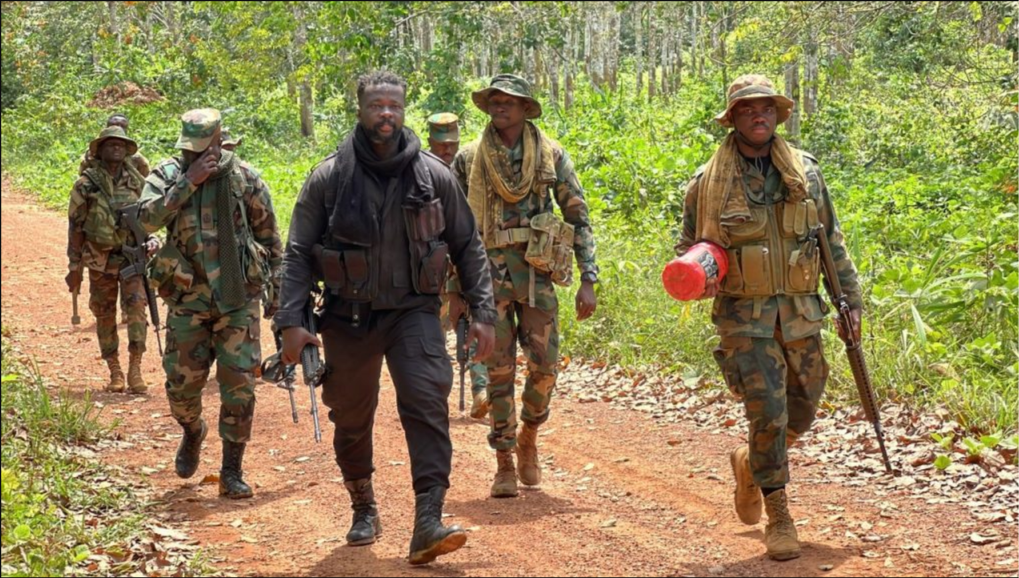
Ghana’s fight against illegal mining presents a similar challenge. Government is currently deploying security forces, tracking excavators and funding land reclamation in an attempt to protect rivers and forest reserves. The environmental damage accumulated over many years cannot be repaired within a single term, meaning any serious restoration programme will have to survive future political transitions.
The same principle applies to the energy sector. Ghana has accumulated significant power sector liabilities across different administrations, and resolving them will require reforms that may remain politically difficult for years. Former presidents who have dealt with similar challenges can provide perspective on the consequences of delaying difficult decisions.
None of this means that Monday’s meeting necessarily covered every one of these policy areas. The specific content remains private. These issues simply explain why engagement between former and serving presidents can matter at a time when Ghana faces decisions whose consequences extend far beyond one government.
The meeting also offers an example of how political leaders can disagree without severing personal communication. Ghana’s political environment can often become dominated by accusations and partisan conflict, especially through traditional and social media.
Images of Mahama and Kufuor together provide a different picture, showing that political rivalry does not prevent respectful interaction. That is particularly valuable in a country where supporters sometimes mirror the hostility they perceive among party leaders.
When senior political figures show that dialogue remains possible, it can help reinforce a more mature democratic culture. Citizens can hold strong political views while still recognizing that national interest sometimes requires cooperation across party boundaries.
Kufuor’s continued relevance after almost two decades out of office also demonstrates the role former presidents can play in public life. He no longer has constitutional authority over government decisions, but his experience gives him a platform from which to offer advice and participate in national conversations.
Mahama, as the sitting President, remains fully responsible for the decisions of his administration. A consultation with Kufuor does not transfer any executive authority or reduce the accountability of the current government.
Likewise, Kufuor is free to disagree with government policy even after meeting the President. The value of dialogue lies precisely in the fact that agreement is not required for discussion to take place.
The political significance of Monday’s visit should therefore be understood in measured terms. It was not a coalition meeting, a party negotiation or a formal national summit. It was a courtesy call during which the current President checked on a former President and exchanged views with him on Ghanaian and international issues.
That alone is relevant because of who the two participants are and what they represent in Ghana’s political history. Kufuor helped establish the credibility of peaceful political transition at the beginning of the century, while Mahama has experienced both electoral defeat and a later democratic return to power.
Their meeting provides a reminder that Ghana’s political system is built not only on competition for office but also on respect for institutions after elections have ended. Governments change, but the knowledge accumulated by former leaders remains part of the country’s political history.
The visit may also encourage further engagement between the current administration and other senior statesmen. Ghana faces complex questions that can benefit from consultation involving people with different experiences and political perspectives.
Such consultation does not require government to surrender its programme or opposition figures to abandon their criticism. It simply recognizes that certain national problems are larger than one political party.
For Mahama, the visit allows him to maintain communication with one of Ghana’s most prominent former leaders while his administration navigates economic recovery and a demanding policy agenda. For Kufuor, it provides an opportunity to share his perspective privately with the man currently responsible for leading the country.
For the wider public, the most visible message is one of political maturity and continuity. Two men who emerged from opposing political traditions can still sit together, discuss Ghana’s direction and engage respectfully despite the intense competition that has historically existed between their parties.
There is no need to exaggerate that symbolism into a political agreement that has not been announced. The value of the meeting lies in the dialogue itself.
Mahama’s visit to Kufuor therefore stands as a relatively simple but important moment in Ghana’s continuing democratic story. The President went to Peduase to check on his predecessor, the two exchanged views on issues affecting Ghana and the international community, and they did so privately without turning the encounter into a partisan confrontation.
At a time when Ghana is dealing with economic recovery, institutional reform, environmental pressures and a rapidly changing international environment, maintaining communication between experienced national leaders can contribute to a broader culture of consultation and political tolerance.
The meeting does not answer Ghana’s economic or political challenges, and it does not remove the deep policy differences between the NDC and NPP. What it does demonstrate is that those differences do not have to prevent dialogue between people who have each carried the responsibility of leading the country.
That is the clearest significance of Mahama’s October 19 visit to Kufuor. It was an expression of personal respect, an exchange between two experienced statesmen and another example of the political relationships that continue to support Ghana’s democratic stability long after individual elections have ended.