MOHBAD DNA TEST THROWN INTO FRESH CONTROVERSY AS FAMILY DEMANDS POSTPONEMENT AND FULL DISCLOSURE OF U.S. LAB
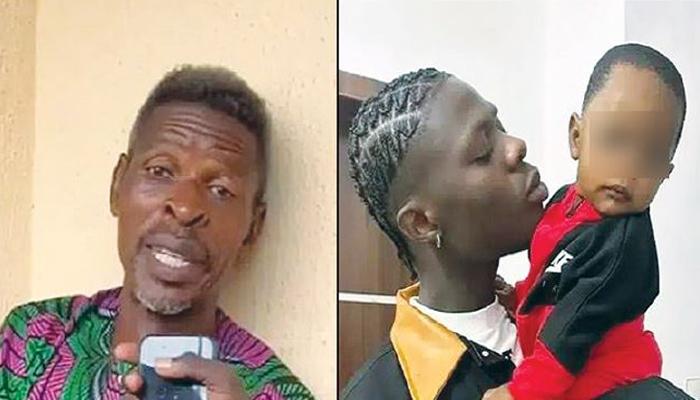
Mohbad’s family has asked authorities to postpone the DNA examination scheduled for October 31 at Mainland General Hospital/IDH in Yaba, Lagos, pending clarification over the laboratory that will conduct the analysis. The family wants the identity, address and accreditation of the proposed U.S. laboratory disclosed and is demanding detailed documentation showing how samples will be collected, labelled, preserved, transported and tested. It says the request is intended to ensure transparency and compliance with a May 5, 2026 court order and is not an allegation that the DNA process has already been manipulated.
The long-running paternity dispute surrounding the late Nigerian singer Ilerioluwa Aloba, popularly known as Mohbad, has entered another contentious phase after his family formally requested the postponement of a court-linked DNA examination scheduled for Saturday, October 31, at Mainland General Hospital/IDH in Yaba, Lagos. The family says it is not opposed to a DNA test and does not seek to frustrate the judicial process, but it is demanding greater transparency over how biological samples will be collected, preserved, transported and analysed, particularly after learning that the samples may be sent from Lagos to an unnamed laboratory in the United States. The request has reopened public debate over the paternity of Mohbad’s son, Liam, while also raising broader questions about forensic procedure, chain of custody and the level of disclosure required when scientific evidence may carry significant legal and personal consequences.
In a statement signed by family head Samuel Aloba, the family said it wanted the planned examination delayed until authorities disclose the full identity and location of the U.S. laboratory expected to conduct the analysis, provide evidence of its accreditation and technical competence, and explain the precise testing procedures that will be used. The family is also asking for a documented system showing how the samples will be collected and labelled in Lagos, how they will be preserved and transported abroad, and how all parties can independently verify that the specimens received by the foreign laboratory are the same ones collected in Nigeria. Their position is that the credibility of the eventual result will depend not only on what the laboratory reports but also on whether every step leading to that result can be independently verified.
The central point of dispute concerns a court order issued on May 5, 2026, which the family says designated the Lagos State DNA and Forensic Centre to carry out the examination. According to the family, it has since been informed that samples may instead be collected locally and forwarded to an unnamed laboratory in the United States for analysis. That distinction has become crucial because the family argues that if a court order contemplated testing at a particular institution, any materially different arrangement should be clearly explained and, where necessary, referred back to the court for clarification before the process proceeds. The family is therefore seeking confirmation on whether the Lagos State DNA and Forensic Centre will actually conduct the analysis itself or merely serve as a collection point before the samples are shipped overseas.
The family has also objected to suggestions that the identity of the overseas laboratory may be disclosed only to the court and not to all parties involved. Its statement argues that confidentiality should not prevent meaningful verification in a process with potentially far-reaching legal implications, particularly where the result may determine questions of paternity, inheritance and family status. The Aloba family says it wants the proposed laboratory’s name, address, accreditation status and technical credentials disclosed in advance so that the parties can assess whether the institution is qualified to perform the test and whether its methods meet accepted forensic standards. The family maintains that this level of transparency is necessary to avoid future disputes over the validity of the result.
Importantly, the family has stopped short of claiming that the scheduled DNA examination has already been manipulated or compromised. Its statement specifically clarifies that it is not alleging that wrongdoing has been established and that its concerns are precautionary rather than accusatory. This distinction is significant because the paternity dispute has generated years of intense public speculation, social-media accusations and competing narratives from different relatives. By framing its objection around procedure rather than a direct allegation of tampering, the family is attempting to focus attention on forensic credibility and judicial compliance rather than making claims that have not been proven.
The scheduled test is intended to help resolve the paternity dispute involving Liam, the young son of Mohbad’s widow, Omowunmi Aloba. Questions surrounding Liam’s paternity became one of the most persistent controversies following Mohbad’s death in September 2023, with members of the singer’s family and sections of the public repeatedly calling for scientific confirmation. Mohbad’s father, Joseph Aloba, has been one of the most prominent advocates for a DNA test, arguing that certainty is necessary before questions concerning lineage and inheritance can be fully settled. Omowunmi has, at different times, publicly indicated her willingness to participate in a legally supervised DNA process, but disagreements over procedure, venue and conditions have repeatedly delayed resolution.
The current examination is described as a tissue-based test because it would involve biological material connected to the late singer rather than simply collecting fresh samples from both alleged father and child. Mohbad was buried after his death on September 12, 2023, and his remains were later exhumed as part of the investigation into the circumstances of his death. That history has made the handling of biological evidence particularly sensitive because the reliability of any paternity test depends on the integrity of the sample attributed to the deceased.
The family has linked its latest concerns to questions it previously raised about the handling of biological samples during Mohbad’s post-mortem examination. According to the statement, enquiries conducted by the family allegedly produced information suggesting that a laboratory to which some earlier samples were said to have been sent had no record of receiving specimens registered in Mohbad’s name. The family itself has acknowledged that this account has not been established as a judicial finding and should not be treated as proof of wrongdoing by any pathologist, laboratory or official. It is nevertheless relying on that earlier uncertainty to argue that the new DNA process should be documented more rigorously from the outset so that similar questions cannot arise afterward.
Chain of custody is central to that argument. In forensic science, the value of a DNA result depends not only on laboratory analysis but on proving that the sample tested is authentic, was collected from the correct source and was protected against substitution, contamination or mislabelling throughout the process. A complete chain of custody typically records who collected a specimen, when and where it was collected, how it was sealed, who handled it at every stage, how it was transported and when it arrived at the laboratory. If any of those steps are poorly documented, parties in a legal dispute may challenge the reliability of the evidence even where the underlying scientific testing was technically accurate.
That is why the family is demanding a procedure it says should be capable of independent verification from beginning to end. It wants documentation showing that samples collected at Mainland General Hospital are uniquely identified and securely sealed, that all transfers are recorded, and that the same samples arrive intact at the laboratory that eventually performs the analysis. The family’s position is that the final DNA report should not exist in isolation from the process that produced it, particularly in a dispute that has already attracted intense national attention and could continue through the courts.
The dispute also raises questions about the role of foreign laboratories in Nigerian forensic cases. Sending samples abroad is not inherently unusual, particularly where a specialist laboratory offers technology, accreditation or expertise that may not be readily available locally. However, when a court order appears to specify a particular domestic institution, parties may seek judicial clarification before that institution delegates or outsources the analytical component of the examination. The family’s objection therefore focuses less on the fact that a U.S. laboratory may be involved and more on why its identity and exact role have not, in the family’s view, been sufficiently explained.
The case remains complicated by the fact that multiple legal and investigative proceedings have surrounded Mohbad’s death. Lagos State authorities opened investigations after the singer died unexpectedly at age 27 on September 12, 2023, a death that triggered widespread public anger and demands for accountability. The Lagos State Police Command constituted a special investigation team, while a coroner’s inquest examined the circumstances surrounding the death. Mohbad’s remains were exhumed for an autopsy, and several individuals connected to his career and final days were questioned as part of the broader investigation.
The singer’s death became one of Nigeria’s most discussed entertainment stories, partly because of allegations he had previously made about bullying, harassment and disputes within the music industry. Those issues produced nationwide demonstrations and calls for justice, while the separate paternity controversy involving Liam gradually became intertwined with public arguments over Mohbad’s estate and family relationships. The DNA question has therefore continued long after the initial investigation into the singer’s death, even though paternity and cause of death are separate legal and factual issues.
For Mohbad’s family, resolving Liam’s paternity has been presented as necessary for certainty surrounding lineage and any future inheritance claims. For Omowunmi and her supporters, the prolonged public questioning has been criticised as intrusive and emotionally damaging, especially because the dispute involves a young child who has no role in the controversy. Those competing concerns have made the DNA process highly sensitive, with every procedural development attracting intense scrutiny.
The scheduled October 31 test was supposed to represent a significant step toward resolving that uncertainty. According to reports, authorities planned to begin the examination at 10 a.m. at Mainland General Hospital/IDH in Yaba. The family’s postponement request, however, means the process could now face another delay if the relevant authorities agree that the concerns should be addressed before sampling proceeds. At the time of the family’s statement, there was no independently confirmed public announcement showing that a court had formally postponed the examination, meaning the family’s request should not automatically be interpreted as proof that Saturday’s procedure had been cancelled.
That distinction is important because only the court or the responsible authorities can formally alter the schedule established for the examination. The family has requested postponement, but a request does not itself suspend a judicial direction unless the competent authority accepts it or issues a fresh order. The immediate question is therefore whether the DNA exercise will proceed as scheduled or whether officials will pause the process while the family seeks clarification from the court.
If the test does proceed despite the family’s concerns, any disagreement over procedure could become part of future litigation. A party dissatisfied with how the samples were handled could challenge the result, potentially prolonging rather than resolving the dispute. That possibility explains why the family argues that transparency before testing is preferable to legal arguments after the result has already been produced.
Conversely, repeated procedural challenges can also delay a scientific answer indefinitely. The paternity dispute has persisted for years, and each postponement extends uncertainty for everyone involved, including Liam. A credible process therefore requires both transparency and finality: enough safeguards to inspire confidence, but also a clear timetable that prevents the issue from remaining unresolved indefinitely.
The court will ultimately have to balance those considerations if further applications are filed. Judges may examine whether the proposed overseas testing arrangement complies with the May 5 order, whether the Lagos State DNA and Forensic Centre has authority to involve an external laboratory, and whether disclosure of the laboratory’s identity is necessary before samples are collected. The court could also establish additional conditions governing observers, documentation, independent experts or the release of results.
Independent oversight could provide one possible route through the dispute. Where parties distrust each other, forensic processes can sometimes involve representatives or experts appointed by each side who observe sample collection and verify seals and documentation without interfering with the laboratory analysis itself. Such arrangements can reduce later accusations by ensuring that everyone has access to the same procedural record.
The family’s demand for evidence of accreditation is similarly significant because forensic DNA testing used in legal proceedings is generally expected to meet recognised quality standards. Accreditation does not guarantee that every result is correct, but it provides assurance that a laboratory follows documented procedures, participates in proficiency testing and operates under recognised technical standards. The family wants any U.S. laboratory involved in the Mohbad case to demonstrate those credentials before the examination takes place.
Questions about the handling of Mohbad’s tissue are especially sensitive because unlike a living participant, the singer cannot provide a fresh sample if questions arise over the authenticity or condition of the material being tested. Preservation therefore becomes crucial. Biological material can degrade over time depending on how it is stored, and laboratories must assess whether enough usable DNA remains for reliable analysis. If samples are transported internationally, temperature control, secure packaging and documentation become even more important.
The dispute has also highlighted the difference between a scientific result and public acceptance of that result. A DNA test can produce a very high statistical probability concerning biological relationships, but if the parties do not trust how the samples were obtained or handled, controversy may continue regardless of the numbers in the report. This is why the family says the procedure must not merely produce an answer but must produce one that can withstand independent scrutiny.
The public dimension makes that standard even more important. Mohbad remains a widely recognised figure in Nigerian popular culture, and virtually every development involving his death or family has generated intense online discussion. False information and unsupported claims have circulated alongside legitimate reporting, making careful documentation essential if authorities want the eventual DNA result to settle rather than deepen the controversy.
News organisations also have a responsibility to distinguish between confirmed facts, family claims and judicial findings. The family’s statement contains allegations and concerns about earlier sample handling, but those statements have not been established by a court as proof of misconduct. Likewise, no paternity result has yet been publicly confirmed through the present process, meaning reporting should not state or imply that Liam’s biological relationship to Mohbad has been scientifically resolved one way or another.
The same caution applies to the conduct of Omowunmi and other relatives. Public arguments over paternity can quickly become defamatory if individuals are accused of deception without evidence. The purpose of the court-ordered test is precisely to replace speculation with scientific evidence, making procedural integrity essential for all sides.
The family says that remains its objective. Its statement maintains that it supports a credible DNA examination and is not seeking to predetermine what the result should be. It argues instead that the process must be conducted in a way that allows every party to trust that the result genuinely corresponds to the samples collected.
Whether authorities accept that argument will determine the immediate next step. If the examination goes ahead on October 31, attention will shift to how samples are handled and when results are expected. If the procedure is postponed, the court may need to clarify the role of the Lagos State DNA and Forensic Centre and the identity of any foreign laboratory before a new date is fixed.
Either outcome is unlikely to end public interest in the case immediately. Even after a DNA result is produced, questions surrounding Mohbad’s estate, family relationships and the investigation into his death may continue through separate legal processes. The paternity issue is only one part of a much larger story that has remained unresolved in the public mind since 2023.
For Liam, however, the consequences are deeply personal. Paternity disputes involving children can have implications for identity, inheritance and family relationships that last far beyond the news cycle. That makes it especially important that the scientific process be handled carefully and that public commentary avoids turning a child into an object of entertainment or political-style campaigning.
The continuing disagreement also illustrates how mistrust can complicate legal processes even when scientific testing appears capable of producing a straightforward answer. DNA analysis itself may be technically routine, but confidence in the result depends on the institutions, documentation and procedures surrounding it. In a case where relationships between the parties are already strained, any lack of clarity can quickly become another source of dispute.
The Aloba family’s latest intervention therefore shifts the immediate focus away from the eventual DNA result and toward the integrity of the process that will produce it. The family wants the foreign laboratory identified, its qualifications verified, the chain of custody documented and any departure from the May 5 court order explained before the examination begins. It says those demands are intended to protect the credibility of the result rather than prevent testing.
At the time of reporting, the clearest confirmed position is that a tissue-based DNA examination was scheduled for October 31 at Mainland General Hospital/IDH in Yaba and that Mohbad’s family has formally asked for the exercise to be postponed. The family has not claimed that manipulation has already occurred, and there is no public judicial finding establishing wrongdoing in the planned testing process. What exists is a procedural dispute over transparency, laboratory identification and compliance with the court’s earlier directions.
That dispute now threatens to delay a test that many had hoped would finally resolve one of the most persistent controversies surrounding Mohbad’s family. Whether the examination proceeds or is postponed, the central challenge remains the same: producing a scientific result that is not only accurate but credible enough that the parties, the court and the public can understand exactly how it was reached.
Nearly three years after Mohbad’s death, the paternity question surrounding Liam remains unresolved not because DNA technology lacks the ability to provide an answer but because the parties continue to disagree over how that technology should be used. The latest postponement request shows that the battle has shifted from whether a DNA test should happen to who should perform it, where it should be analysed and how the evidence should be protected along the way. Until those questions are settled, the controversy that has followed Mohbad’s family since his death is likely to continue.