
MOROCCO’S KING SAYS SPAIN MIGRATION DEAL HAS “REACHED ITS LIMITS,” DEMANDS NEW COOPERATION FRAMEWORK
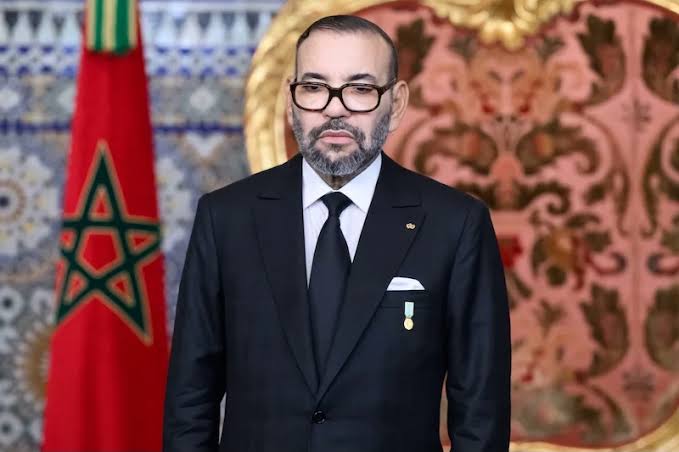
King Mohammed VI has publicly called for a new migration framework with Spain, saying the existing model can no longer adequately handle repeated crises. His remarks follow the July mass crossing into Ceuta and ongoing disputes over the return of migrants, unaccompanied minors and asylum applicants. Morocco says it will present a new strategic document linking migration cooperation with economic development, competitiveness and regional stability rather than relying on the current border-management model.
King Mohammed VI has declared that Morocco’s current migration-cooperation model with Spain has effectively run its course and must be replaced with a new framework, marking one of the clearest signals yet that Rabat wants to renegotiate the terms governing migration, returns and broader strategic cooperation with Madrid. Speaking on Friday during the opening of Morocco’s new parliamentary term, the monarch said cooperation between the two countries had produced tangible results in curbing irregular migration but argued that repeated crises, legal obstacles and disputes over the return of migrants had exposed the limits of the existing arrangement.
The king’s intervention comes after months of tension surrounding irregular migration into Ceuta, Spain’s North African enclave bordering Morocco, where a mass crossing in July placed enormous pressure on Spanish authorities and reignited arguments over responsibility for border control, migrant returns and the treatment of minors. More than 70,000 people crossed from Morocco into Ceuta during that crisis, according to Reuters, although many later returned and thousands remained in the enclave, including minors whose legal status complicated repatriation. The episode created one of the most serious migration challenges in recent Spain-Morocco relations and appears to have accelerated Rabat’s push for a new model.
Mohammed VI acknowledged that cooperation with Spain had advanced substantially in recent years, including in the fight against irregular migration, but said the existing model had become outdated and was no longer capable of dealing effectively with recurring crises. He specifically criticized what he described as obsolete legal provisions and unrealistic court decisions that restrict the return of unaccompanied minors and people Morocco considers to be improperly claiming asylum. In the king’s view, those legal constraints do not merely slow administrative procedures but can also create incentives that criminal smuggling networks exploit.
The comments are important because Morocco has now moved beyond private dissatisfaction or technical objections and has publicly called for a replacement framework at the highest level of state authority. The king said Morocco would present its partners with a new strategic document intended to establish a different model of cooperation built around shared development, economic competitiveness and regional stability rather than treating migration only as a border-security problem. That suggests Rabat wants the relationship with Spain to be rebalanced around a wider package of economic and strategic interests.
The migration issue has long been central to relations between Morocco and Spain because geography makes the two countries unavoidable partners. Spain controls the enclaves of Ceuta and Melilla on the North African coast, while Morocco sits directly across the Strait of Gibraltar from southern Europe and serves simultaneously as a country of origin, transit and destination for migrants. Thousands of people from sub-Saharan Africa, North Africa and elsewhere attempt to reach Spanish territory each year through maritime routes, border fences and other irregular crossings, making Moroccan cooperation critical to Spain’s ability to manage migration pressure.
Madrid has repeatedly relied on Rabat to patrol routes, disrupt smuggling networks, intercept migrants and accept returns, while Morocco has used migration cooperation as one component of a much broader relationship involving trade, fisheries, investment, counterterrorism and diplomatic support. That has often created tension because Spanish policymakers want predictable border control while Moroccan authorities argue that migration cannot be separated from economic development, regional inequality and Europe’s wider relationship with Africa.
The king’s Friday speech appears designed to push that argument further. Rather than framing migration exclusively as a policing challenge, he said the next stage of cooperation should be based on shared economic development and competitiveness. The implication is that Morocco wants Spain and its European partners to invest more heavily in the economic conditions that reduce migration pressure while also modernizing legal procedures governing returns and asylum.
The timing is politically significant. Spain has been dealing with the consequences of the July Ceuta crisis, including overcrowding, emergency accommodation, public anger and legal disputes over how migrants can be processed or returned. Spanish authorities have also moved to accelerate reforms to asylum and immigration procedures following the mass crossing, partly in response to the administrative difficulties exposed by the crisis. Madrid has insisted that irregular arrivals must be handled within Spanish and European law, while Rabat has argued that some of those rules are disconnected from conditions on the ground and make effective cooperation harder.
One of the most sensitive issues concerns unaccompanied minors. Under Spanish and European legal protections, children cannot simply be returned across the border without procedures assessing their welfare, family circumstances and best interests. Moroccan officials have long complained that the system can become extremely slow and difficult, leaving large numbers of minors in Spanish care while administrative disputes continue. The king’s criticism suggests Rabat wants a more workable mechanism for returns that satisfies legal protections while preventing situations in which minors remain stranded indefinitely.
The asylum question is equally contentious. Mohammed VI referred to people he said falsely claim asylum, arguing that existing procedures can be manipulated by individuals and criminal networks seeking to prevent removal. Spain, however, remains bound by domestic and international refugee law requiring authorities to assess asylum claims individually. That means any new migration arrangement will have to navigate the tension between Morocco’s demand for faster returns and Spain’s legal obligations to people seeking international protection.
The king also used unusually strong language about the political treatment of migration cooperation. He rejected what he characterized as pressure, threats and blackmail and said Morocco’s partnerships are political choices entered into voluntarily rather than obligations that can be imposed from outside. That message appears directed not only at Spain but at wider European political debates in which Morocco is sometimes portrayed as using migration flows to obtain concessions from Madrid or Brussels.
Rabat has repeatedly rejected accusations that it deliberately allows migration pressure to rise as a tool of diplomacy. Moroccan officials say the country spends considerable resources securing borders, disrupting smuggling routes and managing migration on behalf of both itself and Europe. Critics in Spain and elsewhere have nevertheless argued that moments of political tension between Madrid and Rabat have sometimes coincided with sudden changes in migration enforcement, making the issue particularly sensitive.
The Ceuta crisis has reinforced those suspicions among some Spanish political groups. The mass crossing placed extraordinary pressure on the enclave and occurred amid wider strains in the relationship, prompting renewed debate about whether Spain had become too dependent on Moroccan security cooperation. Madrid responded by strengthening border infrastructure, increasing emergency humanitarian assistance and opening consultations with Rabat over returns and future prevention measures.
Morocco, meanwhile, reinforced security around Fnideq and routes leading toward Ceuta after fresh calls circulated on social media for additional mass crossings. Spanish authorities also installed new maritime and border barriers while warning people against attempting irregular entry. Those measures reduced immediate pressure but did not resolve the structural disagreements that the king has now placed at the center of bilateral relations.
The new framework Mohammed VI is proposing appears intended to address those structural problems rather than simply prepare for the next border incident. He said Morocco would present a clear and practical strategic document to its partners, although the detailed contents have not yet been published. That distinction matters because Friday’s speech is an announcement of a new framework to come rather than the unveiling of a finalized migration agreement.
The eventual document could become one of the most important diplomatic texts shaping Spain-Morocco relations over the next several years. It is expected to combine migration management with economic development, investment, competitiveness and possibly broader regional-security cooperation. Whether Spain accepts Morocco’s preferred model will depend on how far Madrid is willing to modify existing return procedures and whether the proposals comply with Spanish and European Union law.
The European Union will inevitably be part of that calculation even if the immediate relationship is bilateral. Spain’s migration policy operates inside a wider EU framework governing asylum, border protection and returns, while the bloc provides significant financial support to Morocco for migration management and development projects. Any major change affecting how asylum seekers or minors are returned could therefore involve Brussels as well as Madrid.
The EU has defended its broader partnership with Morocco as extending beyond migration to trade, infrastructure, security and investment, a position that closely resembles the integrated approach now being promoted by Mohammed VI. European officials have argued that migration cooperation works best when combined with economic opportunity and legal mobility rather than relying exclusively on enforcement.
The challenge is that economic partnership and migration control can pull in different political directions. Spain benefits significantly from trade and investment ties with Morocco, and the two countries have built one of the most important commercial relationships in the western Mediterranean. Yet migration remains a deeply polarizing domestic issue in Spain, particularly during periods of heavy arrivals or pressure on housing and public services.
Spain’s political environment makes the king’s announcement especially consequential. The country is heading toward a snap general election in late November, and immigration has become one of the central issues in the campaign alongside housing and the cost of living. Conservative and right-wing parties have criticized Prime Minister Pedro Sánchez’s migration policies, while the government argues that controlled migration contributes to economic growth and that border pressure requires cooperation with Morocco rather than confrontation.
A public demand from Rabat for a new migration framework could therefore become part of Spain’s domestic political debate. Opposition parties may question whether Sánchez has made the country too dependent on Morocco, while the government is likely to emphasize that stable relations with Rabat are essential to controlling irregular crossings and preventing another Ceuta-style crisis.
The king’s comments also intersect with the politically sensitive question of sovereignty over Ceuta and Melilla. Morocco has historically contested Spanish sovereignty over the two enclaves, while Spain considers them integral parts of its national territory. Although Friday’s migration announcement was focused on cooperation rather than territorial claims, any major border crisis inevitably revives those tensions because the enclaves sit at the center of migration routes and bilateral security arrangements.
Spain is preparing for a royal visit to Ceuta by King Felipe VI and Queen Letizia, adding another layer of symbolism to the current moment. The visit comes after Spanish authorities cleared a large migrant camp from a beach in the enclave and relocated thousands of people into temporary accommodation for processing or possible return. The timing means the Spanish monarchy’s presence in Ceuta will occur just days after Mohammed VI publicly called for a new migration framework, guaranteeing further attention to the broader relationship.
Despite the strong language, the king did not call for an end to cooperation with Spain. On the contrary, he acknowledged that the partnership had delivered results and emphasized the need for a different model rather than abandonment of coordination. That suggests Rabat is seeking renegotiation and expansion rather than rupture.
This is important because Spain and Morocco have invested heavily in repairing relations after earlier diplomatic crises. Cooperation has improved across trade, security, counterterrorism and migration, and both governments have frequently described the relationship as strategic. A breakdown would create significant costs on both sides, particularly for border security and commercial ties.
The king’s speech therefore reads more as an attempt to reset the terms of cooperation than as a threat to suspend it. Morocco appears to be arguing that the existing model places too much emphasis on enforcement without resolving the legal and developmental problems that repeatedly recreate pressure. By proposing a strategic framework centered on economic competitiveness and shared development, Rabat is trying to move the conversation from reactive crisis management toward a longer-term partnership.
Whether that succeeds will depend on the details. Spain will want guarantees that Morocco remains committed to preventing mass crossings and accepting eligible returns, while Morocco will likely demand more predictable legal procedures, greater recognition of its financial and security burden and deeper economic cooperation. The European Union may also have to contribute financing or regulatory flexibility if the framework is to work at scale.
There will also be disagreement over how much responsibility each country should bear. Spain can argue that Morocco must prevent departures from its territory and dismantle smuggling networks more effectively, while Morocco can argue that European legal systems and limited development opportunities create incentives it cannot solve alone. The king’s reference to “shared responsibility” suggests Rabat will reject any model that places the burden primarily on countries of origin and transit.
That approach reflects a wider shift in global migration diplomacy. Transit countries increasingly demand economic, security and development concessions in exchange for helping destination countries manage borders, while European governments seek stronger return agreements and cooperation against smuggling. The resulting partnerships are often politically controversial because they can appear transactional and raise concerns about human rights, sovereignty and unequal bargaining power.
Morocco occupies an especially strong position in that system because of its geographic location and its ability to influence migration routes into Spain. The country is one of Europe’s most important migration partners, and Madrid has relatively few alternatives capable of providing the same level of cooperation along the western Mediterranean route.
That strategic leverage helps explain why Friday’s announcement matters. When Morocco’s king says the current model has reached its limits, Spain cannot easily dismiss the statement as routine diplomatic language. Rabat is signaling that the architecture governing one of Europe’s most sensitive migration corridors needs to be renegotiated.
At the same time, the announcement should not be interpreted as an immediate suspension of existing controls or return arrangements. There has been no declaration that Morocco will stop cooperating with Spain, and the king explicitly recognized the results achieved so far. The practical meaning of the speech will become clearer only when Morocco presents the promised strategic document and Spain responds to its proposals.
The most important near-term question is therefore what the new framework contains. If it focuses primarily on investment, development and administrative reforms, Madrid may find significant room for agreement. If it requires major changes to asylum protections or return procedures that conflict with Spanish or EU law, negotiations could become much more difficult.
The second question is how quickly both governments move. The memory of the July Ceuta crisis remains fresh, thousands of migrants remain caught in legal and humanitarian processes and political pressure is high on both sides. That creates incentives to negotiate but also increases the risk that another migration surge could overwhelm the relationship before a new agreement is completed.
The third question is whether the new model will broaden beyond Spain. Mohammed VI spoke about presenting the document to Morocco’s partners, suggesting that the proposal may ultimately be aimed at Europe more generally rather than Madrid alone. If so, the announcement could become the foundation for a wider Moroccan strategy toward the European Union on migration, investment and regional development.
For now, the shift is diplomatic rather than operational. Morocco has not torn up its cooperation with Spain, but its head of state has publicly declared the current model inadequate and announced that Rabat will propose a replacement. That is a meaningful escalation from earlier complaints about individual legal obstacles or border incidents.
The king’s speech also makes clear that Morocco wants recognition as a strategic partner rather than simply Europe’s external border guard. By tying migration to economic competitiveness and shared development, Rabat is demanding a relationship in which cooperation produces broader benefits rather than one focused narrowly on stopping people from reaching Spanish territory.
Spain now faces the task of deciding how much of that argument it is prepared to accept. Madrid has strong reasons to preserve Moroccan cooperation because the July crisis demonstrated how quickly Ceuta can come under pressure when large numbers of people move toward the border. At the same time, Spanish authorities must operate within legal protections for minors and asylum seekers and cannot simply rewrite those obligations through bilateral diplomacy.
The coming negotiations will therefore test how much flexibility exists between legal constraints, political pressure and strategic necessity. If both sides reach a new framework, it could reshape migration management across the western Mediterranean. If they fail, the same unresolved issues that produced repeated crises around Ceuta could return.
Mohammed VI’s intervention has now placed that choice firmly on the table. Morocco is not saying cooperation with Spain has failed entirely; it is saying the existing model no longer works well enough for the realities both countries are facing. The next stage will depend on whether Madrid, Rabat and potentially Brussels can translate that diagnosis into a new agreement before the next migration crisis tests the border again.