NETANYAHU REPORTEDLY WANTS TRUMP TO HIT IRAN "AS SOON AS POSSIBLE." ONE UNNAMED SOURCE COULD DECIDE WHETHER THE MIDDLE EAST BURNS AGAIN
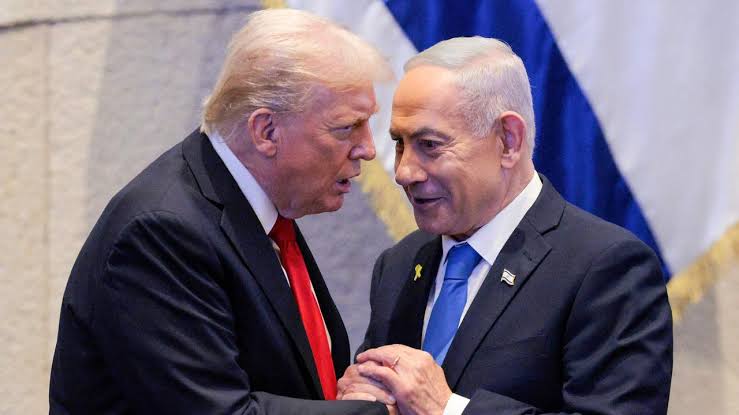
Israel's public broadcaster Kan has reported that Prime Minister Benjamin Netanyahu is pressing US President Donald Trump to attack Iran "as soon as possible." The report cites a single unnamed source familiar with the matter. As far as public reporting shows, neither Netanyahu's office nor the White House has confirmed the claim. Kan has not publicly said what kind of strike was discussed, what targets were involved, or whether Trump agreed to anything. The claim is untested, and it should be read that way. Even so, the report carries real weight. In June 2025, Israel and Iran fought a 12-day war, and US bombers struck Iran's nuclear sites at Fordow, Natanz and Isfahan. Since then, Iran has curbed cooperation with UN nuclear inspectors. The whereabouts of its stockpile of highly enriched uranium remain uncertain. UN sanctions were reimposed in September 2025. Netanyahu has spent three decades warning that Iran is close to a bomb and urging Washington to act. If the Kan report is accurate, he is now asking a president who has already bombed Iran once to do it again. A new US-Iran confrontation would not stay in the Middle East. It could disrupt the Strait of Hormuz, push up oil prices and unsettle shipping lanes and security partnerships far from the Gulf. Nigeria and Ghana would feel the effects quickly. Higher crude prices could lift oil revenue for both countries. They would also raise fuel costs, feed inflation and pressure currencies that are already under strain. Beyond the economics, a wider war could revive old security concerns in West Africa about Iranian and Hezbollah-linked networks.
The report is one sentence long, and it rests on one anonymous voice. That is worth saying first, because it will be easy to forget once the story spreads.
According to Kan, Israel's public broadcaster, Prime Minister Benjamin Netanyahu is pressing President Donald Trump to attack Iran "as soon as possible." Kan attributed the claim to an unnamed source familiar with the matter. It did not publish documents, recordings or a second source. Public reporting so far does not say when the pressure was applied or how it was delivered. It does not say whether it came in a phone call, a meeting, a message through envoys or some other channel. It also does not say what kind of attack Netanyahu supposedly wants or whether Trump responded. At the time of writing, there is no public confirmation from the Prime Minister's Office in Jerusalem or the White House. There is no public denial either.
The claim should be treated as exactly what it is: a serious, single-source report from a credible national broadcaster about a private exchange between two heads of government. It is not a confirmed policy. It is not proof that an attack is planned. It is not evidence that Washington has agreed to anything. Leaks of this kind can be accurate. They can also be partial, exaggerated, or planted to send a message to Tehran, Washington or a domestic audience.
Still, it would be a mistake to dismiss it. The report fits a pattern that spans three decades. It involves two leaders who have already gone to war with Iran together once. And it lands at a moment when the Middle East has barely caught its breath. Whether the claim is fully accurate, partly accurate or a deliberate signal, it says something important about where the region may be heading.
To understand why, start with what happened the last time.
In June 2025, Israel launched a wide air campaign against Iran. Israeli jets and drones struck nuclear facilities, missile sites, air defenses and military commanders. Several senior Iranian officers and nuclear scientists were killed. Iran answered with waves of ballistic missiles and drones fired at Israeli cities. Some got through Israel's layered air defenses and killed civilians. For 12 days, the two countries fought the most direct war in the history of their long rivalry.
Then the United States joined. On June 22, 2025, American B-2 bombers dropped massive bunker-busting bombs on Fordow, the enrichment plant buried deep inside a mountain near Qom. US forces also struck Natanz and Isfahan. Trump declared that Iran's key nuclear sites had been "obliterated." Iran retaliated with a limited, heavily telegraphed missile strike on Al Udeid Air Base in Qatar, which hosts US forces. Within days, Trump announced a ceasefire. It largely held.
The war ended, but the argument over its results did not. A leaked early assessment from the US Defense Intelligence Agency suggested the strikes may have set Iran's program back by months rather than years. The White House rejected that reading forcefully. CIA and Israeli officials later described more serious damage. The truth probably sits somewhere in between. Bombs can destroy buildings and centrifuges. They cannot destroy knowledge, and they cannot easily find material that has been moved.
That last point is the heart of the problem today. Before the war, the International Atomic Energy Agency estimated Iran held roughly 400 kilograms of uranium enriched to 60 percent purity. That level has no clear civilian use and sits a short technical step from weapons grade. After the strikes, Iran sharply curtailed its cooperation with the IAEA. Its parliament passed legislation restricting access for inspectors. Since then, the international community has lacked a clear, verified picture of where that material is, how much of it survived and what Iran intends to do with it. Iran has always denied seeking nuclear weapons. Israel has never believed it.
The diplomatic track collapsed too. In August 2025, Britain, France and Germany triggered the "snapback" mechanism under the 2015 nuclear deal. They accused Iran of serious violations. By late September 2025, UN sanctions lifted a decade earlier had been reimposed, despite objections from Russia and China. Iran called the move illegal. It threatened to reduce its cooperation with the global nonproliferation system even further.
So the situation Netanyahu reportedly wants to resolve by force looks like this. Iran's nuclear program has been damaged but not erased. International inspectors have limited visibility. Iran is under renewed UN sanctions and deeply humiliated by the 2025 strikes. Israel has shown it can hit Iran hard. The United States has shown it is willing to join. Each of those facts can be read as an argument for restraint or as an argument for finishing the job. Netanyahu, if Kan is right, has chosen the second reading.
That choice would surprise no one who has followed his career.
Benjamin Netanyahu has warned about an Iranian bomb for longer than many of today's Iranian engineers have been alive. In his 1995 book, he predicted Iran could have a nuclear weapon within a few years. In 2002, he told the US Congress that removing Saddam Hussein would have positive effects across the region, including in Iran. In 2012, he stood at the United Nations General Assembly with a cartoon diagram of a bomb. He drew a red line across it to show how close he said Iran was to the threshold.
In 2015, he went further. Without the approval of President Barack Obama, he accepted an invitation from congressional Republicans to address a joint session of Congress. There, he attacked the nuclear deal Obama was negotiating with Iran. It was an extraordinary act. A foreign leader had lobbied the American legislature against the policy of a sitting American president. Netanyahu argued the deal would pave Iran's path to a bomb rather than block it. The agreement, known as the Joint Comprehensive Plan of Action, was signed anyway in July 2015.
Three years later, Netanyahu got the outcome he wanted. In April 2018, he presented what he described as a vast archive of Iranian nuclear documents stolen by Israeli intelligence from a warehouse in Tehran. The next month, Trump withdrew the United States from the nuclear deal and launched a "maximum pressure" campaign of sanctions. Iran responded by gradually breaching the deal's limits. It enriched to higher levels and installed more advanced centrifuges. Critics of the withdrawal argue it pushed Iran closer to a bomb, not further away. Supporters argue the deal was always too weak.
Across all these years, Israel was widely reported to be carrying out a covert campaign inside Iran. Sabotage hit centrifuge halls at Natanz. The Stuxnet cyberweapon, widely attributed to the United States and Israel, damaged Iranian centrifuges before it was discovered in 2010. Several Iranian nuclear scientists were assassinated. The most senior of them, Mohsen Fakhrizadeh, was killed near Tehran in November 2020. Israel rarely confirmed its role in these operations. Iran blamed Israel for nearly all of them.
What Israel always lacked, until 2025, was the willingness of an American president to join an open military attack. Israeli leaders reportedly came close to striking Iran on their own in 2010 and 2012. They pulled back in part because of strong American opposition and doubts among their own security chiefs. Washington's view, under both Republican and Democratic presidents, was that a strike might delay Iran's program but could also start a regional war and drive Iran to build a bomb openly.
Trump changed that equation. In his first term, he did more than tear up the nuclear deal. In January 2020, he ordered the drone strike in Baghdad that killed Qassem Soleimani, commander of Iran's Quds Force and the architect of its regional network of allied militias. In his second term, he crossed the line no previous president had crossed. He bombed Iran's nuclear facilities directly.
That history explains why a report that Netanyahu is pushing Trump to attack Iran again matters so much. In 2012, a similar story would have been a story about a pressure campaign likely to fail. In 2026, it is a story about a pressure campaign aimed at a president who has already said yes once.
The relationship between the two men is not as simple as it looks from the outside, though.
Trump and Netanyahu share a worldview on Iran. They have also shared a long political alliance. In his first term, Trump moved the US Embassy to Jerusalem and recognized Israeli sovereignty over the Golan Heights. He brokered the Abraham Accords, which normalized ties between Israel and the United Arab Emirates, Bahrain, Morocco and Sudan. Netanyahu has repeatedly called Trump the best friend Israel has ever had in the White House.
But the friendship has had sharp edges. Trump was furious when Netanyahu congratulated Joe Biden after the 2020 election. In his second term, Trump has shown that he wants to be the one who decides when war starts and when it ends. In the spring of 2025, Trump reportedly told Netanyahu not to strike Iran while US envoy Steve Witkoff was negotiating with Tehran. Weeks later, when Israel did strike, Trump embraced the operation and then joined it. When both sides appeared to violate the June ceasefire in its first hours, Trump publicly scolded Israel as well as Iran and demanded that Israeli jets turn back.
The pattern repeated in Gaza. In September 2025, Israel struck Hamas leaders in Doha, the capital of Qatar, a close American partner that hosts a major US air base. The strike angered Washington. Within weeks, Trump pressed Netanyahu into accepting a Gaza ceasefire framework built around a 20-point plan. As part of that process, Netanyahu called Qatar's prime minister to apologize. The ceasefire took effect in October 2025. The remaining living Israeli hostages were released, along with Palestinian prisoners. It was a reminder that Trump is willing to restrain Netanyahu when Israeli action collides with Trump's own goals, especially his relationships with the wealthy Gulf states.
So the question raised by the Kan report is not only whether Netanyahu wants a strike. It is whether Trump wants one, and on what timeline. "As soon as possible," if accurately reported, suggests urgency on the Israeli side. It also suggests Washington may not share that urgency. People rarely need to press hard on a partner who already agrees.
There are several reasons Israel might feel urgency now. Each should be treated as a possibility, not a confirmed motive.
The first is technical. Israeli officials argue that every month without inspections gives Iran more time to reconstitute its program in secret. That could happen at new sites, deeper underground, or with centrifuges built away from known facilities. If Iran retains part of its 60 percent stockpile and some working centrifuges, the time needed to produce weapons-grade material could be short. Building a usable weapon would take longer. But the window in which outsiders could detect and stop such work might close.
The second is military. Reports since the 2025 war have described concern in Israel about Iran rebuilding its ballistic missile stocks and production lines. During the 12-day war, Iranian missiles caused deaths and damage in Israeli cities. Israeli interceptor stocks were reportedly strained. Some in Israel's security establishment may argue it is better to strike before Iran can rebuild the missile arsenal that would make retaliation more costly.
The third is strategic opportunity. Iran's regional network, which it calls the "axis of resistance," is weaker than at any point in decades. Hamas was badly degraded in Gaza. Hezbollah lost much of its senior leadership in 2024, including longtime leader Hassan Nasrallah, after Israel's campaign in Lebanon. Bashar al-Assad, Iran's ally in Syria, fell in December 2024, cutting the land bridge Iran used to supply Hezbollah. Iran's own air defenses were battered in 2024 and 2025. From Netanyahu's perspective, Iran may never be more exposed than it is now.
The fourth is political, and it is the most contested. Netanyahu's critics have long argued that his security decisions are shaped by his political survival. He remains on trial on corruption charges, which he denies. Trump has publicly called for him to be pardoned. He faces an International Criminal Court arrest warrant over the conduct of the Gaza war, which Israel rejects. Israeli politics remains bitterly divided over the war, the failures of October 7, 2023, and the government's attempts to reshape the judiciary. Critics say confrontation with Iran tends to rally Israelis around their prime minister. His supporters reject that reading entirely. They argue the Iranian threat is real, and that Netanyahu's consistency on it proves conviction, not calculation. There is no public evidence in the Kan report about his motives. It would be unfair to assume them.
There is also the possibility that the leak itself is the message. Governments sometimes allow stories about private pressure to reach the press for strategic reasons. A report that Israel is urging an immediate American strike could be meant to frighten Tehran into concessions. It could also be meant to show Israeli voters a tough prime minister, or to push the debate inside Washington. It is equally possible that the leak came from someone who opposes a strike and wanted to expose the pressure before it succeeded. Kan's source is unnamed. That means readers cannot know which of these, if any, applies.
What about Washington's side of the calculation?
Trump has said many times that he does not want Iran to have a nuclear weapon. He has also said many times that he wants to end wars, not start them. He campaigned against "forever wars" in the Middle East. He has presented the June 2025 strikes as a short, decisive operation that achieved its goal without dragging America into a long conflict. A second strike would test that story. If the first strikes truly "obliterated" Iran's program, as Trump insisted, why would a second round be needed so soon? Ordering another attack could be read as an admission that the first one fell short. Trump rarely makes that kind of admission.
Then there are the competing priorities in the White House's foreign policy. Just last week, Trump sat down with Russian President Vladimir Putin and Chinese President Xi Jinping in China for rare three-way talks. He described Putin as his "friend." Russia and China both have close ties with Tehran. China is the largest buyer of Iranian oil. Russia has received Iranian drones for its war in Ukraine. A US attack on Iran days after that summit could complicate whatever understandings Trump hopes to build with Moscow and Beijing. It could also give both capitals a fresh argument against American unilateralism.
The Gulf matters too. Trump has cultivated deep financial and political ties with Saudi Arabia, the United Arab Emirates and Qatar. Those relationships include large investment pledges, arms deals and business links. Gulf governments have spent the past few years lowering tensions with Iran. Saudi Arabia restored diplomatic relations with Tehran in 2023 in a deal brokered by China. Gulf rulers know that in a full war, their oil facilities, desalination plants, airports and US bases would be prime Iranian targets. In 2019, an attack on Saudi oil facilities at Abqaiq and Khurais briefly knocked out about half the kingdom's crude output. Washington blamed Iran. Tehran denied involvement. Gulf leaders remember. They are likely to lobby Trump against a new strike as hard as Netanyahu reportedly lobbies for one.
Domestic politics also count. The United States has just come through midterm elections. American public opinion has generally been wary of new wars in the Middle East. Some influential voices in Trump's own movement opposed the June 2025 strikes, arguing that America should not fight Israel's wars. Others in his coalition strongly supported them. A new attack would reopen that split.
Finally, there is the question of diplomacy. Trump has repeatedly said he is open to a deal with Iran. His envoy held rounds of talks with Iranian officials in 2025 before the war broke out. Iran's leadership is badly damaged and under economic strain from sanctions, inflation and a weak currency. Some analysts argue that this is the moment Tehran might accept limits it once rejected. Others argue it has the opposite effect, convincing Iran's hardliners that only a bomb can guarantee the regime's survival. That debate remains unresolved.
On Iran's side, the threat of a new attack lands on a government facing pressure from every direction. Supreme Leader Ayatollah Ali Khamenei is in his late 80s. The question of who will succeed him hangs over every major decision. President Masoud Pezeshkian, elected in 2024 as a relative moderate, has spoken in favor of engagement with the West but holds limited power over security and nuclear policy. The Revolutionary Guards remain the dominant military and economic force. Ordinary Iranians have suffered years of inflation, a collapsing currency, power and water shortages and harsh crackdowns on protest.
Iranian officials have warned repeatedly that any new attack would bring a stronger response than the limited strike on Al Udeid in 2025. Some Iranian lawmakers have also called for leaving the Nuclear Non-Proliferation Treaty altogether. That step would end Iran's legal obligation to remain a non-nuclear-weapons state. It would also likely remove any remaining access for inspectors. A new strike could push Tehran toward that decision. Alternatively, it could convince the leadership that further defiance is too dangerous. No one outside Iran's inner circle can say with confidence which response would win.
This is the core dilemma that has haunted Iran policy for 20 years. Military force can delay a nuclear program. It may also harden the motive to build a bomb. Diplomacy can limit a program. It may also leave the underlying capability in place. Netanyahu has consistently bet on force. Trump, in 2025, bet on force once and then called for peace. If the Kan report is accurate, the question now is whether he will bet again.
The consequences of that bet would reach far beyond Jerusalem, Tehran and Washington.
The most immediate channel is oil. Iran sits on the northern shore of the Strait of Hormuz, the narrow waterway between the Persian Gulf and the Gulf of Oman. Roughly a fifth of the world's oil consumption passes through it every day, along with large volumes of liquefied natural gas from Qatar. Iran has threatened many times to close the strait in a war. It has never fully done so. Closing it would hurt Iran's own exports and its relationship with China, and it would invite massive US naval retaliation. But Iran does not need a full closure to move markets. Harassment of tankers, mines, drone attacks or seizures of ships can be enough to send insurance premiums and prices higher.
During the June 2025 war, oil prices jumped as traders priced in the risk of disruption. Brent crude rose sharply in the days after Israel's first strikes and spiked again after the US bombing. Prices then fell back quickly once the ceasefire held and the Strait of Hormuz stayed open. That pattern reflects how markets usually treat Middle East conflict: a sudden fear premium, followed by a retreat if supplies keep flowing. A longer or wider war, especially one that hit Gulf oil infrastructure or shipping, could produce a far larger and longer shock.
For Nigeria, that shock would cut both ways.
On paper, higher oil prices are good news for Africa's largest oil producer. Crude exports remain Nigeria's main source of foreign exchange and a major source of government revenue. A sustained rise in prices would boost earnings, help the Central Bank of Nigeria build reserves and support the naira. The federal budget is built on an oil price benchmark. Prices above that benchmark create room in public finances, at least in theory.
In practice, the benefits are smaller and slower than many expect. Nigeria's oil output has improved after years of theft and pipeline vandalism, but production still often falls short of its OPEC quota and budget targets. A price spike helps only to the extent that Nigeria can pump and sell more barrels. Some of the gain is also absorbed by costs and existing obligations, including oil-backed financing arrangements.
The costs, meanwhile, arrive quickly. Nigeria removed its petrol subsidy in 2023. Pump prices now move more closely with global markets and the exchange rate. When crude prices rise, the cost of petrol, diesel and aviation fuel rises too. That holds even for products refined locally at the Dangote refinery, which prices fuel with global benchmarks in mind. Diesel powers generators across the country, because grid electricity remains unreliable. Higher diesel costs raise the price of running shops, hospitals, factories and telecom towers. Transport costs feed directly into food prices. Inflation, which had been easing, could pick up again.
The timing would be especially awkward. The naira is already under pressure from Christmas demand for dollars and the early build-up to the 2027 elections. It closed at N1,394 to the dollar at the official market on Friday and traded at N1,460 on the parallel market on Sunday. A war-driven jump in oil prices might, in time, support the naira by raising export earnings. But global shocks also tend to push investors away from risky emerging markets and toward safe havens like the US dollar. Foreign portfolio money, which has helped stabilize the naira, could leave. Nigerian households could face higher fuel prices and a weaker currency at the same time, the worst combination for living costs.
Ghana's position is similar but more fragile. Ghana produces oil from offshore fields such as Jubilee and TEN, so higher prices raise government revenue. But Ghana is also a net importer of refined petroleum products. It is still recovering from the debt crisis that led to its 2022 default and an IMF-backed program. The cedi recovered strongly in 2025 after years of decline, and inflation fell. That recovery was helped by firm gold prices and steady policy. A sharp rise in fuel import costs would test it. Transport fares, electricity tariffs and food prices in Accra and Kumasi are all sensitive to fuel costs. Ghanaians have seen fuel price shocks trigger public anger before.
Gold offers Ghana some protection. War and uncertainty usually push investors toward gold, and Ghana is Africa's largest gold producer. Higher gold prices would increase export earnings and support the cedi. That cushion is real, but it would not fully offset the pain at the pump for ordinary consumers.
Across West Africa, the effects would spread through trade and shipping. Since late 2023, attacks by Yemen's Houthis on ships in the Red Sea have pushed many carriers to avoid the Suez Canal and sail around the Cape of Good Hope instead. That added time and cost to voyages and increased traffic along the West African coast. The Houthis are aligned with Iran. A new US or Israeli attack on Iran could prompt a fresh Houthi campaign in the Red Sea and the Gulf of Aden, keeping that route dangerous for longer. Freight rates and insurance premiums would rise. West African importers of wheat, rice, fertilizer, machinery and consumer goods would pay more.
The Gulf also matters for people, not just prices. Thousands of Nigerians and Ghanaians work in Gulf states such as the UAE, Qatar and Saudi Arabia, and many send money home. Dubai is a major hub for West African traders, travelers and business. A regional war that disrupted Gulf aviation, damaged infrastructure or slowed Gulf economies would affect jobs, remittances and trade links. Major Gulf carriers connect Lagos, Abuja and Accra to Asia and the Middle East. During past escalations, airspace closures across the region forced flight cancellations and long detours.
Then there is security, a dimension that rarely appears in Western coverage of Iran but matters in West Africa.
Nigeria has its own history with Iranian-linked networks, though the details have often been disputed. In 2010, Nigerian authorities seized a shipment of rockets, grenades and other weapons at the Lagos port. The cargo had been shipped from Iran, hidden in containers labeled as building materials. The case caused a diplomatic row and was reported to the UN Security Council. In 2013, Nigeria's security services said they had uncovered a weapons cache in a residence in Kano linked to Lebanese nationals. Authorities said they were connected to Hezbollah. Those individuals denied the charges, and the case's outcome drew mixed reactions. Nigerian officials have also, at various times, accused Iranian-linked individuals of plotting against Western or Israeli targets in the country.
Nigeria is also home to the Islamic Movement in Nigeria, a large Shiite group led by Sheikh Ibrahim El-Zakzaky. The movement draws inspiration from Iran's revolution, though it describes itself as an independent religious organization. Its relationship with the Nigerian state has been violent and tragic. In December 2015, the army clashed with the movement's members in Zaria, and hundreds of them were reported killed. El-Zakzaky was detained for years before being released in 2021. The group was banned in 2019. Any major war involving Iran could heighten tensions around the movement, increase government scrutiny and raise the risk of protests or confrontations. That is not a prediction that violence will follow. It is a reminder that Middle Eastern conflicts have local echoes in Nigeria's politics and security.
West Africa also hosts long-established Lebanese communities, especially in Nigeria, Ghana, Côte d'Ivoire, Sierra Leone and Senegal. Most are business families with deep roots in the region, many going back generations, and the vast majority have nothing to do with politics or armed groups. But Western governments have long alleged that some Hezbollah financing networks operate through parts of the region's trade and diamond sectors. The US Treasury has sanctioned individuals and companies in West Africa on that basis over the years. A wider war involving Iran, and possibly a renewed Israel-Hezbollah conflict, would likely bring more Western pressure on West African governments to monitor these networks. That creates a delicate balance. Governments must take real security risks seriously without casting suspicion on entire communities that are an integral part of their economies.
Diplomatically, Nigeria and Ghana would face familiar pressures. Both maintain relations with Israel and with Iran. Both have generally supported Palestinian statehood and a negotiated solution in the Middle East. Neither wants to be drawn into a great-power confrontation. A new US strike on Iran would bring demands from various sides for statements of support or condemnation. African governments have tended to call for restraint, dialogue and respect for international law, and that is likely to be their line again. But in a world where the United States, Russia and China appear to be redrawing the rules among themselves, the space for neutral middle powers is shrinking.
There is one more reason this single-source report matters, and it may be the most important. In the Middle East, perceptions often move events before facts do.
If Iran's leaders believe an American strike is coming soon, they may act on that belief. They could move nuclear material and equipment, disperse missiles or put allied forces on alert. Some voices in Tehran might push for a preemptive move or a dash toward a weapon. They could also open a quiet channel to Washington in search of a deal. If Gulf states believe a strike is coming, they will press Washington to hold back and quietly reassure Tehran they will not allow their territory to be used. If oil traders believe a strike is coming, they will build a risk premium into prices long before any bomb falls. If Israeli voters believe their prime minister is pushing for decisive action, that will shape domestic politics. And if Trump believes he is being publicly cornered by a leaked story, he may react in unpredictable ways, either asserting independence by refusing or proving his toughness by acting.
That is why responsible coverage must hold two ideas at once. The Kan report is unconfirmed and rests on a single anonymous source. Its details are thin. It should not be treated as proof that war is imminent. Yet it describes something entirely plausible, consistent with Netanyahu's long record and with the unfinished business of the 2025 war. In a region where miscalculation has repeatedly led to catastrophe, even an unconfirmed report of pressure for war deserves serious attention.
Several signals in the coming days and weeks will show whether the report reflects a real shift or a passing moment. One is any official comment from Washington or Jerusalem. A firm denial would carry weight. A vague non-denial, or silence, would leave the question open. Another is military movement. The arrival of additional US bombers, aircraft carriers or air defense systems in the region would be watched closely, as it was before the June 2025 strikes. A third is diplomacy. Any sign of new US-Iran contacts, through Oman, Qatar or other intermediaries, would suggest Trump is keeping a negotiating option alive. A fourth is the IAEA. Any new report on Iran's stockpile or on access for inspectors could shape the debate in Washington. A fifth is the oil market. Prices and tanker insurance rates often react to private intelligence long before the public learns what is happening.
There is a deeper question beneath all of this. For more than 20 years, the world has tried to stop Iran from getting a nuclear weapon through sanctions, sabotage, negotiation and, finally, open military force. Each approach has bought time. None has produced a lasting solution. The 2015 deal limited Iran's program, then collapsed. Maximum pressure squeezed Iran's economy but did not stop enrichment. Covert operations slowed progress but did not end it. The 2025 strikes destroyed facilities but left Iran's material and knowledge partly unaccounted for. If Netanyahu is now urging another round of strikes, it suggests that, in his view, the last one did not settle the matter.
That should give everyone pause. A policy that requires repeated bombing campaigns is not a solution. It is a cycle. Each round carries the risk of escalation, civilian deaths, regional war and economic shock. Each round may also deepen Iran's conviction that only a nuclear deterrent can guarantee its survival. The alternative, a negotiated agreement with real inspections and real limits, has its own risks and has failed before. But it is the only path that has ever placed verified constraints on Iran's program.
For West Africans watching from Lagos, Abuja, Accra and Kumasi, the debate may feel distant. It is not. The price of petrol at the pump, the value of the naira and the cedi, the cost of food in the market, the safety of shipping lanes and the security of their own cities are all tied, in ways large and small, to decisions made between Jerusalem, Washington and Tehran. Africa will not be in the room when those decisions are made. It will live with the results.
For now, the facts are limited. Kan reports, citing one unnamed source, that Netanyahu is pressing Trump to attack Iran "as soon as possible." Neither leader has publicly confirmed it. The nature of any proposed strike is unknown. What is known is the history behind it, the fragile state of the region around it and the stakes that would follow if the pressure succeeds.
The last war between Israel and Iran lasted 12 days and ended with a ceasefire announced by Trump himself. The next one, if it comes, may not end so neatly. Whether it comes may depend less on what one anonymous source told Israeli public television than on what one American president decides he wants his legacy to be: the man who ended the Iran problem by force, or the man who refused to be pushed into a second war.