NETANYAHU’S POLITICAL FUTURE UNDER PRESSURE AS REPUBLICAN MIDTERM DEFEAT SHAKES ISRAEL’S US ALLIANCE
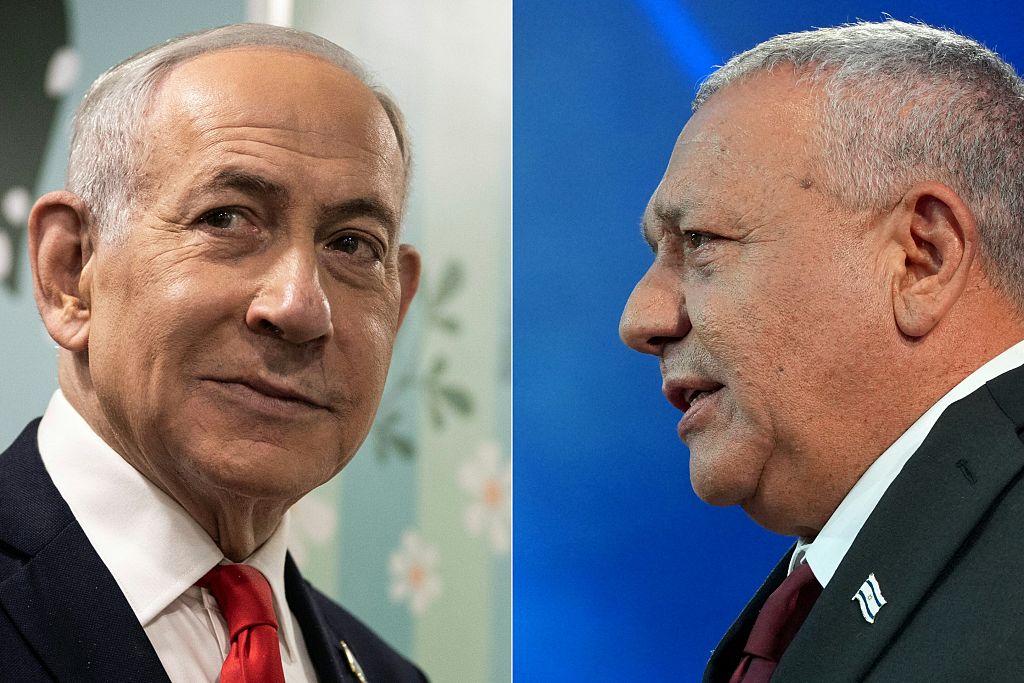
The Republican Party's defeat in the US midterm elections has intensified pressure on Israeli Prime Minister Benjamin Netanyahu, whose opponents argue that his close relationship with Donald Trump has weakened Israel's bipartisan support in Washington. The developments come as former military chief Gadi Eisenkot receives recommendations from 67 Israeli lawmakers to form the next government, compared with 46 for Netanyahu. President Isaac Herzog says he will appoint a candidate on Sunday, November 8.
The Republican Party's heavy defeat in the United States midterm elections is creating fresh political complications for Israeli Prime Minister Benjamin Netanyahu, with his domestic opponents arguing that his close relationship with President Donald Trump has become a liability at a moment when Israel is struggling to preserve bipartisan support in Washington. The American election results have arrived at a particularly sensitive time for Netanyahu, whose right-wing coalition failed to secure a parliamentary majority in Israel's October 27 election, leaving the country facing another difficult round of negotiations over who will lead its next government.
For years, Netanyahu presented himself as the Israeli leader best positioned to maintain a strong relationship with the United States, Israel's most important international ally. His personal relationship with Trump became a central part of that political argument, particularly during the American president's return to office and the subsequent military confrontation with Iran. Trump's public endorsement of Netanyahu ahead of Israel's parliamentary election appeared to reinforce the prime minister's claim that his leadership was essential to maintaining Washington's support. However, the Republican Party's poor performance in the November 3 midterm elections has changed the political conversation, giving Netanyahu's opponents an opportunity to question whether his close association with Trump has weakened rather than protected Israel's international position.
The Democratic Party secured majorities in both the US House of Representatives and the Senate, delivering a major setback to Trump's administration and raising the prospect of a more confrontational Congress on several foreign policy issues, including American military assistance to Israel. The outcome has also intensified scrutiny of the joint US-Israeli military campaign against Iran, which has become a significant issue in American domestic politics. Trump and Vice President JD Vance have both acknowledged that public dissatisfaction with the war and the relationship with Israel contributed to the Republican defeat, although the election results reflected a broader range of domestic political concerns. Vance specifically identified the Iran war and the close relationship with Israel among the factors discussed in the administration's assessment of the Republican losses.
The political consequences are already being felt in Israel, where opposition leaders have seized on the American results to argue that Netanyahu has damaged a relationship that previous Israeli governments worked to maintain across party lines. Yair Golan, leader of Israel's Democrats party, described Netanyahu as politically toxic among both Democrats and Republicans, arguing that the continuation of his government could expose Israel to greater international isolation, possible sanctions and increasingly difficult relations with Washington. Opposition leader Yair Lapid also warned that Israel could not afford to have Netanyahu remain in office, saying that the situation threatened the country's security, democratic institutions and international standing. These are political assessments from Netanyahu's opponents, but they reflect the growing debate within Israel over whether the country can continue its existing foreign policy approach while maintaining the same level of American backing.
Former Israeli prime minister Lapid has also attempted to position himself as a figure capable of rebuilding relationships with American lawmakers across the political spectrum. Following the midterm results, he emphasised his connections with members of Congress and argued that Israel should return to a longstanding principle of avoiding partisan alignment in American politics. His argument is that Israeli leaders should engage with both Democrats and Republicans rather than allowing the country's interests to become associated with one political party or administration. Lapid has proposed renewed engagement with American politicians and community leaders, presenting the effort as necessary to restore confidence in the relationship.
The criticism is significant because Netanyahu has frequently departed from that bipartisan approach. His relationship with Republican leaders has been especially prominent, most notably in 2015 when he addressed the US Congress in opposition to then-President Barack Obama's proposed nuclear agreement with Iran. The speech, arranged with Republican lawmakers without the White House's approval, created a major dispute with the Obama administration and contributed to the perception that Netanyahu was becoming increasingly aligned with one side of American politics. Although the Republican Party remained a strong source of support for Israel, the growing divide among American voters over Israeli policy has made that political strategy more complicated.
The war in Gaza, which followed the Hamas-led attacks on Israel on October 7, 2023, has also contributed to the deterioration of public support for Israel among sections of the American electorate. Criticism has extended beyond progressive Democrats, with some Republican voters and political figures also questioning the scale of American involvement and the consequences of Israeli military operations. The joint military campaign against Iran has added another layer to those concerns, particularly as the conflict has affected energy prices and raised questions about the long-term costs of American military commitments in the Middle East. For Netanyahu, the challenge is therefore not limited to the relationship with Trump or the results of one election. It concerns a wider change in the American political debate over Israel, military assistance and the direction of Middle East policy.
One of the most immediate financial concerns emerged on the day of the US midterm elections, when Trump announced that American military assistance to Israel would be brought to an end by the end of the year. The existing US-Israel military assistance memorandum provides for approximately $3.8 billion annually over a 10-year period running through 2028. The funding is subject to congressional allocation, meaning that the president's announcement has raised questions about the future of the arrangement and the extent to which the administration intends to change its commitments before the current agreement expires. Trump reportedly described the move as a way of removing an argument that Democratic candidates had used against Republicans during the campaign.
The announcement has created an additional political problem for Netanyahu because it came shortly after Trump publicly supported his continued leadership of Israel. Avigdor Lieberman, leader of the Yisrael Beytenu party, linked the two developments, suggesting that the financial consequences of Trump's announcement were the price Israel was paying for the American president's endorsement. The claim remains Lieberman's political interpretation rather than an established explanation of Trump's decision, but it illustrates how the American election has become part of Israel's internal political debate. If military assistance is reduced or withdrawn, Israel could face pressure to increase its own defence spending, with possible implications for public finances and other government priorities.
The incoming Democratic-controlled Congress could also use its authority over government spending, legislative oversight and military appropriations to increase pressure on the administration's Israel policy. Although the president retains substantial authority over foreign policy and could veto legislation targeting Israel, Congress has considerable influence over the allocation of public funds. Democratic lawmakers have already discussed using budget legislation to place restrictions on funding for American military operations connected to the war with Iran. Senate Democratic leader Chuck Schumer has indicated that his party intends to use Congress's spending powers to pursue an end to the conflict. Any such effort would face political and procedural obstacles, but the new balance of power means the administration will have to deal with a Congress less inclined to support its current approach without scrutiny.
The debate over American policy also extends to Gaza and the future of the region after the fighting. Democratic lawmakers have raised concerns about Israeli actions in Gaza, settlement expansion and violence by settlers in the occupied West Bank. Some have called for restrictions on arms transfers and other measures intended to influence Israeli government policy. The incoming Congress may consider legislation or investigations related to these issues, although the extent to which such proposals could become law will depend on internal divisions among Democrats, Republican opposition and the president's position. The political debate is no longer confined to whether Israel should receive American support, but increasingly concerns the conditions under which that support should continue.
Against this American backdrop, Israel is facing its own leadership uncertainty following the October 27 parliamentary election. Netanyahu's Likud party emerged as the largest individual party with 27 seats in the 120-member Knesset, but the wider right-wing and religious bloc supporting him secured only 53 seats, eight short of the 61 required for a parliamentary majority. The opposition bloc led by former military chief Gadi Eisenkot secured 48 seats, while Arab-led parties, including Ra'am and the Joint List, won a combined 19 seats. Their representation gives them a potentially decisive role in determining whether an alternative government can be formed.
The results did not produce an immediate transfer of power, and Netanyahu has remained prime minister in a caretaker capacity while negotiations continue. President Isaac Herzog is responsible for deciding which member of parliament should receive the mandate to form the next government. Following two days of consultations with representatives of the parties elected to the 26th Knesset, Herzog announced on Thursday that representatives of factions representing 67 lawmakers had recommended Eisenkot, while factions representing 46 lawmakers had recommended Netanyahu. The remaining members did not recommend either candidate. Although the figures give Eisenkot greater declared support, Herzog emphasised that his constitutional responsibility is to determine who has a realistic ability to form a government, rather than simply selecting the candidate with the largest number of recommendations.
Herzog said he intended to appoint a member of parliament to form the government on Sunday, November 8, after further discussions with political leaders. The nominated candidate will initially have 28 days to assemble a governing coalition, with the possibility of an additional 14 days. If the candidate fails to secure the necessary support, the process could move to another potential nominee. A prolonged deadlock could eventually result in another election, while Netanyahu's existing government would remain in place in a caretaker capacity until a new administration is formed.
Eisenkot's position received an additional boost on Thursday when United Torah Judaism, a long-standing ultra-Orthodox ally of Netanyahu, declined to recommend either Netanyahu or another candidate for the premiership. The decision marked a departure from the party's previous political alignment and weakened Netanyahu's effort to demonstrate that he remained the strongest candidate to lead the next government. Nevertheless, Eisenkot still faces the difficult task of turning recommendations into a workable coalition. The opposition parties do not necessarily share the same political priorities, and the question of whether Arab-led parties can participate in or support a government remains a sensitive issue within Israeli politics.
The relationship between Netanyahu and the Arab-led parties has become particularly contentious. Both Ra'am and the Joint List have recommended Eisenkot, but the opposition leader has previously been reluctant to form a government that depends on their formal participation. His political partners also have differing positions on security, religion, military service and the future of the occupied Palestinian territories. This means that even with 67 lawmakers recommending him to Herzog, Eisenkot cannot automatically assume that he has a stable governing majority. He must negotiate arrangements that can survive parliamentary votes and satisfy parties whose policy positions are often sharply divided.
Netanyahu, meanwhile, has continued to challenge the political circumstances surrounding the election, including making allegations about irregularities involving Arab-led parties. Israeli election authorities have said that the integrity of the vote was not compromised and have warned against undermining public confidence in the democratic process. The allegations have added to the tension surrounding the coalition negotiations, with the opposition accusing Netanyahu of attempting to delegitimise parties that could help form an alternative government.
The American election results have consequently become an important part of the argument over which Israeli leader should be given the opportunity to form the next administration. Netanyahu's opponents believe that replacing him could provide Israel with an opportunity to rebuild relationships with Washington, particularly with a Democratic-controlled Congress preparing to scrutinise American policy towards the Middle East. They argue that a government led by Eisenkot or another opposition figure could reduce the perception that Israel is aligned with one American political faction and open new channels of communication with lawmakers who have become increasingly critical of Netanyahu.
However, a change of prime minister would not automatically restore American public support or resolve the policy disagreements that have emerged over Gaza, Iran and the occupied West Bank. Political analysts have warned that dissatisfaction with Israel extends beyond Netanyahu personally, meaning that a new government would still face pressure to demonstrate changes in policy. Pollster Shibley Telhami, director of the University of Maryland Critical Issues Poll, has argued that replacing Netanyahu alone may not substantially change American attitudes towards Israel, as negative views increasingly concern the country's policies and conduct rather than only its current leadership.
The United States also remains a central partner in Israel's security, intelligence cooperation and diplomatic relationships, making any serious deterioration in ties consequential for both countries. While Congress can influence military funding and increase political scrutiny, the White House continues to hold significant authority over American foreign policy. Trump remains president, and his administration retains the ability to shape Washington's immediate diplomatic and military decisions. The Democratic victories therefore do not mean that American policy towards Israel will change overnight, but they create a more difficult political environment for Netanyahu and any future Israeli government.
For Netanyahu, the coming days could prove important both for his political survival and for the future direction of Israel's relationship with its most powerful ally. Herzog's decision on Sunday will determine who receives the first opportunity to assemble a government, while the new American Congress prepares to take office in January. Whether Netanyahu remains prime minister or is replaced by Eisenkot, the next Israeli administration will face difficult decisions over military policy, relations with the Palestinians, the war with Iran and the country's diplomatic standing.
The central question is no longer simply whether Netanyahu can maintain his relationship with Trump. It is whether Israel can preserve a durable relationship with the United States across political parties at a time when American public opinion and congressional attitudes are changing. The outcome of Israel's coalition negotiations may determine who leads the country, but the wider challenge of rebuilding bipartisan confidence in Washington is likely to confront whoever takes office next.