NEW MEXICO SUES JEFFREY EPSTEIN’S FORMER LAWYER AND ACCOUNTANT OVER ALLEGED ROLE IN FINANCING AND CONCEALING SEX TRAFFICKING
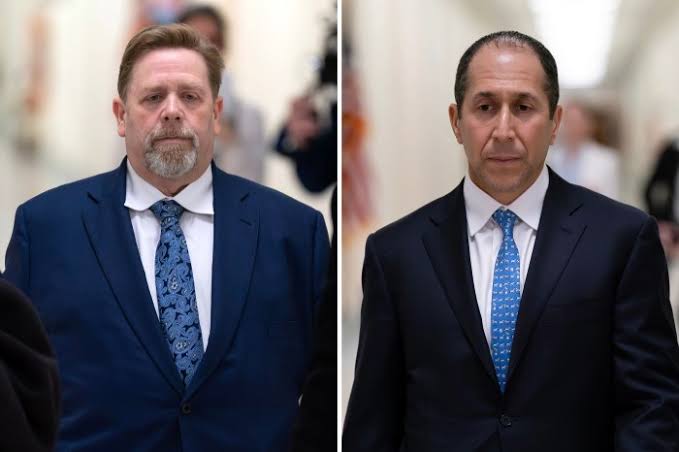
New Mexico Attorney General Raúl Torrez has filed a federal civil lawsuit against Jeffrey Epstein’s former attorney Darren Indyke and accountant Richard Kahn, accusing them of helping finance, facilitate and conceal Epstein’s sex-trafficking operation, including activities connected to his Zorro Ranch in New Mexico. The two men deny knowing about the abuse. The state is seeking to stop them from receiving payments from Epstein’s estate, restrict distributions from the 1953 Trust and recover damages, restitution and other assets for survivors. Reuters
The US state of New Mexico has filed a sweeping federal civil lawsuit against Jeffrey Epstein’s longtime personal attorney Darren Indyke and accountant Richard Kahn, accusing the two men of helping finance, facilitate and conceal the late financier’s sex trafficking operation while benefiting financially from their positions inside his business empire. New Mexico Attorney General Raúl Torrez announced the action on Wednesday, October 21, saying the state intends to prevent Indyke and Kahn from receiving further payments from Epstein’s estate while the litigation proceeds and to recover money for survivors. The lawsuit also names the Estate of Jeffrey Epstein and the 1953 Trust, which controls more than $100 million in remaining estate assets, making the case one of the most significant attempts by a US law-enforcement authority to pursue people who worked closely with Epstein rather than Epstein himself.
The complaint was filed in the US District Court for the District of New Mexico and is the first law-enforcement action brought directly against Indyke and Kahn over their alleged roles in Epstein’s wider operation. Both men now serve as co-executors of Epstein’s estate, meaning they remain involved in the management and distribution of assets belonging to a man who died in federal custody in 2019 while awaiting trial on sex-trafficking charges. New Mexico alleges that their professional roles went far beyond providing ordinary legal and accounting services and instead placed them at the financial centre of an enterprise that allowed Epstein to continue exploiting girls and young women for years.
Torrez’s lawsuit focuses heavily on Epstein’s former Zorro Ranch in Santa Fe County, approximately 30 miles south of Santa Fe, where Epstein is accused of abusing women and girls over a period spanning decades. The state says Indyke and Kahn used their positions, access to Epstein’s companies and control over financial accounts to authorise transactions that supported the operation and helped obscure what was happening. The allegations remain unproven in court, and both men have previously denied knowing about Epstein’s abuse or participating in trafficking.
The complaint portrays Indyke and Kahn as key financial and administrative figures inside Epstein’s organisation. Prosecutors allege they managed accounts, authorised payments and helped structure corporate arrangements that allowed Epstein’s activities to continue while giving the appearance of legitimate business operations. New Mexico says the two men were deeply embedded in the financial systems surrounding Epstein and therefore should not be treated merely as professionals who happened to work for a client later exposed as a sex offender.
Indyke served as Epstein’s personal attorney for roughly two decades, while Kahn became his longtime accountant and financial administrator. Both men have acknowledged extensive professional involvement with Epstein but have insisted under oath that they did not know he was trafficking or sexually abusing girls and young women. During congressional depositions earlier this year, both said they would have severed their relationships with Epstein if they had known what was occurring.
New Mexico is challenging those denials through the new civil case. The state alleges that the scale, duration and nature of the financial transactions managed by the two men were such that they either knew or knowingly participated in conduct supporting the trafficking enterprise. The complaint includes allegations involving cash movements, payments connected to women in Epstein’s circle, corporate structures and financial arrangements associated with his properties and personal operations.
One allegation highlighted by the state concerns Indyke’s role in transferring ownership of Zorro Ranch in 2011 to a company controlled by Epstein. New Mexico argues that transactions surrounding the property helped maintain the corporate structure through which Epstein controlled and operated the ranch. The significance of the ranch is central to the lawsuit because survivors and witnesses have previously alleged that abuse occurred there, making the ownership and financial management of the property relevant to the state’s argument that Epstein’s professional advisers helped sustain the broader enterprise.
The Attorney General’s office also alleges that both defendants received substantial financial benefits from their relationships with Epstein. According to the complaint, Indyke received more than $16 million from Epstein and related entities between 2011 and 2019, while Kahn received more than $10 million over the same period. The state says those payments, combined with their continuing positions as beneficiaries and co-executors of the estate, create a powerful financial reason for the court to intervene before additional assets are distributed.
Epstein’s 1953 Trust is particularly important to the case. The trust was created shortly before Epstein’s death and holds assets that the New Mexico Attorney General says are now worth more than $100 million. Indyke and Kahn are involved in managing those assets and, according to reporting on the estate, could also receive substantial personal benefits from the trust if its remaining funds are eventually distributed according to Epstein’s estate plan.
New Mexico is asking the federal court to prohibit Indyke and Kahn from receiving estate payments while the case continues. The state also wants restrictions placed on their ability to authorise distributions from the estate, arguing that allowing the two defendants to continue controlling or benefiting from the same pool of assets at issue in the litigation could undermine efforts to compensate survivors.
The lawsuit goes considerably further than simply seeking a temporary freeze. New Mexico is asking the court to declare that Indyke and Kahn participated in racketeering and trafficking-related conduct in violation of state and federal law, require them to divest certain Epstein-related financial interests and award compensatory and punitive damages. The state is also seeking restitution and disgorgement, a legal remedy that can force defendants to surrender profits or benefits allegedly obtained through unlawful conduct.
Torrez has framed the lawsuit as an effort to shift attention from Epstein alone toward the people and financial structures that allegedly allowed his abuse to continue. He said at the announcement that Epstein did not operate in isolation and argued that his death should not end attempts to hold others accountable if evidence shows they helped make his crimes possible. The Attorney General was joined by survivors Julia Molchanova and Anouska De Georgiou, underscoring the state’s position that remaining estate assets should primarily benefit people harmed by Epstein rather than individuals who worked closely with him.
The case marks a major expansion of New Mexico’s renewed Epstein investigation. The state reopened its inquiry in February 2026, focusing particularly on allegations connected to Zorro Ranch and attempting to identify individuals who may have participated in, witnessed or facilitated criminal conduct there. The investigation has already led to disputes with federal authorities over access to unredacted records and now to direct legal action against two of Epstein’s closest professional advisers.
New Mexico has also sued the US Department of Justice for access to unredacted Epstein files, arguing that federal restrictions have prevented state investigators from obtaining information needed to examine events at the ranch. The state maintains that identifying visitors, employees, associates and possible witnesses is essential to determining what happened in New Mexico and whether additional people should face legal consequences.
The Justice Department has responded that privacy protections and other legal restrictions prevent it from handing over some materials in unredacted form. That dispute remains separate from Wednesday’s lawsuit, but both actions form part of the same broader effort by New Mexico authorities to reopen questions surrounding Epstein’s activities in the state and the people around him.
The new civil complaint also arrives after years of private litigation involving Indyke and Kahn. Survivors have previously accused them in civil cases of being central to the financial machinery that enabled Epstein’s trafficking operation, although the two men have denied those accusations. The state action is significant because it now places the power and resources of a law-enforcement office behind allegations that had previously been advanced largely by individual plaintiffs.
A federal judge considering earlier survivor litigation described claims accusing Indyke and Kahn of acting as the financial managers of Epstein’s operation, including allegations that they helped ensure he had access to cash and financial resources used to recruit and control victims. Those prior cases do not establish liability in the new New Mexico lawsuit, but they provide background showing that questions about the two men’s financial roles have existed for years.
Both defendants have consistently maintained that they were unaware of Epstein’s sexual abuse while working for him. Richard Kahn told the House Oversight Committee in March that he never witnessed or was informed about sex trafficking or abuse and said he would have ended his relationship with Epstein immediately had he known. Darren Indyke gave similar testimony days later, saying his work was legal and administrative and that he did not know Epstein was abusing underage girls.
Their lawyer, Daniel Weiner, has rejected New Mexico’s allegations and said the two men had no knowledge of Epstein’s abuse. The defence is expected to argue that managing finances or legal affairs for Epstein does not prove they understood the criminal purpose behind particular payments or transactions and that professional involvement should not automatically be interpreted as participation in sex trafficking.
That dispute is likely to become the central legal question in the case. New Mexico will need to show that Indyke and Kahn did more than perform routine professional services and instead knowingly participated in conduct that sustained or concealed the trafficking enterprise. The defendants, in turn, are likely to emphasise the difference between access to financial information and actual knowledge of criminal sexual abuse.
The state’s racketeering theory could become particularly important because racketeering laws are designed to reach people who participate in broader criminal enterprises even when they are not accused of personally committing every underlying act. If the state can establish that the alleged trafficking network functioned as an enterprise and that Indyke and Kahn knowingly helped manage essential financial components of that enterprise, the court could consider a wider range of transactions than would be relevant in a conventional professional-negligence case.
The federal Trafficking Victims Protection Act is another foundation of the lawsuit. That law allows civil claims against people who knowingly benefit financially from participation in ventures they knew or should have known were engaged in trafficking. New Mexico’s complaint appears designed in part to argue that the defendants’ payments, administrative authority and alleged knowledge satisfy those standards.
The defendants are expected to contest both knowledge and causation. They may argue that Epstein controlled his own conduct and that professional services such as preparing tax filings, managing corporate entities or processing legitimate-looking payments cannot be transformed into trafficking participation without direct evidence showing they understood the purpose behind those activities.
The outcome could therefore have implications beyond Epstein’s estate. Lawyers, accountants, bankers and other professionals who work for wealthy clients accused of criminal activity may watch the case closely because it tests how far civil liability can extend when advisers are accused of providing the financial or organisational infrastructure through which abuse was allegedly carried out.
The lawsuit also raises a major question about control of Epstein’s remaining estate. His fortune was valued at hundreds of millions of dollars at the time of his death, but the estate has since paid substantial amounts in compensation, taxes, legal fees and other obligations. More than $120 million has reportedly already been paid to survivors through settlements and compensation programmes, while the remaining estate and trust assets are now valued at a little over $100 million.
New Mexico argues those remaining funds should be protected while courts determine whether additional survivors are entitled to compensation and whether the two executors can lawfully benefit from the estate. Torrez has said the central principle is that resources connected to Epstein should go to survivors before people accused of helping maintain his operation are allowed to profit.
Indyke and Kahn occupy an unusually complicated position because they are both defendants in the new lawsuit and co-executors charged with managing the estate being targeted. New Mexico says that structure creates an inherent conflict requiring judicial intervention. The court may now have to consider whether restrictions should be imposed on their authority over estate distributions while the allegations against them remain unresolved.
The 1953 Trust was established shortly before Epstein’s death in August 2019. Trust structures can provide legitimate estate-planning benefits, but they can also make it more complicated for creditors or litigants to identify and reach assets. New Mexico’s complaint seeks to ensure the trust cannot distribute or move funds in ways that frustrate potential judgments or survivor claims.
The state is therefore asking for injunctive relief that could freeze important aspects of the trust’s financial activity. If granted, such an order could prevent distributions to Indyke or Kahn and limit their ability to authorise transactions involving disputed estate assets until the case is resolved.
The lawsuit does not accuse Indyke or Kahn of personally committing sexual abuse. Its focus is on alleged financial facilitation, concealment and participation in the structures through which Epstein’s trafficking operation functioned. That distinction is important because the evidence required will centre heavily on documents, account records, communications, corporate structures and the defendants’ knowledge rather than allegations that they personally assaulted survivors.
New Mexico’s case will therefore likely involve detailed forensic accounting. Investigators may examine years of bank records, company transfers, expense payments, tax documents and communications to determine whether particular transactions had an innocent business explanation or whether they were knowingly connected to trafficking and efforts to conceal it.
Cash transactions are expected to receive particular attention because prior Epstein litigation and congressional scrutiny have examined how large quantities of cash moved through his financial network. Prosecutors may attempt to show that repeated cash withdrawals or payments were structured in ways that should have alerted sophisticated professional advisers to improper activity.
Defence lawyers will likely counter that wealthy clients routinely make unusual or large transactions and that accountants and attorneys do not automatically know the personal purpose behind every payment. The legal fight could therefore turn on whether New Mexico can connect specific financial acts to specific criminal conduct and demonstrate what each defendant knew at the time.
The Zorro Ranch itself will remain central to that analysis. Epstein purchased the property in the 1990s and transformed it into a sprawling private estate with a large residence, private airstrip and other facilities. Survivors and witnesses have alleged that women and girls were brought there and abused, while the property’s remote location made outside scrutiny difficult.
Epstein was never prosecuted in New Mexico while alive. Earlier state investigations were complicated by legal limitations, jurisdictional issues and statutes that critics later argued were inadequate to deal with the allegations. Torrez has made clear that his office is now attempting to use available civil and criminal investigative tools to revisit conduct that may not have been pursued aggressively enough in previous years.
The ranch was sold by Epstein’s estate in 2023, but the sale did not end interest in what occurred there. New Mexico investigators have continued reviewing records and have searched the property as part of the renewed inquiry. The Attorney General’s office says understanding how the ranch was financed, owned and operated is essential to understanding the broader network surrounding Epstein.
Ghislaine Maxwell’s conviction also forms part of the established background to the case. Maxwell is serving a 20-year federal prison sentence after being convicted in 2021 on sex-trafficking-related charges involving Epstein’s abuse of girls. Her conviction demonstrated in criminal court that Epstein’s offences involved at least one other person who actively helped recruit and groom victims, although it does not establish that every professional adviser around Epstein participated in that conduct.
New Mexico is now attempting to establish a different form of alleged participation involving financial infrastructure rather than recruitment. If the state succeeds, the lawsuit could reinforce the argument that trafficking operations can depend on accountants, lawyers and financial managers whose conduct may be legally significant even when they are not accused of direct abuse.
The case may also produce new discovery that reveals additional details about Epstein’s finances. Civil litigation can require defendants to produce documents, answer questions under oath and disclose financial records that may not previously have been available publicly. That process could expose information relevant not only to the claims against Indyke and Kahn but also to the wider investigation into Epstein’s network.
However, much of that material could remain under protective orders because it involves survivors’ identities, private financial information or ongoing investigations. Courts will need to balance public interest in transparency with the privacy and safety of people who were abused.
Survivors participating in Wednesday’s announcement argued that accountability must extend beyond Epstein and Maxwell to people who allegedly helped keep the operation functioning. Their position reflects years of frustration among victims who believe professional and financial networks around Epstein have not received the same level of legal scrutiny as the people who directly recruited or abused girls.
The defendants strongly dispute that characterisation. Their prior testimony presents them as professionals who handled legitimate legal and financial matters and who were deceived about Epstein’s private criminal behaviour. Determining which account is supported by the evidence will now be the responsibility of the federal court.
Because this is a civil lawsuit, the legal standard differs from a criminal prosecution. New Mexico does not need to prove the defendants’ liability beyond a reasonable doubt, but it must still establish the elements of its claims through admissible evidence. The state is seeking substantial financial remedies rather than imprisonment through this particular case.
Torrez has nevertheless said the state’s broader investigation remains active. That means the civil action may not be the final development arising from New Mexico’s renewed scrutiny of Epstein’s activities. Additional lawsuits, referrals or criminal investigative steps could follow if authorities uncover new evidence involving other people.
The Attorney General has also made the pursuit of federal records an important part of that effort. New Mexico argues that unredacted investigative files could identify people who travelled to the ranch, worked there or witnessed conduct relevant to the state inquiry. The continuing dispute with the Justice Department demonstrates that authorities still believe substantial information remains outside their reach.
The lawsuit against Indyke and Kahn gives the state another route to information because civil discovery may compel disclosure of records held by the two men or entities they control. If the case survives early motions to dismiss, discovery could become one of its most consequential phases.
The defendants are likely to challenge the lawsuit aggressively. They can contest New Mexico’s standing, legal theories, jurisdiction, factual allegations and requests to freeze estate assets. They may also argue that previous settlements and estate compensation mechanisms have already addressed many survivor claims and that the state is attempting to impose liability without evidence of actual knowledge.
New Mexico will counter that previous compensation does not erase potential liability for people who knowingly benefited from or facilitated trafficking. The state’s argument is that money already paid to some survivors does not give alleged enablers immunity from separate claims if evidence shows they participated in the operation.
The financial stakes are substantial. Beyond the more than $100 million currently held in the trust, Indyke and Kahn could face disgorgement of millions of dollars they allegedly received from Epstein, punitive damages and restrictions on future estate benefits. The exact amount that could ultimately be recovered will depend on the evidence, court rulings and whether the parties eventually settle.
The reputational stakes are equally significant because both men have spent years insisting that their proximity to Epstein did not mean they knew about his abuse. A judicial finding that they knowingly participated in his trafficking operation would fundamentally change how their roles are understood.
Conversely, if they defeat the claims, the case could reinforce their argument that professional involvement with Epstein has been unfairly conflated with knowledge of his crimes. The litigation is therefore likely to become a major test of whether the documentary record can bridge the gap between suspicion created by proximity and legally provable participation.
For survivors, the immediate importance lies in preserving assets. Estate litigation can take years, and funds can diminish through administrative expenses, legal fees and distributions. New Mexico is seeking early court intervention because it argues that waiting until the end of the case could leave fewer assets available if survivors eventually win judgments.
That concern is heightened by the decline in the estate’s value since Epstein’s death. His holdings were originally reported at well over half a billion dollars, while the remaining trust now contains a much smaller sum after years of settlements, expenses and asset sales.
The Zorro Ranch itself has already been sold, meaning survivors cannot simply rely on preserving that particular property as a source of recovery. New Mexico’s focus has consequently shifted toward the remaining cash, investments and trust interests that can still potentially be reached through court orders.
Wednesday’s lawsuit therefore combines several objectives at once. It seeks to establish legal responsibility for alleged financial facilitation, preserve estate assets, recover money for survivors and force greater disclosure about how Epstein’s operation functioned in New Mexico.
The case also reflects a wider change in how authorities approach trafficking investigations. Modern anti-trafficking strategies increasingly focus not only on direct perpetrators but also on financial flows, corporations and professional structures that may enable exploitation. Following the money can reveal organisers and facilitators who rarely appear at the scene of abuse but may still play critical roles in sustaining an illegal enterprise.
Whether that theory can be proven against Indyke and Kahn remains unresolved. The allegations are serious, but the two men deny knowing about Epstein’s abuse, and no court has yet found them liable for the conduct alleged in New Mexico’s complaint.
For responsible coverage, that distinction should remain clear throughout the case. New Mexico alleges that Indyke and Kahn helped finance and conceal a sex-trafficking enterprise, while the defendants say they knew nothing about the abuse. The lawsuit now gives a federal court the opportunity to examine financial records, testimony and other evidence and determine whether the state’s claims can be substantiated.
What is confirmed is that New Mexico has moved beyond investigation and into formal litigation. Attorney General Raúl Torrez has sued Epstein’s former attorney, his former accountant, his estate and the 1953 Trust, seeking to halt payments, recover assets for survivors and establish liability under trafficking and racketeering laws. The filing represents the strongest government action yet directed specifically at Indyke and Kahn and ensures that the question of who helped sustain Epstein’s financial infrastructure will remain at the centre of legal scrutiny long after Epstein’s death.