
NPP CALLS FOR CONSULTATIVE ASSEMBLY BEFORE GHANA MOVES AHEAD WITH CONSTITUTIONAL AMENDMENTS
The New Patriotic Party has called on the government to establish a broad based Constituent or Consultative Assembly before proceeding with proposed amendments to Ghana's 1992 Constitution. The NPP says the body should bring together political parties, organised labour, traditional authorities, professional bodies, civil society and other groups to build consensus before Parliament or a national referendum considers the proposed changes.
Ghana's opposition New Patriotic Party has called on the government to establish a broad based Constituent or Consultative Assembly before proceeding with proposed amendments to the 1992 Constitution or putting entrenched provisions before voters in a referendum.
The party says the scale of the proposed constitutional changes requires another stage of national deliberation involving political parties, organised labour, traditional authorities, professional bodies, religious organisations, civil society and other groups before Parliament and voters consider the amendments.
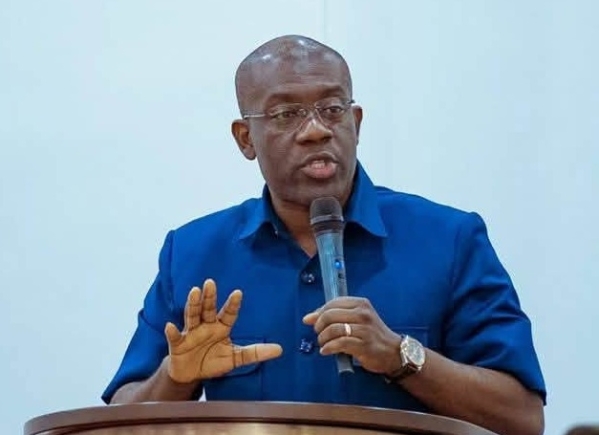
The NPP presented its position at a press conference in Accra on Thursday, September 17, with its Policy Coordination Committee Chairman Kojo Oppong Nkrumah arguing that constitutional reform of such magnitude should be built around broad national consensus rather than the preferences of any single political party.
NPP WANTS ASSEMBLY ESTABLISHED BY LAW
Oppong Nkrumah said the government should introduce a Constituent or Consultative Assembly Bill in Parliament to provide a legal foundation for the proposed body.
According to the NPP, membership should include representatives of political parties, organised labour, professional bodies, the National House of Chiefs, religious organisations, women's groups, persons with disabilities, students and young people, the private sector, civil society and Ghana's regions.
The party argues that such an assembly would provide a single platform for resolving areas of disagreement before proposed constitutional changes are presented to Parliament or voters.
The NPP says about 100 recommendations remain areas of disagreement between the government's position and that of the Constitution Review Committee. The figure is the party's characterisation of the differences between the two positions.
PARTY POINTS TO SCALE OF PROPOSED CHANGES
The NPP says its concerns are partly based on the scale of the constitutional reform under consideration.
According to the party, the Constitution Review Committee's report contains proposals affecting 147 of the Constitution's 299 articles as well as 59 proposed new provisions.
The party argues that changes on that scale go beyond routine constitutional amendments and require a broader deliberative process.
The Constitution Review Committee chaired by Professor H Kwasi Prempeh was appointed by President John Mahama in January 2025 and submitted its full report in February 2026.
The government subsequently published its position on the recommendations and established an implementation committee as it works towards proposed amendment legislation.
NPP THREATENS TO OPPOSE PROCESS WITHOUT ASSEMBLY
Oppong Nkrumah said the NPP would oppose the government's proposed constitutional amendment process if it proceeds without a Constituent Assembly or another mechanism capable of producing negotiated consensus.
The party said this opposition would extend to amendment bills in Parliament and a yes vote at a referendum if its concerns about the process are not addressed.
At the same time, the NPP maintains that it is not opposed to constitutional reform itself.
The party says it wants recommendations it considers beneficial to become law and would cooperate with the government if a broad based deliberative assembly is established.
ARTICLE 290 SETS HIGH REFERENDUM THRESHOLD
Oppong Nkrumah also pointed to the requirements under Article 290 of Ghana's Constitution for changing entrenched provisions.
Under the constitutional procedure, at least 40 percent of people entitled to vote must participate in the referendum and at least 75 percent of those who vote must support the proposed amendment for it to pass.
The NPP argues that the high thresholds demonstrate the need for broad political and public agreement before entrenched provisions are changed.
PARTY CITES GHANA'S CONSTITUTIONAL HISTORY
The NPP also pointed to Ghana's constitutional processes in 1969, 1979 and 1992 as precedents for involving representative bodies in major constitutional changes.
Its position is that expert recommendations should first undergo wider national deliberation before the final proposals are submitted through the constitutionally required approval processes.
The government has not accepted the NPP's characterisation that the current exercise amounts to rewriting the Constitution. Its stated approach distinguishes between non entrenched provisions, which would be handled through the parliamentary process under Article 291, and entrenched provisions, which would ultimately require a referendum under Article 290.
The NPP is now calling for the proposed assembly to be established with a clear timetable before the constitutional review moves to its next major stage.