NPP GIVES ABLAKWA SEVEN-DAY ULTIMATUM OVER GH¢49.7 MILLION SOUTH AFRICA EVACUATION SPENDING AS POLITICAL FIGHT INTENSIFIES
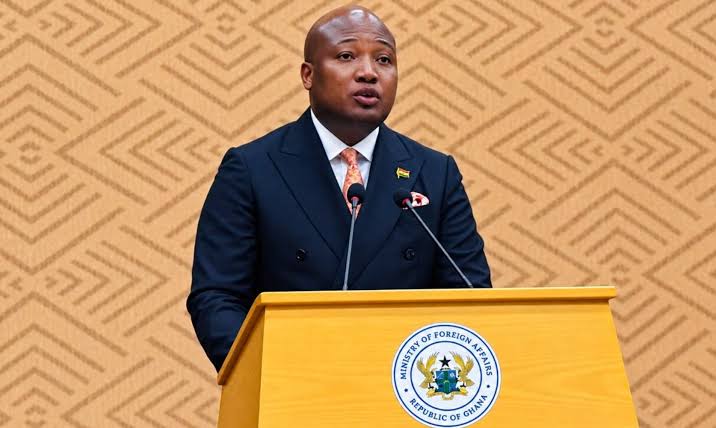
The New Patriotic Party has given Foreign Affairs Minister Samuel Okudzeto Ablakwa seven days to provide additional financial records covering Ghana’s evacuation of 1,964 citizens from South Africa. The opposition is demanding original charter-flight invoices, contracts, payment vouchers and complete beneficiary acknowledgement records linked to the approximately GH¢49.72 million spent on the exercise. NPP and Minority figures say they have identified an estimated GH¢16.4 million reconciliation gap, while Ablakwa strongly rejects suggestions that money is missing and says the expenditure has been properly documented. The dispute has become a major political confrontation between the opposition NPP and the governing NDC over transparency and accountability.
The New Patriotic Party has given Foreign Affairs Minister Samuel Okudzeto Ablakwa seven days to provide what it describes as a full and verifiable account of expenditure connected to the evacuation of Ghanaian citizens from South Africa, escalating a political dispute over the approximately GH¢49.7 million reportedly spent on the exercise.
The opposition party says it wants the Foreign Affairs Ministry to release original invoices, contracts, payment vouchers, beneficiary records and supporting documents showing how public and private funds were used during the evacuation and subsequent reintegration of the returnees. The NPP has warned that it could pursue further parliamentary, audit and Right to Information processes if the minister fails to provide the additional documents within the deadline.
The ultimatum was announced by NPP Communications Director Dennis Miracles Aboagye as the party intensified its scrutiny of the evacuation operation. According to the NPP, the documents released by the Foreign Affairs Ministry so far do not provide enough information for an independent reconciliation of every major expenditure connected to the operation.
The controversy relates to the evacuation of 1,964 Ghanaians from South Africa during 2026 amid concerns over xenophobic violence and increasing hostility towards some foreign nationals. The government organised a combination of chartered and commercial flights to bring the affected Ghanaians home and later provided financial assistance intended to help them resettle after their return.
Foreign Affairs Minister Samuel Okudzeto Ablakwa has said the entire operation cost GH¢49,721,786. According to the ministry, the expenditure covered flights, internal transportation in South Africa, accommodation, feeding, medical treatment, hospitalisation, administrative expenses and financial support provided to the evacuees after arriving in Ghana.
The ministry says approximately GH¢33.7 million of the total expenditure was funded by the Government of Ghana, while GH¢16 million was contributed by Engineers and Planners. Ablakwa has repeatedly maintained that the entire amount is accounted for and has rejected suggestions that millions of Ghana cedis disappeared during the exercise.
According to the minister’s breakdown, a significant portion of the expenditure covered flights, accommodation, transport and other operational costs, while another portion was used for financial support provided directly to the evacuees. Each returnee was reportedly given a GH¢5,000 reintegration allowance together with GH¢500 to assist with transportation after arriving in Ghana.
The NPP and members of the Minority in Parliament, however, say questions remain about whether all of the expenditure can be independently verified from the documentation released so far. Their concerns have focused particularly on the reconciliation of beneficiary lists, payment acknowledgement sheets, signatures, charter-flight invoices and other expenditure records.
The opposition has referred to an estimated GH¢16.4 million gap that it says requires additional explanation. That figure should not be interpreted as an established finding that GH¢16.4 million was stolen or missing. It represents the amount opposition figures say they have been unable to reconcile satisfactorily from the documents they have reviewed.
Ablakwa strongly disputes that interpretation and insists that there is no missing money. He has argued that the ministry has provided substantial documentation and has expressed willingness for the expenditure to be examined independently through the appropriate auditing institutions.
Deputy Ranking Member on Parliament’s Foreign Affairs Committee Nana Asafo-Adjei Ayeh has been among the opposition MPs questioning the records. He has alleged that there are inconsistencies between some beneficiary lists and payment acknowledgement records relating to the GH¢5,000 reintegration support and GH¢500 transportation allowance.
One of the issues raised involves signatures attached to records for children and infants. Opposition MPs have questioned how very young beneficiaries could have signed payment documents and have asked the ministry to identify clearly who received and acknowledged the payments on behalf of minors.
The government’s position is that every registered evacuee qualified for the financial support, including children. Under that arrangement, parents or guardians could therefore receive assistance allocated to children within their families. The dispute is not necessarily over whether children were eligible to benefit, but over whether the documentation clearly identifies the adults who received and acknowledged funds on their behalf.
This has become important because the opposition argues that government accountability requires more than publishing a list of names. It says the records should make it possible to trace each beneficiary, the amount allocated to that person, the individual who received the money where necessary and the exact payment documentation supporting the transaction.
The Ministry of Foreign Affairs has already taken steps to respond to earlier demands for transparency. It released a report running into more than 200 pages containing information about the evacuation exercise and later published names and signatures relating to beneficiaries.
The ministry presented those disclosures as evidence that it had nothing to hide. Ablakwa and officials supporting the exercise have argued that the level of documentation already released goes beyond what is normally provided for similar emergency operations.
The opposition disagrees and says the central question is not simply how many pages have been published but whether the underlying financial transactions can be reconciled independently. The NPP wants access to original contractual records, invoices and vouchers instead of relying only on summary documents prepared by the ministry.
Charter-flight expenditure has emerged as one of the most important aspects of the dispute. The opposition says tens of millions of Ghana cedis were spent on aircraft used to transport evacuees from South Africa to Ghana and wants to see the original agreements showing the airlines or operators involved, the cost of each flight and the procurement process used to engage them.
Emergency evacuations can be expensive because charter aircraft are normally contracted at short notice and may involve additional costs for ground handling, passenger processing, crew arrangements and airport services. The NPP argues that those realities do not remove the government’s obligation to provide detailed records demonstrating that the prices paid were reasonable and properly authorised.
The Foreign Affairs Ministry has maintained that the evacuation had to be conducted urgently because of concerns about the safety of Ghanaians in South Africa. Government officials have argued that the priority at the time was protecting citizens who wanted to return home while ensuring that vulnerable people were transported safely.
The political argument has therefore developed into two separate questions. The first concerns whether the evacuation itself was necessary, while the second concerns whether the money used to carry it out was properly documented and accounted for.
There has been relatively little disagreement over the government’s responsibility to protect Ghanaian citizens facing danger abroad. The sharper dispute is over financial accountability after the emergency operation was completed.
For the NPP, the issue has become part of a broader argument about transparency under the National Democratic Congress administration. The opposition says a government that promised accountability should be willing to release every document necessary to explain an expenditure approaching GH¢50 million.
The NDC and supporters of Ablakwa, on the other hand, argue that the minister has already released unusually extensive information and that the opposition is attempting to create a corruption scandal where one has not been established.
That difference has transformed the evacuation into a major political flashpoint. What began as an emergency diplomatic and humanitarian operation is now being debated through press conferences, parliamentary statements and public demands for documentary evidence.
The amount involved has contributed to the intensity of the debate. GH¢49.7 million is substantial public expenditure, particularly at a time when government finances and the cost of living remain major concerns for Ghanaians.
Citizens are therefore likely to expect detailed answers about how the money was spent, regardless of which political party is raising the questions. Transparency over emergency expenditure is important because urgent circumstances can sometimes require government agencies to bypass normal timelines or rely on exceptional procurement arrangements.
Those emergency powers may be necessary, but they also make post-operation accountability especially important. Once the immediate crisis has passed, government institutions should be able to demonstrate who was contracted, what services were provided, how much was paid and who authorised each payment.
The NPP’s seven-day ultimatum is designed to increase pressure for that level of disclosure. The party wants Ablakwa to make available the original charter-flight documentation, invoices from service providers, payment vouchers and complete acknowledgement records for the financial support provided to returnees.
The opposition has also signalled that it may escalate the matter if the information is not produced. Possible next steps could involve parliamentary committees, formal audit requests, additional Right to Information applications or referrals to institutions responsible for investigating public expenditure.
Whether the NPP can legally compel the minister to comply specifically within its seven-day deadline is a separate question. An opposition political party does not itself possess the authority of a court or statutory investigative institution merely by issuing an ultimatum.
However, MPs can use parliamentary procedures to demand information, while citizens and political parties can rely on Ghana’s Right to Information framework to seek public records subject to lawful exemptions. State expenditure can also come under the scrutiny of the Auditor-General and parliamentary committees.
The political significance of the deadline therefore lies primarily in the pressure it creates rather than the existence of an automatic legal penalty after seven days.
Ablakwa’s response will be important because he has built a public reputation around demanding accountability from previous governments. Before becoming Foreign Affairs Minister, he frequently used parliamentary questions, investigations and document releases to challenge government expenditure.
The NPP is now using similar language against him, arguing that the transparency standards he demanded while in opposition should also apply to him as a minister.
That political reversal is one reason the issue has attracted significant attention. The debate is not only about the numbers but also about whether politicians apply the same accountability standards when they move from opposition into government.
Ablakwa has repeatedly stated that he welcomes scrutiny and has rejected accusations of financial wrongdoing. If the minister releases additional primary records, the dispute could shift from demands for documents to detailed arguments over individual payments and procurement decisions.
If he does not provide further documentation, the NPP is likely to present that decision as evidence that the ministry is withholding important information, even though the government may argue that the records already released are sufficient.
An independent audit could become the most effective way of resolving the competing claims. An audit would examine the original records rather than relying solely on figures selected by either the government or opposition.
Such a process could determine whether the GH¢49.72 million expenditure is fully supported by documentation, whether procurement rules were followed and whether financial support reached the intended beneficiaries.
If an audit identifies irregularities, those findings could then be referred to the appropriate institutions. If the records reconcile properly, it could also help clear government officials of allegations being made in the political debate.
For now, however, there has been no established judicial or audit finding that Ablakwa personally misappropriated money or that GH¢16.4 million was stolen. The accusations remain political and financial questions being raised by the opposition.
That distinction is essential because public accountability reporting should separate allegations from proven wrongdoing. Demanding documents is legitimate political scrutiny, but an unresolved accounting question cannot automatically be described as corruption.
The same principle applies to the wider GH¢49 million figure. It is the reported total cost of the entire evacuation exercise, not an amount alleged to have disappeared.
The operation itself involved nearly 2,000 people and several categories of expenditure. Flights formed one major component, while accommodation, transport, medical treatment and reintegration assistance contributed to the remaining costs.
The per-person cost cannot therefore be calculated simply by dividing the total amount by the number of evacuees and assuming each person personally received that figure. Much of the spending covered shared logistical and transportation services.
The GH¢5,000 reintegration allowance and GH¢500 transportation assistance are the clearest direct payments linked to individual evacuees. The opposition’s examination of those records is therefore focused on whether the number of payments, names and signatures correspond correctly.
Some families would naturally have received larger total amounts because payments were allocated according to the number of registered evacuees in a household. A family of five, for example, would potentially receive financial support connected to five beneficiaries under the policy.
That arrangement makes proper guardian acknowledgement especially important for minors because children cannot realistically complete the same administrative processes as adults.
The ministry can therefore reduce confusion by publishing clear explanations showing how payments for children were handled and how guardians were recorded.
The controversy also raises broader questions about how Ghana manages emergency evacuations. Similar operations may be required in the future if citizens become trapped in countries affected by war, political instability, natural disasters or xenophobic violence.
Government therefore needs procedures that allow officials to act quickly while maintaining transparent records that can later withstand parliamentary and public scrutiny.
Waiting for lengthy procurement processes during an emergency could endanger citizens, but using emergency procedures without strong documentation could create opportunities for abuse or suspicion.
The best system is one in which rapid action and financial accountability operate together.
The South Africa operation could become an important test of whether Ghana has achieved that balance.
For the Foreign Affairs Ministry, successfully defending the expenditure would demonstrate that a large emergency evacuation can be conducted quickly while still producing sufficient documentation afterwards.
For the opposition, proving that serious gaps remain could strengthen its argument that government spending requires closer scrutiny.
The disagreement is likely to continue beyond the seven-day ultimatum because political parties have already taken strongly opposing positions.
The NPP says the records released so far are insufficient.
Ablakwa says the funds are accounted for.
The NDC says the opposition is trying to manufacture a scandal.
The Minority says basic questions remain unanswered.
The most credible resolution will therefore depend on documents rather than competing press conferences.
Original invoices, payment vouchers, contracts, beneficiary acknowledgements and independent audit findings can establish facts more effectively than political accusations from either side.
The next seven days will be watched closely because the NPP has now attached a specific deadline to its demands.
If Ablakwa releases additional records, those documents will become the next focus of scrutiny.
If he refuses or argues that everything necessary has already been provided, the opposition has promised to pursue further action.
For ordinary Ghanaians, the central issue is straightforward. Almost GH¢50 million was reportedly spent during an emergency operation involving 1,964 citizens, and the public is entitled to clear information showing where the money went.
The political parties may continue arguing over motives, but transparency ultimately depends on whether the financial trail can be independently followed from government accounts and donor contributions to service providers and individual beneficiaries.
Until that process is completed, allegations of a GH¢16.4 million gap should remain described as allegations rather than established evidence of theft or corruption.
What has been confirmed is that the NPP has issued a seven-day ultimatum and is demanding deeper financial disclosure from the Foreign Affairs Minister.
The controversy has now moved beyond the original evacuation itself and become a direct political confrontation over public spending, accountability and whether the documentation already released is enough to justify an expenditure of approximately GH¢49.72 million.