POLITICALLY DISPLACED ERRAND BOY IMO APC FIRES BACK AT WIKE OVER OFFER TO SECURE TINUBU’S 2027 RE-ELECTION
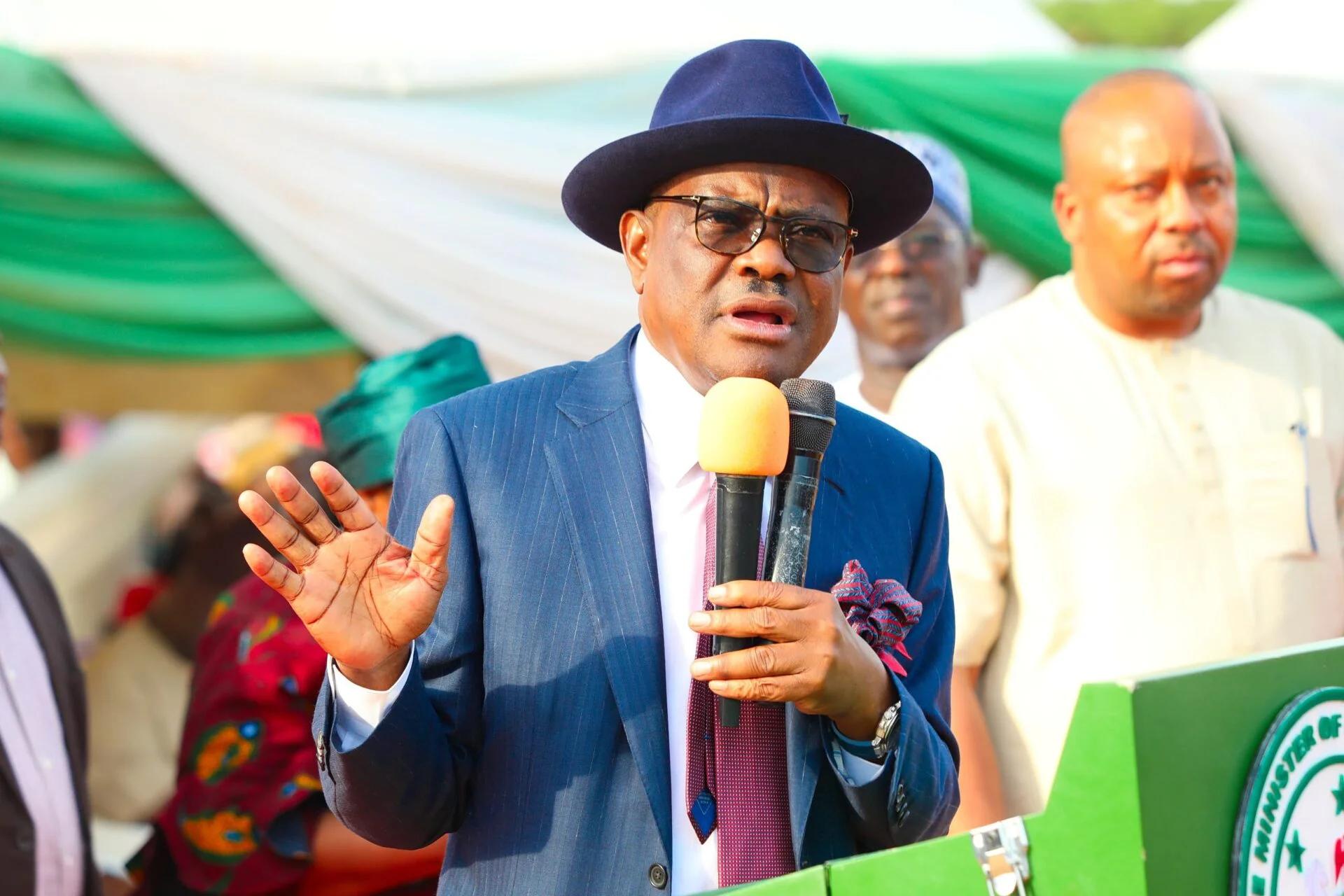
The Imo State chapter of the All Progressives Congress has strongly rejected FCT Minister Nyesom Wike's offer to coordinate President Bola Ahmed Tinubu's re-election campaign in the state ahead of the 2027 general elections, describing him as a “politically displaced errand boy.” The controversy followed Wike's declaration at a Rainbow Coalition town hall meeting in Rivers State that he had completed his campaign assignments in Rivers and the Federal Capital Territory and was ready to assume additional responsibilities in Imo and Kwara. Imo APC Publicity Secretary Onwuasoanya FCC Jones dismissed suggestions that the party required external intervention, accused Wike of undermining democratic principles and alleged that he had deployed intermediaries with money to create divisions within the party. The allegations remain independently unverified, while the confrontation has exposed tensions over campaign authority and political influence within the coalition supporting Tinubu's re-election.
The Imo State chapter of the All Progressives Congress has launched a blistering attack on the Minister of the Federal Capital Territory, Nyesom Wike, rejecting his offer to coordinate President Bola Ahmed Tinubu's re-election campaign in the state ahead of the 2027 general elections. In a strongly worded statement issued on Thursday, November 26, 2026, the party described the former Rivers State governor as a “politically displaced errand boy” and accused him of attempting to undermine the authority of its leadership in Imo. The confrontation follows Wike's declaration that he had completed the political mobilization necessary to deliver Rivers State and the Federal Capital Territory for Tinubu and was prepared to assume additional campaign responsibilities in Imo and Kwara. The exchange has exposed growing tensions among political figures supporting the president's second-term ambition, particularly over who should control campaign structures at the state level.
Wike made the controversial remarks on Wednesday during a town hall meeting organized by the Rainbow Coalition in Gokana Local Government Area of Rivers State, where he expressed confidence in the political structures established to mobilize support for Tinubu. The minister maintained that his responsibilities in Rivers and the Federal Capital Territory had effectively been completed, leaving him available to undertake additional assignments elsewhere. He subsequently appealed to the president and the leadership of the APC presidential campaign to extend his responsibilities to Imo and Kwara, suggesting that political challenges in both states required additional intervention.
The proposal immediately attracted criticism from the Imo APC, whose leadership rejected the suggestion that its campaign organization was experiencing difficulties requiring Wike's involvement. In a statement signed by its state publicity secretary, Onwuasoanya FCC Jones, the party insisted that its preparations for the presidential election were progressing without the problems identified by the minister. Jones accused Wike of attempting to create a misleading impression about the political situation in Imo and maintained that the party possessed established structures capable of mobilizing support for the president without external supervision.
The publicity secretary went further by questioning the political intentions behind Wike's proposal. He alleged that the minister was attempting to portray Tinubu as a president whose electoral prospects depended on the assistance of a politician from outside the APC. Jones argued that such a portrayal undermined the efforts of party members who had committed themselves to advancing the president's political agenda. His comments reflected considerable resentment toward Wike's expanding influence within political structures associated with the ruling party, despite the minister's longstanding association with the opposition Peoples Democratic Party.
Jones also took particular exception to Wike's declaration that Rivers State and the Federal Capital Territory had already been politically secured for Tinubu before voters had cast their ballots. The APC spokesman characterized the remarks as displaying insufficient regard for democratic principles and accused the minister of speaking in a manner that diminished the importance of voters in determining electoral outcomes. He maintained that the party respected the right of Nigerians to make independent political choices and should not be associated with statements suggesting that election results had effectively been determined in advance.
The disagreement over Wike's remarks highlights an important distinction between political mobilization and the actual outcome of an election. Political parties routinely express confidence in their campaign preparations, identify areas where they believe they possess substantial support and establish organizational structures intended to encourage voter participation. However, those activities cannot independently establish the results of an election before voting and counting have taken place. Wike's declaration represents his own assessment of the political preparations undertaken in Rivers and the Federal Capital Territory, rather than confirmation of an electoral outcome.
The most serious allegations in the Imo APC statement concerned claims that Wike had attempted to interfere with the party's internal affairs through individuals allegedly carrying money intended to create divisions within its ranks. Jones accused the minister of deploying intermediaries to the state and attempting to introduce political practices that the party associated with excessive political patronage and interference in democratic processes. He issued a warning against such alleged activities, declaring that Imo State was not available for political acquisition. However, the statement did not publicly establish the identities of the alleged intermediaries, the amounts of money involved or documentary evidence supporting the accusations.
Those allegations remain unverified and must be distinguished from the established fact that Wike publicly requested additional campaign responsibilities. No independent investigation, judicial finding or verified financial records have been identified establishing that the minister transferred money to individuals for the purpose alleged by the Imo APC. A substantive response from Wike to the specific accusations had also not been identified in the reporting available at the time of publication. The claims therefore remain the position of the state chapter of the APC rather than established findings of political misconduct.
The confrontation is particularly significant because Wike and the Imo APC leadership are ostensibly working toward the same presidential objective. Both sides have publicly expressed support for Tinubu's re-election, yet their disagreement concerns the authority to organize that support and the political influence associated with controlling campaign operations. Rather than representing a conventional dispute between supporters of rival presidential candidates, the controversy exposes divisions among individuals and organizations seeking to advance the incumbent president's second-term ambition. Such disagreements can create complications for campaign coordination, particularly where established state party structures resist intervention from influential national political figures.
Wike's political position has been unusual since the formation of Tinubu's administration following the 2023 presidential election. A former governor of Rivers State and prominent figure within the PDP, he accepted appointment as minister of the Federal Capital Territory under an APC-led federal government. His cooperation with Tinubu attracted considerable attention because it crossed traditional party boundaries and followed years of involvement in opposition politics. Wike has since become one of the most visible political figures associated with efforts to mobilize support for the president, while maintaining a political identity that has generated repeated disagreements within the PDP and the ruling APC.
His involvement in the Rainbow Coalition reflects that cross-party approach to political organization. The movement has brought together individuals from different political backgrounds who support Tinubu's presidential ambition, providing a framework through which political alliances can operate beyond conventional party structures. Wike's activities in Rivers State have emphasized the importance of such cooperation, particularly among individuals whose support for the president does not necessarily correspond with membership of the APC. However, the rejection of his proposal by the Imo chapter demonstrates that acceptance of those arrangements is not uniform across the ruling party.
For the Imo APC, the minister's attempt to obtain additional campaign responsibilities touches directly on questions of organizational autonomy and political authority. State chapters traditionally possess established leadership structures responsible for coordinating party activities, maintaining relationships with local members and implementing campaign programs. The involvement of a nationally influential politician from outside those structures may be welcomed in some circumstances but resisted in others, particularly where existing leaders regard the intervention as a challenge to their authority. The dispute surrounding Wike's proposal illustrates how disagreements concerning campaign organization can become intertwined with broader struggles for political influence.
The controversy also places Governor Hope Uzodimma's political position within the wider discussion. Imo remains under an APC-led administration, giving the party's existing leadership considerable institutional responsibilities concerning campaign coordination within the state. Wike's suggestion that additional assistance was necessary could be interpreted as questioning the effectiveness of those arrangements, although the minister's remarks do not independently establish that the governor or state party leadership has failed to perform its responsibilities. The Imo APC's emphatic rejection of the proposal reflects its determination to defend its own political structures and decision-making authority.
The inclusion of Kwara State in Wike's request further demonstrates the potential national implications of his proposal. The minister did not simply offer to assist campaign activities within a neighboring state or an area where his political organization was already established. Instead, he sought to expand his responsibilities across different parts of the country, potentially increasing his influence within the broader presidential campaign. However, the available information does not establish that Tinubu or the national campaign leadership has approved the requested assignments, nor does it establish that Kwara's APC leadership has adopted the same position as its Imo counterpart.
The dispute also highlights the continuing difficulty political parties face when attempting to balance formal membership structures with broader electoral alliances. Presidential campaigns frequently seek support from individuals associated with different political organizations, particularly where established political figures possess influence within specific communities. Such cooperation can expand a campaign's reach, but it can also create disagreements over loyalty, organizational discipline and the distribution of political responsibilities. Wike's role within Tinubu's political coalition has brought those competing considerations into particularly sharp focus.
Jones challenged the minister to direct his political energy toward the PDP rather than attempting to assume responsibilities within APC-controlled states. The criticism reflected the Imo party leadership's view that Wike's association with the ruling party did not entitle him to exercise authority over its internal affairs. The spokesman also alleged that the minister's continued political relevance depended substantially on his relationship with the APC. Those assertions represent the state party's political assessment of Wike's position and should not be interpreted as an independently established judgment about his influence.
The confrontation has wider implications for the relationship between political appointments and party affiliation in Nigeria. Individuals serving within a government do not necessarily possess identical political backgrounds, and appointments can reflect considerations extending beyond formal membership of the governing party. However, participation in an administration does not automatically establish authority over the internal structures of the party responsible for forming that government. Determining who may coordinate particular campaign activities depends on decisions made by the relevant political institutions rather than an individual's ministerial position alone.
For Tinubu's presidential campaign, the public disagreement presents an organizational issue requiring careful management. Wike's established support for the president and the Imo APC's declared commitment to his re-election indicate that the immediate dispute concerns campaign responsibilities rather than competing presidential endorsements. Nevertheless, continued public exchanges involving personal insults and serious allegations could complicate cooperation among individuals pursuing the same electoral objective. The national campaign leadership may eventually need to clarify the respective responsibilities of state party officials, coalition representatives and nationally appointed campaign coordinators.
The allegations of electoral manipulation raised by the Imo APC also warrant careful consideration because of their seriousness within Nigeria's democratic framework. Accusations concerning financial inducements, voter suppression or interference with electoral processes should be examined through credible evidence and appropriate institutional procedures. Political statements alone cannot establish that such offenses have occurred, just as expressions of confidence about winning particular states cannot determine future election results. The Independent National Electoral Commission remains responsible for administering elections and declaring results in accordance with applicable legislation.
As preparations for the 2027 elections continue, the dispute between Wike and the Imo APC provides an example of the competing interests operating within broad presidential coalitions. The minister has presented his offer as an extension of his efforts to support Tinubu, while the Imo party leadership has rejected it as unnecessary interference in its political affairs. The national leadership has not publicly resolved the disagreement in the reports reviewed, leaving questions about whether Wike will receive additional responsibilities and how the campaign will manage competing claims to authority.
The controversy is unlikely to be resolved solely through competing declarations of political strength. Establishing clear campaign responsibilities, maintaining transparency concerning electoral activities and addressing serious allegations through appropriate procedures will be important to preserving public confidence. For the APC, the immediate challenge involves reconciling the contributions of political allies from different backgrounds with the authority of its established state structures. For Wike, the outstanding question is whether the president's campaign leadership will authorize the expansion of his responsibilities despite the objections raised by party officials in Imo.
Ultimately, the political disagreement has exposed a struggle over influence within the coalition supporting Tinubu's re-election at a time when the outcome of the presidential election remains in the hands of Nigerian voters. The Imo APC has made clear that it intends to defend its organizational independence, while Wike has publicly indicated his willingness to extend his campaign involvement beyond Rivers and the Federal Capital Territory. Until the national campaign leadership establishes its position and the specific allegations raised by the state party are addressed, the confrontation remains an unresolved dispute among political actors whose declared presidential objective is the same but whose approaches to achieving it differ considerably.