
PORTUGAL PROVISIONALLY SUSPENDS CRISTIANO RONALDO AS DISCIPLINARY PROBE BEGINS
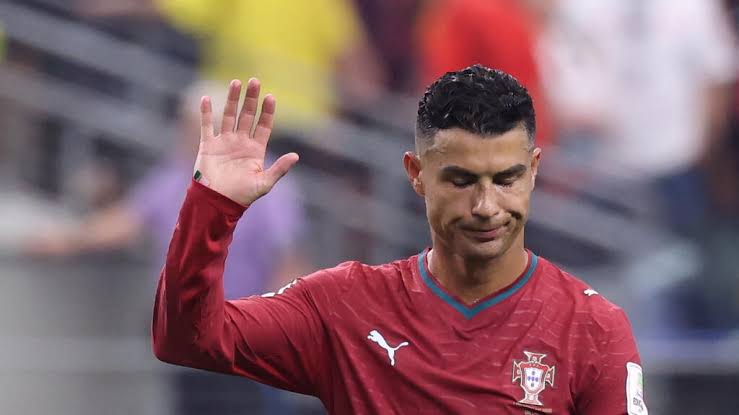
Cristiano Ronaldo has been provisionally suspended from Portugal duty as the Portuguese Football Federation investigates his decision to leave the national team camp in September. The case has been given urgent status, but no final punishment has yet been imposed. Under FPF regulations, Ronaldo could ultimately face between one and six months of suspension, although mitigating circumstances may affect the final ruling.
Cristiano Ronaldo has been provisionally suspended by the Portuguese Football Federation while its disciplinary authorities investigate his decision to leave the national team camp in Copenhagen on September 30 following a dispute with head coach Jorge Jesus. The Portuguese federation confirmed on Saturday that disciplinary proceedings had formally been opened against the 41 year old captain after facts concerning his departure were reported to the disciplinary council on October 7. The case has been given urgent status and sent to the FPF Disciplinary Investigation Commission, leaving Ronaldo temporarily unavailable for national team duty while the process continues.
The decision represents a major escalation in a dispute that began during Portugal’s September Nations League camp and has raised questions about Ronaldo’s future with the national team. According to the disciplinary council, Ronaldo had already been subject to the automatic provisional suspension required under federation rules once he left the camp, but the council has now imposed a separate non automatic preventive suspension while the investigation proceeds. The federation also said proceedings will remain confidential until the investigative phase has been completed, meaning the full evidence considered by the disciplinary authorities is unlikely to become public immediately.
Ronaldo left Portugal’s camp in Copenhagen after a series of disagreements over his playing role under Jesus. He had been an unused substitute during Portugal’s 2 to 1 victory away to Norway on September 27 despite warming up during the match. The forward later said there had been an understanding about how his minutes would be managed because of his age, fitness and club commitments, but he accused Jesus of failing to honor commitments that had been made privately.
The disagreement intensified before Portugal’s match against Denmark. Ronaldo said Jesus had initially agreed that he would not play in the fixtures against Norway and Denmark as part of an agreed management plan, but later told him he would feature for around 30 minutes against Norway. Ronaldo remained on the bench throughout that match and later said another understanding was reached about how Jesus would publicly explain the situation.
According to Ronaldo’s version of events, he and Jesus discussed an eight point clarification intended to explain that the captain had not demanded playing time, had respected the coach’s decisions and remained committed to Portugal. Ronaldo said he became frustrated when Jesus’s subsequent public comments did not match what he believed they had agreed privately. Jesus has disputed parts of Ronaldo’s account and has maintained that selection decisions belong entirely to the coach.
The tension reached breaking point on September 30. Ronaldo did not train normally with the squad and later left the Parken Stadium in Copenhagen in a federation vehicle before departing Denmark. FPF President Pedro Proença and Jesus reportedly attempted to persuade him to remain with the squad, but Ronaldo ultimately left the camp before Portugal’s Nations League fixture against Denmark.
The federation confirmed his departure at the time but initially avoided imposing a public disciplinary judgment. Portugal continued without him and secured qualification for the Nations League quarter finals, while senior players including Bruno Fernandes rejected suggestions that the controversy had divided the dressing room. Proença later described the situation as a misunderstanding and Jesus indicated that the door remained open for Ronaldo to return.
Ronaldo himself later published a detailed explanation in which he accepted responsibility for leaving the camp and apologized to teammates and supporters. He also expressed regret for leaving the field without acknowledging Portuguese fans after the Norway match. However, he maintained that he had been disappointed by what he considered a breakdown of trust with Jesus.
The apology did not prevent disciplinary action because FPF rules contain specific provisions governing players who leave or fail to attend national team activities without accepted justification. Under Article 160 of the federation’s disciplinary regulations, a player who abandons or fails to report for training, matches or other national team activities can face a suspension ranging from one to six months. Professional players may also face an additional fine.
The same regulation provides for an automatic preventive suspension following an unauthorized departure, which explains why Ronaldo was technically subject to suspension even before the disciplinary council formally opened proceedings. Saturday’s announcement goes further by confirming that the council has now imposed a non automatic preventive suspension and classified the investigation as urgent.
That means Ronaldo cannot simply return to Portugal duty while the disciplinary case remains unresolved. His eligibility for the national team will depend on the outcome of the investigation and any final sanction imposed by the federation. Portugal is due to play further Nations League fixtures in November, making the timing of the case particularly significant.
The maximum possible punishment under the relevant regulation is six months, although the final sanction could be considerably shorter depending on how the disciplinary council evaluates the circumstances. Ronaldo’s admission that he left the camp, his apology and his long record with the national team could be considered as mitigating factors, while the fact that he was captain may also be viewed as increasing his responsibility to remain with the squad.
Sports law specialists in Portugal have said the regulation provides a clear disciplinary basis for action once a player abandons national team duties. The key issue will therefore not necessarily be whether Ronaldo left, because that is undisputed, but whether the circumstances he has described justify the decision sufficiently to reduce or eliminate the final punishment.
Ronaldo has already indicated that he expects some form of sanction. In his public statement, he said he remained willing to represent Portugal after serving whatever suspension is eventually imposed, provided he remains physically fit and continues performing at club level. That position suggests he does not currently regard the dispute as the end of his international career.
His future nevertheless remains unusually uncertain. Ronaldo is Portugal’s most capped player and all time leading scorer, with 234 appearances and 146 goals, and has represented the country at senior level since 2003. He captained Portugal to the 2016 European Championship and Nations League titles in 2019 and 2025, making him the most influential figure in the history of the men’s national team.
That status is part of what makes the disciplinary action so significant. Portugal has rarely had to deal publicly with a conflict involving a player of Ronaldo’s stature, particularly one centred on the authority of the national coach. Jesus took charge of Portugal in July after the 2026 World Cup and made clear from the beginning that selection would be based on performance rather than reputation.
Ronaldo was included in Jesus’s first squad, but the coach’s management of his playing time quickly became a major issue. Ronaldo had previously indicated that the 2026 World Cup would be his last, but he has not announced his retirement from international football and has continued playing for Al Nassr at club level.
The dispute therefore became partly about how Portugal should manage a legendary player approaching the end of his career. Jesus has stressed that no individual player can dictate his tactical decisions, while Ronaldo has argued that the problem was not simply a lack of playing time but what he viewed as commitments that were made and then broken.
That distinction will likely feature in the disciplinary investigation. If Ronaldo can establish that his departure followed an unusual breakdown in communication involving the coach and federation leadership, that may affect the severity of any sanction. It would not necessarily remove responsibility for leaving the camp, but it could influence how the council interprets the incident.
The federation’s decision to treat the case as urgent suggests officials want clarity before Portugal’s next international window. An extended unresolved dispute would risk becoming a continuing distraction for Jesus and the squad and could overshadow preparations for upcoming Nations League matches.
For Jesus, the situation also presents a test of authority. He has repeatedly said Ronaldo remains important to Portugal but has also insisted that no player is guaranteed playing time. If Ronaldo eventually returns, the two men will have to rebuild a working relationship after a dispute that has now moved from private disagreement into formal disciplinary proceedings.
For Ronaldo, the investigation presents one of the most unusual moments of his international career. He has faced criticism over performances, tournament exits and disciplinary incidents before, but a federation imposed suspension over abandoning a national team camp carries a different significance because it directly concerns his obligations as Portugal captain.
The disciplinary council has not yet announced when it expects to reach a final decision. Because the process is confidential during the investigative phase, further details may remain limited until the commission completes its work and submits findings for consideration.
The most important development on Saturday is therefore not that Ronaldo has already received a final ban. He has not. The federation has imposed a preventive suspension while a formal disciplinary investigation determines whether his conduct warrants a final penalty and, if so, how severe that penalty should be.
Ronaldo remains available to play for Al Nassr because the current action concerns his obligations to the Portuguese national team rather than a general worldwide football ban. Any wider consequences would depend on the wording of a final disciplinary ruling and the relevant federation regulations.
Portugal’s next squad announcement will now be watched closely, but under the current preventive suspension Ronaldo cannot simply be selected as normal while proceedings remain active. The federation has effectively placed his international career on hold until the case is resolved.
The dispute may still end with reconciliation. Ronaldo has apologized, Jesus has previously said the door remains open and federation president Pedro Proença has emphasized the forward’s importance to Portuguese football. However, Saturday’s decision shows that those conciliatory public comments have not prevented the federation from applying its disciplinary rules.
For now, Portugal’s most famous player is officially suspended from national team activity while investigators examine the circumstances surrounding his decision to walk away from the September camp. The eventual ruling will determine whether the episode results in a short disciplinary interruption or becomes a more consequential turning point in the final stage of Cristiano Ronaldo’s extraordinary international career.