RMRDC CHIEF URGES PETER OBI TO DROP 2027 BID AND SUPPORT TINUBU
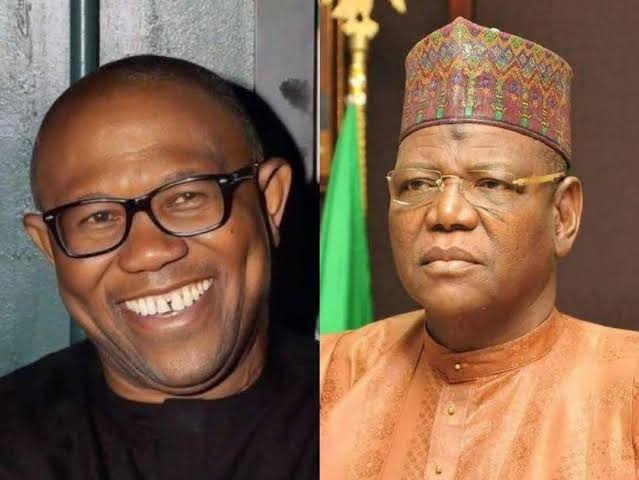
RMRDC Director-General Professor Nnanyelugo Ike-Muonso has urged Peter Obi to abandon his 2027 presidential bid and support President Bola Tinubu’s re-election, arguing that Nigeria’s informal North–South power-rotation arrangement should allow the South to complete an eight-year presidential cycle. He also suggested Obi consider joining the APC. The proposal is Ike-Muonso’s political position, not an official constitutional requirement or announced RMRDC policy. Obi remains an active 2027 presidential candidate and has recently argued that opposition candidates should mobilise voters rather than step down for one another.
The Director-General and Chief Executive Officer of Nigeria’s Raw Materials Research and Development Council, Professor Nnanyelugo Ike-Muonso, has urged former Anambra State Governor Peter Obi to abandon his 2027 presidential ambition and support President Bola Ahmed Tinubu’s bid for another term in office. Speaking during an interactive session in Abuja on Monday, October 26, Ike-Muonso argued that Nigeria’s longstanding but informal practice of balancing presidential power between the northern and southern parts of the country should influence the political calculations of major candidates ahead of the next general election.
Ike-Muonso said he believed Obi should consider stepping aside from the 2027 contest and supporting Tinubu so that the South could complete what he described as an eight-year presidential cycle before power returns to the North. He also suggested that Obi could consider joining the ruling All Progressives Congress and contributing his ideas within the party, particularly on economic development, industrialisation, infrastructure and public-sector reform. His comments represent his personal political position and do not amount to an official directive from the Raw Materials Research and Development Council, nor do they impose any legal obligation on Obi or any other presidential aspirant.
The remarks have attracted attention because they touch on one of the most enduring and controversial features of Nigerian politics: the informal expectation that presidential power should rotate between different regions in order to maintain a sense of political balance in a highly diverse federation. Nigeria’s Constitution does not require the presidency to alternate between the North and South, and there is no law preventing a candidate from any part of the country from contesting whenever he or she meets the constitutional requirements. Nevertheless, major political parties have repeatedly relied on zoning arrangements, regional balancing and negotiated power-sharing as tools for managing political competition and reducing fears of domination by one section of the country.
Ike-Muonso’s argument is based on the position that President Tinubu, who is from the South-West, should be allowed to complete two terms in office if he wins re-election in 2027, after which political power could shift back to the North. Under that interpretation, Obi, who is from the South-East, would be expected to suspend his ambition for the sake of a broader southern arrangement. The proposal, however, is politically contentious because it assumes that geographical rotation should carry greater weight than the independent ambitions of candidates and the right of voters to decide who leads the country.
Peter Obi has given no indication that he intends to accept that position. His recent political activities show that he remains committed to contesting the 2027 presidential election and has been preparing supporters for an active national campaign. He has repeatedly argued that Nigerians should be given the opportunity to choose between competing candidates based on their records, policies and plans for the country rather than through elite political agreements reached outside the ballot box.
Obi has also recently rejected suggestions that opposition candidates should automatically step aside for one another in order to create a single challenger to the incumbent. Instead, he has argued that opposition parties should concentrate on expanding political participation and persuading millions of Nigerians who did not vote in previous elections to take part in the next one. In his view, the strength of an opposition campaign should come from mobilising citizens rather than from assuming that one candidate has an automatic right to inherit the votes of another.
That position places him in direct disagreement with Ike-Muonso’s proposal. While the RMRDC chief is calling for a political accommodation that would preserve an informal regional cycle and strengthen the incumbent president’s re-election coalition, Obi has been framing the 2027 election as a contest that should be determined by voters evaluating economic conditions, governance, security and leadership performance.
The debate has become even more significant because Obi has previously suggested that the 2027 election could be his final attempt at the presidency. The former Anambra governor has spoken openly about age, the physical demands of national leadership and the limited number of future election cycles in which he expects to remain an active presidential candidate. That makes any suggestion that he should postpone his ambition particularly consequential, because waiting for another political cycle may not fit the personal timetable he has publicly discussed.
Obi has also stated in previous interviews that he is not desperate to become president for personal reasons but is deeply concerned about Nigeria’s condition and wants to see the country function better. Supporters of political compromise have sometimes cited those comments as evidence that he could support another candidate if he believed doing so served the national interest. However, Obi has continued to maintain an active campaign posture, and there is no evidence that his broader statements about national interest amount to an intention to support Tinubu.
Ike-Muonso’s suggestion that Obi should consider joining the APC is equally significant. Obi has built much of his political identity in recent years around opposition to the governing establishment and has repeatedly criticised the Tinubu administration on issues including economic hardship, poverty, public expenditure, insecurity and the cost of living. His political supporters largely view him as an alternative to the ruling party, which would make a move into the APC a major shift in his current political positioning.
At the same time, Obi has shown that opposition does not necessarily mean rejecting every policy introduced by the federal government. He has previously indicated that some existing economic reforms could be retained under a future administration if he considered them sound, while arguing that implementation, productivity and public accountability would need to improve. That approach allows him to criticise the government while acknowledging individual policies he believes could be useful.
Ike-Muonso’s intervention therefore appears to be less about a specific policy disagreement and more about the broader political question of continuity. He argued that national development requires long-term planning and that major economic initiatives should not be abandoned simply because one administration leaves office and another takes over. From his perspective, Tinubu’s re-election could provide additional time for ongoing reforms and industrial policies to mature, while Obi could participate in the process through collaboration rather than electoral competition.
That argument reflects a familiar debate in democratic politics. Governments often defend re-election by arguing that major reforms require continuity, while opposition candidates argue that poor performance or flawed implementation justifies a change in leadership. Both positions are legitimate political arguments, and the electorate ultimately determines which one it finds more persuasive.
The Raw Materials Research and Development Council itself has no formal role in determining who contests for president. Its mandate is focused on the development, utilisation and local processing of industrial raw materials, with the broader objective of reducing Nigeria’s dependence on imported inputs and increasing value addition within the domestic economy. The agency does not regulate elections, political parties or presidential zoning arrangements.
That distinction is important because Ike-Muonso’s comments were made by a senior public official who also heads a federal agency. Unless the council formally issues a political position through its governing structures, his remarks should be treated as his personal political view rather than as an official institutional endorsement of Tinubu’s re-election or a directive to Obi.
The timing of the comments is also notable because Nigeria is already entering a more active phase of political positioning ahead of 2027. Government officials, party leaders, governors, opposition figures and regional organisations are increasingly making public arguments about who should contest, who should withdraw and whether political power should remain in the South or shift elsewhere.
Supporters of Tinubu have increasingly promoted the argument that he should be allowed to complete a second term so that the South can hold the presidency for eight consecutive years, similar to the two full terms completed by former President Muhammadu Buhari, who came from the North. They argue that interrupting Tinubu after one term could create a perception that southern leaders are not being given the same opportunity to complete two terms.
Critics of that position respond that presidential tenure is not allocated automatically by region. They argue that Buhari completed two terms because he won two elections, not because the North had an unconditional constitutional entitlement to eight years. Under that interpretation, Tinubu must also win the confidence of voters in 2027 rather than rely on a rotational principle to justify a second term.
The history of presidential rotation since Nigeria returned to civilian rule in 1999 also complicates the argument. Olusegun Obasanjo, a southerner, served two terms from 1999 to 2007. Umaru Musa Yar’Adua, a northerner, succeeded him in 2007 but died in office in 2010, after which Vice-President Goodluck Jonathan, from the South, completed the term and later won an election of his own. Muhammadu Buhari, from the North, then governed from 2015 to 2023 before Tinubu, from the South-West, assumed office.
Because of those interruptions and varying regional identities, there has never been a perfectly consistent eight-year North–South rotation. Political actors therefore interpret the convention differently depending on their interests and the electoral circumstances of the moment.
Obi’s candidacy introduces an additional layer because he comes from the South-East, a region that has not produced an elected president since the beginning of the Fourth Republic. His supporters frequently argue that the South-East has been excluded from the presidency and deserves a stronger opportunity to compete for national leadership. They therefore reject the argument that the region should wait simply because the current president is also from the broader southern half of the country.
Others argue that presidential elections should not be treated as compensation for regional exclusion and that the office should remain open to any qualified Nigerian who can win sufficient support across the federation. This competing view prioritises electoral choice over geographical entitlement and questions whether informal zoning agreements should determine who is considered entitled to run.
These disagreements are likely to become increasingly important as the 2027 campaign develops. Economic hardship, inflation, unemployment, security, infrastructure and public confidence in government will shape voter decisions, but regional balancing will continue to influence party negotiations and elite endorsements.
Ike-Muonso’s comments effectively place him within the camp that considers political stability and regional sequencing important enough to justify asking a major opposition candidate to step aside. His position is that Tinubu should be allowed to complete a full southern cycle while Obi could contribute through cooperation and potentially pursue future opportunities.
Obi’s current position is substantially different. He has continued to campaign, mobilise supporters and present himself as a viable alternative to the current administration. He has repeatedly criticised the government’s handling of the economy and has argued that Nigeria requires more productive investment, tighter fiscal discipline, stronger anti-corruption measures and greater attention to education, security and poverty reduction.
Those criticisms make it difficult to reconcile his current political strategy with the suggestion that he should support Tinubu without a major change in his assessment of the administration. There has been no public indication that such a change is taking place.
The suggestion that Obi should join the APC would also require a significant political realignment. His supporters have built their movement partly around dissatisfaction with the two major political establishments that dominated Nigeria before his 2023 presidential run, and any move into the ruling party could be seen by some supporters as a contradiction of that message.
Political alliances can change quickly, however, and Nigeria has a long history of politicians switching parties, forming coalitions and reconciling with former rivals. The possibility of realignment can never be completely dismissed, but no evidence currently shows that Obi is negotiating to join the APC or withdraw from the presidential race.
For that reason, reports about Ike-Muonso’s comments should avoid creating the impression that negotiations are underway unless additional evidence emerges. What is currently confirmed is that a senior federal agency head has publicly advised Obi to reconsider his 2027 ambition and support the president.
The remarks also raise questions about the role of public officials during election periods. Senior government appointees are entitled to personal political opinions, but explicit endorsements can attract scrutiny when those officials also control public institutions and resources. Opposition parties may question whether agency heads should use public platforms to campaign for incumbents, while government supporters may argue that political rights do not disappear simply because someone holds public office.
Nigeria has frequently debated the line between official responsibilities and partisan politics. That debate is likely to become more intense as 2027 approaches, especially if heads of ministries, agencies and departments begin making more direct electoral appeals.
Ike-Muonso linked his political position to the wider issue of industrial development. He has been promoting policies aimed at reducing Nigeria’s dependence on raw-material exports and encouraging domestic processing before commodities leave the country. One of the council’s policy priorities is increasing local value addition so that Nigeria earns more from its natural resources and creates manufacturing employment at home.
That policy agenda reflects a broader economic concern shared by multiple administrations. Nigeria exports large quantities of raw or minimally processed commodities while importing finished products at substantially higher prices. Successive governments have promised to reverse that pattern by building domestic processing, manufacturing and industrial capacity.
Ike-Muonso’s broader argument is that such policies require continuity beyond a single political term. He believes that political actors should be willing to cooperate around development programmes that they consider beneficial even when they belong to opposing camps.
That point can be separated from his specific recommendation that Obi support Tinubu. Long-term industrial policy can continue across administrations if institutions are strong and if governments preserve effective programmes, even when political leadership changes. Continuity does not necessarily require electoral withdrawal by opposition candidates.
The democratic process is designed precisely to allow voters to decide whether continuity or change is preferable. If voters believe Tinubu’s reforms deserve more time, they can return him to office. If they prefer Obi or another candidate, they can vote for an alternative without violating any constitutional regional arrangement.
The informal rotation debate therefore remains political rather than legal. Political parties may choose to zone their tickets, negotiate regional formulas or encourage candidates to wait, but no national rule compels a southern candidate to support another southern candidate or prevents a northern aspirant from contesting.
The only binding requirements are those established by the Constitution, electoral law and party nomination procedures.
Obi has so far acted within that framework by pursuing his candidacy through his political platform and preparing for a national campaign. He has urged supporters to protect their votes from polling units through the final declaration of results and has repeatedly emphasised the need for stronger voter participation.
Those statements are inconsistent with the idea that he is presently preparing to withdraw.
The political significance of Ike-Muonso’s remarks lies instead in the increasing pressure being placed on opposition figures as the ruling party seeks to consolidate support for Tinubu. Similar appeals have come from other political figures, particularly those who argue that the South-East should support the current president now and pursue the presidency later.
That argument has not produced a single regional consensus. Political organisations and leaders from the South-East remain divided, with some endorsing Tinubu and others strongly supporting Obi. The region cannot therefore be treated as politically uniform.
The same applies nationally. Nigerians are likely to assess the election through different combinations of economic interest, party loyalty, regional identity, religion, candidate personality and policy preferences.
For many voters, the question of whether the South should complete eight years may matter. For others, the immediate cost of food, fuel, housing and transportation may be more important.
That diversity of priorities is precisely why elections rather than informal elite agreements remain the final mechanism for determining leadership.
Ike-Muonso is entitled to advocate his preferred political arrangement, but his appeal does not change Obi’s legal or political status. Obi remains free to contest if he secures his party’s nomination and satisfies electoral requirements.
Tinubu likewise remains free to seek re-election and campaign on the record of his administration.
The 2027 election will therefore present voters with competing arguments about continuity, reform, economic recovery, regional balance and political change.
Ike-Muonso’s intervention adds the North–South rotation argument to that debate in unusually direct terms. He believes Obi should sacrifice his immediate ambition in favour of Tinubu and wait for a later opportunity.
Obi’s recent public statements indicate that he does not currently share that view. He continues to present himself as a candidate who wants Nigerians to evaluate his proposals directly against those of the incumbent and other challengers.
Unless he announces otherwise, that remains the most accurate description of his position.
The broader constitutional point should also remain clear. Nigeria does not have a legal presidential zoning system. Rotation has political influence because parties and elites choose to observe it at different times, but voters retain the final authority to decide who governs.
That makes the approaching election more than a debate about whose “turn” it is. It will also be a referendum on the performance of the Tinubu administration, the credibility of opposition alternatives and the ability of candidates to build national coalitions across regional and party lines.
Ike-Muonso has now made his preference public. He wants Obi to step aside, support Tinubu, consider joining the APC and allow the South to complete what he sees as an eight-year political cycle.
Obi, however, has neither withdrawn his candidacy nor endorsed the president, and there is currently no evidence that he intends to do either.
The RMRDC chief’s remarks should therefore be understood for what they are: a senior public official’s political appeal in an emerging presidential campaign, not an official requirement, an electoral decision or evidence of an agreement between Obi and the ruling party.
As Nigeria moves closer to 2027, similar arguments over zoning, coalition-building and candidate withdrawals are likely to become more frequent. The ultimate decision, however, will rest with the candidates who choose whether to remain in the race, the parties that nominate them and the millions of Nigerians who will determine the next president through the ballot box.