RUSSIA LAUNCHES FRESH STRIKES ACROSS UKRAINE AS CASUALTIES MOUNT, MOSCOW CLAIMS UKRAINIAN AGENTS DETAINED
Russian missile, drone and aerial attacks struck several Ukrainian regions on October 26, initially injuring six people in Zaporizhzhia and Chernihiv before later attacks killed two people in Kharkiv and another in Pavlohrad and wounded additional civilians. Russia says it also attacked Ukrainian power stations, port infrastructure and other facilities, although not all of Moscow’s claims have been independently verified. Separately, Russia’s FSB says it detained two men allegedly preparing drone attacks against Russian air-defence and electricity infrastructure under instructions from Ukraine’s SBU. Ukraine had not confirmed that allegation at the time of the latest reporting.
Russia launched another wave of missile, drone and aerial attacks across Ukraine on Monday, October 26, striking cities, residential areas, energy infrastructure and other facilities as the war continued to expand far beyond the immediate front lines. Ukrainian officials initially reported at least six people injured overnight in the Zaporizhzhia and Chernihiv regions, but the casualty toll rose later in the day after additional Russian attacks killed at least three people and injured more than a dozen others in Kharkiv and Pavlohrad, according to regional authorities. Moscow, meanwhile, said its forces had targeted Ukrainian power stations, port facilities and other infrastructure while Russia’s Federal Security Service separately claimed it had detained two suspected Ukrainian agents preparing drone attacks against Russian air-defence and electricity infrastructure.
In the southeastern city of Zaporizhzhia, regional authorities said four civilians were injured during the overnight Russian attack. Ukrainian reporting identified the wounded as two women aged 22 and 30 and two men aged 40 and 61. Residential properties, vehicles and a commercial building were damaged, with emergency crews responding to fires and destruction caused by the strikes. Ukrainian authorities later reported further attacks in the wider Zaporizhzhia region, illustrating the sustained pressure on an area that remains close to active combat zones and has repeatedly been targeted by missiles, guided aerial bombs and drones.
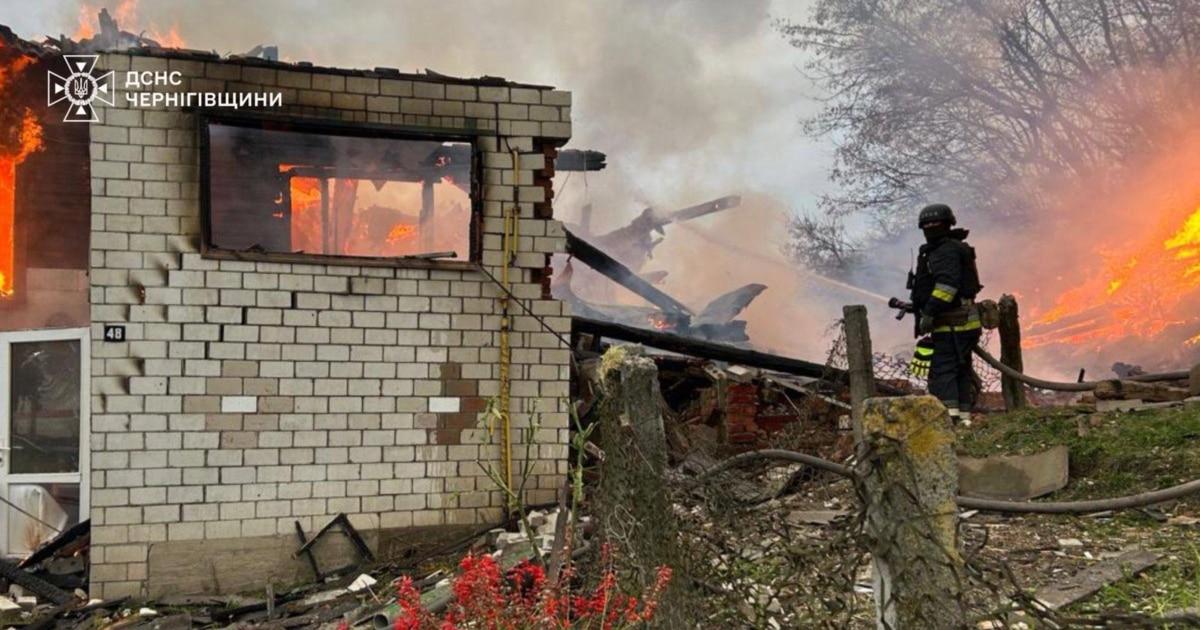
Ukraine’s State Emergency Service also reported two people injured in separate attacks in the northern Chernihiv region. One man was injured after a strike hit a hangar belonging to a private company in the Pryluky district, while a woman was injured when another attack caused a fire at a grain-storage facility in the Novhorod-Siverskyi district. Emergency officials also reported a substantial warehouse fire in the Koriukivka district, adding to a pattern of Russian attacks that Ukrainian authorities say increasingly includes commercial, agricultural and energy-related infrastructure alongside military targets.
The scale of the overnight assault extended beyond the six casualties included in the earliest international reports. Ukraine’s Air Force said Russia launched approximately 140 drones overnight, including a large number of jet-powered attack drones, along with guided and anti-radiation missiles. Ukrainian air defences reported shooting down or suppressing more than 100 drones and intercepting several missiles, while acknowledging that weapons reached multiple locations and falling debris was recorded elsewhere. Such figures are issued by Ukraine’s military and cannot always be independently verified in real time, but they indicate the intensity of the aerial pressure facing cities across the country.
In the Kharkiv region, overnight guided aerial-bomb attacks also struck the city of Izium, according to Ukrainian officials, damaging residential buildings and a children’s sports school. More than 10 homes were reported damaged or destroyed in one residential area, while three people were injured. Kharkiv and its surrounding region lie close to the Russian border and have faced repeated missile, drone and glide-bomb attacks throughout the war, leaving the area particularly exposed to weapons that can be launched from Russian territory with relatively little warning.
The situation deteriorated further later on Monday when Russian forces launched missile strikes against Kharkiv itself, Ukraine’s second-largest city. Mayor Ihor Terekhov said three strikes hit one of the city’s districts, killing two people and injuring four others. A high-rise apartment building and private houses were damaged. Regional Governor Oleh Syniehubov confirmed that Russian missiles had struck the city, although complete information on the weapons used and the final extent of the damage was still being gathered as rescue and assessment operations continued.
The neighbouring Dnipropetrovsk region was also subjected to extensive bombardment. Governor Oleksandr Hanzha said Russian forces carried out more than 50 drone and artillery attacks across the region, including a drone strike on Pavlohrad that killed one person and injured 10 others. Three of the wounded were reported to be in serious condition. The attack added another civilian death to Monday’s toll and demonstrated how the day’s violence extended across several regions rather than being confined to the initial overnight strikes reported in Zaporizhzhia and Chernihiv.
Russia’s Defence Ministry presented a different account of its operations, saying Russian forces had attacked targets connected to Ukraine’s military and energy infrastructure. Moscow said it struck a power station in Kharkiv, a warehouse elsewhere in the surrounding region and another power facility in the Khmelnytskyi region. It also said Russian forces targeted port infrastructure in Chornomorsk on the Black Sea and attacked a cargo vessel travelling toward Odesa that Moscow alleged was being used for military purposes. The Russian military did not provide independently verifiable evidence for all of those claims, and Ukraine has repeatedly disputed Moscow’s characterisation of infrastructure struck during Russian attacks.
The competing accounts are important because attacks on Ukraine’s electricity system have become a central feature of the war, particularly as colder weather approaches. Russian forces have repeatedly targeted generating facilities, substations and transmission infrastructure, arguing that energy systems support Ukraine’s military and industrial capabilities. Kyiv says the campaign is designed to deprive civilians of electricity, heating and water and has accused Moscow of deliberately trying to weaken the country’s ability to function during winter. Russian officials deny intentionally targeting civilians and maintain that their strikes are directed at military or military-related infrastructure.
Ukraine has responded by taking its own long-range drone campaign deeper into Russian territory, particularly against oil refineries, fuel depots, industrial sites and other facilities Kyiv says sustain Moscow’s war effort. Those operations have caused fires, temporary production interruptions and growing concern over Russia’s domestic fuel supplies. The Ukrainian government generally argues that Russian energy infrastructure constitutes a legitimate military-economic target because petroleum revenue and fuel supplies directly support Moscow’s armed forces.
That reciprocal campaign against energy infrastructure has become the subject of increasing international pressure. The United States has urged Ukraine to suspend attacks on Russian oil refineries, arguing that the strikes have contributed to higher global energy prices at a politically and economically sensitive moment. Ukrainian President Volodymyr Zelenskyy responded by saying Kyiv would consider halting attacks on Russian refinery infrastructure if Moscow stopped striking Ukraine’s power system, effectively proposing a reciprocal end to attacks on energy targets rather than a unilateral Ukrainian suspension.
Zelenskyy has also pressed Washington for stronger air-defence assistance, including additional Patriot interceptor missiles, as Russia continues its long-range bombardment. He said another possible arrangement would involve allowing Ukraine greater access to Starshield capabilities over Russian territory to help detect missile-launch locations before weapons reach Ukrainian cities. The Ukrainian president has argued repeatedly that stronger air defences remain essential because even when Ukraine intercepts most incoming drones and missiles, the weapons that penetrate the defensive network can cause substantial civilian casualties and infrastructure damage.
The debate is occurring as relations between Washington and Kyiv face growing strain over the direction of the war, energy prices and the extent of U.S. military assistance. Zelenskyy said on Sunday that American warnings about impending Russian ballistic-missile attacks had been fully restored after earlier disruptions, but he also complained that Ukraine had been waiting nearly a month for U.S. approval of additional missiles for Patriot and NASAMS air-defence systems. The delay has become particularly sensitive as Russia intensifies attacks against electricity infrastructure and populated areas ahead of the winter period.
Russia, meanwhile, said on Monday that it had disrupted a separate Ukrainian operation inside Russian territory. The Federal Security Service, or FSB, announced the detention of two men whom it accused of preparing close-range drone attacks against an important component of Moscow’s missile-defence system and an electricity facility. According to the FSB, both suspects originated from the South Caucasus region and were acting under instructions from Ukraine’s Security Service, the SBU.
The Russian security service alleged that the suspects obtained first-person-view drones and explosives from two regions of Russia before transporting them to the Moscow region, where the devices were being prepared for use. The FSB claimed that the drones were intended to be operated remotely from Ukraine and that one of the detained men had been recruited by an SBU officer who promised him payment for travelling to Russia and organising the alleged sabotage operation. The agency said the first suspect subsequently recruited an acquaintance to assist him and that both men were detained before the planned attacks could be carried out.
Ukraine’s Security Service and other Ukrainian authorities had not publicly confirmed or responded to the FSB’s allegations at the time of the latest reporting. There has therefore been no independent verification that the two detainees were acting for Ukrainian intelligence, that the alleged targets had been selected by Kyiv or that the seized equipment was intended for the operations described by Moscow. The announcement should consequently be treated as an allegation by Russia’s domestic security agency rather than as an independently established account of a Ukrainian intelligence operation.
The FSB claim nevertheless fits into a wider pattern of escalating covert and long-range warfare between Russia and Ukraine. Kyiv has carried out increasingly sophisticated drone attacks deep inside Russia, sometimes reaching industrial plants, military installations, oil facilities and regions hundreds of kilometres from the Ukrainian border. Russian authorities routinely accuse Ukrainian intelligence agencies of recruiting operatives for sabotage and assassination missions inside Russia, while Ukraine frequently accuses Moscow of running espionage and sabotage networks inside Ukrainian and European territory.
The expanding use of relatively inexpensive first-person-view drones has further complicated security for both countries. Originally associated primarily with battlefield operations, FPV drones can carry explosives and can be adapted for attacks against fixed infrastructure at comparatively short range. If deployed by operatives who are already inside the target country, such systems can bypass some of the challenges associated with launching long-range weapons across heavily defended airspace. That possibility has made internal counterintelligence and protection of air-defence facilities increasingly important to Russian security agencies.
Monday’s military developments also occurred against the backdrop of rare diplomatic efforts between Moscow and Kyiv. Russia and Ukraine recently agreed to a temporary local ceasefire around the Russian-occupied Ukrainian town of Oleshky in the Kherson region, with the arrangement scheduled to begin on October 27 to allow humanitarian assistance and civilian evacuations. The agreement represents a limited humanitarian arrangement rather than a nationwide ceasefire, and fighting has continued elsewhere despite preparations for the temporary pause.
Russia on Monday accused Ukrainian forces of repeatedly attacking Oleshky with artillery and drones in the days before the planned ceasefire, alleging that the strikes disrupted aid deliveries and endangered evacuation routes. Ukraine had not immediately responded to those latest Russian accusations, while Kyiv has previously accused Russian forces of preventing humanitarian access and restricting civilians attempting to leave occupied areas. The competing allegations underline how difficult even geographically limited agreements have become after more than four years of full-scale war.
The latest attacks also demonstrate why discussions about a wider negotiated settlement remain extremely difficult. Although the two sides have agreed to resume technical-level discussions with U.S. involvement in November, fundamental disagreements remain unresolved over occupied territory, Ukraine’s future security arrangements, the size and structure of its armed forces and the conditions under which sanctions against Russia might eventually be lifted. Ukraine continues to insist that no agreement regarding its territory can be imposed without its consent, while Moscow maintains territorial demands that Kyiv rejects.
The conflict has increasingly developed into a war of infrastructure alongside the conventional battles being fought along the front. Russia attacks Ukraine’s electricity generation, railway systems, ports, industrial facilities and logistics networks, while Ukraine targets Russian refineries, fuel depots, military-industrial facilities and transport infrastructure. Both governments argue that these targets support their opponent’s military operations, but the cumulative consequences reach civilian populations through blackouts, disrupted transport, higher fuel prices and damage to homes and businesses.
Ukraine’s Black Sea ports remain particularly important because they support agricultural exports and wider economic activity. Chornomorsk, which Russia said it targeted on Monday, is part of the port network around Odesa that Ukraine relies upon to export grain and other goods despite continuing military threats. Attacks on port infrastructure can therefore affect not only Ukraine’s economy but international commodity markets and countries dependent on Ukrainian agricultural exports.
Energy infrastructure carries similarly broad consequences. Damage to power stations can leave entire communities without electricity and heating, while attacks on Russian refineries can reduce fuel production and potentially influence international petroleum markets. The United States’ concern about Ukrainian strikes on Russian energy facilities reflects how the war’s economic effects increasingly extend beyond the battlefield and into global energy pricing.
For Ukrainian civilians, however, Monday’s immediate reality was another day of casualties and damaged homes. What began with reports of six people injured overnight in Zaporizhzhia and Chernihiv expanded as the day continued, with additional injuries in Izium and deadly strikes in Kharkiv and Pavlohrad. The precise nationwide casualty count could continue changing as local authorities assess damage and hospitals report on the condition of the wounded.
That evolving toll is why the earlier six-injured headline no longer provides a complete picture of the day’s attacks. By Monday evening, Reuters had separately confirmed through Ukrainian officials that two people had been killed and four wounded in Kharkiv and that another person had been killed and 10 wounded in Pavlohrad. Those casualties came in addition to the people injured during the earlier attacks in Zaporizhzhia and Chernihiv.
The latest round of strikes therefore reinforces a central reality of the conflict as it moves deeper into its fifth year: neither side has succeeded in preventing the other from striking well beyond the immediate battlefield. Russia retains a substantial long-range missile and drone arsenal capable of attacking cities throughout Ukraine, while Kyiv has built a growing drone capability that can reach strategic sites inside Russia. Air defences on both sides intercept significant numbers of weapons, but neither defensive network can guarantee complete protection.
For Ukraine, that vulnerability has intensified demands for more Western air-defence missiles and systems capable of intercepting ballistic weapons. Patriot batteries remain particularly valuable because of their ability to engage certain ballistic missiles, but interceptor availability is limited and Ukrainian officials have repeatedly warned that Russia can attempt to overwhelm defensive systems through large combined attacks involving drones, cruise missiles and ballistic missiles.
Russia has similarly expanded defensive measures around Moscow and other strategic regions as Ukrainian drones penetrate increasingly deep into its territory. The FSB’s announcement concerning the two alleged Ukrainian agents suggests Moscow is also focused on the possibility that some attacks could be launched from inside Russia itself rather than crossing the border from Ukraine.
Both governments are therefore attempting to defend an expanding range of targets while simultaneously attacking the infrastructure that supports the other side’s military and economy. The result is a conflict in which civilians hundreds of kilometres from the front continue to face air-raid warnings, explosions and disruption even when ground fighting is far away.
Monday’s events provide another example of how quickly the security picture can change. Initial reports focused on six wounded civilians in Zaporizhzhia and Chernihiv, but within hours additional Russian strikes had produced fatalities and more injuries elsewhere. Moscow’s claims about attacks on power stations and ports, combined with the FSB’s alleged sabotage case, also show how the confrontation now encompasses military operations, energy warfare, covert intelligence activity and pressure on civilian infrastructure at the same time.
The immediate priority in the affected Ukrainian regions remains emergency response and damage assessment. Rescue teams continue clearing debris, extinguishing fires and inspecting damaged buildings, while regional administrations are assessing whether additional residents require evacuation or temporary accommodation. Authorities are also attempting to restore services in locations where power or other infrastructure was affected.
At the diplomatic level, the continuing attacks will complicate efforts by the United States and other governments to produce even limited de-escalation agreements. Zelenskyy has linked any Ukrainian restraint against Russian oil infrastructure to reciprocal restraint from Moscow, while Russia continues to argue that attacks on Ukraine’s power and transport systems are legitimate because they support military activity. Without agreement on what infrastructure should be protected, both sides appear likely to continue the campaign.
For now, the latest verified picture is considerably more serious than the initial overnight report. Russian attacks wounded civilians in Zaporizhzhia and Chernihiv before further strikes killed at least three people and wounded others in Kharkiv and Pavlohrad later Monday. Moscow says its forces also struck energy and port infrastructure, while its security service claims to have disrupted a Ukrainian plan to attack Russian air-defence and electricity facilities with drones. Those Russian claims remain partly unverified and the alleged Ukrainian operatives have not been publicly linked to Kyiv through independent evidence.
The continuing escalation shows that infrastructure and civilian areas remain deeply exposed even as limited diplomatic contacts continue. With winter approaching, attacks on electricity systems are likely to become an increasingly important part of the conflict, while Ukraine’s strikes against Russian energy infrastructure will remain a major point of tension with both Moscow and Washington. Unless the two sides reach a meaningful reciprocal arrangement limiting attacks on energy targets, the pattern of missile, drone and sabotage operations is likely to remain one of the defining features of the next phase of the war.