SANWO-OLU CANCELS LAGOS MONTHLY ENVIRONMENTAL SANITATION EXERCISE TO ALLOW INEC’S NATIONWIDE MOCK ACCREDITATION AHEAD OF 2027 ELECTIONS
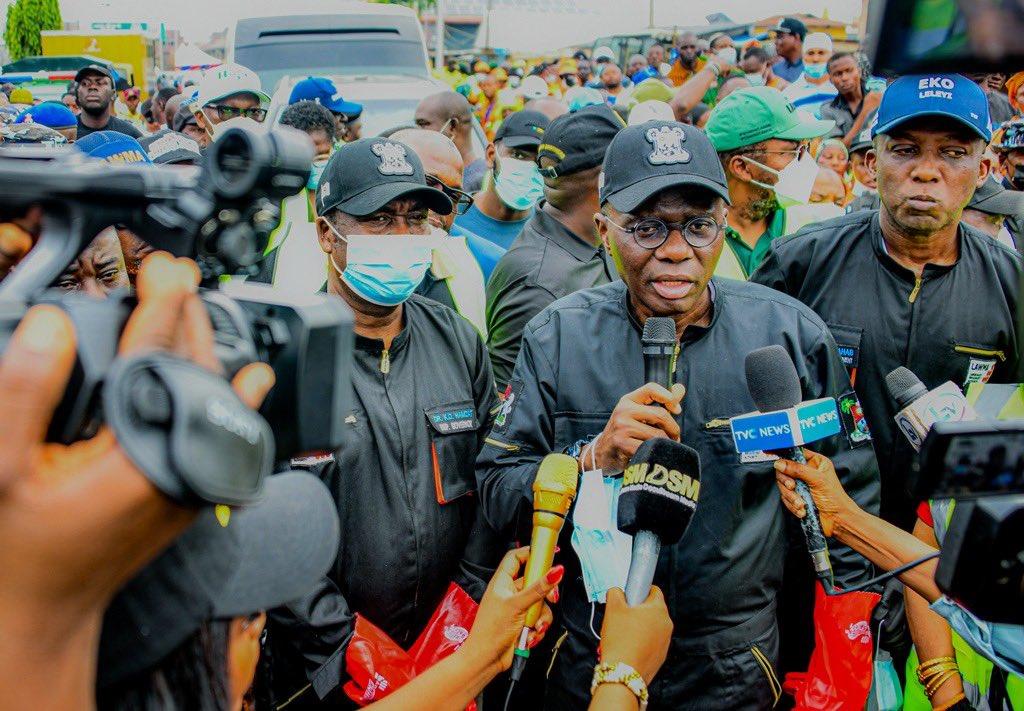
Lagos State Governor Babajide Sanwo-Olu has canceled the November edition of the monthly environmental sanitation exercise scheduled for Saturday, November 28, 2026, to facilitate INEC's nationwide mock voter accreditation and result upload exercise ahead of the 2027 general elections. The updated directive reverses an earlier government announcement confirming that the sanitation exercise would proceed. INEC's assessment will take place between 8:30 a.m. and 2:30 p.m. across 17,676 selected polling units nationwide, including 490 in Lagos State. The exercise will evaluate the functionality of the Bimodal Voter Accreditation System, electronic result-upload procedures and the commission's operational readiness for the forthcoming elections.
Lagos State Governor Babajide Sanwo-Olu has directed the cancellation of the November edition of the state's monthly environmental sanitation exercise scheduled for Saturday, November 28, 2026, to facilitate the nationwide mock voter accreditation and result upload exercise organized by the Independent National Electoral Commission. The decision, announced on Friday by the Lagos State Ministry of the Environment and Water Resources, reverses an earlier government position that the sanitation exercise would proceed as scheduled despite preparations for the electoral technology test. INEC's exercise will take place between 8:30 a.m. and 2:30 p.m. across selected polling units nationwide, providing the electoral commission with an opportunity to evaluate its technological and operational readiness ahead of Nigeria's 2027 general elections.
The cancellation was communicated through an updated statement involving the Permanent Secretary of the Office of Environmental Services, Dr. Gaji Omobolaji Tajudeen, and the ministry's Director of Public Affairs, Kunle Adeshina. The government explained that the governor's directive was intended to allow the electoral commission to conduct its activities without disruption. The announcement provides greater clarity for Lagos residents following conflicting information concerning whether the monthly sanitation exercise would take place alongside the nationwide electoral preparations.
On Thursday, the Lagos State Government had dismissed reports suggesting that the November sanitation exercise would be postponed, maintaining that residents were expected to participate in the statewide cleanup between 6:30 a.m. and 8:30 a.m. Officials had also announced monitoring arrangements involving senior government representatives, including the state's First Lady, Dr. Claudiana Ibijoke Sanwo-Olu. Friday's updated directive supersedes that earlier announcement, meaning the scheduled November sanitation exercise will no longer take place on Saturday.
The decision reflects the importance attached to INEC's preparations for the forthcoming general elections, particularly following concerns surrounding the performance of electoral technology during previous national polls. The commission intends to conduct a comprehensive assessment of its voter accreditation equipment, electronic result management procedures and administrative arrangements under simulated election conditions. Lagos State, which possesses one of Nigeria's largest concentrations of registered voters, will constitute an important component of that assessment.
According to INEC, Saturday's nationwide mock exercise will take place in 17,676 selected polling units, representing two polling units in each of the country's 8,838 registration areas. The exercise will allow the commission to evaluate how its existing electoral infrastructure performs across different geographical and operational environments. Registered voters whose polling units have been selected are encouraged to participate, enabling election officials to assess the accreditation process under conditions resembling those expected during the general elections.
In Lagos State, the exercise will cover 490 polling units distributed across the state's 245 registration areas. The commission's Lagos office announced that the assessment would focus on the functionality of the Bimodal Voter Accreditation System, commonly known as BVAS, and the procedures associated with uploading simulated election results. The selection of polling units across the state will provide opportunities to identify potential operational difficulties before election officials undertake the substantially larger responsibilities associated with nationwide voting in 2027.
The BVAS technology occupies a central position within Nigeria's contemporary electoral framework because of its role in verifying the identities of registered voters. The equipment uses biometric identification, including fingerprint and facial recognition capabilities, to confirm whether individuals presenting themselves at polling units are eligible to participate. Its introduction was intended to strengthen the credibility of voter accreditation and reduce opportunities for unauthorized voting and impersonation.
Saturday's exercise will also examine the process through which simulated polling unit results are uploaded to the INEC Result Viewing Portal, known as IReV. The portal allows members of the public to view images of polling unit result sheets uploaded by electoral officials, providing an additional mechanism for transparency and public scrutiny. Although the portal is an important component of INEC's result management framework, viewing uploaded documents should be distinguished from the formal procedures through which election results are collated and officially declared.
The figures uploaded during Saturday's exercise will be simulated results generated for testing purposes rather than votes cast in an actual election. No political candidate will be elected through the exercise, and participation will not determine the outcome of the forthcoming presidential, legislative or governorship contests. The purpose of the assessment is to identify weaknesses in electoral technology and administrative procedures while providing officials with an opportunity to implement corrective measures before the general elections.
INEC Chairman Professor Joash Amupitan announced plans for the nationwide exercise during a high-level discussion at Chatham House in London on November 12. Addressing concerns about Nigeria's electoral system, Amupitan acknowledged that controversies surrounding the 2023 general elections had substantially damaged public confidence in the commission. He maintained that lessons obtained from subsequent elections had informed efforts to strengthen voter accreditation, improve result management and address weaknesses in the commission's technological infrastructure.
The INEC chairman identified insecurity, logistical difficulties and result management as major priorities confronting the commission ahead of 2027. He also disclosed that additional technological safeguards had been introduced to address inconsistencies associated with election results, including discrepancies between accredited voter numbers and figures appearing on result sheets. According to Amupitan, the commission intends to use Saturday's nationwide assessment to evaluate whether those improvements are functioning as expected.
Among the adjustments announced by the commission is a reduction in the maximum number of registered voters assigned to an individual BVAS device from 1,250 to 850. Polling units exceeding the revised threshold are expected to receive additional equipment during the general elections. The measure is intended to address operational pressure on individual devices and improve the efficiency of voter accreditation, although its effectiveness will depend on the availability of functional equipment and appropriately trained election personnel.
Amupitan also disclosed that INEC was developing climate-controlled storage facilities to improve the conditions under which electoral equipment is maintained. The initiative follows concerns that exposure to excessive heat and unsuitable storage conditions contributed to equipment difficulties during previous elections. Improving storage arrangements forms part of a wider effort to ensure that technological resources remain operational when deployed across different parts of the country.
The nationwide mock exercise consequently represents an opportunity for INEC to demonstrate the practical progress of its preparations rather than relying exclusively on public assurances. Testing equipment before election day can help identify technical weaknesses, administrative inconsistencies and logistical challenges that might otherwise become apparent only when millions of Nigerians are attempting to vote. However, successful performance during a simulated exercise does not automatically guarantee that every polling unit will operate without difficulties during the general elections.
For Lagos residents, the cancellation of the sanitation exercise removes the competing demand created by two major public activities scheduled for the same morning. The state's monthly environmental cleanup program ordinarily encourages households, businesses and community organizations to dedicate time to maintaining their surroundings. INEC's exercise, meanwhile, requires participating voters, electoral personnel and supporting officials to access designated polling units across the state.
Lagos possesses a densely populated urban environment in which coordinating statewide public activities can present considerable logistical challenges. Traffic congestion, commercial activity and the movement of residents across different local government areas can influence the implementation of government programs. Adjusting the sanitation schedule provides the state administration with an opportunity to avoid unnecessary complications while supporting an important stage of the national electoral commission's preparations.
The monthly environmental sanitation exercise was reintroduced by the Sanwo-Olu administration earlier in 2026 following its suspension in November 2016. The governor announced the revival of the initiative in March, with regular statewide cleanup activities commencing on April 25. Under the restored arrangement, the exercise is ordinarily scheduled for the final Saturday of each month between 6:30 a.m. and 8:30 a.m.
The initiative forms part of the state government's wider efforts to address environmental deterioration, improper waste disposal, blocked drainage systems and other public health concerns. Lagos faces considerable environmental pressures associated with rapid population growth, urban development and the increasing demand for waste management services. Encouraging residents to participate in regular neighborhood cleanup activities is intended to complement the responsibilities of government agencies charged with maintaining public infrastructure.
Poor waste management and obstructed drainage channels can contribute to flooding, particularly in communities where heavy rainfall places substantial pressure on existing infrastructure. Accumulated refuse can also create conditions conducive to the spread of disease and environmental pollution. Although Saturday's scheduled statewide exercise has been canceled, the underlying environmental responsibilities of residents, businesses and public institutions remain unchanged.
The governor's directive concerns the November edition of the monthly program and should not be interpreted as a permanent suspension of environmental sanitation activities across Lagos. No separate announcement abolishing the restored monthly initiative has been identified. Residents remain responsible for maintaining hygienic surroundings and complying with applicable waste disposal and environmental regulations regardless of whether a coordinated statewide cleanup exercise is taking place.
Attention will now turn to Saturday's electoral assessment and the extent to which INEC can successfully evaluate its equipment and procedures across Lagos and the rest of the federation. The commission has made information concerning selected polling units available through its official channels, enabling registered voters to determine whether their locations are participating. Members of the public will also be able to monitor the simulated result-upload process through the IReV platform.
The assessment carries particular significance because Nigeria's 2027 general elections are approaching under the timetable announced by the electoral commission. According to INEC, presidential and National Assembly elections are scheduled for January 16, 2027, while governorship and state House of Assembly elections are scheduled for February 6. Saturday's mock accreditation therefore provides an important opportunity to evaluate electoral systems before the commission assumes responsibility for conducting the actual contests.
Public confidence in electoral technology will depend not only on the successful deployment of equipment but also on the transparency with which INEC communicates the findings of its assessment. Identifying technical difficulties during a mock exercise is not necessarily evidence of institutional failure, provided those problems are properly documented and addressed. Publishing meaningful information about equipment performance, accreditation efficiency and result-upload reliability could help citizens understand the commission's progress and the challenges that remain.
The Lagos State Government's decision to prioritize Saturday's electoral preparations demonstrates the need for coordination between state administrations and federal institutions responsible for conducting national elections. While INEC retains responsibility for administering the electoral process independently, cooperation with state governments can assist with logistical arrangements and access to public facilities. Such cooperation must remain consistent with the commission's institutional independence and its obligation to administer elections without partisan interference.
For now, Lagos residents are no longer expected to participate in the scheduled November 28 statewide sanitation exercise, following the governor's updated directive. Registered voters in selected polling units will instead have the opportunity to assist INEC in assessing the technology intended for deployment during the forthcoming elections. The exercise will not determine any electoral outcome, but its findings could provide important information about the commission's readiness and the additional improvements required before Nigerians return to the polls.
As Nigeria enters the final stages of preparations for the 2027 general elections, the successful coordination of public institutions and the reliability of electoral technology will remain important considerations. Saturday's mock exercise presents INEC with an opportunity to demonstrate progress in addressing concerns arising from previous elections, while the Lagos government's cancellation of its sanitation program removes a potential competing administrative activity. The immediate focus will now be on the performance of the accreditation equipment, the reliability of simulated result uploads and the commission's ability to translate lessons from the assessment into practical improvements ahead of the general elections.