SHETTIMA ACCUSES PETER OBI OF CLOUT CHASING OVER FLAMINGOS AIRPORT ROW
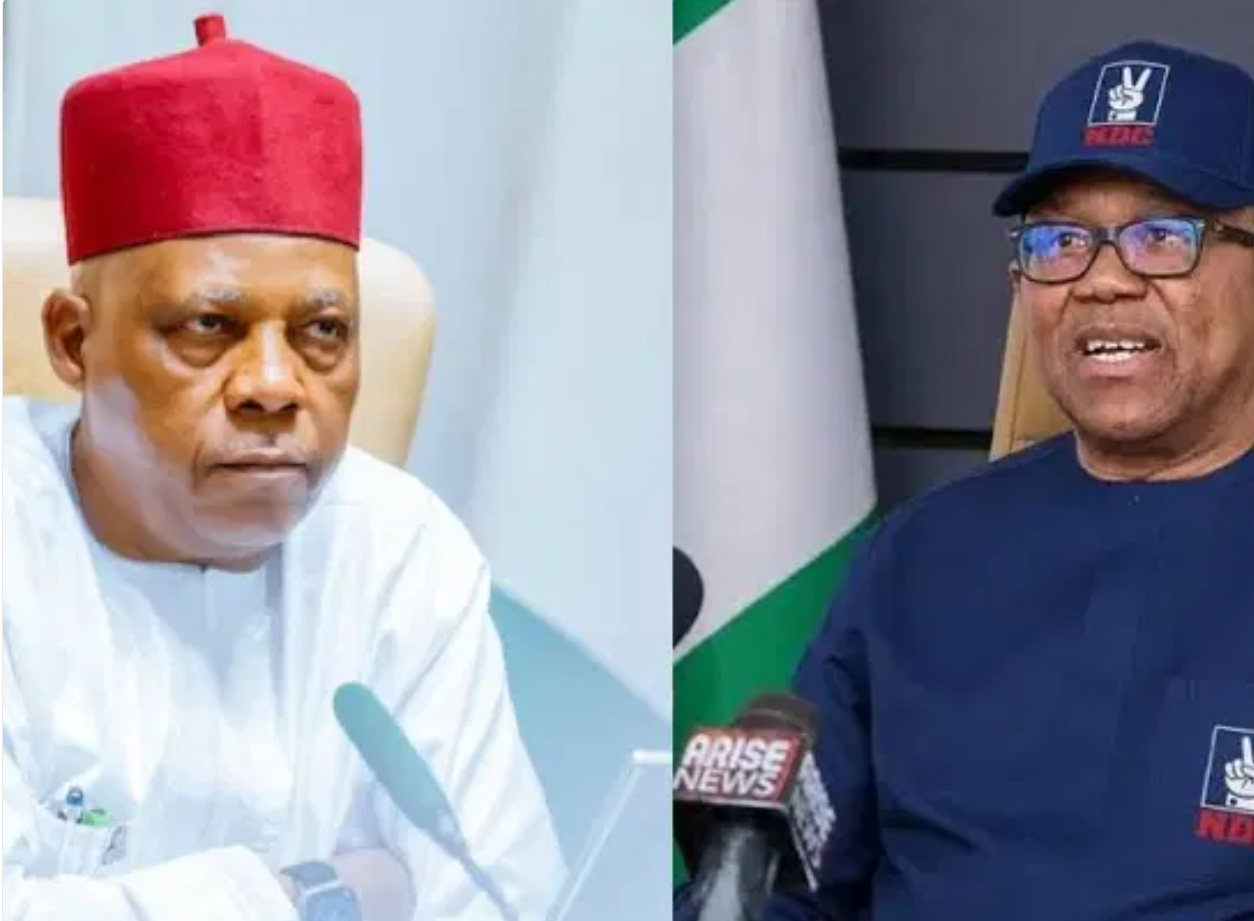
Vice President Kashim Shettima has accused NDC presidential candidate Peter Obi of “clout chasing” after Obi said NFF officials prevented him from greeting Nigeria’s victorious Flamingos at Abuja airport. The National Sports Commission disputes Obi’s account, saying the request was unscheduled and came through people wearing campaign materials while officials were moving the players from the airport. Shettima said Obi had gone “out of protocol” and used the episode to argue that presidential ambition requires grassroots and stakeholder support.
Vice President Kashim Shettima has accused Nigeria Democratic Congress presidential candidate Peter Obi of “clout chasing” over the controversy surrounding his unsuccessful attempt to greet Nigeria’s victorious Under 17 women’s football team, the Flamingos, at the Nnamdi Azikiwe International Airport in Abuja. Shettima made the remarks on Wednesday while speaking at an All Progressives Congress presidential campaign rally in Akure, Ondo State, where he argued that Obi had gone “out of protocol” in trying to meet the players and used the incident to question the former Anambra governor’s political approach ahead of the 2027 general election. The exchange has added a new political dimension to what began as a dispute over access to the young players after their historic return from Morocco.
Obi had said he arrived at the Abuja airport at about 7 in the morning on Monday while preparing to board a flight to Enugu and saw the Flamingos after their return from Morocco, where they defeated Japan 2 to 1 to win Nigeria’s first FIFA Under 17 Women’s World Cup title. According to Obi, he asked his protocol officer to find out whether he could approach the team, congratulate the players and welcome them home. He said he was later informed that officials of the Nigeria Football Federation had refused the request and warned that allowing him to interact with the players could cost them their jobs. Obi described the incident as another example of what he called increasingly toxic politics in Nigeria.
The former Anambra governor said he found the alleged refusal particularly troubling because the Flamingos were representing Nigeria rather than any political party. He argued that national sporting achievements should provide opportunities for unity and should not become entangled in partisan competition. Obi also recalled what he said was a similar experience during a World Cup qualifying match in Uyo in March 2025, where he claimed he was prevented from greeting Super Eagles players after the game even though other government officials were allowed to interact with the team.
The National Sports Commission later challenged significant parts of Obi’s account. NSC Chairman Shehu Dikko said officials accompanying and receiving the Flamingos reported that they did not see Obi standing near the players when the team arrived. According to the commission, two people wearing Obi campaign caps and other campaign materials approached officials and requested that the NDC presidential candidate be allowed to meet and take photographs with the players while the team was being escorted toward waiting buses. The commission said the request had not been arranged in advance and that officials were focused on moving the young players quickly after their journey from Morocco.
Dikko also argued that the welfare of the players had to be considered because many members of the Flamingos squad are minors. The NSC position was that official reception arrangements had already been put in place and that political figures who wished to interact with the team should follow established protocols rather than approach players during airport movement. The commission rejected the suggestion that officials had deliberately targeted Obi because of his opposition status and said the encounter should not be presented as evidence that the government had prohibited him from celebrating the team’s success.
That disagreement set the stage for Shettima’s intervention at the APC rally in Akure. While discussing the 2027 presidential race and the importance of political structures, the vice president referred directly to Obi and argued that seeking national office required more than public visibility. He described Obi as his “big friend” but accused him of believing that political attention could substitute for grassroots organization and stakeholder support. Shettima then pointed to the Flamingos airport controversy as an example of what he characterized as clout chasing.
Shettima said Obi had gone outside established protocol in trying to welcome the players and used the episode to make a broader political argument about presidential ambition. His remarks were not limited to the airport incident. The vice president questioned the level of political support Obi commands among prominent figures from Anambra State and referred to former governors Chris Ngige and Willie Obiano as well as incumbent Governor Chukwuma Soludo, arguing that none of them was backing Obi’s presidential bid. The comments formed part of a wider APC campaign message aimed at portraying political organization and stakeholder support as essential to winning a national election.
The dispute has therefore moved well beyond the narrow question of whether Obi was physically prevented from greeting the Flamingos. It now involves competing interpretations of political conduct, protocol and the extent to which national sports teams should be insulated from campaign activities. Obi’s position is that he encountered the players unexpectedly, asked politely for permission to congratulate them and was denied because officials feared political consequences. The NSC’s position is that the request was unscheduled, was communicated through people visibly associated with Obi’s campaign and came at a time when officials were trying to move the players through an organized arrival process.
The difference between those accounts is significant because each side presents the encounter in a very different light. Under Obi’s version, the incident demonstrates excessive political intolerance and a willingness to prevent an opposition leader from participating in a national celebration. Under the NSC version, officials were simply enforcing an established reception arrangement and avoiding an unplanned political interaction involving a youth team. Neither version has been independently established through publicly available video or a detailed joint account from everyone directly involved in the exchange.
The controversy has also brought the Nigeria Football Federation into the dispute. Obi specifically said NFF officials refused his request, while the NSC said the information it received from officials did not support his description of events. The NFF itself initially did not issue a detailed independent account of the incident, leaving the Sports Commission to respond publicly. That absence contributed to the competing narratives because the central dispute concerns what federation officials allegedly told Obi’s protocol team.
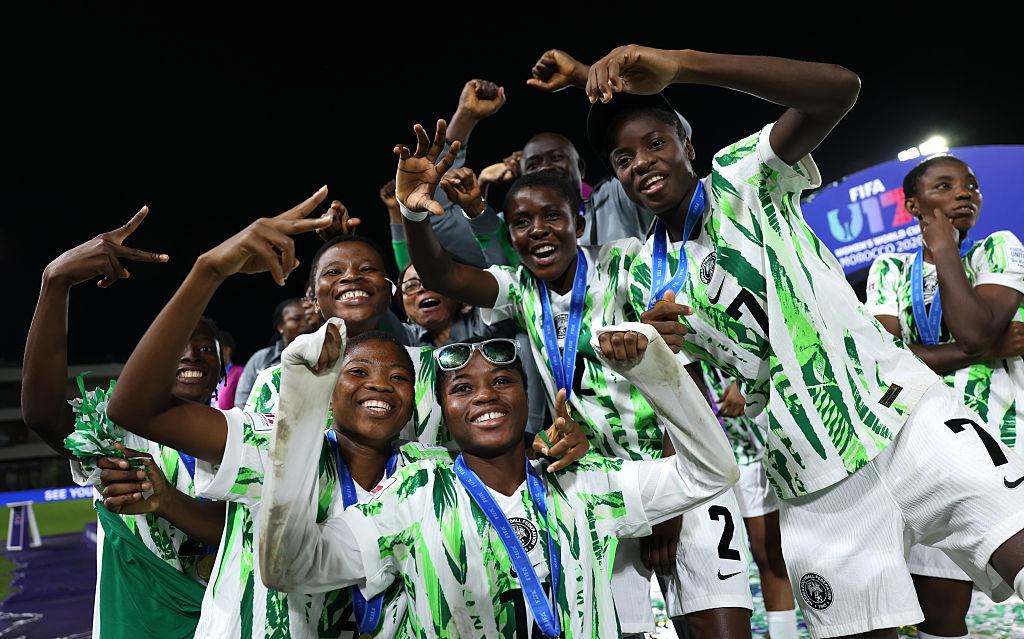
The Flamingos returned to Nigeria after completing the most successful campaign in the team’s history. Their 2 to 1 victory over Japan in the final in Rabat made Nigeria the first African country to win the FIFA Under 17 Women’s World Cup and triggered celebrations across the country. The Senate has since announced a ₦100 million reward for the team, while lawmakers and sports officials have called for the players to be retained and developed for future competitions.
The scale of that achievement helps explain why political figures across party lines have wanted to publicly associate themselves with the team. Sporting victories involving national teams often generate rare moments of shared celebration in Nigeria, particularly when results come at a time of intense political and economic disagreement. That also makes the question of access more sensitive because an appearance with successful athletes can quickly become a powerful political image during an election season.
The NSC has argued that this was one of the reasons officials had to protect the players from being drawn into political activities during their airport arrival. Because the team is made up largely of teenagers, the commission said their movements and public engagements should be carefully managed. From that perspective, the issue was not whether Obi had the right to congratulate the players but whether the airport arrival was the appropriate setting for an unscheduled political interaction.
Obi rejected the idea that his request should be interpreted as a campaign activity. His statement emphasized that he wanted only to congratulate the players and described the attempt to prevent him from doing so as evidence that political divisions were becoming too deeply embedded in national life. He argued that Nigerians should be able to celebrate collective achievements regardless of their political affiliation and said the country needed more unity and mutual respect.
That argument is consistent with Obi’s broader campaign message, which has frequently criticized what he describes as excessive partisanship and a political culture in which disagreement is treated as hostility. His supporters have interpreted the airport incident as confirmation of that criticism, while his political opponents have accused him of exaggerating an ordinary protocol decision for political benefit.
Shettima’s use of the phrase “clout chasing” directly challenges Obi’s interpretation. Rather than treating the incident as evidence of political exclusion, the vice president portrayed it as an attempt to generate attention and suggested that presidential candidates should focus on building political support rather than creating publicity around encounters with national teams. His comments brought the dispute firmly into the 2027 campaign and made it part of the wider contest between the APC and opposition parties.
The political context matters because both Shettima and Obi are campaigning in an increasingly competitive environment. President Bola Tinubu is seeking reelection under the APC, while Obi is running on the platform of the Nigeria Democratic Congress. Public statements by senior figures are therefore being interpreted not only as reactions to individual events but as part of the wider effort to define opponents and influence how voters understand their records, methods and political support.
The dispute has also prompted questions about whether opposition politicians should have access to national teams during official events. There is no general rule preventing an opposition candidate from greeting athletes, but organized receptions normally involve security arrangements, accreditation and predetermined schedules. Where teams contain minors, officials may impose additional controls over access. The disagreement in Abuja appears to center not on whether Obi could ever meet the players but on whether the encounter should have happened spontaneously during their arrival.
That distinction has not prevented the issue from becoming politically charged. In Nigeria, sports and politics frequently overlap because successful national teams are received by presidents, governors, ministers and lawmakers. Players are often invited to government houses, rewarded with money or property and used as symbols of national achievement. Opposition politicians also routinely congratulate teams and attend sporting events, creating situations where protocol decisions can easily be interpreted through a partisan lens.
The Flamingos themselves have largely remained outside the dispute. Their historic World Cup triumph has been the central reason for the public attention, but the argument over Obi’s attempted greeting has been conducted mainly among political figures, sports administrators and their supporters. There has been no indication that the players were responsible for the decision about access or that they were involved in the disagreement between officials and Obi’s team.
That is an important point because both sides have said the young players should remain at the center of the celebration. The NSC has accused Obi’s camp of politicizing their arrival, while Obi has argued that officials themselves introduced politics by preventing a simple congratulatory interaction. Each side therefore says it is defending the principle that the team’s achievement should rise above partisan divisions, even as the dispute itself has become part of the election campaign.
Shettima’s comments are likely to keep the controversy alive because they move the debate from an administrative disagreement into direct political confrontation. By describing Obi as a clout chaser, the vice president has attached a broader criticism to his opponent’s conduct and linked the airport incident to questions about grassroots political strength. Obi and his supporters may in turn continue to present the episode as evidence of intolerance toward opposition figures.
The National Sports Commission’s account also leaves some questions unanswered. It has said the request was unscheduled and came through people wearing campaign materials, but that does not by itself establish whether officials told Obi’s representatives that they would lose their jobs if he was allowed to approach. That specific allegation remains central to Obi’s account and is one of the most politically sensitive elements of the dispute.
A clearer account from officials directly involved in the airport exchange could help resolve that issue. Details such as who received the request, what exact response was given and whether the refusal was based on security, scheduling or political concerns would allow the public to assess the competing versions more accurately. Until then, the controversy will continue to depend largely on conflicting statements from the two sides.
The incident also illustrates how quickly ordinary encounters can become campaign issues in an election season. What began as an attempted greeting at an airport has expanded into a national argument about political tolerance, campaign publicity and access to successful young athletes. Senior government officials and opposition figures are now using the same episode to make much broader claims about one another.
For the Flamingos, the more significant story remains their historic victory in Morocco and the question of how Nigeria will build on that success. The players have already received praise from the Senate, sports authorities and political leaders across the country, and attention is turning toward their development, education and transition into higher levels of women’s football.
For Obi and Shettima, however, the airport controversy has become another line of attack in the approaching presidential election. Obi says he was prevented from joining a national celebration because of political intolerance. The Sports Commission says established protocol and the welfare of the players explain what happened. Shettima says the entire episode shows Obi was chasing political attention.
Those competing accounts now leave Nigerians to decide how much political significance should be attached to an incident that lasted only a short time at Abuja airport but has produced days of national argument. What is clear is that the Flamingos’ historic success has unexpectedly become part of the wider 2027 political contest, even as the young players themselves remain focused on celebrating one of the greatest achievements in Nigerian women’s football history.