SHETTIMA ARRIVES IN OSUN TO REPRESENT TINUBU AT ADELEKE’S SECOND-TERM INAUGURATION AS CROSS-PARTY POLITICAL ALLIANCE DRAWS ATTENTION
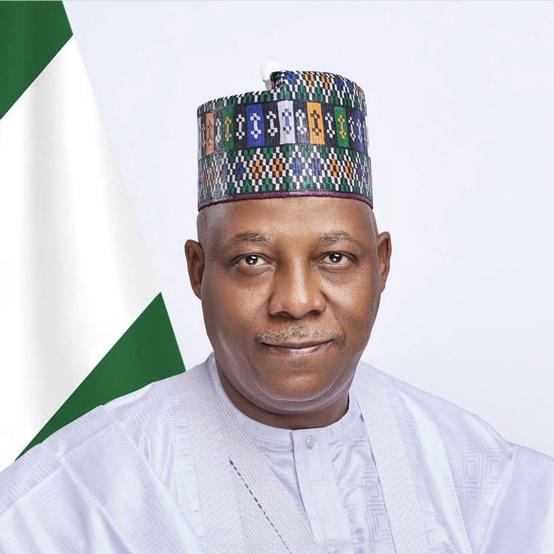
Vice President Kashim Shettima is representing President Bola Ahmed Tinubu at Governor Ademola Adeleke's second-term inauguration in Osogbo, Osun State, on Friday, November 27, 2026. Shettima arrived in southwestern Nigeria on Thursday following infrastructure commissioning engagements in Anambra State and was subsequently reported to have been received by Adeleke at Government House. The ceremony marks the commencement of Adeleke's 2026–2030 administration following his re-election under the Accord Party with 511,067 votes against APC candidate Bola Oyebamiji's 444,815 votes. The inauguration carries additional political significance following Adeleke's appointment as Osun State coordinator of Tinubu's 2027 presidential re-election campaign, despite belonging to a different political party. The state government has declared a public holiday, while security agencies have intensified preparations for the ceremony.
Vice President Kashim Shettima is representing President Bola Ahmed Tinubu at the second-term inauguration of Osun State Governor Ademola Adeleke on Friday, November 27, 2026, marking the commencement of another four-year administration in the southwestern state. The vice president's participation was confirmed by his spokesperson, Stanley Nkwocha, following Shettima's arrival in southwestern Nigeria on Thursday night after commissioning infrastructure projects in Anambra State. The inauguration, scheduled to take place at the Osogbo Township Stadium, has attracted considerable political attention because of Adeleke's decision to support Tinubu's 2027 re-election campaign despite belonging to the Accord Party. The ceremony is expected to bring together senior federal officials, state governors, lawmakers, traditional rulers and other dignitaries.
Shettima's journey to Osun followed a series of official engagements in southeastern Nigeria, where he participated in infrastructure commissioning activities on behalf of the Federal Government. His office confirmed that he traveled through Ibadan, Oyo State, before proceeding to Osogbo for the inauguration. Local reports subsequently indicated that Adeleke and senior members of his administration received the vice president at Government House on Thursday evening, ahead of Friday's formal proceedings.
Among the officials reported to have welcomed Shettima were Osun Deputy Governor Prince Kola Adewusi and Secretary to the State Government Teslim Igbalaye, who also chairs the second-term inauguration planning committee. The reception marked the beginning of the vice president's engagements connected to the ceremony. His presence provides official federal representation at an event that will formally renew the constitutional mandates of Adeleke and his deputy.
The Osun State Government had previously extended invitations to Tinubu, Shettima, members of the Federal Executive Council, governors from the southwestern region, diplomats and prominent political figures. Speaker of the House of Representatives Tajudeen Abbas and several federal lawmakers were also among those invited. Although earlier announcements suggested that the president might attend personally, Friday's confirmation from the vice president's office established that Shettima would represent him at the ceremony.
Adeleke's inauguration follows his victory in the August 15, 2026, Osun governorship election, in which he contested under the Accord Party. According to published election results, the incumbent governor secured 511,067 votes, defeating his principal challenger, Bola Oyebamiji of the All Progressives Congress, who received 444,815 votes. Fifteen political parties participated in the election, which renewed Adeleke's mandate to govern the state until 2030.
The governor's return to office represents a significant development in Osun's political history because he secured a second term under a different political platform from the one through which he originally became governor. Adeleke first assumed office on November 27, 2022, following his victory under the Peoples Democratic Party. His subsequent political realignment and successful re-election under Accord have altered established party relationships within the state and introduced new considerations into the preparations for Nigeria's 2027 general elections.
One of the most notable aspects of Friday's inauguration is the evolving political relationship between Adeleke and President Tinubu. Despite defeating the APC's candidate in the August governorship election, Adeleke has publicly declared support for the president's second-term ambition. In October, he was appointed as the Osun State coordinator of the APC Presidential Campaign Council, an arrangement that placed a governor belonging to another political party in charge of coordinating the ruling party's presidential campaign within the state.
The appointment attracted attention because it demonstrated the extent to which political cooperation ahead of the 2027 elections has extended beyond conventional party boundaries. While Adeleke remains associated with the Accord Party, his presidential campaign responsibilities involve cooperation with prominent APC politicians and individuals from other political organizations. The arrangement illustrates the distinction between supporting a presidential candidate and formally belonging to the political party sponsoring that candidate.
Following his re-election, Adeleke explained that his support for Tinubu was influenced partly by their shared southwestern regional background and his interest in seeing federal infrastructure projects within the region completed. His position established a basis for cooperation with the presidential administration despite the electoral rivalry between Accord and the APC at the state level. However, the governor's political alignment does not establish that every member of his party or every resident of Osun shares his presidential preference.
The inauguration has consequently acquired political significance beyond the formal commencement of Adeleke's second term. Shettima's attendance will bring together representatives of the APC-led Federal Government and an Accord-led state administration whose governor is also coordinating Tinubu's re-election efforts. Nevertheless, the vice president's participation is an official government engagement and should not be interpreted as confirmation of a merger between the two political parties or a change in Adeleke's party membership.
The cross-party arrangement also reflects the complexity of Nigeria's federal political system, in which state governments frequently maintain relationships with federal authorities despite differences in party affiliation. Governors require cooperation with national institutions in areas including infrastructure development, security, economic planning and the administration of public resources. The existence of those institutional responsibilities means that political competition does not necessarily prevent governments from pursuing shared administrative objectives.
For Osun State, the relationship with the Federal Government carries particular importance because of the responsibilities shared between federal and state authorities. Infrastructure projects, public security initiatives, social development programs and fiscal arrangements often require cooperation across different levels of government. Adeleke's administration will continue to navigate those relationships during its second term, while remaining responsible for addressing the development needs of Osun residents.
Friday's ceremony forms the centerpiece of an extensive program organized by the state government to commemorate Adeleke's re-election and the beginning of his second administration. Activities announced by the inauguration planning committee included religious services, youth development engagements, community welfare initiatives and public discussions concerning governance. The program was designed to involve different sections of the population rather than limiting the inauguration to the formal swearing-in ceremony.
Former Kaduna Central Senator Shehu Sani was selected to deliver an inauguration lecture addressing challenges associated with Nigerian federalism, institutional disagreements and local government financial arrangements. The subject reflects continuing national discussions concerning the distribution of administrative responsibilities between federal, state and local authorities. Those questions remain particularly relevant to governors responsible for delivering public services within constitutional and financial frameworks involving multiple levels of government.
The inauguration program also included the Osun Youth Summit on Innovation and Enterprise, which was scheduled to bring attention to entrepreneurship, skills development and opportunities for young residents. Such engagements provide a platform for discussing the economic challenges confronting younger Nigerians, particularly those seeking employment or attempting to establish businesses. The practical significance of those discussions will depend on whether the incoming administration develops and implements programs capable of producing measurable results.
To facilitate participation in Friday's ceremony, the Osun State Government declared November 27 a public holiday, allowing public servants and other residents to observe the occasion. The decision reflects the administration's intention to provide opportunities for members of the public to participate in activities marking the beginning of Adeleke's second term. Commercial and administrative arrangements across Osogbo are also expected to be affected by the increased number of visitors attending the ceremony.
Security preparations have occupied a central position in the government's arrangements because of the anticipated presence of senior political leaders and large numbers of supporters. The Osun State Command of the Nigeria Security and Civil Defence Corps announced the deployment of 1,300 personnel across the state to protect lives and property during the inauguration period. The operation forms part of broader efforts by relevant security agencies to ensure that the ceremony proceeds peacefully.
The security arrangements have received additional attention following Adeleke's directive barring leaders of the National Union of Road Transport Workers from attending the inauguration. The governor instructed the Osun State Commissioner of Police, Ibrahim Zungura, to prevent potential disturbances arising from concerns involving the transport union. The administration also reaffirmed its position concerning restrictions on NURTW activities within motor parks and garages across the state.
Government officials cited security information suggesting that some individuals associated with the union intended to gather in Osogbo ahead of the ceremony. However, those allegations have not been independently substantiated, and the restriction should not be interpreted as evidence that every member of the organization poses a threat. The immediate responsibility of security agencies remains the prevention of violence while ensuring that enforcement measures comply with applicable legal requirements.
Beyond the inauguration, Adeleke's administration will face the task of translating its renewed electoral mandate into tangible improvements in governance and public services. Osun State's development priorities include infrastructure, education, healthcare, employment opportunities, agricultural development and the administration of public finances. The governor's second term will provide an opportunity to assess the continuity of policies introduced during his first administration and examine whether new initiatives address outstanding challenges.
Economic development will remain an important consideration for the state, particularly given the pressures experienced by households and businesses across Nigeria. Inflation, transportation expenses and the cost of essential commodities have affected purchasing power and commercial activity. State governments possess important responsibilities in addressing some of those pressures through infrastructure investment, business support programs and the effective delivery of public services, although many of the wider economic factors fall under federal policy.
Education and youth employment are also expected to remain significant areas of public interest during Adeleke's new administration. Osun's communities require accessible educational institutions, appropriately trained personnel and infrastructure capable of supporting learning. Creating opportunities for young people to acquire professional and entrepreneurial skills could contribute to broader economic development, particularly where those initiatives are connected to employment opportunities and sustainable business growth.
The administration's approach to public healthcare will similarly influence the experiences of residents over the next four years. State governments play important roles in managing healthcare facilities, supporting community health services and ensuring that essential medical assistance is available to vulnerable populations. Improvements in those areas require sustained financial commitments, appropriate staffing arrangements and effective management rather than announcements alone.
Infrastructure development will remain another area in which cooperation between the state and Federal Government could produce practical consequences. Road construction, transportation systems, energy infrastructure and other public facilities frequently involve responsibilities distributed across different levels of government. The political relationship between Adeleke and Tinubu may provide opportunities for consultation, but specific projects and financial commitments must be assessed through official agreements and actual implementation.
The approaching presidential election adds another dimension to Adeleke's second-term administration. His responsibilities as Tinubu's campaign coordinator will require him to distinguish political activities from the official duties associated with governing Osun. That separation remains important because state institutions are responsible for serving all residents regardless of their political affiliations or presidential preferences. Maintaining transparency in the use of public resources will also be relevant as electoral competition intensifies.
The inauguration itself does not determine how Osun residents will vote in the forthcoming presidential election. Although political leaders have expressed confidence in their respective campaign organizations, the outcome remains dependent on voters exercising their democratic rights through the electoral process. Adeleke's successful governorship campaign and his subsequent support for Tinubu represent distinct political developments that should not be treated as confirmation of a predetermined presidential result.
For Shettima, Friday's engagement forms part of his responsibilities as vice president and representative of the Federal Government at major official ceremonies. His attendance follows other engagements involving infrastructure development and cooperation with state governments. No confirmed text of an inauguration address by the vice president was available ahead of the ceremony, and any additional federal commitments announced during the proceedings will require separate reporting.
As Adeleke prepares to begin his second term, attention will increasingly turn from the celebrations surrounding his re-election to the administrative responsibilities associated with another four years in office. The inauguration provides an opportunity for the governor to reaffirm his commitments to Osun residents, while Shettima's representation of Tinubu highlights the continuing relationship between federal and state authorities. The political cooperation established between the two administrations will be assessed not only through public appearances but also through the manner in which it translates into governance and development.
Friday's ceremony marks an important transition for Osun State, renewing Adeleke's mandate following an election in which residents returned him to office under a new political platform. The presence of senior federal representatives reflects the national significance of the occasion, while the governor's involvement in Tinubu's presidential campaign illustrates the changing relationships within Nigeria's political environment. Beyond those political considerations, the central responsibility of the incoming administration remains the delivery of public services, the responsible management of state resources and the protection of the interests of all Osun residents throughout the 2026–2030 term.