

SMARTPHONE COSTS REMAIN MAJOR BARRIER TO MOBILE INTERNET GROWTH IN SUB SAHARAN AFRICA
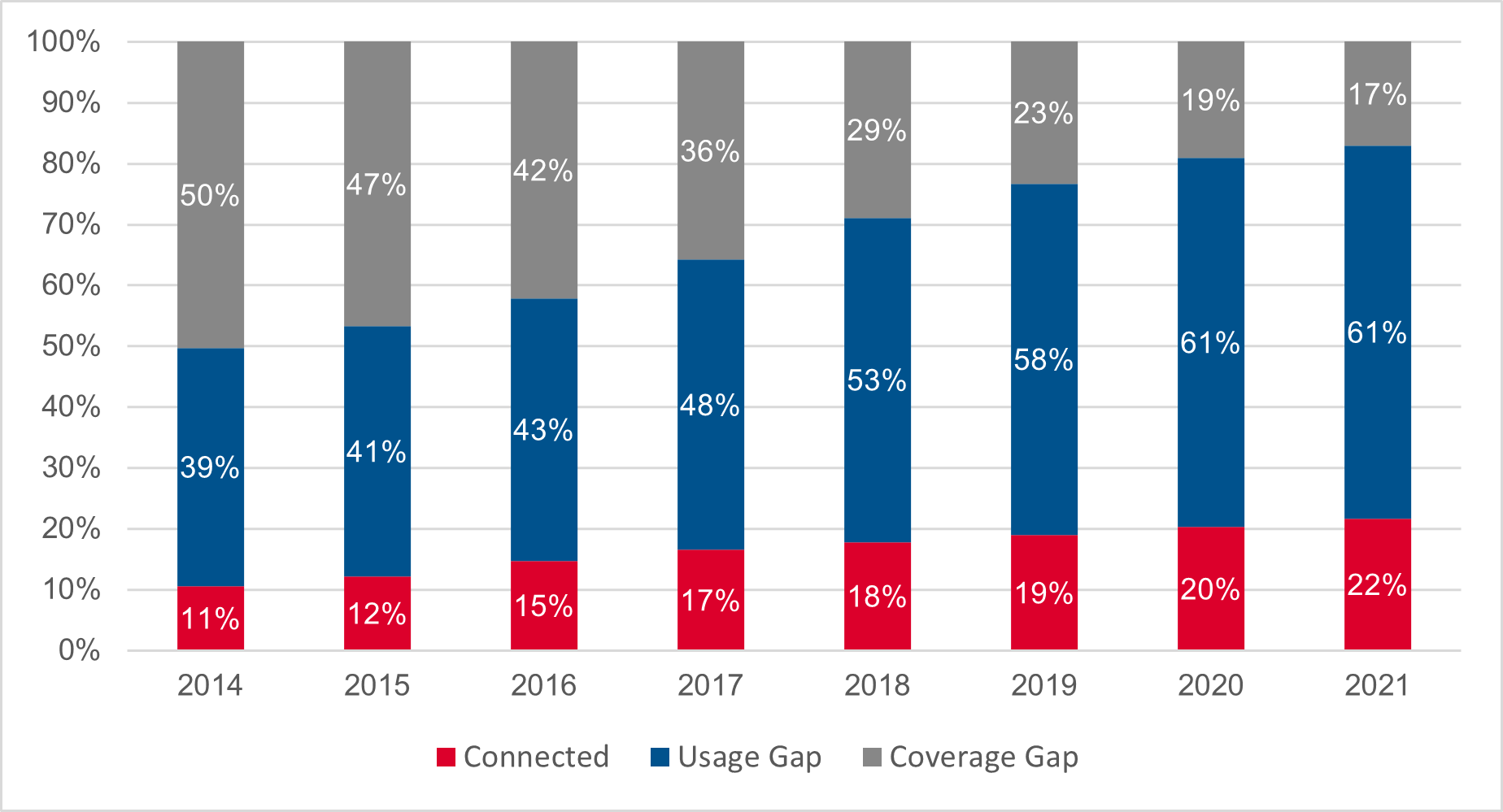
The cost of smartphones remains a major obstacle to mobile internet adoption in Sub Saharan Africa, with an entry level internet capable handset costing the poorest 20 percent of consumers about 76 percent of their average monthly income. GSMA estimates that closing the global mobile internet usage gap could generate $3.5 trillion in additional economic output by 2030.
The high cost of internet capable smartphones remains one of the biggest obstacles to expanding mobile internet access in Sub Saharan Africa, according to new findings from the GSMA.
The State of Mobile Internet Connectivity 2026 report shows that an entry level internet enabled handset costs the poorest 20 percent of people in Sub Saharan Africa the equivalent of about 76 percent of their average monthly income.
The affordability challenge comes as billions of people worldwide remain unable to take advantage of mobile internet despite already living within areas covered by mobile broadband networks.
GSMA estimates that closing the global mobile internet usage gap could generate about $3.5 trillion in additional economic output between 2023 and 2030.
More than 90 percent of those potential economic benefits could accrue to low and middle income countries.
BILLIONS REMAIN OFFLINE DESPITE NETWORK COVERAGE
By the end of 2025, approximately 4.8 billion people were using mobile internet on their own devices, representing about 59 percent of the global population.
However, around 3.4 billion people remained without mobile internet access.
Of those, approximately 3.1 billion already lived within areas covered by mobile broadband networks but were not using mobile internet.
This is known as the usage gap.
The figures suggest that simply expanding network infrastructure will not be enough to achieve universal digital inclusion.
For many consumers, particularly in developing economies, the challenge is being able to afford the devices required to access those networks.
SMARTPHONES REMAIN EXPENSIVE FOR AFRICA'S POOREST
The affordability problem is particularly severe in Sub Saharan Africa.
According to GSMA, an entry level internet capable handset represented about 76 percent of average monthly income for the poorest 20 percent of consumers in the region at the end of 2025.
Across low and middle income countries more broadly, the same type of device represented approximately 44 percent of average monthly income for the poorest fifth of the population.
GSMA identifies handset affordability as the single biggest barrier to mobile internet adoption across the low and middle income countries it surveyed.
A lack of digital skills is another major obstacle.
RISING COMPONENT COSTS COULD WORSEN PROBLEM
The challenge could become more difficult as the cost of producing affordable smartphones increases.
GSMA says rising memory prices are putting additional pressure on manufacturers producing lower cost internet capable devices.
Citing Counterpoint Research data, the organisation said memory prices more than doubled between the third quarter of 2025 and the first quarter of 2026.
Prices then increased by a further 80 to 90 percent during the second quarter of 2026.
The increases threaten the availability of smartphones priced for consumers in lower income markets, including large parts of Africa.
$3.5 TRILLION ECONOMIC OPPORTUNITY
Beyond providing access to social media and communications, mobile internet increasingly serves as an important gateway to financial services, education, healthcare, ecommerce, employment and government services.
GSMA estimates that eliminating the mobile internet usage gap could generate approximately $3.5 trillion in additional global GDP between 2023 and 2030.
More than 90 percent of the potential economic benefit is expected to accrue to low and middle income countries because they account for most of the world's population that remains unconnected.
The findings underline the economic consequences of digital exclusion.
People who cannot afford internet capable devices may remain unable to participate fully in increasingly digital economies even when network coverage is already available where they live.
AFRICA HAS NEARLY ONE BILLION PEOPLE WITHIN COVERAGE BUT OFFLINE
The affordability challenge is particularly significant for Africa's digital transformation.
Separate GSMA figures show that almost one billion people across Africa live within mobile internet coverage but are not connected.
This represents about 63 percent of the continent's population.
Device costs, mobile data affordability, limited digital skills and other social barriers continue to prevent wider adoption.
Mobile technologies and services contributed an estimated $240 billion to Africa's economy in 2025, equivalent to about 7.8 percent of the continent's GDP.
GSMA forecasts that the contribution could reach approximately $290 billion by 2030 as 4G, 5G, artificial intelligence and digital services expand.
AFFORDABLE DEVICES COULD UNLOCK DIGITAL ECONOMY
Mobile operators and technology companies are increasingly experimenting with financing programmes and cheaper devices to address the affordability problem.
Some initiatives allow customers to acquire smartphones through instalment payments rather than paying the entire purchase price upfront.
GSMA has also called for cooperation between governments, mobile operators, device manufacturers and financial institutions to reduce the cost of accessing smartphones.
For Sub Saharan Africa, the report suggests that network coverage alone is no longer the only major challenge.
Millions of people already live within reach of mobile broadband.
The increasingly important question is whether they can afford the devices required to use it.
Closing that affordability gap could determine how quickly Africa expands participation in its digital economy and how much of the wider economic opportunity created by mobile connectivity reaches lower income households.