SPAIN SEIZES 2.6 TONNES OF COCAINE SHIPPED FROM TEMA PORT AS GHANA-LINKED INVESTIGATION WIDENS
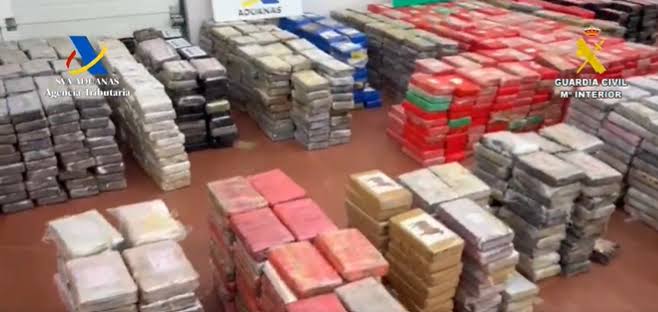
Spanish authorities have seized 2.6 tonnes of cocaine concealed beneath false bottoms in wooden coconut crates carried in two containers loaded at Tema Port on August 2 and delivered to Valencia on August 22. The Spanish Tax Agency and Guardia Civil tracked the shipment to a warehouse in Almería, where two men were arrested, while NACOC has since detained at least one Tema-based freight forwarder linked to the customs documentation and is pursuing further suspects. Investigators have not yet publicly established where the cocaine was inserted into the cargo or whether any Ghanaian port official was involved.
Spanish law enforcement authorities have seized approximately 2.6 tonnes of cocaine concealed in a commercial shipment that originated from Tema Port in Ghana, triggering arrests in Spain and a widening investigation into the people and companies involved in moving the consignment through the international shipping system. The drugs were hidden beneath false bottoms constructed inside wooden crates carrying coconuts and were discovered after Spanish customs officials identified two containers as high-risk during routine international cargo screening at the Port of Valencia. The scale of the seizure and the fact that the containers were loaded in Tema have intensified scrutiny of Ghana’s port security, export controls and the extent to which transnational drug networks may be exploiting legitimate trade routes linking West Africa to Europe.
According to an official statement from Spain’s Tax Agency and Guardia Civil, the two containers were loaded at Tema Port on August 2, 2026, and arrived at the Port of Valencia on August 22 aboard a container vessel. The shipment was declared as coconuts, but investigators became suspicious after an Entry Summary risk-analysis unit identified the containers for inspection. During the search, officers discovered false compartments built into the wooden crates, with layers of packages hidden beneath the declared produce.
The concealed material was tested and confirmed to be cocaine hydrochloride. Spanish authorities said approximately 2,600 kilograms of the drug were recovered from the shipment, making the operation one of the most significant cocaine seizures linked to Ghanaian export cargo in recent months. The size of the consignment indicates that the operation was not the work of an isolated courier but part of a highly organised trafficking system capable of arranging large-scale maritime transport, commercial documentation, cargo concealment and onward distribution inside Europe.
Spanish investigators did not immediately terminate the operation after locating the drugs. Instead, they removed the cocaine, completed the necessary customs procedures and placed the containers under surveillance in an effort to identify the people expecting to receive the shipment. The decision allowed authorities to follow the commercial movement of the cargo beyond Valencia and gather evidence about the distribution network connected to the consignment.
The containers were eventually transferred into two refrigerated trucks that left the Port of Valencia and travelled to a warehouse in the La Juaida industrial area in Viator, Almería. Spanish officers maintained surveillance as the cargo was unloaded and moved in when the individuals linked to the delivery appeared to take possession of the shipment. Two men were arrested during the operation, with Spanish authorities identifying one as the suspected importer of the goods and the other as the person responsible for overseeing the unloading process.
The operation involved officers from Spain’s Customs Surveillance Service and the Guardia Civil, including organised crime and fiscal investigation units operating in Valencia and Almería. The involvement of multiple specialised agencies reflects the seriousness of the case and the increasingly sophisticated methods used by international cocaine trafficking organisations to move narcotics through commercial seaports.
What makes the case particularly important for Ghana is the confirmed origin of the two containers. Spanish authorities explicitly stated that the containers were loaded at Tema Port before sailing to Valencia, placing Ghana directly within the documented shipping route. However, the information released by Spanish investigators does not establish where the cocaine was physically inserted into the crates or whether the drugs were placed into the consignment before the cargo entered the port, inside the port area or at another stage in the logistics chain.
That distinction remains critical. A container leaving Tema with narcotics concealed inside it raises serious questions about how the shipment passed through export processing and cargo-control systems, but it does not by itself prove that port officials or Ghanaian authorities knowingly allowed the drugs to move. Determining where the cocaine entered the shipment and who controlled the process will therefore be one of the central tasks of the continuing investigation.
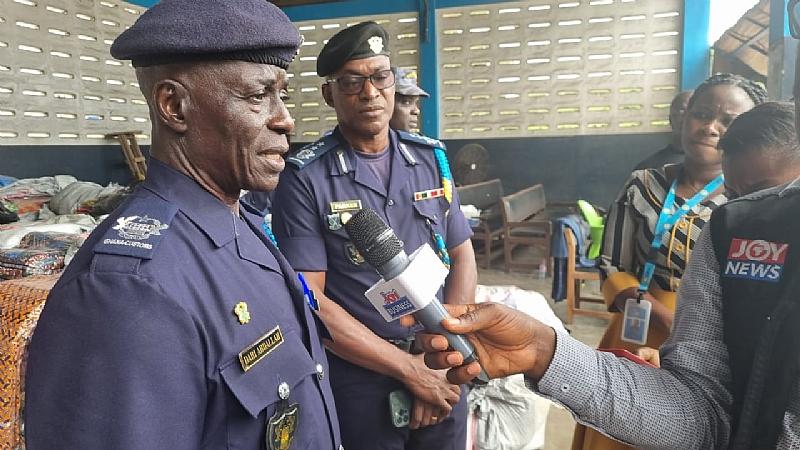
Ghana’s Narcotics Control Commission has already begun pursuing individuals believed to have been connected to the export paperwork. NACOC has arrested a 43-year-old freight forwarder operating from Community 1 in Tema who is assisting investigators with enquiries into the shipment. According to reports citing sources within the commission, preliminary investigations linked the suspect to customs documents prepared for the two containers.
Investigators are reportedly examining how the shipment was presented to the freight forwarding company, who provided the information used to process the export documents and which companies or individuals were listed as exporters, agents or consignees. The freight forwarder’s arrest does not establish criminal guilt, and no court has yet convicted him of any offence in connection with the shipment. His detention should therefore be understood as part of an ongoing investigation rather than proof that he knowingly participated in drug trafficking.
Separate reports have suggested that another suspect has also been arrested in Ghana, while authorities continue searching for additional individuals believed to have played roles in the operation. Public information about the number of Ghana-based arrests has varied, however, making it important to distinguish confirmed detentions from preliminary reports. What is clear is that NACOC has opened a local investigation and is attempting to trace the chain of documentation and logistics that allowed the containers to leave Tema.
The Ghana investigation could ultimately become as important as the arrests in Spain because transnational drug trafficking networks rely on people operating at multiple points in the supply chain. Large maritime shipments require access to export companies, freight forwarders, customs documentation, container handling systems, shipping lines and destination networks. Investigators will therefore be examining whether legitimate commercial actors were deceived, compromised or deliberately involved.
The use of coconuts as the declared cargo illustrates a common trafficking strategy in which drugs are hidden within ordinary agricultural exports that move regularly through international ports. Rather than placing the cocaine directly inside the produce, the traffickers constructed false bottoms beneath the wooden crates. This method allowed the declared cargo to remain visible during superficial inspection while the narcotics remained concealed underneath.
Such concealment systems are designed to defeat routine visual checks and force authorities to rely on intelligence, risk profiling, scanning technology and targeted inspections. In the Valencia operation, Spanish customs officials selected the containers because they were considered to present a high trafficking risk, demonstrating the importance of data-driven profiling in modern port security.
The case has renewed public debate in Ghana about whether similar risk-based systems are operating effectively at Tema Port. Opposition politicians, civil society figures and security analysts have questioned how containers carrying such a large quantity of cocaine could leave the country and reach Europe without the drugs being detected locally.
Critics have argued that the shipment exposes vulnerabilities in cargo-screening systems, particularly where containers are exported rather than imported. Much public attention in Ghana traditionally focuses on detecting contraband entering the country, but this case demonstrates that export routes can also be exploited by criminal organisations seeking to use Ghana as a transit or staging point for drugs destined for Europe.
Port security involves several layers of responsibility. Ghana Ports and Harbours Authority manages port infrastructure, Customs handles cargo clearance and border controls, NACOC focuses on narcotics enforcement, while freight forwarders, shipping agents and private terminal operators are involved in different stages of cargo movement. Identifying how the cocaine passed through the system will therefore require cooperation across multiple institutions rather than focusing on a single agency.
One of the central questions will be whether the shipment was scanned before departure and, if so, whether any anomalies were visible. Modern container scanning systems can detect density differences and hidden compartments, but interpretation depends on the quality of the equipment, operator training and whether suspicious images are escalated for physical inspection.
Investigators will also examine export declarations and shipping documents to determine whether the consignor, consignee and intermediary companies were legitimate businesses. Traffickers frequently use shell companies, stolen identities or genuine firms whose directors may not know that their documentation is being used for narcotics shipments.
The possibility that legitimate export businesses could be infiltrated by criminal networks is a major concern because Ghana is trying to expand agricultural exports and strengthen its role in global trade. Repeated drug seizures associated with Ghanaian cargo can damage the reputation of exporters and increase inspection costs for legitimate businesses.
European customs authorities may respond to repeated cases by subjecting Ghana-linked containers to more intensive scrutiny. That can increase delays, inspection fees and logistical costs for innocent exporters, particularly in sectors dealing with perishable goods. The wider economic consequences of narcotics trafficking can therefore extend far beyond the individuals directly involved.
The 2.6-tonne Valencia seizure is particularly concerning because it follows several other significant narcotics interceptions involving cargo linked to Ghana. Authorities in Europe and other regions have discovered large drug consignments in shipments that either originated from Ghana or passed through Ghanaian logistics networks, creating increasing concern that international trafficking groups are testing or exploiting West African shipping routes.
In September 2026, French customs authorities at the Port of Dunkirk intercepted nearly 3.9 tonnes of cocaine concealed inside a container associated with cargo from Ghana. That case generated considerable debate because of questions surrounding how the shipment was processed before leaving Ghana and whether local authorities had detected irregularities.
Other recent seizures have included cocaine intercepted in Belgium and the Netherlands in shipments linked to Ghanaian ports, as well as methamphetamine detected in cargo sent to Australia. Individual cases can involve different criminal networks and should not automatically be treated as part of a single organisation, but the recurrence has increased pressure on Ghanaian authorities to demonstrate stronger controls.
Belgian customs statistics have also drawn attention to Ghana’s position among countries associated with cocaine seizures at the Port of Antwerp. Reports based on 2025 data placed Ghana among the leading countries of origin connected to intercepted cocaine shipments, an unusual position for a West African state and one that has raised concern among security analysts.
Ghana is not a major cocaine-producing country. Most cocaine reaching West Africa originates in South America, particularly countries linked to the Andean cocaine trade. West Africa is used primarily as a transit region, with traffickers moving drugs through coastal states before redirecting them toward Europe, North America or other markets.
The attraction of West African routes has grown partly because enforcement pressure on traditional direct routes from Latin America to Europe has increased. Trafficking organisations adapt by moving drugs through intermediary countries, mixing narcotics with legitimate exports or using multiple ports to obscure the original source.
Ghana’s location and relatively sophisticated port infrastructure can make it attractive to legitimate traders and traffickers alike. Tema Port handles large volumes of international container traffic and connects Ghana with Europe, Asia and the Americas. The same efficiency that supports commerce can be exploited by criminal organisations if security systems are compromised or manipulated.
Drug trafficking networks often rely on corruption or insider assistance at ports. Workers with knowledge of container movements, inspection schedules or security systems can help traffickers insert or retrieve narcotics without necessarily controlling the entire shipment. Investigators in the current case will likely examine whether anyone with access to Tema Port facilitated the operation.
There is currently no verified public evidence establishing that any named port official participated in the 2.6-tonne shipment. Allegations of institutional involvement should therefore not be made without evidence. The investigation remains focused on tracing individuals connected to the cargo and determining how the drugs entered the supply chain.
Spanish authorities have also not publicly identified the wider organisation behind the consignment. The two men arrested in Almería are accused of involvement in importing and unloading the cargo, but investigators may still be pursuing additional individuals responsible for financing, coordinating or distributing the drugs.
A shipment of 2.6 tonnes of cocaine would have significant wholesale value in Europe, potentially running into tens of millions of euros depending on purity and market conditions. The final street value could be substantially higher after the cocaine is divided and distributed through retail networks.
The scale of the financial investment behind such a shipment suggests that the trafficking network would likely have access to considerable capital. Large cocaine consignments require payment to suppliers, transport arrangements, concealment materials, logistics and distribution networks, making them characteristic of organised crime rather than opportunistic trafficking.
Spanish authorities have extensive experience dealing with cocaine entering Europe through major ports such as Valencia, Algeciras and Barcelona. Spain’s geographical position and commercial connections with Latin America and Africa make it both a destination and a transit point for narcotics moving into the wider European market.
Valencia is one of the Mediterranean’s busiest container ports, handling enormous volumes of cargo each year. That scale makes it impossible to physically open every container, forcing customs agencies to rely heavily on intelligence and risk analysis.
The decision to select the Ghana-linked containers demonstrates how targeted inspection can produce major seizures. Authorities have not publicly disclosed the specific risk indicators that led to the selection, likely because revealing those details could help traffickers understand enforcement methods.
After discovering the cocaine, Spanish officers used a controlled-surveillance approach to identify the intended recipients. That strategy can provide more valuable intelligence than simply announcing a seizure at the port because it allows investigators to follow the movement of the cargo and identify people further along the distribution chain.
The movement from Valencia to Almería suggests that the shipment was not necessarily intended for immediate distribution around the port itself. Once inside Spain, cocaine can be moved by road to warehouses and subsequently distributed to other regions or European countries.
The two refrigerated trucks used to transport the containers may have been selected because they were consistent with the declared agricultural cargo. Using vehicles appropriate for coconuts could reduce suspicion and maintain the appearance of a legitimate food distribution operation.
The La Juaida industrial estate provided a warehouse environment where the cargo could have been unloaded away from the direct scrutiny of port authorities. Investigators moved in during the unloading process, allowing them to connect the suspects directly to the shipment.
The case also demonstrates the value of international cooperation. Drug trafficking networks cross borders easily, while police investigations remain governed by national jurisdictions. Spanish authorities need information from Ghana to identify the people who arranged the export, while Ghanaian investigators may need evidence from Spain to understand who was expecting the cargo.
Ketu North MP Eric Edem Agbana has said Ghanaian and Spanish authorities collaborated in the investigation and that this cooperation helped produce arrests in Ghana. NACOC has not publicly released a detailed account of the international cooperation, meaning the precise scope of information sharing has not been fully disclosed.
Cross-border cooperation could involve sharing shipping manifests, customs declarations, telephone records, financial transactions and company information. Mutual legal assistance procedures may also be required if prosecutors eventually seek evidence for court cases in either country.
The investigation could expand further if financial intelligence reveals payments linked to the shipment. Large drug operations often generate money-laundering activity through companies, property or international transfers, meaning financial investigations can become as important as the physical seizure.
Ghana’s Financial Intelligence Centre and other agencies could potentially become involved if suspicious transactions are identified. No public statement has yet established that such an investigation is underway in the current case.
The political reaction in Ghana has already become intense. Opposition figures have used the seizure to question the government’s security record and management of the country’s ports, while officials and government supporters have emphasised that international trafficking networks can exploit even highly regulated ports.
Dr Frank Bannor, an NPP spokesperson on economy and finance, publicly questioned who is checking Ghana’s ports and argued that the seizure demands stronger accountability. His comments reflect growing concern that repeated overseas interceptions involving Ghana-linked cargo could damage the country’s reputation.
Civil society figures have also demanded explanations. IMANI Africa President Franklin Cudjoe described the pattern of cocaine seizures as a serious national concern and called for authorities to establish how large drug consignments are passing through commercial systems.
Those criticisms are political and should be distinguished from the evidence in the criminal investigation. The confirmed facts are that the containers left Tema, arrived in Valencia, contained 2.6 tonnes of cocaine concealed beneath false-bottom coconut crates and were tracked to Almería, where Spanish authorities arrested two men.
What remains under investigation is how the cocaine entered the containers, who arranged the concealment, whether individuals in Ghana knowingly participated and whether any public officials or private employees facilitated the shipment.
The distinction matters because international cargo can be compromised at multiple points. A container may be loaded and sealed by an exporter, tampered with during inland transport, manipulated inside a port terminal or altered after leaving the country. Investigators need chain-of-custody evidence to determine where the drugs were introduced.
Shipping containers are often protected by numbered seals designed to reveal tampering. Examination of seal records can help investigators determine whether the container was opened between loading and inspection.
Electronic tracking and port gate records can also show who handled a container and when it moved through different areas. Modern ports maintain extensive digital records that can become critical evidence in trafficking investigations.
CCTV footage may provide additional information, although the August shipment date means investigators must determine whether relevant recordings have been retained. Records from freight forwarding companies and exporters may also reveal who organised the movement.
The freight forwarder arrested in Tema could therefore provide investigators with valuable information even if he was not personally involved in the trafficking scheme. Freight forwarders process documentation on behalf of exporters and may have records identifying the individuals who submitted cargo details or made payments.
Authorities will need to determine whether the documentation was genuine and whether the exporter listed on the forms actually controlled the shipment. Criminal networks sometimes exploit legitimate businesses by using their names or documents without full knowledge.
If investigators establish that the shipment was knowingly prepared in Ghana, prosecutors could pursue serious narcotics trafficking and organised crime charges against those responsible. If evidence shows that the containers were compromised after leaving the exporter’s control, the investigation would shift toward the point where the drugs were inserted.
The case will also test Ghana’s ability to prosecute complex international drug cases. Successful prosecution requires more than announcing arrests because investigators must establish a clear link between suspects and the narcotics shipment.
Previous drug cases have sometimes collapsed because of weak evidence, chain-of-custody problems or procedural failures. Authorities will therefore be under pressure to ensure that any charges arising from the Valencia seizure are supported by strong documentation.
NACOC’s handling of the case will be closely watched because the commission is responsible for coordinating Ghana’s response to narcotics trafficking. The agency has carried out several seizures at airports, ports and inland locations, but international cases require extensive cooperation with foreign agencies.
The Valencia operation could provide an opportunity for Ghanaian authorities to demonstrate that they can trace a shipment backward from an overseas seizure and identify the people responsible domestically.
It could also lead to reviews of export screening at Tema Port. Authorities may examine whether containers carrying certain high-risk commodities or travelling on particular routes require additional scanning or physical inspection.
Risk profiling is likely to become increasingly important because physically inspecting every export container would be impractical and economically disruptive. Intelligent targeting allows agencies to focus resources on shipments presenting unusual characteristics.
Improved information sharing between Customs, NACOC, port operators and international partners could help identify suspicious consignments before they leave Ghana. Shipping data can reveal unusual companies, routes or cargo patterns that may warrant inspection.
The economic implications of tighter controls will need to be considered carefully. Excessive delays at ports can harm legitimate exporters, particularly agricultural businesses handling perishable products. Security improvements therefore need to be targeted and efficient rather than simply adding bureaucracy.
Technology could play a larger role. High-resolution scanners, artificial intelligence-assisted image analysis and automated risk systems are increasingly used at major ports worldwide to identify hidden compartments and suspicious cargo.
However, technology cannot eliminate corruption or insider threats. Strong internal controls, employee vetting and accountability mechanisms remain essential.
The repeated appearance of Ghana-linked cargo in international drug cases means authorities may also need to examine broader vulnerabilities outside the port. Traffickers can establish shell export companies, recruit agents and prepare concealed cargo before containers ever reach the terminal.
Law enforcement therefore needs to investigate networks rather than simply individual shipments. Identifying financiers, organisers and logistics coordinators can have greater long-term impact than arresting couriers or low-level intermediaries.
The international cocaine trade is highly adaptive. When one route becomes difficult, traffickers shift to another country, port or commodity. Ghana’s response therefore needs to anticipate changing methods rather than reacting only after foreign authorities announce seizures.
The 2.6-tonne Valencia case has already produced significant attention because of its size, but the broader concern is whether it represents part of a continuing pattern. Repeated large shipments could suggest that criminal networks see Ghana’s export system as sufficiently accessible to justify continued use.
Authorities have not established publicly whether the recent European seizures are linked to one organisation or several independent groups. Treating them as one cartel without evidence would therefore be premature.
The Valencia investigation could eventually clarify whether the Ghana-based network has connections to South American suppliers, European importers or other West African intermediaries. Those relationships are likely to remain confidential while investigators pursue suspects.
For now, the strongest evidence lies in the Spanish operation itself. The Tax Agency and Guardia Civil have documented the route from Tema to Valencia, the concealment method, the cocaine seizure and the arrests in Almería.
Ghanaian investigators are now attempting to fill in the earlier stages of that chain. The arrest of a Tema freight forwarder indicates that attention has shifted to the people who processed the export and the information used to move the containers through customs.
The outcome of that investigation will determine whether the case becomes primarily an example of Ghana being exploited as a transit point or evidence of a deeper locally organised trafficking network.
Either outcome would have important implications for port security. If foreign traffickers can manipulate Ghanaian cargo without local knowledge, controls need strengthening. If local networks are actively facilitating shipments, the challenge becomes more serious because it would involve organised criminal activity operating within domestic logistics systems.
Public confidence will depend heavily on transparency. Authorities will need to explain what they discover without compromising ongoing investigations, particularly as questions continue about how such a large quantity of cocaine passed through Tema.
The government will also face pressure to demonstrate that the investigation does not end with lower-level logistics workers if evidence points toward more influential individuals. Drug trafficking networks often rely on financial and political connections, although no such links have yet been established publicly in the Valencia case.
The credibility of Ghana’s response will therefore depend on whether investigators follow the evidence wherever it leads.
Spain’s operation has already removed 2.6 tonnes of cocaine from the European drug market and identified at least two individuals connected to the intended import and unloading. The international investigation now turns increasingly toward Ghana and the origin side of the shipment.
The most important unanswered question remains how the drugs entered containers that were loaded at Tema Port. Until investigators answer that question, allegations about specific institutions or individuals should remain cautious.
What can be stated with confidence is that the containers originated from Tema, the declared cargo was coconuts, the cocaine was concealed beneath specially constructed false bottoms and Spanish authorities intercepted the shipment after identifying it as high-risk.
At least one freight forwarder in Tema has subsequently been detained by NACOC, and authorities are pursuing additional suspects while cooperating with international partners.
The case therefore represents more than a major overseas drug seizure. It is now a test of Ghana’s port security, narcotics enforcement and ability to work across borders to dismantle the network behind one of the largest cocaine shipments recently linked to the country.
As investigators in Spain and Ghana continue tracing the operation, the seizure is likely to remain under intense scrutiny. The scale of the cargo, the sophisticated concealment and the confirmed Tema-Valencia route have raised questions that cannot be answered simply by announcing arrests.
The final measure of the investigation will be whether authorities can identify who financed the shipment, who placed the drugs into the containers, who processed the export knowingly or unknowingly and whether the wider organisation behind the 2.6-tonne consignment can be dismantled on both sides of the trafficking route.