
SYRIA DEMANDS INDEPENDENT INVESTIGATION INTO BLACK SEA SHIP SINKING AS 10 SAILORS REMAIN MISSING
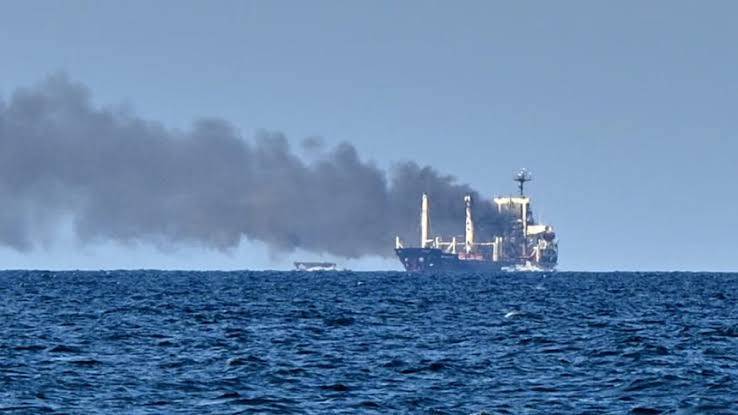
Syria has formally requested an independent investigation involving Bulgarian authorities and the International Maritime Organization into the sinking of the Alfa Watan in the Black Sea. The vessel was struck by drones on October 6 inside Bulgaria’s exclusive economic zone and sank rapidly. Ten crew members, including nine Syrians and one Egyptian, remain officially missing. Bulgarian authorities ended their search after finding life rafts, an overturned lifeboat and debris but no sailors. Responsibility for the attack has not been established; Ukraine has blamed Russia, while Moscow denies involvement.
Syria has formally called for an independent international investigation into the sinking of the cargo vessel Alfa Watan in the Black Sea after the ship was struck by drones inside Bulgaria’s exclusive economic zone, with 10 crew members still missing and Syrian authorities questioning why search-and-rescue operations were halted before the sailors’ fate had been conclusively established.
The Syrian General Authority for Ports and Customs said Thursday that it wants Bulgarian authorities and the International Maritime Organization to participate in an independent and transparent investigation into the October 6 attack, determine who was responsible and examine the circumstances surrounding the loss of the vessel. Mazen Aloush, the authority’s director for international relations and cooperation, also called for the wreckage of the ship to be located and inspected as part of the investigation.
According to the latest Syrian and Reuters reporting, Alfa Watan was carrying 10 crew members, nine of them Syrian nationals and one Egyptian, when it was struck in the early hours of Tuesday. The Togo-flagged cargo vessel suffered catastrophic damage and sank rapidly approximately 70 nautical miles off Bulgaria’s coast, inside the country’s exclusive economic zone.
No crew member from Alfa Watan has been found.
Bulgarian rescue teams searched the area after the attack and recovered three life rafts, an overturned lifeboat and floating debris from the vessel, but found no trace of the missing sailors. Bulgarian maritime authorities subsequently ended the search-and-rescue operation, saying the ship appeared to have sunk within seconds following a powerful explosion and that the chances of locating survivors had become extremely small.
That decision is now at the center of Syria’s complaint.
Aloush questioned why the search was terminated before the status of the missing crew had been definitively resolved and urged Bulgarian authorities to use all available technical capabilities to locate the wreck. Syria’s position is that the crew should remain officially classified as missing until there is conclusive evidence establishing what happened to them.
The distinction has become particularly important after conflicting statements circulated about whether all those aboard had died. The Syrian Seafarers’ Association clarified Thursday that the crew members should still be regarded as missing and that an earlier statement interpreted as confirming their deaths had instead been intended to convey that no survivors had been found after the Bulgarian search operation ended.
The attack on Alfa Watan formed part of a wider drone strike against commercial shipping in Bulgarian waters on Tuesday. A second merchant vessel, the Palau-flagged Able, was also hit and caught fire after sustaining damage near its stern. All 18 members of that ship’s crew were rescued, although two suffered serious injuries.
Bulgarian authorities said sea and aerial drones were involved in the attacks, which occurred in the western Black Sea at a time of growing concern about the spread of the Russia-Ukraine war into commercial shipping lanes. The strikes marked a significant escalation because they occurred within Bulgaria’s exclusive economic zone, bringing a direct maritime security threat closer to the territory of a NATO and European Union member.
Responsibility for the attack has not been conclusively established.
Ukrainian President Volodymyr Zelenskyy blamed Russia for the strikes, describing them as part of a broader campaign threatening commercial shipping and regional security. Russia has rejected allegations of responsibility, with its embassy in Sofia denying that Russian forces targeted the vessel and calling for conclusions to wait until an investigation is completed.
Bulgarian authorities have not publicly identified the attacker.
That uncertainty is one reason Syria is demanding an international investigation rather than relying solely on political accusations surrounding the Russia-Ukraine conflict. Damascus is seeking a process capable of establishing how the vessel was struck, what type of drones were used, where they originated and whether the attack deliberately targeted commercial shipping.
The Syrian ports authority also described the incident as a serious threat to maritime safety and international trade. Commercial vessels continue to operate across the Black Sea despite the war, carrying grain, energy products, industrial goods and other cargo between ports in Eastern Europe, the Mediterranean and global markets.
The western Black Sea has traditionally been viewed as safer than waters closer to Ukraine and Russian-occupied territory, but the recent attacks have increased concern that commercial ships may now face greater exposure well beyond the immediate combat zone.
The Alfa Watan incident has particular significance because Bulgaria is not a participant in the Russia-Ukraine war. Its exclusive economic zone is not the same as sovereign territorial waters, but attacks on merchant shipping there raise serious legal and security questions and increase pressure on Bulgarian authorities to strengthen surveillance and maritime protection.
Bulgaria’s government condemned the drone attacks as unacceptable and began an investigation into their origin. The European Commission has also been involved in efforts to assess the incident, including through satellite imagery and regional monitoring.
Bulgaria’s political leadership has warned that the security environment in the Black Sea is deteriorating as both aerial and naval drones become more prominent in the conflict. Commercial vessels can now face threats from weapons capable of traveling considerable distances from launch areas, complicating efforts to determine attribution immediately after an attack.
The sinking also comes amid an increase in strikes against ports, tankers, cargo vessels and maritime infrastructure linked directly or indirectly to the conflict. Russia has repeatedly attacked Ukrainian port facilities and grain-export infrastructure, while Ukraine has targeted Russian naval assets, oil terminals, vessels and infrastructure supporting Moscow’s war economy.
Commercial shipping has frequently been caught between those campaigns.
Türkiye, which maintains relationships with both Moscow and Kyiv and controls access between the Black Sea and Mediterranean through the Bosphorus and Dardanelles, warned Thursday that attacks in the region are becoming increasingly dangerous. Turkish Foreign Minister Hakan Fidan said Russia and Ukraine appeared to be intensifying operations ahead of winter and stressed the need to prevent the Black Sea from becoming an even broader theater of conflict.
The danger to commercial shipping has already had economic consequences. Insurance premiums rise when vessels operate through areas considered vulnerable to missile, drone or mine attacks, while shipowners can alter routes or refuse contracts if the risks become too high.
Those costs ultimately affect commodity prices and trade flows, particularly for countries that depend on Black Sea exports of grain, oil and other bulk goods.
The region is especially important to global food markets. Ukraine and Russia are major agricultural exporters, while Black Sea ports and shipping routes carry wheat, corn, sunflower products and fertilizers to markets across the Middle East, Africa and Asia.
Although the cargo aboard Alfa Watan has not been definitively established in all public accounts, the broader attack involved commercial shipping operating along routes connected to regional trade.
The earlier Black Sea Grain Initiative, brokered by the United Nations and Türkiye in 2022, provided a mechanism allowing Ukrainian grain exports to continue despite the war. Russia withdrew from that agreement in 2023, after which maritime trade became increasingly dependent on alternative corridors and unilateral security arrangements.
Ukraine later established a shipping corridor closer to the western Black Sea coast, allowing significant volumes of exports to continue despite Russian threats. That system has worked largely because ships could move through waters nearer Romania and Bulgaria, away from the most dangerous areas closer to occupied Ukrainian territory.
Drone attacks in Bulgaria’s economic zone challenge assumptions about the relative safety of that western route.
The sinking also raises questions under international maritime law. Commercial ships not participating in hostilities are generally protected from deliberate attack, although determining responsibility becomes more complicated if a vessel is alleged to be transporting military-related cargo or supporting one side in a conflict.
Bulgarian Prime Minister Rumen Radev suggested that the route and cargo of the vessels could become relevant to the investigation and potentially point toward a connection with Russia, but he did not present conclusive evidence identifying the attacker.
Russia’s denial and Ukraine’s accusation therefore remain competing claims until investigators establish more.
Syria’s demand for an IMO role could add an independent maritime dimension to the inquiry. The International Maritime Organization, a United Nations agency responsible for shipping safety and international maritime standards, does not function as a criminal court, but it can support investigations, safety reviews and international cooperation around serious maritime incidents.
An investigation involving Bulgaria would have access to radar information, rescue records, debris, witness accounts and potentially military or civilian surveillance data from the area. Locating the wreck could also provide forensic evidence about the direction and nature of the blast and the type of weapon that struck the vessel.
Syria has specifically called for such an examination.
The wreck could contain information relevant not only to attribution but to the fate of the crew. If the ship sank extremely quickly, some sailors may have been trapped inside. An underwater inspection could help clarify that possibility even if recovery efforts prove technically difficult.
Bulgarian rescue authorities have said that conducting an underwater inspection of the wreck is not part of their ordinary search-and-rescue responsibilities. Syria is now effectively asking for the investigation to go beyond the completed rescue operation and examine the wreck through a separate technical process.
That disagreement highlights the difference between rescue obligations and a broader casualty investigation. Bulgarian authorities have said they completed the search phase after extensive aerial and maritime operations failed to locate survivors. Syria argues that ending rescue operations should not end efforts to establish what happened to the missing crew.
The families of the sailors are likely to remain central to that issue. Without bodies, confirmed survivors or a wreck inspection, relatives are left without definitive answers about whether the men died immediately, escaped the vessel or were lost at sea after the sinking.
That uncertainty can persist for years in maritime disasters unless a wreck is located and examined.
The exact crew count has also been reported differently during the early stages of the incident. Some initial Bulgarian reporting referred to a larger number of Syrians aboard the ship, while the latest Reuters and Syrian government account lists 10 crew members, including nine Syrians and one Egyptian.
The current official Syrian demand is therefore based on the 10-person figure.
The nationality of the missing crew gives Damascus a direct interest in the investigation even though the ship was sailing under the Togolese flag and operating in Bulgarian waters. Under maritime practice, responsibility for investigations can involve the flag state, coastal authorities, shipowners and countries whose citizens were aboard.
The vessel was also reported to be Turkish-owned, adding another international dimension to the case.
That web of jurisdictions makes an independent investigation particularly important if the findings are expected to carry credibility beyond Bulgaria.
Syria’s intervention comes as regional governments face a broader question about how to protect commercial vessels from drone warfare. Sea drones have become increasingly important in the Russia-Ukraine conflict because they can strike ships and ports at long range without risking crews.
Aerial drones have similarly increased the reach of both sides, while electronic warfare, GPS disruption and contested air-defense environments make maritime operations more complex.
Commercial crews have little ability to defend themselves against those threats.
Shipowners can change routes, reduce time spent near conflict zones or rely on naval warnings, but merchant vessels are not designed to operate like warships. If the western Black Sea becomes a regular area for drone attacks, governments could face pressure to increase naval patrols, surveillance and coordination with commercial operators.
That could itself carry escalation risks.
Bulgaria, Romania and Türkiye are all NATO members, and additional military activity around civilian shipping lanes would occur alongside a war involving Russia, making attribution and communication critical.
The current incident has so far remained a maritime security investigation rather than a direct NATO confrontation. Bulgarian officials have condemned the attack but have not declared that the country itself was militarily attacked.
That distinction is likely to remain important while investigators determine the origin of the drones.
For Syria, the immediate focus is narrower. Its government wants answers about the missing sailors and a formal investigation into the destruction of a commercial vessel carrying Syrian nationals.
Aloush said the attack should be treated as a serious violation of maritime safety and called for international measures to protect commercial vessels operating in the region.
The demand also places pressure on Bulgarian authorities to explain publicly why the search ended when it did and whether any further effort will be made to inspect the seabed.
Bulgarian rescue officials have said the rapid sinking and absence of survivors, life jackets or other evidence after the search made the possibility of a successful rescue extremely remote. They found an overturned lifeboat and life rafts but no crew.
Those findings are grim, but they do not legally establish the deaths of the missing sailors.
Syria’s decision to keep their status as missing reflects that uncertainty.
The investigation will also need to examine whether the drones targeted Alfa Watan specifically or whether the vessel was struck as part of a wider attack on shipping in the area. Two commercial vessels being hit in the same period makes an accidental isolated strike less likely, but the motive remains unconfirmed.
Any determination that merchant shipping was deliberately targeted would deepen concerns about the rules governing the Black Sea conflict.
If investigators establish Russian responsibility, the attack would likely intensify criticism of Moscow and raise questions about how far Russian operations are expanding toward NATO-linked waters. If evidence points elsewhere, the diplomatic consequences could be very different.
For now, neither scenario has been proven.
That uncertainty should remain central to coverage of the incident. Ukraine has directly accused Russia, and Russia has denied involvement, but Bulgarian investigators have yet to publicly establish attribution.
The latest confirmed development is Syria’s formal demand for an independent investigation and its challenge to the decision to stop searching before the sailors’ fate was known.
The case is therefore entering a second phase. The emergency rescue operation has ended, but the diplomatic, technical and potentially criminal investigation is only beginning.
Questions now include whether the wreck will be located, what forensic evidence can be recovered, whether satellite or radar data can identify the drones’ origin and whether the IMO will take an active role alongside Bulgarian authorities.
The outcome will matter beyond the families of the missing sailors. A reliable investigation could help establish whether commercial ships in Bulgaria’s economic zone are facing an expanding pattern of deliberate attack and whether additional security measures are required across the western Black Sea.
Until that work is completed, the 10 sailors aboard Alfa Watan remain officially missing, responsibility for the drone strike remains unconfirmed, and Syria is pressing for an international inquiry capable of providing both accountability and a definitive account of what happened to the vessel and its crew.