TINUBU MOCKS PETER OBI OVER ANAMBRA EROSION, SAYS HE CONFRONTED AND TAMED ATLANTIC OCEAN
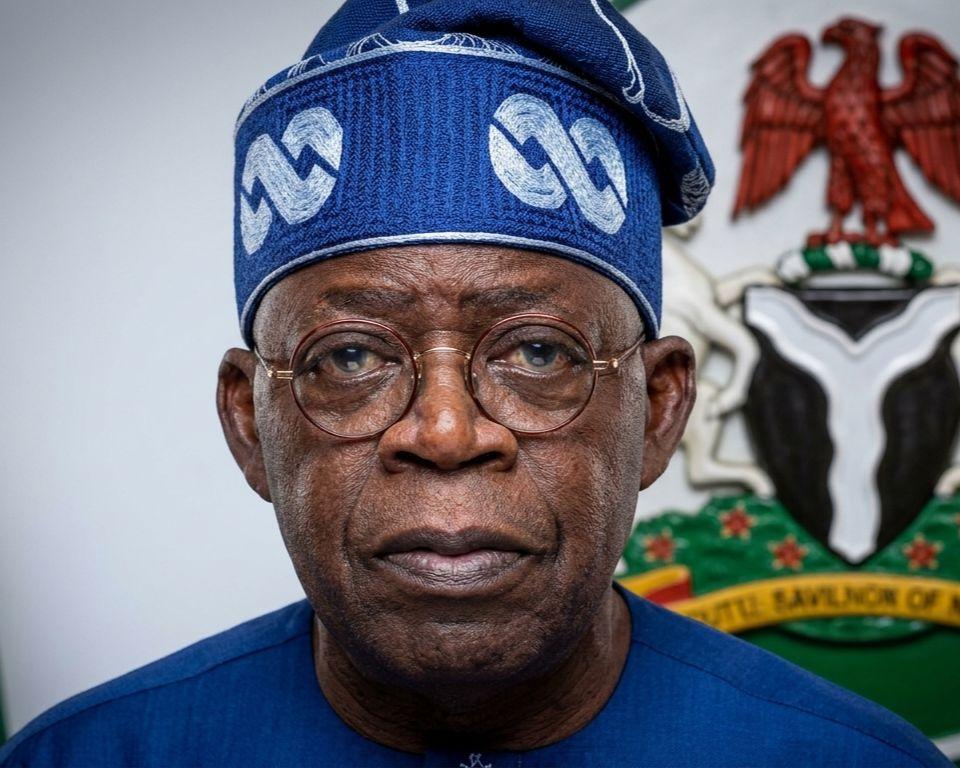
President Bola Tinubu criticized Peter Obi at an APC rally in Uyo, accusing the former Anambra governor of failing to address erosion during his time in office. Tinubu contrasted the allegation with coastal protection efforts in Lagos, declaring that he had confronted and tamed the Atlantic Ocean. He also attacked Atiku Abubakar over his repeated political defections and departure from the PDP.
President Bola Ahmed Tinubu has criticised former Anambra State Governor Peter Obi over the erosion challenges facing communities in the state, claiming that the former governor failed to confront the problem before leaving office, while presenting his own administration’s coastal protection efforts in Lagos as evidence of his leadership record. Tinubu made the remarks during an All Progressives Congress (APC) political rally in Uyo, Akwa Ibom State, on Friday, November 6, where he also attacked former Vice President Atiku Abubakar over his history of changing political parties and his decision to leave the Peoples Democratic Party (PDP).
Addressing supporters at the rally, Tinubu questioned Obi’s record as governor of Anambra and mocked his presidential ambition, alleging that the former governor had abandoned the state’s erosion problems rather than confronting them.
“One governor, Peter Obi, claimed he is in one party they call NDC, who is running for president. He ran away from erosion in Anambra State; he couldn’t confront erosion,” the President said.
Tinubu then contrasted Obi’s alleged failure with his own experience as governor of Lagos State, invoking the Atlantic Ocean and the coastal protection projects associated with the development of Eko Atlantic City.
“I, Bola Ahmed Tinubu, I confronted the Atlantic Ocean. I tamed it for you,” he declared.
The comments represented a direct political attack on Obi, who is seeking to challenge Tinubu in the 2027 presidential election under the Nigeria Democratic Congress (NDC). They also brought environmental management and infrastructure development into the increasingly personal exchanges between political figures positioning themselves for the next general election.
Tinubu’s reference to the Atlantic Ocean was an apparent allusion to the Great Wall of Lagos, a major coastal protection structure developed as part of the Eko Atlantic project. The initiative was conceived to address persistent coastal erosion and protect areas including Victoria Island, where ocean waves had repeatedly threatened the shoreline, businesses and residential properties.
The Eko Atlantic project dates back to 2003, when the Lagos State Government partnered with South Energyx Nigeria Limited to address coastal erosion and reclaim land from the Atlantic Ocean. Construction of the Great Wall of Lagos sea revetment began in 2008, after Tinubu had completed his tenure as Lagos governor in 2007. The project was designed to protect the coastline from destructive ocean surges and support the development of the new coastal city.
The structure became a prominent part of the infrastructure legacy associated with Lagos's coastal development, although its construction and the broader Eko Atlantic project have involved successive administrations and private-sector partners. The project's own published timeline records the beginning of the initiative during Tinubu's governorship and the commencement of the Great Wall construction after he left office. Tinubu's remarks therefore draw on a project whose conception began during his administration but whose construction and subsequent development extended beyond his time as governor.
His criticism of Obi also touches on one of the most persistent environmental challenges in southeastern Nigeria. Anambra State has numerous erosion sites, with communities facing the destruction of homes, roads, farmland and other infrastructure as gullies expand. The problem has been particularly serious in parts of the state where heavy rainfall, soil conditions, drainage patterns and human activities contribute to severe land degradation.
Erosion has remained a major issue for successive administrations in Anambra, and federal intervention has also formed part of efforts to address some of the most serious sites. The state’s challenges cannot be assessed solely through a political speech, however. Tinubu's allegation that Obi ran away from the problem was not accompanied by a detailed breakdown of the erosion-control projects undertaken during Obi's governorship or an assessment of the interventions completed, ongoing or left unresolved when he handed over power.
The President's remarks also did not distinguish between the scale and technical requirements of coastal erosion in Lagos and the gully erosion affecting communities in Anambra. Both involve land degradation and the destruction of property, but they present different geographical and engineering challenges. Lagos's Great Wall is a coastal engineering structure designed to reduce the impact of Atlantic waves, while erosion-control projects in Anambra often require drainage systems, gully stabilisation, land rehabilitation and the management of surface water.
Tinubu's second major target at the Uyo rally was Atiku Abubakar, whom he accused of lacking political consistency and leadership character because of his repeated movement between political parties.
The President questioned Atiku's decision to leave the PDP after years of political association, arguing that a leader should not abandon a political organisation because of disagreements or internal difficulties.
“They lack leadership and character. If a man, Atiku, that was once upon a time a baby of PDP became father later and because of a little inconvenience he ran away from that party and formed a dangerous camp in another party, is that a leadership trait? And he wants you to vote for him!” Tinubu said.
Atiku has had a long and well-documented history of political realignments. He was a member of the PDP and served as Nigeria's vice president from 1999 to 2007 under former President Olusegun Obasanjo. He left the PDP in 2006 following disagreements with the party's leadership and joined the Action Congress, under whose platform he contested the 2007 presidential election.
He later returned to the PDP, before joining the newly formed All Progressives Congress in 2014 ahead of the 2015 general election. After losing the APC presidential primary to Muhammadu Buhari, Atiku returned to the PDP in 2017 and secured its presidential ticket for the 2019 and 2023 elections. He left the PDP again in July 2025, citing disagreements with the party's direction, and subsequently joined the African Democratic Congress (ADC) as part of efforts to build an opposition coalition ahead of the 2027 election.
The opposition realignment later included Obi, who initially joined the ADC before leaving for the NDC in 2026. Atiku and Obi have since emerged as prominent figures in the opposition's preparations for the next presidential election, although their political movements have also exposed disagreements and organisational challenges within the opposition.
Tinubu's description of Atiku's new political alliance as a dangerous camp was a political characterisation rather than a legal or institutional designation. Atiku has presented his departure from the PDP as a response to internal disagreements and the need for a broader opposition platform capable of challenging the ruling party.
The President's attack on Atiku also came amid a significant legal development involving the former vice president. On November 5, a Federal High Court in Abuja nullified the leadership structure of the ADC led by David Mark and set aside the process through which Atiku emerged as the party's presidential candidate. The ruling followed a legal challenge by former ADC deputy national chairman Nafiu Bala Gombe, who questioned the legitimacy of the party's leadership arrangements.
The ADC rejected the judgment and indicated that it would appeal, describing the decision as an attempt to weaken the opposition. Atiku also criticised the ruling, while the legal dispute introduced further uncertainty into the party's preparations for the 2027 election. The court decision was separate from Tinubu's remarks in Uyo, but it formed part of the political environment surrounding the President's criticism of the opposition.
Tinubu's visit to Akwa Ibom was part of a two-state trip that included the inauguration of projects completed by Governor Umo Eno's administration and political engagements with APC supporters. The President arrived in Uyo on Friday and was scheduled to proceed to Rivers State on Saturday, November 7, for another APC rally in Port Harcourt.
The Uyo rally was one of the President's early public campaign engagements ahead of the 2027 general election, following the formal commencement of his re-election campaign in Kaduna in October. His appearances in the South-South are part of efforts by the APC to consolidate support in a region that has historically been politically competitive and where opposition figures have also been seeking to strengthen their presence.
Tinubu's remarks signal that the 2027 campaign is likely to involve increasingly direct comparisons of the records of the major presidential contenders, particularly their periods in public office and their approaches to infrastructure, governance and political organisation. His comments on Obi focused on erosion management in Anambra and coastal protection in Lagos, while his criticism of Atiku centred on political defections and the opposition coalition.
Neither the President's claims about Obi's handling of erosion nor his assessment of Atiku's political character settles the wider questions surrounding the records of the two opposition figures. Those issues will require examination of government projects, public records, policy decisions and the circumstances surrounding each political realignment. The exchange nevertheless provides an indication of the arguments Tinubu intends to use against his opponents as the election approaches.
For Obi, the erosion challenge remains a significant issue in discussions about his tenure as Anambra governor, particularly because the state continues to face serious environmental threats. For Atiku, the history of party changes remains a recurring subject of criticism from political opponents, even as he has defended his decisions as responses to disagreements within the parties he previously belonged to.
The President's comments in Uyo have therefore added another chapter to the emerging political contest ahead of 2027, with infrastructure delivery, environmental management, political loyalty and opposition unity becoming part of the public debate. As the major parties intensify their preparations, voters will ultimately have to assess the claims made by the candidates against their documented records and the policies they present for addressing Nigeria's challenges.