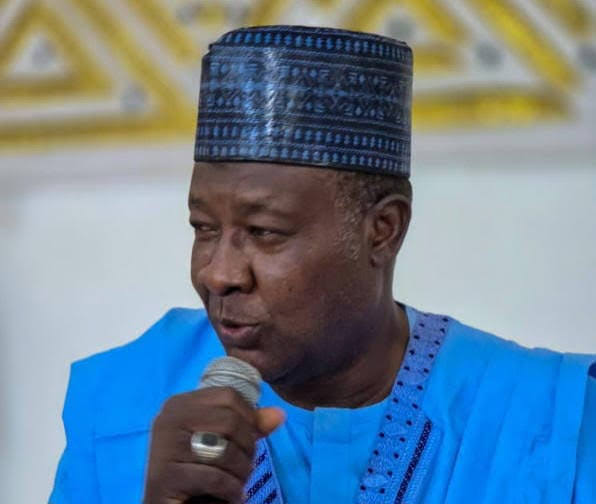
TINUBU PROMISES CHEAPER FOOD, EXPANDED HEALTHCARE AND 154,800 SOCIAL HOMES IF RE-ELECTED IN 2027

President Bola Tinubu and the APC have formally pledged to make food more affordable, expand health insurance and primary healthcare access, and deliver 154,800 social housing units if Tinubu wins re-election in 2027. The commitments are contained in the APC’s official “From Reforms to Prosperity” 2027–2031 manifesto, which proposes 200 homes in each of Nigeria’s 774 local government areas as part of a broader target of working toward 200,000 homes during the next term. The party also promises health insurance for 40 per cent of Nigerians by 2031, lower out-of-pocket medical spending, stronger strategic food reserves, lower food transport and storage costs, expanded social protection, youth skills programmes, mortgage reforms and one million digital land titles. The manifesto places household affordability at the centre of Tinubu’s second-term campaign as the President argues that first-term economic reforms should now translate into more visible improvements in everyday living standards.
President Bola Tinubu has pledged to make food more affordable, expand access to healthcare and deliver 154,800 social housing units across Nigeria if voters return him to office in the 2027 presidential election, according to the All Progressives Congress manifesto setting out the administration’s proposed policy direction for a second term between 2027 and 2031. The commitments are contained in the APC’s “From Reforms to Prosperity” agenda, a four-pillar programme that attempts to reposition Tinubu’s first-term economic reforms as the foundation for what the ruling party says should now become a period of more visible improvements in household living standards. Under Pillar 2, titled “Better Quality and More Affordable Life for Every Nigerian,” the manifesto places food prices, healthcare, education, jobs, social protection and housing at the centre of its social-policy offer, arguing that the success of reform should ultimately be judged by whether families can afford basic necessities, obtain medical care without catastrophic financial pressure, find decent work and secure stable housing.
The document presents the 2027 election as a transition point between what Tinubu describes as difficult but necessary first-term reforms and a proposed second phase focused more directly on household prosperity. In the President’s introductory message, the APC argues that subsidy removal, exchange-rate reform, tax changes and other measures taken since 2023 were intended to stabilise the economy and create room for longer-term growth, even though many Nigerians have experienced severe increases in the cost of food, transport, housing and other essentials during the same period. Tinubu’s campaign is therefore asking voters to accept the argument that the pain associated with those reforms should now begin to produce measurable improvements in daily life, a claim that places significant pressure on the government because the cost-of-living crisis remains one of the most politically sensitive issues ahead of the January 2027 election.
The food component of the manifesto is one of the most detailed parts of the second pillar. Rather than simply promising lower prices in broad terms, the APC says it will attempt to stabilise staple-food costs through a Guaranteed Minimum Price scheme, stronger strategic grain reserves and more transparent publication of reserve levels and releases. The party also proposes a monthly staple-food price tracker that would be published alongside headline inflation figures so that households, farmers and policymakers can monitor movements in the prices of key foods more closely. In addition, the manifesto links food affordability to infrastructure by promising to reduce waste and transportation costs through improved storage, cold-chain systems, farm-to-market roads, rail, compressed natural gas transport and agro-processing, while also expanding nutrition support for children and mothers through schools and primary healthcare centres.
The emphasis on food affordability reflects the political reality confronting Tinubu as he seeks another term. Nigeria has experienced an intense cost-of-living crisis during his presidency, with households facing sharp increases in food prices, petrol costs and transportation expenses following the removal of the fuel subsidy and the depreciation of the naira. Reuters and the Associated Press both described economic hardship as one of the central tests of Tinubu’s re-election campaign when he formally launched his bid in Kaduna on October 24, with the President defending his reforms while arguing that they were necessary to repair structural weaknesses in the economy. The opposition has made hunger, inflation and living costs central campaign themes, meaning the APC’s promise of cheaper food is not simply a policy proposal but also a direct response to one of the strongest lines of attack against the administration.
The manifesto does not promise to control food prices through a single mechanism. Instead, it combines market-support policies with measures intended to reduce costs along the agricultural supply chain. The party says it plans to build on a N200 billion Guaranteed Minimum Price programme designed to protect farmers from sharp price collapses while maintaining strategic grain reserves that can be released when staple prices rise excessively. It also promises to preserve tax exemptions on basic food items, reduce post-harvest losses and improve food transportation, an approach based on the argument that a significant share of consumer food inflation is driven not only by farm production but also by storage failures, poor roads, fuel costs and inefficient movement from farms to urban markets.
The healthcare commitments are similarly ambitious. The APC says it wants health insurance coverage to reach 40 per cent of Nigeria’s population by 2031, while reducing out-of-pocket health spending from around 71 per cent of total healthcare expenditure to below 50 per cent. That target is significant because high out-of-pocket expenditure means many Nigerians still pay directly from their own income whenever they need treatment, leaving low- and middle-income households particularly vulnerable to financial hardship when illness occurs. The manifesto therefore frames expansion of insurance as a form of financial protection rather than simply a healthcare-access measure, arguing that families should not be forced into poverty because of medical costs.
The government also says it will extend direct financing to all 17,600 primary healthcare centres and increase the proportion considered functional from roughly 53 per cent toward 90 per cent. The proposal includes supplying solar power to 30 per cent of healthcare facilities by the end of 2027 and expanding the Maternal and Neonatal Mortality Reduction Innovation Initiative, known as MAMII, to all 774 local government areas. The manifesto further proposes commercialising BioVaccines Nigeria with the objective of producing 50 per cent of essential medicines locally, a target designed to reduce dependence on imported medical products and potentially strengthen Nigeria’s pharmaceutical manufacturing base.
Those healthcare promises are tied to one of the manifesto’s broader claims: that the administration wants public policy to be judged through measurable outcomes rather than through project announcements alone. The APC says its next-term commitments will be accompanied by annual scorecards comparing baseline conditions with targets through 2031, and the housing programme in particular is supposed to be monitored through a public dashboard counting units completed, handed over and mortgaged rather than merely projects that have been launched. This emphasis on measurable delivery appears designed to respond to longstanding criticism of Nigerian political manifestos, which often contain large promises without consistent public reporting on whether targets were eventually met.
Housing is one of the clearest examples because the APC has placed a specific numerical target on the proposal. The manifesto says the government would establish the Tinubu Mass Social Housing Scheme across all 774 local government areas, expanding from a costed pilot of 11,421 units to a programme delivering 200 homes in each local government area. Multiplying 200 units by 774 councils produces the headline target of 154,800 homes, while the manifesto says this would form part of a wider effort, involving government-backed mortgage institutions and licensed private developers, to work toward delivering 200,000 homes over the course of the next term.
The manifesto also promises to complete more than 15,000 Renewed Hope Cities and Estates units already under construction across 14 sites. These existing projects are separate from the proposed 154,800-unit mass social housing programme and are intended to form part of the broader 200,000-home target. This distinction is important because the headline 154,800 figure does not represent the entire housing commitment; rather, it is the core local-government-based social housing scheme within a wider programme that also includes existing estates, mortgage financing and private-sector development.
The financing model is equally important because Nigeria’s housing deficit cannot be addressed simply by constructing government-owned units. The APC proposes capitalising the Ministry of Finance Incorporated Real Estate Investment Fund, MREIF, toward N1 trillion with participation from pension funds, while promoting 20-year fixed-rate mortgages. It also plans to complete the recapitalisation of the Federal Mortgage Bank of Nigeria, expand the National Housing Fund contributor base from about six million people to 10 million by 2028 and increase the mortgage loan ceiling from N50 million to N85 million. The party says these measures are intended to tackle one of the biggest structural barriers to home ownership in Nigeria: the combination of expensive credit, short mortgage tenors and limited access to formal housing finance.
Land documentation is another major component of the housing proposal. The APC manifesto promises the first phase of a Land4Growth programme that would issue one million digital land titles across 18 to 20 states before expanding the system nationally. Nigeria’s property market has long been constrained by difficulties surrounding land registration, title verification and the cost and time required to perfect ownership documents, problems that reduce access to mortgages and make property transactions vulnerable to disputes and fraud. The proposed digital-title programme is therefore designed to expand the formal property market while making land easier to use as collateral for credit.
The party also proposes stronger regulation of developers and off-plan sales, including a National Housing and Built Environment Regulation Policy, licensing rules and mandatory escrow arrangements for certain property transactions. Such measures appear aimed at reducing the risks faced by buyers who pay developers for homes that are delayed, abandoned or never completed. If properly enforced, escrow requirements could ensure that money paid by buyers is protected and released according to project milestones rather than immediately becoming available to developers without safeguards.
The housing promise is nevertheless small relative to the scale of Nigeria’s national shortage. The manifesto itself estimates the housing requirement at about 15 million units, meaning 154,800 social homes would address only a fraction of overall demand even if every unit were delivered. The significance of the programme therefore lies less in eliminating the deficit outright and more in whether it can establish a replicable financing and construction model that draws in private capital, improves mortgage access and expands formal land ownership. The APC appears to recognise this limitation by framing the target as part of a wider housing ecosystem rather than as a complete solution to Nigeria’s housing shortage.
Education also forms a major part of Pillar 2. The manifesto promises to scale up the HOPE-EDU programme nationwide, halve the number of out-of-school children by 2031 and recruit and train 20,000 additional teachers, with particular emphasis on female teachers in rural areas. It also proposes stronger science, technology, engineering, mathematics and medical education, expanded digital curricula and pathways allowing teenage mothers to return to school. The party says it intends to preserve academic stability in public universities while building stronger links between education, skills acquisition and employment.
The manifesto cites current education programmes as evidence that the government already has some of the infrastructure needed to expand those commitments. It says the Adolescent Girls Initiative for Learning and Empowerment has supported about 7.19 million girls, with approximately 3.7 million girls enrolled in secondary education across 18 states and more than 10,000 schools rehabilitated. It also says the Nigerian Education Loan Fund has processed more than 1.65 million applications and paid approximately N355.87 billion, divided between institutional fees and student upkeep allowances. These figures are presented by the APC as first-term achievements and therefore represent the party’s own accounting of government performance, although the programmes themselves are established government initiatives.
Employment and youth skills are another central part of the second pillar. The APC says it wants youth unemployment halved by 2031, two million young Nigerians trained in relevant skills and 30 million people made digitally literate. It also proposes employment training for 100,000 unemployed Nigerians every year by 2030 and a dedicated Youth Bank law intended to expand access to loans with lighter collateral requirements. The manifesto further proposes transforming the National Youth Service Corps orientation programme into a more explicit skills-acquisition and job-placement platform, reflecting the growing political pressure to link education and national service more directly to employment outcomes.
On wages, the document says the administration intends to enforce the N70,000 national minimum wage across all states and modernise labour legislation. That commitment may prove politically sensitive because wage implementation has historically varied across states, and inflation can erode the purchasing power of nominal salary increases even where minimum-wage laws are observed. The manifesto does not suggest that the minimum wage alone will solve living-cost pressures but presents labour income, food affordability and social protection as complementary parts of a broader cost-of-living strategy.
The social-protection section proposes expanding the National Social Register from its current base to 20 million verified people by 2030 and extending school feeding nationwide through the HOPE-SP programme. The manifesto also says cash transfers should increasingly be linked to productive assets and pathways toward self-reliance rather than functioning indefinitely as stand-alone welfare payments. This reflects a broader policy direction in which social protection is framed as both immediate relief and an attempt to help households build sustainable income.
The manifesto additionally sets out consumer-protection reforms that could have a direct effect on household finances. It proposes a central database for lenders, stronger penalties against unregistered operators and a joint Central Bank of Nigeria–Federal Competition and Consumer Protection Commission mechanism for the automatic reversal of failed electronic transactions within a specified time. The party says banks or payment providers should pay interest when refunds for failed transactions are excessively delayed, while the government would strengthen surveillance of weights and measures in markets for food, fuel and medicine. These proposals are intended to translate consumer rights into direct financial protections for people who lose money through failed transactions, hidden charges or dishonest market practices.
Gender inclusion is also embedded in the social-policy package. The APC proposes a legal requirement for at least 35 per cent representation of women in the Cabinet, ministries, departments and agencies and other public appointments. It also promises to turn the GLOW financing programme into a permanent national credit-guarantee window, expand the Nigeria for Women Project across all 36 states and establish Sexual Assault Referral Centres with integrated shelters and legal assistance in every state. These commitments are designed to link women’s political representation, access to credit and protection from violence within the same policy framework.
The manifesto’s breadth also reflects an effort to consolidate the eight-point agenda presented in 2023 into a more compact four-pillar structure. The four pillars are a Secure and Resilient Nation; Better Quality and More Affordable Life for Every Nigerian; Energy, Infrastructure and Economic Growth; and Effective and Accountable Governance. The APC says the framework contains 28 principal commitments, although some Nigerian media organisations have broken the document into 35 more detailed pledges by counting individual targets separately.
Some analysts and Nigerian media have noted that several of the second-term promises resemble commitments from the APC’s 2023 campaign, particularly in housing, agriculture, electricity, healthcare, job creation and social protection. The main difference is that the new document attaches more specific numerical targets and timelines to many of those themes. On housing, for example, the 2023 manifesto broadly promised affordable mortgages and reforms to land administration, whereas the new programme specifies 200 homes in each local government area, a 154,800-unit social housing target, a broader 200,000-home objective and one million digital land titles.
That overlap is likely to become a central issue in the campaign because opposition parties can argue that voters should judge Tinubu first on what has already been delivered, while the APC is asking voters to view the second-term agenda as the completion and expansion of reforms already underway. The ruling party’s campaign language repeatedly emphasises continuity, arguing that the most difficult fiscal and economic restructuring was done during the first term and that a second mandate is necessary to convert those changes into prosperity. Opposition parties, by contrast, are expected to focus heavily on current hardship and ask why many households have yet to experience the benefits the government says its reforms are producing.
Tinubu has already begun making that argument directly. At the APC’s October 24 campaign launch in Kaduna, he defended the removal of the fuel subsidy and broader economic reforms while promising what he described as a better future and greater prosperity if returned to office. The President accused previous governments and political opponents of helping create the structural problems now driving poverty and hunger, while critics responded that he should be judged on conditions under his own administration. Those competing interpretations of economic responsibility are likely to dominate the campaign because the manifesto’s success ultimately depends on persuading voters that present hardship is temporary rather than evidence that the reforms themselves have failed.
The APC formally launched Tinubu’s re-election campaign in Kaduna on October 24, with the official campaign platform describing the election as a request for another four years to complete reforms begun after the 2023 election. The party’s campaign materials present “From Reforms to Prosperity” as the bridge between Tinubu’s first and proposed second terms, with the argument that economic stabilisation must now be followed by cheaper food, better healthcare, improved infrastructure and more reliable incomes.
Tinubu had already accepted the APC’s presidential nomination in May and told party members that his objective remained building a country where security, enterprise, jobs and opportunity were more widely available. His acceptance speech emphasised continuity but also framed the 2027 contest as a test of the government’s record and the alternatives offered by opposition parties. The manifesto now gives that political message a more detailed policy structure, particularly in areas where everyday household conditions are likely to influence voter judgment.
The decision to focus so heavily on affordability is therefore politically understandable. Nigeria’s economic reforms have improved some macroeconomic indicators, including government revenues and foreign reserves, while attracting praise from sections of the investment community, but those improvements coexist with severe pressure on household purchasing power. A government can record stronger fiscal balances or reserves while families still experience difficulty buying food, paying rent or accessing healthcare, which is why the APC itself says that reform must ultimately be judged by how it affects everyday life.
That tension between macroeconomic improvement and household hardship is likely to determine how voters interpret the manifesto. Supporters of Tinubu can point to the government’s argument that subsidy removal and exchange-rate reforms were unavoidable and are beginning to stabilise the economy, while critics can point to the immediate cost borne by households and question why many of the new promises require a second term to become fully visible. Neither side can resolve that debate through campaign messaging alone, and the strongest test will be measurable performance against the targets the APC itself has now published.
The housing target is a particularly useful example because it can be measured directly. If the government promises 154,800 units across 774 local government areas, citizens can eventually compare the number of houses actually completed and occupied with the number announced. The manifesto’s promise of a public dashboard appears designed to make that kind of verification easier, but such transparency will matter only if the data is timely, accurate and independently verifiable.
The same applies to healthcare. A commitment to increase insurance coverage to 40 per cent and reduce out-of-pocket expenditure below 50 per cent can be tracked through national health data, while the promise to improve functionality across primary healthcare centres can be assessed through facility-level performance rather than simply through budget allocations. By putting numbers on these goals, the APC is creating benchmarks that opposition parties, journalists and civil-society organisations will be able to use when judging the administration if Tinubu wins another term.
Food affordability is more complex because prices are influenced by factors beyond federal policy, including weather, insecurity, global commodity markets, exchange rates, transport costs and state-level agricultural conditions. Even so, the proposed monthly staple-food tracker could make government performance more transparent by showing whether prices are moving in the direction promised. The challenge will be ensuring that lower inflation is not confused with falling prices, because a reduction in the inflation rate still means prices are rising, only more slowly.
The manifesto also faces a financing question. Building 154,800 social housing units, expanding health insurance, supporting food-price mechanisms, recruiting teachers, increasing social protection and funding infrastructure all require substantial public and private resources. The APC’s response is to rely on a combination of government spending, institutional funds, mortgages, private developers and financial reforms rather than direct federal funding alone, but the success of that model will depend on investor confidence, interest rates, fiscal space and implementation capacity.
Housing finance may prove especially difficult if borrowing costs remain high. The proposal for long-term fixed-rate mortgages is intended to address that problem, but such products require stable financing structures and careful management of interest-rate risk. Capitalising MREIF toward N1 trillion and expanding pension-fund participation could provide deeper pools of long-term capital, yet regulators will need to ensure that pension savings are protected and that housing projects remain commercially and financially sustainable.
Execution at state and local levels will be another challenge because many of the manifesto’s targets involve responsibilities shared across Nigeria’s federal structure. Housing projects require land and local approvals, primary healthcare centres are heavily influenced by state and local administration, food supply chains cross multiple jurisdictions, and implementation of the minimum wage varies across states. The federal government can provide funding and policy direction, but achieving national targets will require cooperation from governors, local governments and private-sector operators.
This intergovernmental dependence is particularly important for the 154,800 housing pledge because building 200 units in each local government area assumes land availability, planning approvals, infrastructure and construction capacity across hundreds of different locations. The manifesto’s emphasis on digital land titles and developer licensing appears partly intended to reduce those obstacles, but the logistical task remains substantial.
The scale of the programme also creates procurement and quality-control risks. Large social housing programmes can fail if projects are awarded without proper oversight, if building standards are weak or if units are constructed in locations where residents have little access to jobs, transport and public services. The APC’s promise to strengthen developer regulation and create a National Housing Data Centre suggests awareness of those risks, but the eventual results will depend heavily on enforcement.
Healthcare expansion faces comparable challenges. Increasing insurance coverage is useful only if patients can actually obtain treatment from functioning facilities, while direct financing to primary healthcare centres must be accompanied by staffing, medicines, electricity, equipment and referral systems. The manifesto’s plan to use solar power in some facilities and expand emergency maternal care attempts to address parts of that infrastructure problem, but healthcare quality cannot be measured solely by the number of enrolled insurance beneficiaries.
The party’s commitment to local pharmaceutical production is therefore potentially important. If BioVaccines Nigeria can increase domestic production of essential medicines, Nigeria could reduce vulnerability to exchange-rate swings and supply disruptions affecting imported drugs. However, pharmaceutical manufacturing requires reliable power, strict quality control, access to active ingredients and predictable regulation, meaning the target will depend on industrial policy as much as on health policy.
The labour and youth commitments face similar questions of scale. Training two million young people and expanding digital literacy to 30 million Nigerians would be significant achievements, but training programmes must ultimately lead to employment or higher productivity to have lasting value. Nigeria has operated numerous skills programmes over the years, and criticism has often focused on whether trainees gain durable employment after completing them.
The proposed Youth Bank could improve access to capital for young entrepreneurs, but its success would depend on governance, loan recovery, credit assessment and protection from political interference. A public credit institution that lends on overly weak standards could accumulate losses, while one that demands conventional collateral could fail to reach the young people it is intended to serve. The manifesto’s emphasis on collateral-light lending will therefore require careful design.
The consumer-protection proposals may be among the easier commitments for voters to evaluate because they involve daily financial experiences. Failed electronic transactions, delayed refunds, unregistered digital lenders and unexplained bank deductions are common complaints among Nigerian consumers. Automatic reversal rules and stronger penalties could therefore have a visible effect on household confidence if regulators enforce them consistently.
The gender-representation target of 35 per cent may also face a clear test because Cabinet and public appointment numbers are easy to count. Nigeria has historically struggled to achieve gender inclusion targets in political appointments, making the commitment significant if it becomes legally enforceable rather than remaining aspirational.
The social register expansion will raise questions about identification and targeting. Nigeria’s previous cash-transfer programmes have been criticised at various times over beneficiary selection, duplication and transparency. Expanding the register to 20 million verified people could strengthen the system if identification improves, but it could also magnify errors if databases remain fragmented.
That is why the manifesto’s broader emphasis on measurement and public reporting may ultimately be one of its most consequential features. The APC says commitments will be linked to targets and annual progress reporting rather than broad political statements alone. If implemented, that could make future governments more accountable because campaign promises would be tied to measurable outcomes rather than vague intentions.
The manifesto does not, however, remove the need to assess Tinubu’s first-term record. The President is running as an incumbent, which means voters will evaluate both promises for 2027–2031 and the actual performance of the government since 2023. This distinguishes his campaign from that of a challenger who can focus mainly on future plans.
The APC’s central political argument is that the hardest phase of reform has already taken place and that a second term would allow those reforms to produce broader prosperity. Opposition parties are likely to argue that voters should instead focus on whether living standards have improved sufficiently during the first term to justify continued confidence.
That contrast is likely to define the election more than any single housing or healthcare pledge. Tinubu is effectively asking Nigerians to judge whether current hardship represents a temporary cost of structural reform or evidence that the government’s economic approach has placed too much burden on households.
The manifesto attempts to answer that question by promising to shift the focus from macroeconomic adjustment toward family welfare. Food prices, health costs, housing access, employment and household security are therefore not secondary themes in the document; they are at the centre of the party’s effort to translate economic policy into an electoral argument.
The housing commitment illustrates the strategy clearly. Rather than simply saying government will address the housing deficit, the APC has produced a number that can be repeated during campaign rallies: 154,800 social homes, based on 200 units in each of 774 local government areas. It has then placed that number within a broader 200,000-home target involving ongoing projects, mortgages and private developers.
The food pledge follows the same approach. Instead of only promising food security, the party says it will publish price data, manage reserves, support farmers, reduce transport costs and cut post-harvest losses. Whether those policies will actually produce cheaper food is a question that can only be answered through implementation, but the manifesto is more specific about the intended mechanisms than a simple promise to reduce inflation.
Healthcare is similarly framed around measurable access and affordability. The party wants insurance coverage to rise to 40 per cent, out-of-pocket expenditure to fall below 50 per cent and functional primary healthcare centres to move toward 90 per cent. Those numbers create benchmarks that could later expose failure as easily as they could demonstrate success.
For Tinubu, that level of specificity creates both opportunity and risk. Clear targets can reassure voters who want more concrete policies, but they also give critics precise numbers against which to measure performance.
The same applies to the promise of annual public scorecards. If the government publishes credible data showing progress, the approach could strengthen political accountability. If reporting is delayed, incomplete or selective, the pledge itself could become another source of criticism.
The 2027 campaign is therefore developing into a contest not only over competing promises but over different interpretations of Nigeria’s economic direction. Tinubu is arguing that difficult reforms should be completed rather than reversed, while opposition candidates are challenging whether those reforms have delivered enough relief to ordinary citizens.
The APC’s new manifesto is designed to make that argument more tangible. It connects economic reform to the price of food in markets, the cost of medical treatment, access to jobs, the ability to own a home and the capacity of families to withstand financial shocks.
Whether Nigerians accept that case will ultimately depend on their own assessment of present conditions and the credibility they attach to the government’s targets.
What is clear from the official document is that the APC is no longer framing Tinubu’s second-term bid only around macroeconomic stability or infrastructure. It is placing household affordability and social welfare at the centre of the campaign and promising that the next four years would be judged by whether reforms become visible in ordinary life.
The headline housing promise is therefore only one part of a much wider political commitment. The party says it wants to deliver 154,800 social housing units through a local-government-based programme, work toward 200,000 total homes, expand mortgage access, issue one million digital land titles, widen health insurance coverage, reduce household medical costs, make food more affordable, expand skills programmes and strengthen social protection.
Those promises are now part of the formal platform on which Tinubu is seeking re-election, and they create a set of measurable commitments that voters can compare with both his first-term record and the alternatives offered by opposition candidates.
For the administration, the argument is that Nigeria has passed through the most painful stage of reform and is ready to move into prosperity. For voters, the central question will be whether they believe the policies already implemented provide enough evidence that those second-term promises can be delivered.
That judgment will not be settled by the manifesto alone. It will be shaped by food prices, household incomes, security, housing costs, healthcare access and the wider economic conditions Nigerians experience between now and election day.
But the document makes one thing politically unmistakable: Tinubu and the APC have placed the everyday cost of living at the heart of their 2027 re-election campaign, and the President is asking Nigerians for another four years on the promise that reforms which imposed heavy costs during his first term will produce a more affordable and materially better life in the next.