TINUBU UNLEASHES 2027 CAMPAIGN MACHINE AS WIKE, SOLUDO, ADELEKE JOIN APC PUSH FOR SECOND TERM
President Bola Tinubu has inaugurated the APC Presidential Campaign Council for the 2027 election, bringing senior ruling-party figures together with notable politicians from other parties including Nyesom Wike, Charles Soludo and Ademola Adeleke. Tinubu says governance will remain his priority and has asked the campaign team to handle much of the nationwide mobilization while he focuses on presidential duties. The APC plans to campaign heavily on economic reforms and infrastructure, while Atiku Abubakar, Peter Obi and other opposition figures are expected to focus on cost-of-living pressures, insecurity and the impact of Tinubu’s policies on ordinary Nigerians.
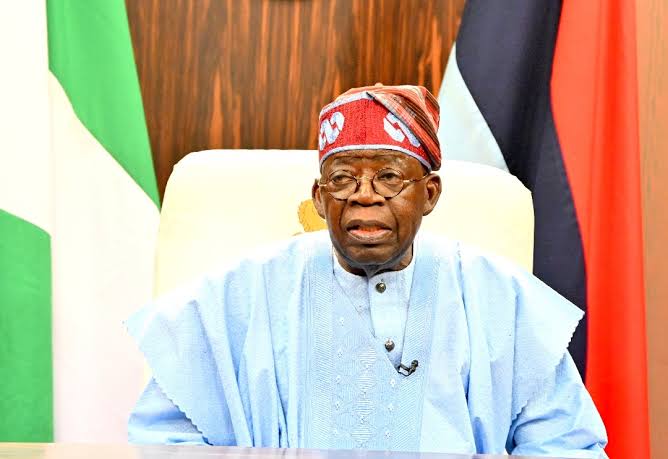
President Bola Tinubu has formally activated the All Progressives Congress machinery for the 2027 presidential election, inaugurating an expansive campaign council that brings together some of the ruling party’s most powerful figures alongside influential politicians from rival parties, including Federal Capital Territory Minister Nyesom Wike, Anambra State Governor Charles Soludo and Osun State Governor Ademola Adeleke. The inauguration at the State House Conference Centre in Abuja on Wednesday marked a significant escalation in the battle for the January 16 presidential election, with Tinubu presenting his administration’s economic reforms, infrastructure program and political coalition as the foundation of his bid for a second four-year term.
The composition of the Presidential Campaign Council immediately underscored the APC’s strategy of reaching beyond its formal party structure. Wike remains associated with the Peoples Democratic Party, Soludo governs Anambra on the platform of the All Progressives Grand Alliance, while Adeleke is now with the Accord Party. Their appearance at an APC presidential campaign event and their open pledges to support Tinubu reflected the unusual degree of cross-party alignment the President’s campaign is seeking to project ahead of an election in which the opposition is itself divided among several major presidential candidates.
Tinubu, however, told the council that campaigning would not be allowed to overwhelm the responsibilities of the presidency. He said he had accepted advice from party leaders that he should not spend the election season traveling across every state with the campaign team and asked to be excused from following the council everywhere. According to the President, Nigeria’s governance demands remain too pressing for him to devote the coming months primarily to electioneering, although he said he would still speak directly to voters and participate in major campaign engagements.
That decision places much of the day-to-day political burden on the newly inaugurated council. Tinubu serves as chairman, Vice President Kashim Shettima and APC National Chairman Nentawe Yilwatda hold senior vice-chairmanship positions, former Zamfara State Governor Abdulaziz Yari is Director-General, while Imo State Governor Hope Uzodimma serves as secretary. Senate President Godswill Akpabio, House Speaker Tajudeen Abbas and several governors, ministers, lawmakers and senior party officials also occupy prominent positions in a structure designed to coordinate national mobilization, election planning, grassroots outreach, communications and voter engagement.
The council’s message is expected to be built heavily around Tinubu’s economic program, particularly reforms introduced after he took office in May 2023. His administration removed the longstanding petrol subsidy, allowed major changes in the foreign exchange system, pursued tax reforms and repeatedly argued that the measures were necessary to correct structural weaknesses in the Nigerian economy. Those decisions produced some of the most severe political pressure of his presidency as Nigerians confronted higher transport costs, food inflation, currency weakness and a broader cost-of-living crisis.
Tinubu and his allies now argue that the painful phase of those changes is beginning to produce measurable results. The World Bank said in its October Nigeria Development Update that economic performance improved in 2026, with stronger growth, public finances and external balances. The institution projects average annual economic growth of about 4.4 percent through 2028 if reform momentum is sustained and improvements in public service delivery follow. The World Bank has also emphasized, however, that stronger macroeconomic indicators must translate into jobs, better services and improved living standards if the reform program is to deliver meaningful benefits to ordinary Nigerians.
That gap between improving headline economic indicators and the daily experience of households is likely to define much of the 2027 campaign. APC National Chairman Yilwatda acknowledged the challenge during the inauguration, telling campaign officials that they must explain not only what the government believes it has achieved but also how infrastructure, economic reforms and public investment are supposed to improve the lives of citizens. He pointed to roads, power projects, gas infrastructure, railways, ports, agriculture and digital connectivity as major areas the party intends to highlight.
The ruling party’s campaign argument is that Nigeria endured a difficult adjustment because Tinubu confronted problems that earlier administrations had postponed. Uzodimma praised the President for ending the petrol subsidy and moving away from the previous multiple exchange-rate structure, saying other leaders had recognized the unsustainability of those systems but lacked the political will to dismantle them. That assessment represents the APC’s central defense of the administration. The opposition, however, has consistently argued that even if reform was necessary, the government imposed enormous hardship without providing sufficient protection for households and businesses.
Tinubu himself acknowledged that the reforms caused hardship and inconvenience, but said economic institutions were increasingly supporting the government’s claim that the economy was moving in the right direction. The argument will now be tested politically as the APC attempts to persuade voters that short-term pain has created the foundation for longer-term recovery. That message is particularly important because Tinubu entered office after one of the most competitive presidential elections in Nigeria’s Fourth Republic and did not win an outright majority of the national vote.
Official INEC results from the 2023 presidential election showed Tinubu winning with 8,794,726 votes. Atiku Abubakar of the PDP received 6,984,520 votes, while Peter Obi, then of the Labour Party, secured 6,101,533. Rabiu Kwankwaso of the New Nigeria Peoples Party won 1,496,687 votes. The fragmented result meant Tinubu entered the presidency with roughly 37 percent of valid votes cast, making coalition building and opposition fragmentation critical elements of any second-term strategy.
The political field has changed substantially since then. INEC’s final list for the 2027 election contains 18 presidential candidates. Tinubu is running again on the APC platform with Vice President Shettima, while Atiku Abubakar is contesting on the African Democratic Congress ticket. Peter Obi is the presidential candidate of the Nigeria Democratic Congress, while Oyo State Governor Seyi Makinde is running under the Allied Peoples Movement. Former Cross River State Governor Donald Duke, Omoyele Sowore and several other candidates are also in the race.
Against that backdrop, the presence of politicians from other parties inside Tinubu’s campaign council is strategically important. Wike has been one of the most prominent examples of the breakdown of traditional party boundaries in Nigerian politics. Although associated with the PDP, he has served as Tinubu’s FCT minister and has openly supported the President’s re-election. At Wednesday’s event, he pledged to mobilize both Rivers State and the Federal Capital Territory for Tinubu and argued that the President had shown the willingness to confront difficult national problems from the beginning of his administration.
Wike also described himself as a leader of the PDP while declaring support for an APC presidential candidate, highlighting the continuing internal conflict surrounding the opposition party. His position has repeatedly been criticized by figures within the PDP and other opposition groups, but he has maintained that supporting Tinubu is based on what he describes as the President’s leadership and performance rather than formal party affiliation. The APC has increasingly treated his support as an important part of its national coalition.
Soludo’s support gives the ruling party another high-profile ally outside its formal structure. The Anambra governor argued that the political alignment behind Tinubu represents an unusually broad elite consensus and said APGA would stand with the President. He described the administration as a winning team and called for continuity, though his support does not automatically mean that every APGA voter or official will follow the same direction.
Adeleke also delivered one of the most enthusiastic endorsements of the day, arguing that four years was not enough for Tinubu’s reforms to fully work and urging Nigerians to give the President additional time. The Osun governor pledged to mobilize support for the re-election campaign, signaling that the Tinubu coalition intends to rely on personal relationships, regional political structures and incumbent governors as much as on traditional party loyalties.
The APC has sought to portray the collection of governors and senior politicians around the President as evidence of national political momentum, but opposition campaigns have offered a sharply different interpretation. Atiku’s campaign accused Tinubu of assembling political elites in an attempt to distract from public hardship and argued that the size of the campaign council could not erase concerns about living costs and poverty. It also criticized the use of the Presidential Villa for what it characterized as a partisan political gathering, arguing that the State House is public property rather than a campaign facility.
Makinde’s campaign organization also attacked the council, arguing that the APC’s political coalition could not substitute for accountability on insecurity, economic pressure, unemployment and social conditions. Those are campaign claims rather than independent findings, but they illustrate the line of attack the ruling party is likely to face repeatedly between now and election day. The opposition will seek to turn the election into a referendum on household conditions, while the APC will argue that abandoning the reforms midway would risk reversing economic stabilization.
Vice President Shettima used the inauguration to attack major opposition candidates directly, particularly Atiku and Obi, challenging their economic positions and questioning the credibility of some of their prescriptions. His remarks offered an early indication that the 2027 campaign will combine arguments over policy with aggressive personal political criticism. The President, meanwhile, urged campaign officials to focus on delivering votes at ward and local government level rather than relying on speeches and national visibility.
That grassroots emphasis is already shaping the campaign structure. Tinubu’s team is expected to begin its major nationwide rally program in Kaduna on October 24, followed by engagements in Port Harcourt and Maiduguri. The women’s mobilization directorate has announced an ambitious target of reaching tens of millions of female voters through communities and polling-unit structures across the 36 states and the Federal Capital Territory. Whether those targets translate into actual votes will depend on organization, turnout and the political conditions in individual states.
Tinubu also used the council inauguration to repeat commitments beyond the election itself, including his support for state police and legislation intended to increase women’s representation in elected institutions. Both issues have significant constitutional and political implications, and their progress will be watched closely as the campaign unfolds. The President’s allies are likely to cite such proposals as evidence that a second term would extend institutional reforms beyond economic policy.
The administration’s economic record nevertheless remains the most consequential part of the reelection argument. Nigeria’s government finances have benefited from subsidy removal, exchange-rate adjustments and stronger revenue flows, while the World Bank has pointed to improvements in growth and the external position. Yet the institution has also repeatedly emphasized that economic stabilization is only meaningful if it improves employment, public services and household welfare. That gives both sides of the political debate evidence they can use. The APC can point to macroeconomic recovery, while opposition parties can argue that the gains have not been sufficiently felt by millions of families.
Security will also remain central. Tinubu’s government continues to face challenges involving terrorism, banditry, kidnapping and communal violence in different parts of the country. Any deterioration in security before the election could complicate the APC’s attempt to make economic recovery the dominant campaign message, while improvements would strengthen its argument that stability is returning. The campaign council’s ability to discuss economic policy without ignoring insecurity, food affordability, electricity, jobs and public services will therefore be critical to its credibility.
The unusual cross-party character of Tinubu’s campaign creates advantages but also political complications. An alliance that includes serving governors and ministers from parties nominally competing against the APC can demonstrate the President’s reach, yet it may also reinforce criticism that Nigerian politics is becoming less ideological and more centered on elite alliances. Voters will ultimately decide whether endorsements from powerful political figures carry enough weight to overcome local grievances, economic frustrations or loyalty to opposition candidates.
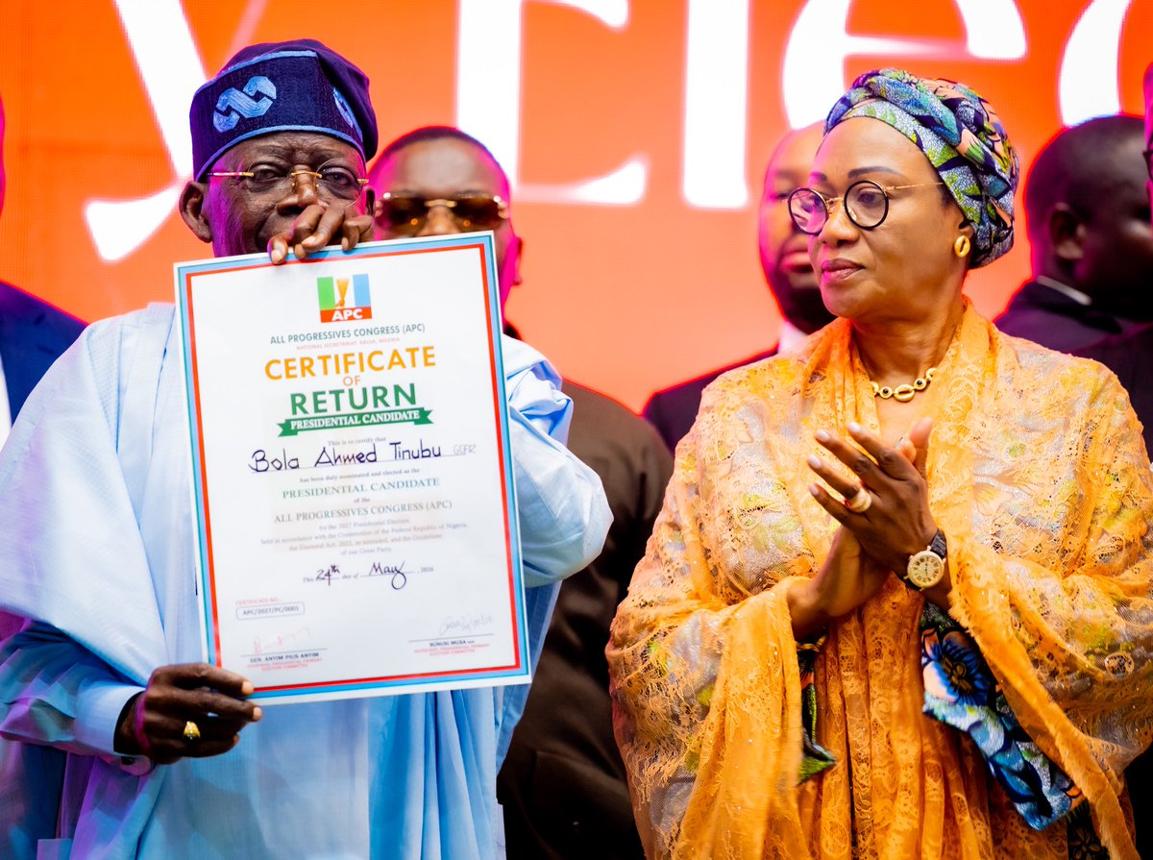
For the APC, Wednesday’s inauguration formally transformed months of political preparation into an organized national campaign. Tinubu has secured his party’s nomination, retained Shettima as his running mate, assembled a large campaign council and attracted public backing from influential figures beyond the APC. The next phase will shift from elite endorsements in Abuja to the more difficult work of persuading voters across states, local governments and wards that the administration’s record deserves another four years.
The opposition, meanwhile, enters the campaign with multiple presidential candidates competing for many of the same voters who opposed Tinubu in 2023. Atiku, Obi, Makinde and the other challengers must each build a national coalition while also competing against one another. That fragmentation could benefit the incumbent, but it does not by itself settle the contest. Tinubu’s campaign still has to defend a record shaped by sweeping reforms, significant economic disruption and continuing public concern over living standards and security.
The inauguration therefore marks the opening of a more intense phase of Nigeria’s 2027 presidential race rather than evidence of its outcome. The APC’s case rests on continuity, reform and the argument that the economy is moving toward stronger growth after years of difficult adjustment. Its opponents will seek to make the election about the cost borne by Nigerians during that adjustment and whether promised improvements have reached ordinary households. With the official presidential field already set and the January 16 vote approaching, those competing interpretations of Tinubu’s first term are now moving to the center of the national campaign.