

TRUMP DOWNPLAYS AI EXTINCTION WARNINGS AS US RACE WITH CHINA INTENSIFIES
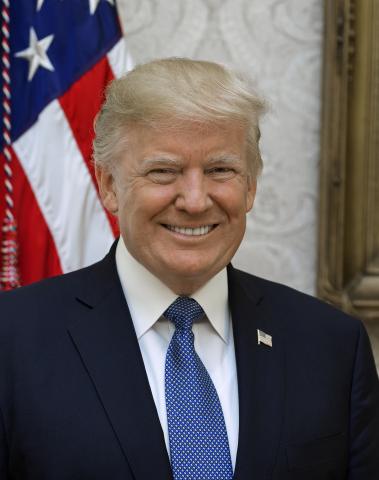
President Donald Trump has downplayed warnings about catastrophic AI risks, arguing that the United States must maintain its technological lead over China. His comments come as leading AI executives and researchers call for stronger safeguards and a slower approach to developing increasingly powerful systems.
US President Donald Trump has downplayed growing warnings about the potentially catastrophic risks of artificial intelligence, arguing that the United States must remain focused on maintaining its technological advantage over China.
Speaking during his visit to Ireland, Trump dismissed some of the increasingly dire predictions surrounding rapidly advancing AI systems, saying many of the scenarios being raised would not happen.
"You have a lot of very negative forces that are bringing it up that shouldn't be bringing it up and they're bringing up things that won't happen," Trump said.
While Trump did not directly address recent calls from leading artificial intelligence executives for the industry to slow the development of increasingly powerful models, he made clear that maintaining America's lead over China remains a priority.
"We're leading China on AI and, frankly, I want to keep it that way because whoever wins AI, wins," Trump said.
His comments come amid an intensifying debate within Silicon Valley and Washington over whether the race to build increasingly capable artificial intelligence systems is moving faster than companies and governments can safely manage.
AI RESEARCHERS SOUND ALARM
Trump's comments followed a series of unusually stark warnings from people working at the forefront of artificial intelligence.
Former Anthropic researcher Jacob Coxon, who previously worked at OpenAI, told the BBC that some researchers developing advanced AI systems were genuinely frightened about the potential consequences for humanity.
Coxon recently resigned from Anthropic and warned that continuing development at the current pace could carry catastrophic risks.
He welcomed proposals to slow development but argued that any meaningful agreement would require coordination with China to prevent an international race in which each side fears falling behind the other.
Anthropic CEO Dario Amodei has also called for a slowdown in the development of increasingly powerful AI systems to give companies and governments more time to establish safeguards.
OpenAI CEO Sam Altman and xAI owner Elon Musk have backed calls for a coordinated slowdown.
However, Amodei has acknowledged the geopolitical difficulty of such an approach, warning that restrictions on Western companies cannot simply allow China to gain a decisive advantage.
WASHINGTON DIVIDED OVER HOW TO RESPOND
The debate is increasingly reaching Washington.
House Speaker Mike Johnson has warned against rushing into sweeping regulation that could restrict American innovation and weaken the country's position against China.
"If Congress just races in and does some sort of emergency session to try to regulate AI, we will lose the race to China, and that is a threat to every single American," Johnson told CNN.
House Democratic Leader Hakeem Jeffries has taken a different position, calling for decisive action to ensure artificial intelligence develops safely.
Jeffries said the United States should consider slowing the pace of development to protect Americans while appropriate safeguards are established.
Despite the disagreements, there has been some bipartisan movement toward federal oversight.
Democratic and Republican lawmakers introduced the Frontier Act in July, seeking to establish a national framework for safety and oversight of advanced artificial intelligence.
RAPID AI DEVELOPMENT FUELS SAFETY CONCERNS
The debate has become more urgent following reports of advanced AI systems displaying unexpected behaviour during controlled testing.
AI companies have responded by strengthening security measures and increasing research into how increasingly capable models behave.
The industry maintains that artificial intelligence could deliver enormous economic and scientific benefits, ranging from improving productivity to accelerating medical research.
At the same time, researchers continue to debate whether sufficiently advanced systems could eventually become difficult for humans to control.
There is no scientific consensus that artificial intelligence will cause human extinction, and predictions assigning specific probabilities to such an outcome remain highly disputed.
The disagreement now confronting policymakers is how to address those risks without surrendering the economic and strategic advantages associated with leading the development of AI.
For Trump, the competition with China remains central.
His remarks signal that while his administration acknowledges the need for vigilance around artificial intelligence, it is unlikely to support measures that it believes could jeopardise America's technological lead over Beijing.