TRUMP JUSTICE DEPARTMENT ESCALATES CALIFORNIA ELECTION PROBE WITH GRAND JURY SUBPOENAS
The U.S. Justice Department has issued new federal grand jury subpoenas to Los Angeles County election officials as part of a criminal investigation into alleged noncitizen voting. The subpoenas seek records about voter screening, suspected unlawful voting and the county’s response to earlier federal warnings. Los Angeles County says it follows established federal and state election law and argues that voter eligibility cannot be challenged on unverified data alone. Separately, a federal judge has rejected the administration’s request to immediately prevent California from counting ballots associated with more than 20,000 voters the Justice Department suspects may be noncitizens.
The Trump administration has escalated its investigation into alleged noncitizen voting in California, with the U.S. Department of Justice issuing federal grand jury subpoenas to Los Angeles County election officials demanding records about how potentially unlawful voting is identified, investigated and prevented from affecting election results. The subpoenas, issued as voting is already underway ahead of the November 3 midterm elections, significantly deepen a confrontation between federal prosecutors and California officials over voter eligibility, election administration and the extent of Washington’s authority to intervene in state-run electoral processes.
According to documents reviewed by Reuters, the subpoenas were directed at employees of the Los Angeles County Registrar-Recorder/County Clerk’s office and seek information about the systems used to identify individuals suspected of being ineligible to vote because they are not U.S. citizens. Federal prosecutors also want records showing how local election officials respond when concerns about voter eligibility are raised, what procedures exist to prevent unlawful votes from being counted and how the office handled earlier warnings from federal authorities about people the administration suspects may have been improperly registered.
The latest subpoenas represent another stage in a much broader federal campaign targeting suspected noncitizen voting across California and other states. The Justice Department has argued that federal law prohibits noncitizens from voting in federal elections and says election officials have an obligation to ensure that ballots cast by ineligible individuals do not enter the final count. California officials agree that noncitizen voting is illegal but strongly dispute the implication that large numbers of ineligible voters are participating in elections and have questioned the accuracy of federal databases being used to identify suspected cases.
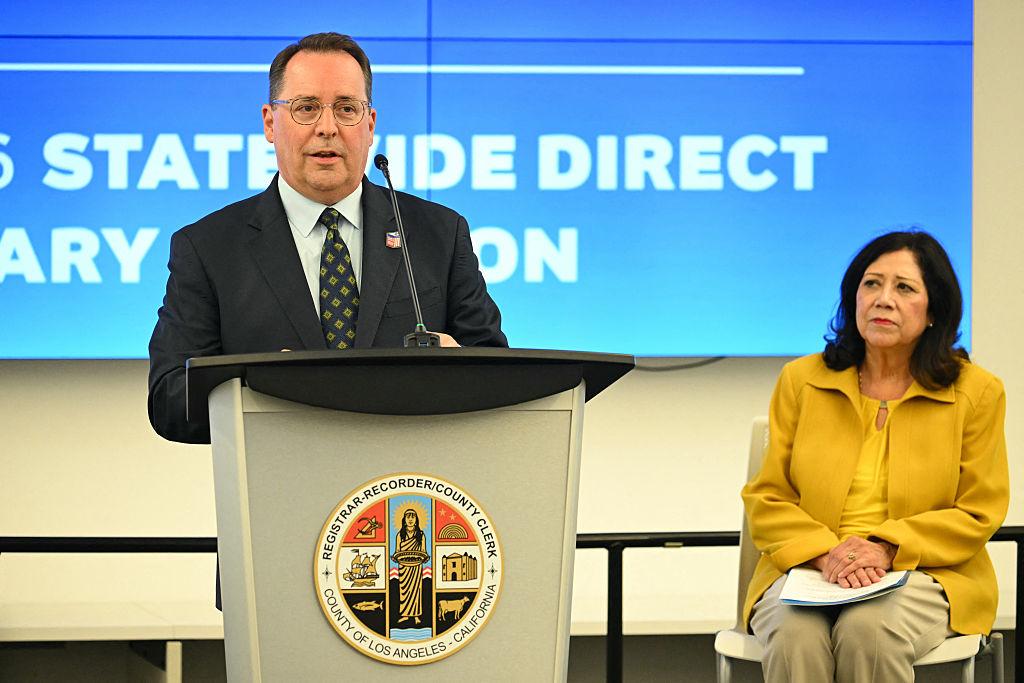
Los Angeles County Registrar-Recorder Dean Logan has been one of the most prominent officials resisting the administration’s approach. Logan has repeatedly said his office follows both federal and state law and takes voter eligibility seriously, but he has also warned that election administrators cannot simply remove voters or discard ballots based on unverified allegations. His position is that claims of unlawful voting must be supported by reliable evidence and processed through established legal procedures rather than through last-minute demands issued while an election is already underway.
That dispute has become increasingly confrontational in recent weeks. Earlier in October, the Justice Department supplied California officials with names of thousands of people it described as likely noncitizens and demanded that their ballots be segregated until citizenship could be verified. Los Angeles County and state election officials objected, saying federal authorities had not provided sufficient underlying evidence or explained the methodology used to generate the lists.
Logan said at the time that election officials could not legally refuse to count ballots simply because the federal government had flagged a voter without producing verifiable evidence establishing ineligibility. His office also said some of the records supplied by the federal government appeared to involve people outside Los Angeles County, creating additional concerns about the precision of the data being used.
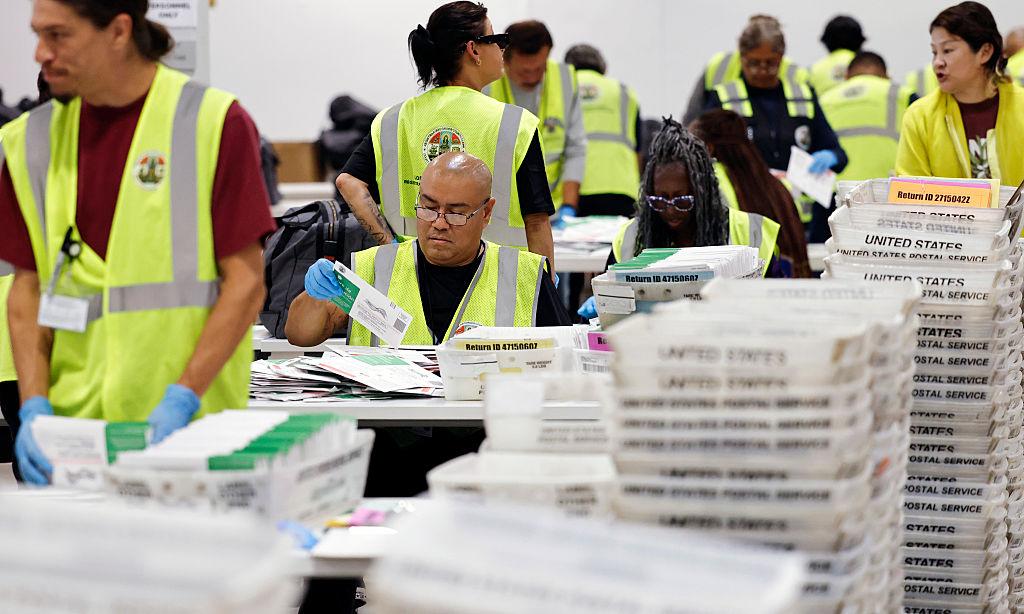
The Justice Department responded by filing litigation seeking emergency court intervention. Federal prosecutors asked a judge to prevent California from counting ballots associated with approximately 20,000 voters whom the administration suspected could be noncitizens until their citizenship status had been established.
That request suffered a significant setback this week when U.S. District Judge David Carter rejected the administration’s effort to immediately set the ballots aside. Carter warned that excluding votes based on unresolved allegations so close to an election could disenfranchise eligible citizens and disrupt the electoral process. The Justice Department has challenged that ruling, meaning the legal battle remains active even as county officials continue processing ballots.
The new grand jury subpoenas add a criminal-investigation dimension to a dispute that had already become a major election-law confrontation. Grand jury subpoenas are powerful investigative tools that allow federal prosecutors to compel the production of documents and testimony as they examine whether federal crimes may have occurred. Their issuance does not mean that the individuals or offices receiving them have been charged with wrongdoing, but it indicates that prosecutors are actively gathering evidence for an ongoing investigation.
The subpoenas seek information beyond individual voter records. Reuters reported that prosecutors are also examining the policies and procedures used by Los Angeles County to detect possible noncitizen voting and prevent unlawful ballots from entering the count. That suggests investigators are interested not only in whether particular individuals may have voted illegally but also in whether election administrators responded appropriately to information provided by federal authorities.
Associated Press reporting on the new subpoenas indicates that three of the documents were issued on October 21 and direct election employees to appear before a federal grand jury after Election Day. The requests seek records and communications connected to earlier letters sent by federal authorities concerning alleged noncitizens on California voter rolls, as well as information about the county’s methods for screening for unlawful voting.
The latest demands come after months of federal scrutiny of Los Angeles County’s voter records. Earlier grand jury subpoenas had already sought registration files, addresses, voting histories, citizenship attestations and other information relating to individual voters. Los Angeles County officials complied with those legal demands while simultaneously expressing concern that federal investigators may have relied on incomplete or outdated immigration information when identifying people for investigation.
That concern has become one of the central issues in the broader dispute. Election officials and voting-rights groups say immigration and citizenship databases can contain outdated information because an individual who was once a lawful permanent resident may later become a naturalized U.S. citizen. If federal investigators rely on older records without accounting for subsequent naturalization, an eligible citizen could incorrectly appear on a list of suspected noncitizens.
Los Angeles County says preliminary reviews of some names supplied by the federal government have already uncovered discrepancies. According to county officials and reporting by the Los Angeles Times and Associated Press, some people identified by federal authorities were born in the United States, some were no longer registered and others had no history of voting. Those findings have strengthened California’s argument that large-scale action based solely on federal lists could risk disenfranchising lawful voters.
The Justice Department rejects the suggestion that its investigation is improper. Federal officials argue that preventing unlawful votes is a legitimate enforcement responsibility and have stressed that federal law makes it a crime for noncitizens to participate in federal elections. The administration has also pointed to criminal cases brought against individuals accused of unlawfully registering or voting as evidence that violations do occur and warrant investigation.
The disagreement therefore is not primarily over whether noncitizen voting is illegal. Both sides acknowledge that it is. The conflict concerns the scale of the problem, the reliability of the government’s evidence and the legal procedures that must be followed before a voter can be prevented from participating or a ballot can be excluded.
Research and election audits have generally found that noncitizen voting in U.S. elections is rare, but even isolated cases can lead to criminal prosecution. The Trump administration has made identifying such violations a major priority and has expanded the use of immigration, voter-registration and other government data to search for potential cases nationwide.
California has become one of the most important battlegrounds in that effort because of its large electorate, extensive use of mail voting and political resistance to the administration’s election policies. The state has repeatedly challenged federal demands that it considers legally questionable or disruptive to election administration.
The current confrontation has become especially sensitive because it is unfolding immediately before the November 3 midterm elections. Election officials traditionally operate under strict schedules during the final weeks before voting concludes, with millions of ballots being mailed, received, verified and processed. Major changes to voter eligibility procedures during that period can create administrative difficulties as well as legal disputes.
California officials argue that state and federal laws require election administrators to follow established procedures and prevent large-scale changes to voter rolls immediately before an election. They contend that accepting federal demands without sufficient evidence could violate those rules and expose eligible citizens to improper disenfranchisement.
The Justice Department, however, has argued that federal criminal law creates a separate obligation to prevent ballots cast by noncitizens from being counted. Prosecutors have warned local officials that knowingly processing an unlawful vote could potentially create legal liability, language that has been interpreted by some election administrators as an attempt to pressure them into changing procedures.
Logan has sharply objected to that approach. He has said election workers should not be threatened or intimidated for following established law and has insisted that the county will continue administering the election while responding appropriately to legitimate investigative requests.
The language surrounding the dispute became even more contentious after federal officials sent letters to election offices across California warning that officials could face legal consequences if they knowingly counted ballots belonging to noncitizens. County officials argued that such warnings placed election administrators in an unnecessarily confrontational position while voting was already underway.
The federal court handling the dispute has also expressed concern about the timing and scope of the government’s demands. Judge Carter’s rejection of the Justice Department’s request to immediately set aside thousands of ballots represented a significant judicial rebuke of the administration’s effort to change election procedures shortly before voting concludes.
The Justice Department has continued pursuing the issue through litigation and investigation despite that setback. The grand jury subpoenas demonstrate that federal prosecutors are examining the matter through a criminal enforcement process separate from the civil lawsuit over ballot counting.
That distinction matters because the civil litigation focuses primarily on whether California can be required to segregate or withhold certain ballots, while a grand jury investigation can examine whether individuals or institutions violated federal criminal law. At present, there has been no public accusation that Logan or other Los Angeles County election officials themselves committed a crime.
The subpoenas should therefore not be interpreted as evidence of guilt. Federal grand juries routinely issue subpoenas during investigations to obtain records and testimony before prosecutors decide whether charges are justified.
The investigation has nevertheless intensified political tensions because President Donald Trump has repeatedly alleged that noncitizen voting is a significant problem in American elections. California officials and voting-rights advocates accuse the administration of exaggerating isolated cases to undermine confidence in election systems, while the administration maintains that vigorous enforcement is necessary to protect election integrity.
Those competing arguments are likely to continue well beyond the midterm election. The Justice Department’s current enforcement programme extends to multiple states, and similar disputes have emerged over voter records, citizenship verification and federal access to election data.
In California, the administration initially raised questions about a much larger population of potentially ineligible voters before narrowing its immediate legal focus to approximately 20,000 individuals whose ballots it sought to segregate. State officials say that narrowing illustrates why federal data must be carefully verified before action is taken.
A preliminary review conducted by Los Angeles County reinforced those concerns. Officials found that many names examined did not correspond to people who had actually voted, while others appeared to involve U.S. citizens. California authorities argue that these inconsistencies demonstrate the danger of treating database matches as proof of unlawful registration.
Federal officials counter that investigations are designed precisely to determine which cases are legitimate and which result from outdated or incomplete information. They say obtaining records through subpoenas allows prosecutors to compare immigration information with local voting histories and establish whether criminal violations occurred.
The stakes are particularly high because citizenship status is one of the basic eligibility requirements in federal elections. A confirmed case of a noncitizen knowingly registering or voting can result in criminal charges and immigration consequences, while false allegations against an eligible citizen can improperly interfere with one of the most fundamental political rights in the United States.
That tension explains why both sides frame their positions as protecting the integrity of elections. The Justice Department says it is enforcing eligibility requirements, while California officials say election integrity also requires protecting lawful voters from being removed or having their ballots excluded without reliable evidence.
The dispute also raises broader constitutional questions about control of elections. Under the U.S. Constitution, states have primary responsibility for administering elections, although Congress and the federal government possess important powers involving federal election law and voting rights.
Courts are therefore being asked to determine how far the executive branch can go when it believes state election procedures are allowing potentially unlawful votes to be counted. California argues that the administration is attempting to impose new requirements during an ongoing election, while federal prosecutors say they are enforcing existing criminal law.
The issue has already reached the federal appeals courts, where judges have questioned parts of the administration’s legal theory. A Ninth Circuit panel recently expressed skepticism about efforts to intervene directly in California’s ballot-counting procedures before the election is complete.
The current grand jury investigation may proceed on a different track regardless of the outcome of that litigation. Prosecutors can continue examining specific allegations of illegal registration or voting even if courts reject the administration’s attempt to broadly segregate ballots.
Federal authorities have already brought individual criminal cases in California and elsewhere involving people accused of falsely claiming U.S. citizenship or unlawfully registering to vote. Those prosecutions demonstrate that isolated violations do occur, but they do not by themselves establish that noncitizen voting is widespread.
That distinction will remain central to the political debate. The administration points to arrests and charges as proof that enforcement is necessary, while critics argue that the small number of confirmed cases compared with the enormous size of the electorate shows the system already identifies violations without extraordinary intervention.
Los Angeles County is one of the largest election jurisdictions in the United States and processes millions of voter records and ballots. Any significant disruption to its procedures can therefore carry consequences far beyond a single county.
Election workers must verify signatures, process mail ballots, maintain voter-registration records and operate hundreds of voting locations while responding to legal challenges and public scrutiny. Federal subpoenas arriving during that process add another layer of administrative pressure.
Logan has said his office will comply with valid legal obligations while continuing to administer the election according to existing law. He has also emphasised that maintaining accurate voter records and protecting eligible citizens are not conflicting responsibilities.
That message has become the county’s central response to federal pressure. Officials say credible evidence of unlawful voting will be reviewed, but allegations must be verified before ballots are rejected or voters are removed.
The Justice Department’s latest subpoenas suggest federal prosecutors are now seeking a fuller understanding of precisely how those decisions are made inside the county election office. Communications between local and state election officials could also reveal how California developed its response to federal demands.
Depending on what investigators find, the grand jury inquiry could remain focused on individual suspected voters or expand into questions about the conduct of election administrators. There is currently no public evidence establishing that such an expansion will occur.
The administration’s wider campaign has already generated substantial concern among civil-rights groups. Organisations including the American Civil Liberties Union have challenged federal efforts to identify suspected noncitizen voters, arguing that aggressive use of immigration records can improperly target naturalized citizens and discourage lawful participation in elections.
Those groups have also raised privacy concerns about the collection and sharing of voter data between federal immigration authorities and election agencies. The government argues that data sharing is necessary to identify people who may have violated federal election law.
The dispute therefore extends beyond California and beyond the 2026 midterms. It raises questions about how government databases can be combined, what standards should be required before voter eligibility is challenged and whether immigration-enforcement agencies should play a major role in election investigations.
For California election officials, however, the immediate task remains completing the November 3 election while responding to subpoenas, lawsuits and federal correspondence. The county has said voters should remain confident that ballots will continue to be processed under established legal procedures.
The Justice Department is equally determined to continue its investigation. The new grand jury subpoenas show that prosecutors are seeking records through compulsory legal process rather than relying solely on voluntary cooperation from state and local officials.
What remains unknown is what the investigation will ultimately establish. Federal prosecutors have not publicly identified evidence showing widespread unlawful voting in Los Angeles County, and the subpoenas themselves do not prove that such conduct occurred.
The central factual questions are therefore still unresolved: how many of the voters flagged by federal authorities are actually noncitizens, how many were registered, how many attempted to vote and whether existing California procedures failed to detect any confirmed violations.
Those answers will determine whether the administration’s investigation uncovers a meaningful election-security problem or reinforces California’s argument that federal authorities relied too heavily on incomplete data.
For now, the development represents a significant escalation. A dispute that began with requests for voter information has developed into federal litigation, warnings of potential criminal liability and now a broader grand jury investigation examining the internal procedures of one of the country’s largest election offices.
With the midterm election only days away, the confrontation places Los Angeles County at the center of a national struggle over voter eligibility, federal enforcement and state control of elections. The Justice Department says it is attempting to stop unlawful voting, while California insists it will protect election integrity by following established law and refusing to exclude ballots based solely on unverified federal allegations.
The subpoenas mean that argument will not end when the polls close. Even after the November 3 ballots are counted, federal prosecutors, California officials and the courts are likely to remain locked in a wider legal battle over exactly how far Washington can go when investigating suspected noncitizen voting and how states must respond when federal authorities challenge the eligibility of registered voters.