TRUMP-LED JUSTICE DEPARTMENT SUES TO BLOCK ALASKA SENATE RESULT IF REPUBLICAN INCUMBENT NARROWLY LOSES
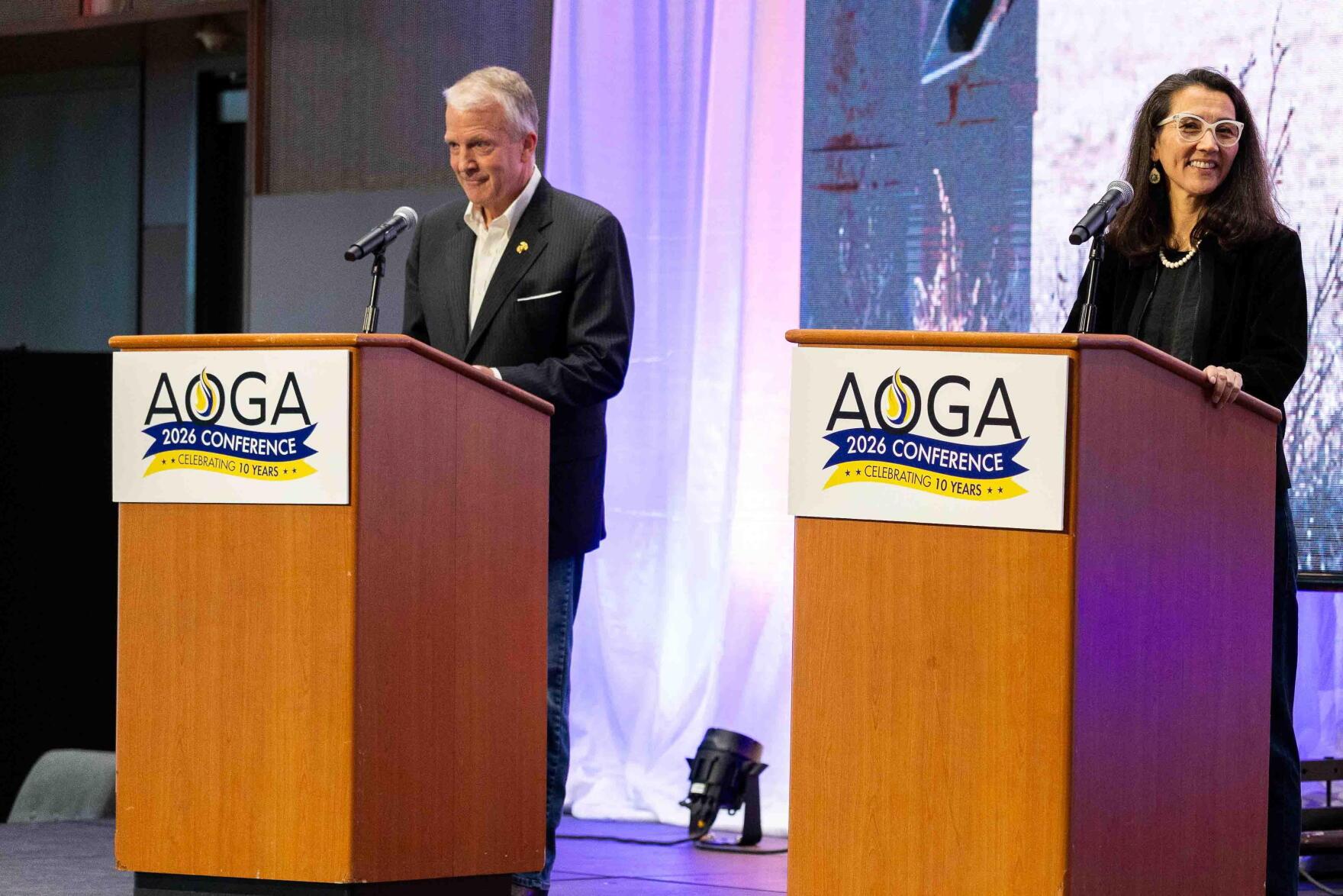
The U.S. Justice Department has sued Alaska seeking to prevent certification of its November 3 Senate result if Republican incumbent Dan S. Sullivan narrowly loses and votes for another candidate named Daniel J. Sullivan could have affected the outcome. The department says the similar names create a voter-confusion problem, while Alaska courts previously allowed the second Sullivan to remain on the ballot. President Donald Trump said he personally directed the lawsuit. Election-law experts and Republican Sen. Lisa Murkowski have criticized the legal action, while the federal court has yet to decide whether the Justice Department can obtain the relief it is seeking.
The United States Department of Justice has taken the extraordinary step of suing the state of Alaska before Election Day in an effort to prevent certification of the state’s closely contested U.S. Senate race if Republican incumbent Dan S. Sullivan narrowly loses, opening a significant legal and political confrontation over federal authority, state election administration and the possibility of post-election disputes determining control of the Senate. The lawsuit, filed in federal court in Anchorage on October 22, centers on the presence of another Senate candidate named Daniel J. Sullivan and argues that voters could confuse the two men in a race where even a relatively small number of disputed ballots could become consequential.
The Justice Department is asking a federal judge to stop Alaska from certifying any result that may have been affected by voter confusion until investigators can determine whether ballots cast for Daniel J. Sullivan were actually intended for incumbent Sen. Dan S. Sullivan. The department argues that the similarity in the candidates’ names creates a potential integrity problem under federal election law, while critics say the lawsuit seeks a remedy that federal law does not authorize and could interfere with a state-run election before voters have even finished casting ballots.
President Donald Trump confirmed on Friday that he personally supported and directed the legal action, telling reporters that he was the one who instructed the administration to proceed. His acknowledgment immediately intensified scrutiny because the lawsuit directly affects a Senate contest that could influence control of Congress and involves an incumbent Republican closely aligned with the president. The case therefore extends beyond a technical dispute over ballot design and candidate identity, raising broader questions about how far a sitting administration can use the Justice Department to intervene in state election procedures when partisan control of Congress is at stake.
The Alaska contest pits Republican incumbent Dan S. Sullivan against Democrat Mary Peltola, a former member of the U.S. House of Representatives who has emerged as his principal challenger. Also on the ballot is Daniel J. Sullivan, a former U.S. Forest Service employee and elementary-school teacher from Petersburg who entered the race in May. Republicans have accused the second Sullivan of running in order to confuse voters and divert support from the incumbent, while Daniel J. Sullivan has denied that allegation and says he entered the race independently.
The dispute over the second Sullivan is not new. Alaska election officials initially sought to remove him from the ballot, but the issue was litigated in state court, and the Alaska Supreme Court ultimately allowed him to remain. The ballot is designed to distinguish the candidates: the incumbent senator is identified as the Republican incumbent, while Daniel J. Sullivan appears without the same party and incumbent designation. Alaska’s ranked-choice voting system also allows voters to rank more than one candidate, further complicating the Justice Department’s argument that name confusion will necessarily distort the final result.
The Justice Department nevertheless contends that the second Sullivan’s candidacy could affect the outcome if the incumbent loses by a small margin. The federal complaint asks the court to block certification while officials investigate whether some voters selected Daniel J. Sullivan when they intended to vote for Sen. Dan S. Sullivan. That request raises an immediate practical problem because American ballots are secret. Election authorities generally cannot determine after the fact what an individual voter intended once a valid ballot has been cast for a legally qualified candidate.
The department has invoked provisions of the National Voter Registration Act and broader federal interests in election integrity, arguing that the government has a responsibility to prevent what it describes as a misleading candidacy from changing the outcome of a federal election. A Justice Department spokesperson said the government was taking necessary steps to ensure that the second Sullivan’s candidacy does not undermine the will of Alaska voters. The department’s position is that allowing certification without examining the potential effect of voter confusion could leave the final result vulnerable to a distortion that federal authorities are obligated to address.
Election-law specialists have challenged that reasoning. Several experts quoted by Reuters and the Associated Press argue that the statute cited by the department does not give federal courts authority to suspend state certification simply because voters may have been confused by two candidates with similar names. They also point out that the candidacy issue was already considered by Alaska courts before the election and that federal litigation is now attempting to revisit a matter the state judiciary resolved months earlier.
Notre Dame election-law professor Derek Muller said the statute relied upon by the Justice Department does not appear to authorize the department to enjoin certification of the Senate result. His assessment is that the case would become relevant only under a narrow set of circumstances, particularly if the Republican incumbent loses by a margin small enough for the second Sullivan’s vote total to become politically significant. A decisive victory by either major candidate could make the litigation largely irrelevant, while a narrow result could place the federal lawsuit at the center of a high-stakes post-election battle.
Former Justice Department voting-rights officials have also raised objections to the timing and scope of the case. David Becker, who previously worked on voting-rights enforcement and now heads the Center for Election Innovation and Research, said the federal government lacks authority to dictate how Alaska certifies its Senate election under these circumstances. He argued that the candidacy question was a matter of state law already handled by Alaska’s courts and warned that the late federal intervention raises concerns about political interference.
Alaska’s senior senator, Republican Lisa Murkowski, has publicly criticized the Justice Department’s lawsuit even though she supports incumbent Dan Sullivan. Murkowski said Alaskans are capable of distinguishing between the two candidates and noted that state officials have already taken steps to make the ballot clear. Her criticism is significant because it demonstrates that opposition to the federal intervention is not limited to Democrats or voting-rights groups and that some Republicans in Alaska consider the legal action unnecessary.
Mary Peltola has characterized the lawsuit as an attempt to manipulate the election in advance of a potential Republican defeat. Her campaign argues that the ballot sufficiently distinguishes the candidates and that voters should be allowed to choose without the federal government threatening to block certification after the election. Peltola has also sought to keep attention on issues such as affordability and cost-of-living concerns, saying the legal dispute distracts from the matters voters are trying to evaluate in the Senate race.
The incumbent Sullivan’s campaign has taken a more restrained public position. Rather than directly defending or rejecting the Justice Department’s intervention, the campaign has said it will allow the litigation to proceed and has expressed confidence that Alaska voters can distinguish the incumbent senator from the other candidate. That response leaves the administration and Justice Department carrying most of the public argument for the federal case.
The lawsuit arrives less than two weeks before the November 3 election and at a moment when control of the U.S. Senate is uncertain. Republicans currently hold a narrow advantage, and several races across the country are highly competitive. Alaska has therefore become strategically important because a single seat could affect which party controls the chamber, determines committee leadership and shapes the president’s ability to advance nominees, legislation and elements of his agenda during the second half of his term.
The political consequences help explain why the case is receiving national attention far beyond Alaska. Federal intervention in state election certification is unusual, and critics worry that the Alaska lawsuit could establish a model for challenging other close races if the president’s party performs poorly. Election officials in several states have already been preparing for potential legal disputes, federal demands for voter data and conflicts over certification procedures during the 2026 midterms.
Attorney General Todd Blanche attempted to address those concerns shortly before the Alaska lawsuit was filed, saying it was not the Justice Department’s intention to improperly interfere with elections or state certification. He suggested that federal intervention in certification would be extraordinary and associated with what he described as an extreme scenario. The Alaska case nevertheless moved forward the same day, increasing scrutiny of how the department defines the circumstances under which it believes federal intervention is appropriate.
The complaint was signed by Associate U.S. Attorney General Stanley Woodward, one of the department’s most senior political appointees. Woodward previously represented Trump allies and defendants connected to the January 6 cases before joining the administration, a background that has added to criticism from opponents who argue that the department has become increasingly involved in disputes affecting the president’s political interests. The administration rejects that characterization and says its election-related actions are aimed at enforcing federal law and protecting election integrity.
The legal confrontation also touches on the constitutional division of responsibility for elections. States administer elections, including voter registration, ballot design, counting and certification, while Congress can establish certain federal requirements for federal elections. Courts regularly adjudicate disputes when state procedures conflict with federal constitutional or statutory protections, but the Justice Department’s attempt to block certification because of alleged candidate-name confusion raises a less familiar legal question.
The federal government is not arguing that Alaska miscounted ballots, excluded eligible voters or allowed ineligible votes to be cast. Instead, it is arguing that a legally qualified candidate’s presence on the ballot may cause some voters to choose the wrong person and that federal courts should intervene if that confusion appears capable of affecting the result. That distinction is central to critics’ argument that the department is trying to create a remedy that has little foundation in traditional election law.
The mechanics of Alaska’s ranked-choice voting system add another layer of complexity. Voters can rank candidates in order of preference, and if no candidate receives a majority of first-choice votes, lower-performing candidates are eliminated and their ballots are redistributed according to subsequent rankings. That system means a voter who accidentally ranked the wrong Sullivan first could still rank the intended Sullivan second, depending on how the ballot was completed. It also means the final result may not be known immediately after Election Day.
The August primary provides some context for the relative strength of the candidates. Peltola finished as the top vote-getter in the nonpartisan primary, while incumbent Dan Sullivan received more than 68,000 votes. Daniel J. Sullivan received just over 4,100 votes, representing roughly 2 percent of the primary vote. Even that relatively small share could become politically important if the general election margin between the leading candidates is extremely narrow, which is why Republicans have focused so heavily on the potential effect of the second Sullivan’s candidacy.
Trump has repeatedly raised the issue during the campaign, including at an Alaska rally and in social-media posts where he accused the second Sullivan’s candidacy of being an attempt to manipulate the race. Daniel J. Sullivan denies coordinating with Democrats or entering the contest as a spoiler. No publicly released evidence has established that his campaign was created or directed by the Democratic Party.
The absence of proven coordination is legally important because there is a difference between a candidate deliberately adopting deceptive campaign tactics and simply entering an election with a name similar to that of another candidate. American elections have historically included candidates with identical or similar names, and states generally address that problem through ballot labels, occupations, addresses, party designations or other distinguishing information rather than by invalidating otherwise lawful candidacies.
The Alaska Supreme Court’s earlier decision allowed the challenger to remain on the ballot, effectively concluding that state law did not justify excluding him. That ruling places the federal government in the unusual position of asking a federal court to prevent certification because of a candidacy that Alaska’s own highest court already permitted. Supporters of the Justice Department argue that federal election-integrity law creates a separate basis for intervention, while critics say the department is attempting to circumvent a state-law decision it dislikes.
The timing also matters. The lawsuit was filed after ballots had been finalized and after early voting procedures were already underway, making removal of the candidate considerably more complicated than it would have been months earlier. Instead of asking primarily for a ballot change before voting, the department is asking for the power to intervene after votes are cast if the outcome appears unfavorable to the incumbent and the second Sullivan’s vote share could plausibly be viewed as significant.
That conditional structure is one of the most controversial aspects of the case. If incumbent Dan Sullivan wins, certification would proceed and the dispute could largely disappear. If Peltola wins decisively, the Justice Department may have difficulty showing that the second Sullivan affected the result. The most consequential scenario is therefore a narrow Peltola victory in which Daniel J. Sullivan receives a number of votes greater than the margin separating the two leading candidates.
Even in that situation, investigators would face major evidentiary difficulties. The fact that one candidate receives enough votes to exceed the winning margin does not establish that those voters would otherwise have supported another candidate. Some may have intentionally chosen the second Sullivan, ranked candidates differently or declined to support the incumbent altogether. Ballot secrecy also prevents investigators from simply questioning voters about how they voted on a person-by-person basis in order to reconstruct an alternative result.
The Justice Department’s lawsuit therefore raises a fundamental question about whether courts can invalidate or delay an election based on hypothetical voter intention rather than demonstrable unlawful ballots or proven misconduct. Election-law experts who have criticized the suit argue that courts traditionally require concrete evidence before overturning certified results and are generally reluctant to speculate about how voters might have behaved under different ballot conditions.
Supporters of the administration counter that waiting until after certification could make corrective action more difficult if the vote is genuinely affected by deception. The department’s case is built around the idea that protecting voter intent sometimes requires intervention before a disputed result becomes final. Whether a federal judge accepts that theory will determine whether the lawsuit survives beyond its initial stages.
The dispute also fits into a wider pattern of election litigation in the 2026 cycle. The Justice Department has sought voter-registration data from states and pursued other election-related actions that the administration describes as efforts to strengthen confidence in voting. Democratic officials, some Republican election administrators and civil-liberties groups have accused the federal government of exceeding its traditional role and creating legal pressure that could influence state election management.
The Alaska case may become the clearest test of those competing views because it directly concerns certification of a Senate result. Certification is the legal process through which state authorities formally recognize the winner after counting, audits, recount procedures where applicable and resolution of legally valid challenges. Preventing certification would delay the point at which Alaska can officially declare a senator-elect and could potentially affect the seating of the winner in Washington.
If the dispute extends for weeks, it could become nationally significant in a closely divided Senate. A delay involving a single seat could influence the chamber’s organization, committee assignments and votes taken early in the new congressional term. Those possibilities remain hypothetical and depend entirely on the election result, but they explain why both parties are closely watching the federal case before ballots have even been fully counted.
The lawsuit does not mean that Alaska’s election result has already been invalidated or that certification will automatically be blocked. A federal judge must first determine whether the Justice Department has legal standing, whether the statutes it cites authorize the requested relief and whether the evidence justifies judicial intervention. Those questions remain unresolved, and the experts criticizing the suit have emphasized that filing a lawsuit is not the same as winning one.
It is equally important not to treat allegations of voter confusion as established fact. The Justice Department says the similarity between the two names creates a serious risk, while Alaska officials have designed the ballot to distinguish the candidates and the state courts have allowed both names to remain. The actual effect, if any, will not be known until voters cast their ballots and the results are examined.
The immediate political significance is nevertheless substantial. President Trump has openly acknowledged directing the Justice Department to bring the case, making the administration’s political interest in the dispute unusually explicit. That fact will remain central to criticism that the federal government is attempting to protect a Republican incumbent, while the administration will continue arguing that presidential interest does not eliminate the government’s responsibility to address what it views as a potential election-integrity problem.
For Alaska voters, the underlying choice remains unchanged for now. Dan S. Sullivan, Mary Peltola, Daniel J. Sullivan and the other qualified candidates remain on the ballot, and voters will participate under the state’s ranked-choice rules. The legal battle becomes most consequential only after Election Day if the result is close enough for the Justice Department to argue that the second Sullivan’s votes may have changed the outcome.
The next major development will come from the federal court in Anchorage, which must decide whether the department’s request can proceed and whether any immediate relief is warranted. Depending on the ruling, appeals could follow quickly because election disputes operate under compressed timelines and certification deadlines.
What makes the Alaska case nationally important is not simply the possibility that one candidate could lose because another candidate has a similar name. It is the broader question of whether a presidential administration can use federal litigation to suspend certification of a state-run Senate election based on an alleged risk of voter confusion after state courts have already approved the ballot.
That question remains unanswered. The Justice Department says it is protecting the will of Alaska voters, while opponents say the lawsuit threatens to override that same will if the president’s preferred candidate loses. With Election Day approaching and the Senate closely divided, the legal dispute has transformed Alaska from an important battleground into a potential test of the boundaries between federal power, state election authority and political influence over the certification of American elections.