TRUMP PROMISES $5,000 PAYMENTS AND NEW KENTUCKY DRUG PLANT INVESTMENT AS REPUBLICANS FIGHT TO KEEP CONTROL OF CONGRESS
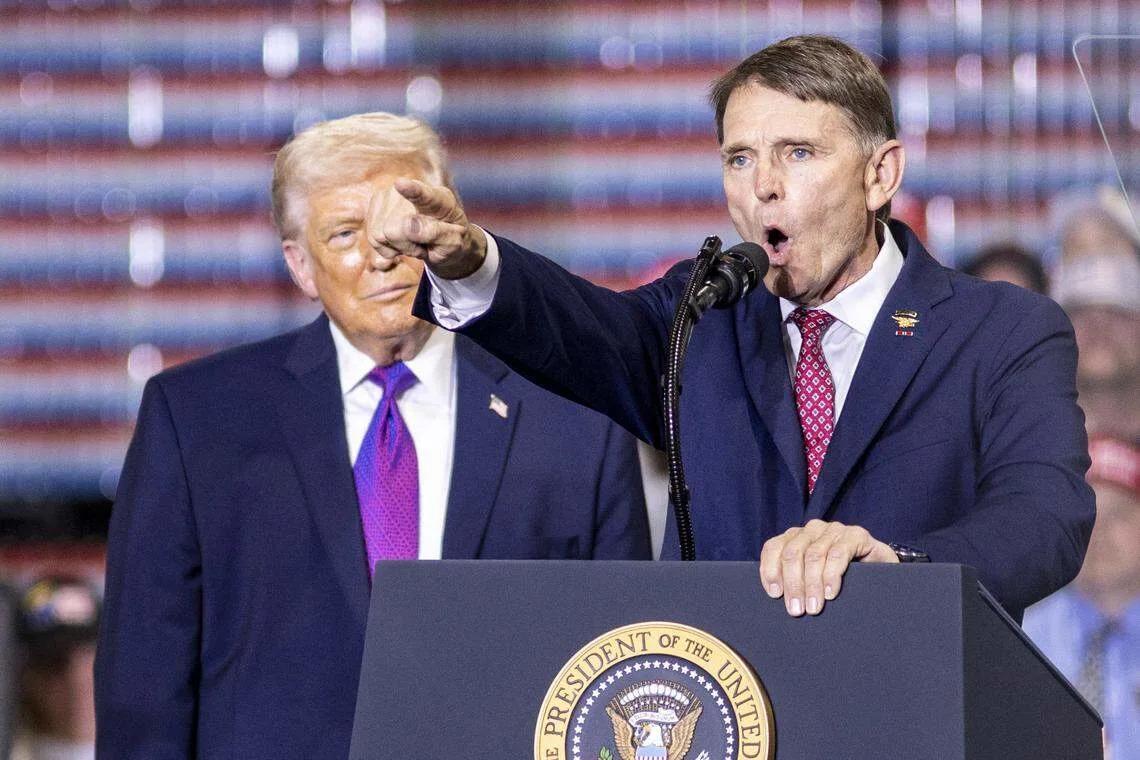
President Donald Trump has stepped up his campaign involvement ahead of the November 3 U.S. midterm elections, using a rally in Highland Heights, Kentucky, to urge supporters to help Republicans retain control of Congress. Trump promoted Republican House candidate Ed Gallrein, who defeated Representative Thomas Massie in the party primary, and repeated his proposal to provide $5,000 to every American adult if Republicans retain the House and Senate. Associated Press notes that such a programme would likely cost more than $1 trillion and require congressional approval. Trump also announced a proposed $100 million Department of Defense investment to revitalise an Antheia pharmaceutical manufacturing facility in Winchester, Kentucky, while linking that investment to a Republican election victory.
President Donald Trump has intensified his campaign push ahead of the November 3 United States midterm elections, using a rally in Highland Heights, Kentucky, to urge Republican voters to turn out in large numbers and warning that his administration needs continued Republican control of Congress to advance its agenda. Speaking at Truist Arena on Saturday, October 17, Trump promoted Republican congressional candidate Ed Gallrein, who defeated Representative Thomas Massie in the Republican primary, while repeating a proposal to provide $5,000 payments to every adult American if Republicans retain both the House of Representatives and the Senate. He also announced a Kentucky-specific proposal involving a $100 million investment by the Department of Defense in pharmaceutical manufacturer Antheia to revitalise a drug manufacturing facility in Winchester, although he presented that investment as dependent on Republicans winning the midterm elections.
The rally came as Trump increases his appearances around the country in the final weeks before voting, attempting to make himself a central figure in contests that will determine control of Congress for the second half of his current presidential term. Republicans are defending their congressional majorities in an election shaped by voter concerns over prices, energy costs, healthcare and the continuing war with Iran. Trump told supporters in Kentucky to behave as though he personally were on the ballot, arguing that higher turnout among his political base could help Republican candidates survive difficult races across the country.
Gallrein was one of the main beneficiaries of Trump’s appearance. The former Navy SEAL and farmer defeated Massie in the Republican primary after receiving Trump’s backing, ending the congressional career of a Republican lawmaker who frequently challenged his own party’s leadership. Trump had become increasingly hostile towards Massie over disagreements including Massie’s support for releasing records connected to Jeffrey Epstein and his opposition to the United States war with Iran. During the Kentucky rally, Trump again criticised Massie and presented Gallrein as a more reliable supporter of the administration’s agenda.
Trump’s comments about Massie demonstrated the degree to which loyalty to the President has become part of Republican primary politics. Massie built a reputation as an independently minded conservative willing to vote against Republican leadership on spending, surveillance, foreign policy and other issues. That record made him popular with some libertarian and anti-establishment conservatives but increasingly placed him at odds with Trump. When Trump attacked Massie at the rally and praised Gallrein as his replacement, Associated Press reporting noted that the crowd reaction was mixed, with some supporters applauding strongly while others remained noticeably quiet.
The most widely discussed economic promise from the rally was Trump’s renewed proposal to give every adult American $5,000 if Republicans retain control of both chambers of Congress. He has raised the idea at previous campaign events, presenting it as a direct financial benefit that would become possible under continued Republican control. However, Associated Press noted that such a programme could cost more than $1 trillion and would require approval from Congress before any payments could legally be made.
That distinction is important because the President cannot unilaterally authorise spending on such a scale. Congress controls federal appropriations, meaning legislation would have to pass both chambers before a nationwide payment programme could be established. Even if Republicans maintain congressional control, lawmakers would still have to agree on how the programme would be funded, who would qualify, whether payments would be taxable and how the additional cost would fit within an already large federal budget deficit.
The financial scale of the proposal is substantial. The United States has more than 250 million adults, meaning a universal $5,000 payment could quickly exceed $1 trillion depending on eligibility rules. AP noted that the programme would come at a time when the annual federal budget deficit is already close to $1.8 trillion. That means the proposal could require either additional borrowing, spending reductions elsewhere, new revenue or some combination of those options.
Trump did not provide a detailed legislative plan explaining how the payments would be financed. His remarks were framed primarily as an election promise intended to persuade voters that Republican congressional control would produce direct economic benefits. The proposal therefore remains political rather than enacted policy, and voters would still depend on Congress to approve any actual payments after the election.
The President also introduced a more targeted promise for Kentucky. Trump said the Department of Defense would invest $100 million in pharmaceutical company Antheia to help revitalise a large drug manufacturing facility in Winchester if Republicans keep control of Congress. Kentucky Lantern reported that the President linked the investment directly to the election outcome, describing it as one of the benefits Kentucky could receive under continued Republican control.
The Department of Defense had not provided public clarification about the proposal by the time of initial reporting. Kentucky Democratic Governor Andy Beshear’s office also said it had no prior information about the investment. A spokesperson for Beshear raised questions about whether federal defense investment should be presented as conditional on an election result, adding another layer of political controversy to the announcement.
The Winchester facility proposal is tied to a wider national-security debate over pharmaceutical manufacturing. The United States has sought to reduce dependence on foreign suppliers for certain medicines, pharmaceutical ingredients and medical products, particularly those considered important for military readiness or emergency preparedness. Expanding domestic pharmaceutical manufacturing can therefore be presented both as an industrial policy and a national-security objective.
Trump has frequently argued that more strategically important manufacturing should return to the United States. His administration has promoted domestic investment in industries ranging from pharmaceuticals and semiconductors to defense equipment and energy. A major investment in a Kentucky pharmaceutical facility would fit that broader policy direction, although the exact structure of the proposed $100 million commitment had not yet been made public.
The rally was therefore about more than Gallrein’s congressional race. Trump used Kentucky as a platform to promote a national argument that Republican control of Congress is necessary for him to implement his second-term agenda. He repeatedly linked future economic and government actions to the outcome of the November vote, seeking to convince supporters that Democratic control would obstruct his administration.
Trump told the crowd to pretend that he was personally on the ballot, a message he has used while campaigning for Republican candidates in several states. Presidents frequently struggle to transfer their own voter enthusiasm to midterm candidates because turnout patterns are different when the presidency itself is not being contested. Trump’s campaign appearances are intended to counter that problem by making congressional races feel like a referendum on his administration.
The strategy carries risks as well as potential benefits. Trump remains highly influential among Republican voters, but his political style can also motivate Democratic turnout. Midterm campaigns therefore have to decide how closely candidates should align themselves with the President depending on the political composition of their districts.
Kentucky is generally favourable territory for Republicans in federal elections, but Trump’s visit was designed to generate media attention extending beyond the state. Highland Heights sits in northern Kentucky close to Cincinnati, meaning the rally was covered heavily in both Kentucky and neighbouring Ohio, where Republicans are also involved in closely watched races.
The President also used the rally to discuss the economy, a central concern for voters ahead of the midterms. Rising prices, fuel costs and the financial consequences of the Iran conflict have complicated Republican messaging. Reuters reported earlier in the week that Trump has repeatedly promised improvements in the economy but has often provided limited detail about how specific measures would reduce living costs in the short term.
At the Kentucky rally, Trump argued that economic conditions would improve under continued Republican leadership and warned that Democratic victories could produce severe economic consequences. He claimed that the United States would face a depression if Democrats won control of Congress. That assertion was a political prediction from Trump rather than an independently established economic forecast.
Trump also said the Democratic platform included proposals to abolish the United States Senate and Supreme Court. Associated Press noted that those proposals are not part of the Democratic Party’s platform. Some ideas involving major institutional reform have been promoted by individual progressive activists or organisations, but they should not be presented as official national Democratic Party policy.
The distinction matters because the 2026 midterms have become highly confrontational, with both parties increasingly presenting the election as a choice with major consequences for the future of American institutions. Republican candidates have warned about socialism, crime, immigration and Democratic congressional investigations, while Democrats have focused heavily on affordability, healthcare, tariffs and oversight of the Trump administration.
Trump spent portions of the Kentucky speech attacking Democratic candidates in states far beyond Kentucky, reflecting his role as the Republican Party’s dominant national campaign figure. He also promoted other Republican candidates, including Kentucky Senate candidate Andy Barr and candidates in competitive House and Senate races elsewhere.
Gallrein used his own remarks to frame the election as a struggle against what he described as socialist and communist policies. He referred to his military service and argued that he had seen the consequences of authoritarian systems abroad. His campaign has closely aligned itself with Trump, and defeating Massie in the primary demonstrated the power of presidential endorsement in the district.
The November election will determine whether Gallrein converts that primary victory into a seat in Congress. His district has historically leaned Republican, but national campaign organisations are still treating every seat seriously because control of the House could depend on a relatively small number of races.
Republicans are also fighting to preserve control of the Senate. A shift in either chamber could have major consequences for Trump’s remaining legislative agenda. Losing the House would give Democrats control over committees, subpoenas, investigations and the chamber’s legislative calendar. Losing the Senate would affect judicial confirmations, senior executive appointments and passage of legislation.
That explains why Trump is increasingly tying campaign promises directly to congressional control. A president without supportive majorities faces far greater difficulty passing tax changes, spending plans or major reforms. Even policies that can be advanced through executive action may face legal and administrative limits.
The $5,000 payment proposal is a particularly clear example because it would require congressional approval. Trump can campaign on the idea, but the executive branch cannot simply distribute more than $1 trillion without legislation providing legal authority and funding.
Any serious attempt to implement the programme would likely generate debate within the Republican Party itself. Fiscal conservatives have historically opposed large increases in federal spending and borrowing, while populist Republicans have become more open to direct government support when they believe it benefits working households.
The United States experienced large direct-payment programmes during the COVID-19 pandemic, when Congress approved stimulus cheques under both Trump and President Joe Biden. Those payments created a political precedent for sending substantial amounts directly to households during an emergency, but a permanent or election-linked payment programme would raise different questions.
Economists would also debate the effect on inflation. Injecting hundreds of billions or potentially more than $1 trillion into household finances could increase consumer spending, depending on how the programme was structured. Supporters could argue that the money would provide relief to families facing high prices, while critics could warn that large deficit-financed payments risk increasing inflationary pressure.
The administration has not yet released enough detail to resolve those questions. Trump’s rally remarks focused on the headline promise rather than the policy mechanics.
The Kentucky pharmaceutical investment raises similar questions about implementation. Federal agencies can support strategic manufacturing through procurement contracts, grants, loans and other programmes, but each mechanism has legal and budgetary requirements. The Department of Defense would also need to explain why a pharmaceutical plant serves a defense requirement and how the investment would be structured.
The national-security argument for domestic drug manufacturing is well established. Supply-chain disruptions during the COVID-19 pandemic exposed significant American dependence on overseas production of medicines and active pharmaceutical ingredients. Government agencies have since explored ways to increase domestic capacity for products considered essential during emergencies.
Antheia has worked on synthetic biology and pharmaceutical manufacturing technologies aimed at producing complex medicines domestically. Revitalising a facility in Winchester could therefore fit within existing federal efforts to strengthen domestic medical supply chains, but the precise project Trump referenced still requires clarification from the relevant agencies.
The political controversy comes from how the President presented it. By linking the federal investment to a Republican victory, Trump made what could otherwise have been described as an industrial-policy announcement into part of his election argument.
Democrats seized on that framing. Beshear criticised the rally more broadly and accused Trump of failing to address the economic concerns facing Kentucky families. His office also questioned the idea of conditioning federal investment on election results.
Republicans, meanwhile, portrayed Trump’s visit as evidence that the administration is focused on bringing investment and manufacturing jobs to Kentucky. Campaign speeches often combine official policy claims with partisan arguments, making it important to distinguish what has already been formally approved from what remains a political promise.
As of the latest reporting, the $5,000 nationwide payment proposal has not been enacted by Congress, and the announced Kentucky pharmaceutical investment has not been accompanied by full public documentation from the Department of Defense.
That does not mean either proposal is impossible. It means both remain dependent on legal, budgetary and political steps that have not yet been completed.
The rally also illustrated Trump’s broader effort to make the midterms personally relevant to voters who supported him in presidential elections but may be less motivated to vote in congressional contests. Telling supporters to imagine that he is on the ballot is designed to transfer presidential loyalty to House and Senate candidates.
Republican strategists have reason to focus on turnout. Midterm electorates are typically smaller than presidential electorates, and differences in enthusiasm can decide close races. A party can perform strongly in a presidential year but lose congressional seats two years later if its voters stay home.
Trump’s intense involvement in Republican campaigning reflects his awareness of that pattern. He has recently appeared in several states to support candidates, often combining endorsements with broader claims about his administration’s achievements.
The Kentucky event also highlighted the President’s increasingly expansive description of his own authority during his second term. Trump told supporters that he was capable of accomplishing things he could not have achieved during his first presidency, pointing to symbolic decisions such as changing federal references to the Gulf of Mexico.
Those comments have drawn both support and criticism. Republican supporters often see Trump’s willingness to act aggressively as evidence of political strength, while critics argue that presidents should operate within clear legal and institutional limits.
The midterms will influence the practical boundaries of that power because Congress plays an independent constitutional role. Even a politically dominant president depends on lawmakers for spending, legislation and many appointments.
That is why the election matters far beyond individual congressional districts. Control of the House and Senate will determine how easily Trump can pursue economic proposals, budget measures, investigations, foreign-policy priorities and domestic reforms during the final two years of the current congressional cycle.
For Republican voters at the Kentucky rally, Trump presented the choice in highly personal terms. Continued Republican control, he argued, would allow his administration to deliver more of its agenda. Democratic control, he warned, would create political and economic obstruction.
Democrats reject that framing and argue that congressional control is necessary to provide oversight of the administration and address policies they say have contributed to higher household costs. The competing arguments will be tested nationally on November 3.
The Kentucky rally therefore combined local campaigning with national stakes. Gallrein received presidential support in his effort to succeed Massie. Republican candidates were reminded that Trump remains willing to campaign aggressively on their behalf. Voters were offered a new promise of possible pharmaceutical investment in Kentucky and another repetition of the proposed $5,000 nationwide payments.
What remains unresolved is whether those promises can move from campaign rhetoric to enacted policy.
The $5,000 proposal would require Congress to approve an enormous new expenditure and determine how to pay for it. The pharmaceutical project requires further clarification from the Department of Defense regarding its legal authority, funding source and relationship with Antheia.
Those unanswered questions do not reduce the political importance of Trump’s announcements. They do, however, mean voters should distinguish between proposals being offered during an election campaign and programmes that have already received formal approval.
With the midterm elections approaching, Trump is increasingly presenting continued Republican congressional control as the key condition for delivering the next phase of his administration’s agenda. The Kentucky rally showed how that argument will be made repeatedly in the final weeks of the campaign, combining direct financial promises, local investment commitments and warnings about what could happen if Democrats take control.
The final decision will be made by voters on November 3, when control of Congress and the future direction of Trump’s second-term agenda will be determined through races across the country.