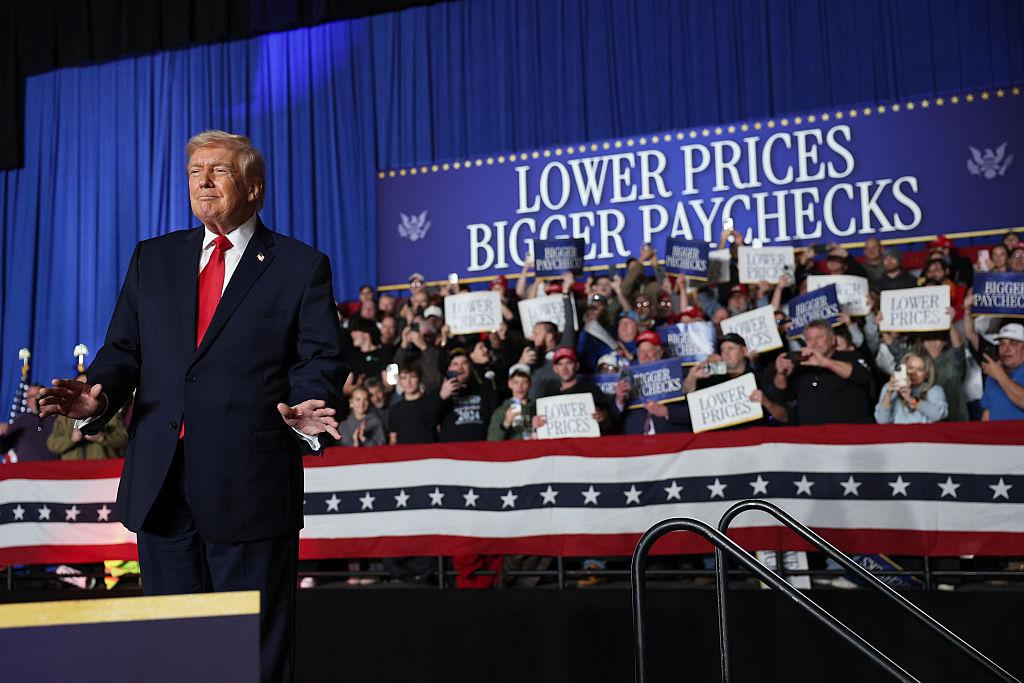
TRUMP RULES OUT SUNDAY IRAN STRIKE AFTER WARNING U.S. COULD ATTACK OR SECURE ‘BIG, BEAUTIFUL’ DEAL
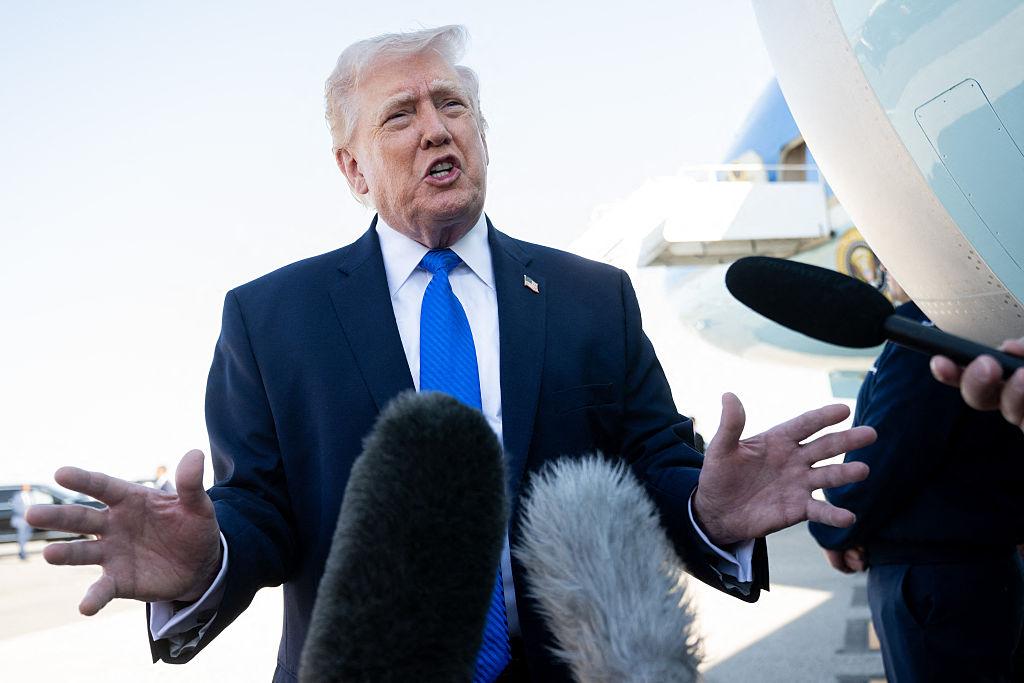
President Donald Trump has ruled out a U.S. strike on Iran on Sunday after saying a day earlier that military action could potentially come “maybe tomorrow.” Trump continues to keep both options open, saying Washington could either carry out further military action or secure what he calls a “big, beautiful” agreement with Tehran. The dispute centers on Iran’s nuclear program, sanctions, the Strait of Hormuz and wider regional hostilities. Iran says indirect diplomatic messages are still being exchanged but rejects demands it describes as surrender.
United States President Donald Trump has ruled out a military strike on Iran on Sunday after spending the previous day publicly suggesting that Washington could attack as soon as “tomorrow” or instead secure what he described as a “nice, big, beautiful agreement” with Tehran, leaving both diplomacy and renewed military action firmly on the table as tensions across the Middle East continue to rise. Trump’s latest comments come as American diplomatic missions reduce staffing, U.S. intelligence agencies warn of advanced Iranian plots targeting American personnel and regional governments attempt to prevent the months-long conflict from escalating into another major round of strikes.
Speaking to reporters on Saturday after casting his ballot early in Florida ahead of the November 3 U.S. midterm elections, Trump was asked how close he was to ordering another attack on Iran. He initially responded by questioning why he would reveal such military plans publicly before adding that Washington was considering action and that it could potentially come “maybe tomorrow.” He then immediately presented a second possibility, saying the United States could instead reach a comprehensive agreement with Tehran if Iranian leaders were prepared to accept terms Washington considered durable.
Trump said Iranian officials wanted to make a deal but questioned whether they would honor any agreement once it was signed. He argued that previous American military operations had significantly weakened Iran’s military capabilities but said his administration wanted a permanent outcome rather than a temporary reduction in the perceived nuclear threat. The president’s language made clear that he views the current confrontation as unfinished and that he is continuing to use the possibility of military escalation as leverage in negotiations.
By Sunday, however, Trump had narrowed the immediate timeline. Asked directly as he departed the White House whether American strikes against Iran could take place that day, the president answered no and said there would be no strike on October 25. His clarification removed the immediate possibility implied by his Saturday “maybe tomorrow” remark but did not amount to a broader renunciation of force.
In a separate Sunday interview, Trump again framed his decision in stark terms, asking whether he should reach an agreement with Iran or “finish them off.” The language underlined how closely the president continues to link diplomacy with the threat of overwhelming military action, even while publicly ruling out an attack on that particular day.
The rapid change in emphasis illustrates the uncertainty surrounding U.S. policy toward Iran. Trump has repeatedly used deliberately unpredictable language about military operations, at times signaling imminent action and at other moments emphasizing negotiations. Supporters argue that the approach preserves pressure on Tehran and prevents Iranian leaders from knowing exactly when Washington might act. Critics warn that such rhetoric can increase the risk of miscalculation in a region already experiencing active hostilities.
The underlying U.S. demand remains centered on preventing Iran from obtaining a nuclear weapon. Trump has repeatedly said Tehran must accept restrictions strong enough to ensure that its nuclear program cannot be converted into a weapons capability. Washington also wants restored freedom of navigation through the Strait of Hormuz, greater access for international nuclear inspectors and limits on activities the United States believes could support future weapons development.
Iran has consistently denied that it is seeking a nuclear weapon and insists that its nuclear program is intended for civilian purposes. Iranian officials have also maintained that the country has a legal right to uranium enrichment for peaceful use and have rejected demands they characterize as surrender.
That disagreement has repeatedly prevented negotiators from converting temporary understandings into a lasting settlement. Tehran has sought sanctions relief, the lifting of the American naval blockade around Iranian ports, access to frozen assets and guarantees against renewed military attacks, while Washington has demanded verifiable concessions before providing major economic relief.
The Strait of Hormuz has emerged as one of the central bargaining points. The waterway is one of the world’s most important energy transit routes and carries a significant share of global oil and liquefied natural gas shipments. Iran has used restrictions on passage through the strait as leverage during negotiations, while the United States has deployed naval forces to protect commercial shipping and pressure Tehran economically.
Iran previously proposed a phased agreement under which it would reopen the Strait of Hormuz within seven days if Washington lifted its naval blockade, waived sanctions on Iranian oil sales and observed a broader ceasefire. Foreign Minister Abbas Araghchi said nuclear talks could resume once those initial steps were completed.
Trump rejected that particular proposal in September, saying it did not provide the kind of agreement he considered acceptable. U.S. officials have continued discussions through intermediaries, however, indicating that diplomacy has not collapsed even as military preparations remain active.
Iranian officials have also sent conflicting signals. President Masoud Pezeshkian has said Tehran remains committed to negotiations, while other senior officials have rejected American demands they describe as requiring complete surrender. Iranian media affiliated with the Revolutionary Guard have also denied reports that Tehran recently offered a new proposal through Pakistani intermediaries.
That disagreement over whether a new offer exists demonstrates how opaque the negotiations have become. Washington says Iran wants a deal; Tehran says communication continues but rejects some accounts of what it has proposed. Regional mediators including Pakistan, Qatar and Oman have attempted to bridge the gap, but neither side has accepted terms sufficient to end the conflict.
Trump’s Saturday remarks therefore came at a moment when military and diplomatic tracks are proceeding simultaneously. U.S. forces remain positioned throughout the Gulf, American intelligence agencies are monitoring threats against personnel and diplomatic staff are being reduced at several missions, while intermediaries continue exchanging messages between Washington and Tehran.
The security environment has deteriorated significantly in recent days. The United States ordered non-emergency government employees and family members to leave its diplomatic missions in Saudi Arabia after renewed attacks by Iran-aligned Houthi forces against Saudi airports and energy infrastructure. Staffing has also been reduced at U.S. embassies in Jordan, Lebanon, Qatar and the United Arab Emirates, although those missions remain open.
An American intelligence memorandum dated October 23 further heightened concern by warning that Iranian efforts to target U.S. citizens and personnel had increased substantially and that some lethal plots had reached what officials described as advanced stages. The memo did not identify intended targets publicly or claim that a particular attack was imminent, but the assessment has prompted stronger security measures across the region.
That intelligence warning provides important context for Trump’s renewed threats. Washington is not only weighing military action because of Iran’s nuclear program or the Strait of Hormuz; it is also responding to what U.S. officials describe as direct threats to American citizens, diplomats and military personnel.
Iran has rejected the broader American portrayal of its actions as unprovoked aggression. Tehran argues that its military and regional activities are responses to months of U.S.-Israeli attacks, sanctions and the American blockade. Iranian leaders say Washington cannot demand restraint while continuing military and economic pressure against the country.
The current conflict began in late February after joint U.S.-Israeli military strikes against Iran and subsequently expanded across the region. Since then, both sides have exchanged attacks, commercial shipping has been disrupted, oil prices have risen sharply and regional allies and armed groups have become increasingly involved.
Trump has repeatedly defended those operations by arguing that they prevented Iran from obtaining a nuclear weapon. He has cited strikes involving B-2 bombers as evidence that the United States damaged critical Iranian nuclear capabilities, while insisting that military pressure must continue until any future nuclear threat is permanently eliminated.
The precise condition of Iran’s nuclear infrastructure remains difficult to assess publicly. International inspectors have had limited access to some facilities, while strikes have damaged sites associated with uranium enrichment and related technology. The current location and condition of some highly enriched uranium stocks remain subjects of international concern.
Iran has enriched uranium to levels well above what would ordinarily be required for civilian energy production, although enrichment at that level does not automatically prove an active weapons program. Western governments argue that the technical gap between advanced enrichment and weapons-grade material has become dangerously small, while Tehran maintains that it has not decided to build a bomb.
That dispute predates the current war and remains at the center of any potential agreement. Washington wants intrusive verification and restrictions that would make rapid weaponization difficult, while Iran wants recognition of its enrichment rights and relief from sanctions.
Trump’s description of a possible “big, beautiful” agreement appears to suggest something broader than a temporary ceasefire. Previous public statements indicate he wants a settlement addressing Iran’s nuclear program, shipping in the Gulf and the wider regional conflict.
Iran, by contrast, has attempted to separate immediate de-escalation from longer-term nuclear negotiations. Its previous seven-day proposal would have reopened the Strait of Hormuz and eased the blockade first, with detailed nuclear discussions beginning afterward.
The sequencing dispute is important because neither side wants to surrender leverage first. Iran fears opening the strait and reducing pressure before receiving sanctions relief, while Washington does not want to lift economic pressure before Iran accepts nuclear restrictions.
That deadlock has produced a cycle in which military threats are used to influence negotiations. Trump has repeatedly warned that Tehran could face overwhelming force if it refuses acceptable terms, while Iranian leaders warn that new American attacks would produce a much larger response.
The Revolutionary Guard has specifically threatened U.S. military bases and other American interests if Washington resumes major strikes. American forces are deployed in Qatar, Bahrain, Kuwait, Saudi Arabia, Iraq, Jordan and other locations, creating numerous potential targets in the event of escalation.
Military planners must therefore consider the possibility that even a limited strike on Iran could produce retaliation across several countries. That risk helps explain why Gulf governments have repeatedly urged diplomacy even while cooperating closely with Washington on defense.
Turkey, France, Britain, Germany, Saudi Arabia, Pakistan and other governments have all publicly or privately pushed for negotiations. Turkish Foreign Minister Hakan Fidan warned on October 23 that renewed attacks on Iran would expand the conflict rather than resolve it, while European officials have similarly argued that diplomacy remains the only sustainable way to prevent nuclear proliferation and wider war.
Oil markets are another major factor influencing the crisis. Brent crude has recently climbed above $110 per barrel amid fears of attacks on Saudi infrastructure and disruption around the Strait of Hormuz. Any large-scale U.S. strike could push prices higher if Iran retaliates against energy facilities or shipping.
Trump has repeatedly argued that a successful agreement would eventually drive oil prices down by restoring normal shipping and reducing geopolitical risk. That economic incentive is significant ahead of the November 3 U.S. midterm elections, where fuel prices and inflation remain politically sensitive issues.
The president has previously said he would not launch renewed strikes before the midterms, although his subsequent “maybe tomorrow” remark created uncertainty about whether that commitment remained firm. Sunday’s statement that there would be no strike that day reduced immediate tension but did not clarify whether the broader pre-election restraint remains in effect through November 3.
That ambiguity appears deliberate. Trump often avoids specifying precise military timelines, arguing that revealing them would give adversaries an advantage. His Saturday comment followed exactly that pattern: he refused to say what he had decided while simultaneously emphasizing that military action remained possible.
The challenge for diplomats is determining which statements represent negotiating pressure and which reflect actual operational decisions. Military forces can prepare for strikes without those strikes ultimately occurring, and political leaders can use such preparations to strengthen their bargaining position.
The same applies to Tehran. Iranian military alerts and threats of retaliation may be genuine preparations for conflict while also serving as negotiating signals designed to deter Washington.
That combination increases the risk of miscalculation. If either side interprets precautionary military movements as preparation for an imminent attack, it could respond preemptively and trigger the very escalation both sides may be trying to avoid.
Regional governments therefore have strong incentives to keep communication channels open. Qatar, Oman and Pakistan have all played roles in passing messages between Washington and Tehran, while Saudi Arabia has attempted to protect its own territory from escalating Houthi attacks without becoming drawn into a direct war with Iran.
The Houthi campaign has complicated negotiations further. The Yemen-based movement has intensified missile and drone attacks against Saudi airports and oil facilities, forcing Riyadh to activate air defenses and disrupting commercial aviation.
The Houthis are supported by Iran but retain their own leadership and strategic priorities, meaning Washington cannot automatically assume every Houthi attack is ordered directly by Tehran. Nevertheless, the United States considers the group part of the broader network of Iran-aligned forces increasing pressure on American partners.
The October security warnings to U.S. embassies show that Washington is preparing for multiple forms of retaliation at once. A renewed conflict could involve missile attacks, drones, proxy forces, cyber operations or targeted plots against individuals rather than a conventional exchange between two national militaries.
That complexity makes any decision to strike Iran particularly consequential. Trump may have the military capability to order attacks rapidly, but the consequences could extend across several countries and global markets.
The president’s Sunday statement therefore should not be interpreted as evidence that the crisis has passed. He ruled out an attack on October 25, not military action altogether. His broader position remains that force is available if Tehran refuses an agreement Washington considers sufficient.
Nor should the Saturday “maybe tomorrow” statement be interpreted as a confirmed strike order. Trump explicitly presented both military action and diplomacy as possible outcomes and did not announce that he had selected either course.
The difference is important for accurate reporting. The United States is weighing or threatening further strikes, but there is no publicly confirmed order for a new attack as of Sunday.
Iran continues to say it is open to negotiations through intermediaries. Associated Press reported Sunday that Tehran says messages are still being exchanged with Washington despite the stalled talks and despite Iranian rejection of demands it characterizes as complete surrender.
That channel could become critical if both sides decide the economic and military costs of continued confrontation are unsustainable. Iran is under heavy sanctions and blockade pressure, while the United States and its allies are dealing with high energy prices, regional instability and increased risk to their personnel.
A deal would therefore require both governments to decide that preserving leverage is less valuable than reducing the costs of the conflict.
For Trump, that calculation is being framed publicly as a choice between agreement and escalation. His language is intentionally dramatic, but the underlying policy problem is real: Washington wants a durable end to Iran’s nuclear threat and regional military pressure, while Tehran wants security guarantees, economic relief and recognition of rights it refuses to surrender.
Neither side has yet demonstrated that it is willing to accept the other’s minimum conditions.
That is why the possibility of renewed military action continues to dominate discussion even as diplomats exchange messages. Threats provide leverage precisely because negotiations remain unresolved.
The coming days will therefore be critical. If mediators produce a new framework acceptable to both sides, Trump could present it as the “big, beautiful” agreement he says remains possible. If negotiations collapse, military preparations could accelerate again.
Any new strike would also need to be understood in the context of the intelligence warning concerning threats to Americans. An Iranian-linked attack against U.S. diplomats or military personnel could dramatically change Washington’s calculations and make retaliation more likely.
Conversely, successful intelligence operations that disrupt those alleged plots could reduce immediate pressure for a military response.
For now, Washington’s official position remains deliberately flexible. Trump has ruled out a strike on Sunday but not in the days or weeks ahead. He continues to say Iran can avoid further attacks by accepting a comprehensive agreement, while Tehran insists it will negotiate but will not surrender its core demands.
The situation therefore remains one of active coercive diplomacy rather than either full peace or an announced new war.
Trump’s Saturday remark that the United States could attack “maybe tomorrow” generated international concern because it suggested military action could be imminent. His Sunday clarification removes that immediate deadline but does not fundamentally change his strategy.
The threat remains active, the military option remains available and diplomacy continues under intense pressure.
What happens next will depend on whether Washington and Tehran can convert indirect messages into an agreement both can defend politically. Until then, the region remains vulnerable to renewed escalation, particularly as American personnel are moved from exposed diplomatic posts, Iranian forces prepare for possible attacks and energy markets react to every sign that another round of fighting may be approaching.
The central development as of October 25 is therefore not that the United States has decided to strike Iran, but that Trump continues to openly present military action and a negotiated settlement as competing options. After suggesting on Saturday that an attack could come within a day, he ruled out a Sunday strike while maintaining that the broader choice remains unresolved.
That distinction matters. The immediate threat has been delayed, but the strategic confrontation has not been settled.