TWO EUROPEAN WOMEN FREED AFTER MORE THAN 18 MONTHS IN CAPTIVITY IN NIGER AND FLOWN TO BENGHAZI
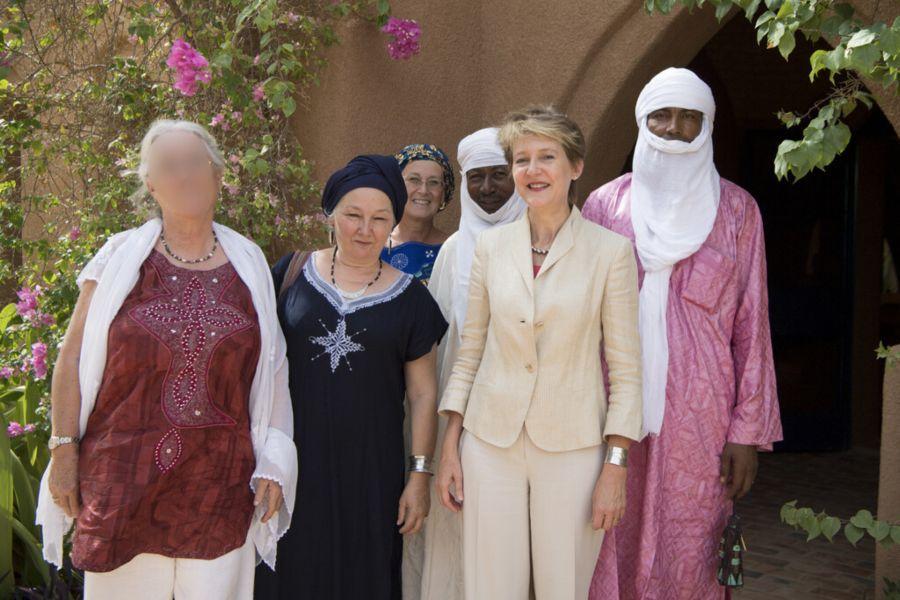
Austrian Eva Gretzmacher and Swiss national Claudia Abbt have been freed after more than 18 months in captivity following separate kidnappings in Agadez, Niger, during 2025. The women were transferred to Benghazi in eastern Libya after their release and were being prepared for handover to Austrian and Swiss authorities. Saddam Haftar, a senior eastern Libyan military commander, was reported to have overseen the operation. The identities of their captors and any terms attached to the release have not been publicly established. Reuters
An Austrian woman and a Swiss woman who were kidnapped separately in Niger during 2025 have been freed after more than 18 months in captivity and transferred to Benghazi in eastern Libya, bringing an end to two long-running hostage cases that had remained largely hidden from public view for much of the past year. The Austrian woman, Eva Gretzmacher, was abducted from her home in Agadez on January 11, 2025, while the Swiss woman, Claudia Abbt, was kidnapped in the same northern Nigerien city in April. Both women had lived in Niger for years before their abductions and had been associated with community, aid or development work in the region.
The women arrived in Benghazi on Wednesday, October 21, after their release and were expected to be handed over to representatives of Austria and Switzerland once the required procedures had been completed. Video broadcast from eastern Libya showed the women appearing physically exhausted but conscious and able to speak, while reports from their families and national authorities indicated that they had survived the ordeal and were now in safe custody. Their release followed months of quiet diplomatic and security efforts involving several governments and intermediaries, although the precise negotiations that led to their freedom have not been publicly disclosed.
The Austrian government formally confirmed Gretzmacher’s release on Thursday, ending more than 21 months of uncertainty for her relatives and supporters. Austria’s foreign ministry described the effort to secure her freedom as a long, complex and highly sensitive diplomatic process involving a crisis team, senior officials and international partners. The government did not reveal whether any financial payment, prisoner exchange or other concession formed part of the agreement, and there remains no independently established public account of exactly who held her during the entire period of captivity.
Gretzmacher had lived in Agadez for almost three decades before she was abducted. Armed men reportedly entered her home on the evening of January 11, 2025, seized her and forced her into a vehicle before disappearing. Her kidnapping immediately alarmed both local residents and Austrian officials because Agadez had long been considered a gateway between the Sahara and the wider Sahel, an area increasingly affected by armed extremist organisations, criminal networks and cross-border kidnapping operations.
The Swiss hostage, Claudia Abbt, was taken in April 2025, also in Agadez. Swiss authorities confirmed the kidnapping at the time but withheld most personal details for privacy and security reasons while a specialised task force worked with police, intelligence agencies and Nigerien authorities to secure her release. Like Gretzmacher, Abbt had spent years living and working in Niger and was well known in parts of the local community.
The separate abductions raised fears that foreigners living or working in Niger were being deliberately targeted as the country’s security environment deteriorated. Western governments had already issued strong travel warnings because of the threat posed by militant organisations linked to Islamic State and al-Qaeda, particularly across Niger’s border regions with Mali and Burkina Faso. The fact that both women were taken from Agadez reinforced concerns that kidnapping risks were spreading beyond the most heavily contested frontier zones.
Reports during their captivity linked the hostages at various times to Islamic State-aligned militants operating in the Sahel, but those claims were never fully established through public evidence. Some local reporting suggested Gretzmacher may initially have been taken by criminal kidnappers and subsequently transferred to a militant group. Other accounts linked both women directly to Islamic State in the Sahel. Because neither the captors nor the intermediaries involved in the final release have provided a verified account, responsibility for the entire kidnapping operation remains uncertain.
Al-Qaeda-linked Jama’at Nusrat al-Islam wal-Muslimin was also active in the wider region during the same period, but it reportedly denied involvement in Gretzmacher’s abduction. The competing presence of several militant and criminal networks makes attribution difficult because hostages can be moved between groups, sold to intermediaries or held in remote areas across borders where governments exercise limited control.
The women were believed at different stages to have been held in the wider Niger-Mali border region, an area where armed groups have established significant operational freedom over recent years. The porous desert frontier allows militants, smugglers and trafficking networks to move between remote communities with limited state presence. Such conditions can make hostage negotiations extremely difficult because even locating the captors can require months of intelligence gathering and indirect communication.
The role of eastern Libya in the final phase of the operation has attracted particular attention. Officials said the women were flown to Benghazi after their release, while local reporting indicated that an aircraft connected to the eastern Libyan military authorities transported them through southern Libya. Benghazi is controlled by the eastern military structure led by Khalifa Haftar and his family, which has increasingly sought to expand its regional influence beyond Libya’s borders.
Saddam Haftar, son of Khalifa Haftar and one of the most powerful military figures in eastern Libya, was identified by officials as having overseen the operation that resulted in the women’s transfer to Benghazi. Local television reports said he intervened after appeals from the hostages’ families and played a role in arranging their release and transport. The full extent of that role has not been independently established, and the terms under which the women were freed remain confidential.
Saddam Haftar currently holds a senior command position within the eastern Libyan armed forces and has become an increasingly prominent figure in regional diplomacy and security affairs. His reported involvement in the hostage case may reflect an effort by eastern Libya’s leadership to build relationships across the Sahel, where Libya shares extensive security, migration and smuggling concerns with Niger, Chad and Sudan. Southern Libya has historically served as both a transit route and a staging area for armed groups moving between North Africa and the Sahel.
The release also highlights the unusual role Libya can sometimes play as an intermediary in hostage cases despite its own internal political divisions. The country remains split between rival administrations, with the Government of National Unity operating from Tripoli in the west and authorities aligned with Khalifa Haftar controlling much of the east and south. Yet Libya’s geography and relationships with tribal, military and commercial networks across the Sahara can give its actors access to channels that European governments may not possess directly.
Reports indicate that the two women were flown from the southern Libyan city of Sebha to Benghazi after leaving captivity. Sebha is a major transit point in the Fezzan region and has long been connected to movement between Libya, Niger and Chad. If confirmed, that route would suggest that the final stage of the operation depended heavily on networks capable of moving safely across some of the most politically complex territory in North Africa.
Both women appeared publicly after arriving in Benghazi and expressed gratitude toward Khalifa Haftar and Saddam Haftar. Their statements were made after a lengthy period in captivity and should not be interpreted as providing a complete account of who secured their release or under what conditions. Hostages emerging from prolonged detention are often exhausted, traumatised and dependent on the people handling their immediate transfer, making detailed assessment of the circumstances more appropriate once they have returned home and been formally debriefed.
Austrian authorities described Gretzmacher’s release as the result of extensive diplomatic work and thanked international partners, the Austrian crisis team and officials involved in negotiations. The language suggests that the operation involved more than a single military intervention, with diplomatic channels and intermediaries likely operating for months before the final transfer. Governments generally avoid revealing such details because doing so can expose negotiators, compromise future hostage cases or encourage additional kidnappings.
Switzerland had similarly maintained a highly discreet approach throughout Abbt’s captivity. Its foreign ministry created a task force immediately after learning of the kidnapping and coordinated with federal police and intelligence agencies while maintaining contact with Nigerien authorities. Switzerland has long maintained a policy of restricting public discussion around hostage negotiations, particularly where publicity could increase the captors’ demands or place a hostage at greater risk.
The identities of the women were treated differently by the two countries during the captivity. Austria publicly referred to Gretzmacher as Eva G. for much of the period before her full surname was widely reported, while Switzerland initially withheld Abbt’s name altogether. That cautious approach reflects standard hostage-management practice designed to limit unnecessary exposure and reduce the value captors may gain from international publicity.
Gretzmacher’s case attracted particular attention in Austria because of her age and the length of time she had lived in Niger. She was in her seventies when abducted and had spent much of her adult life working in Agadez. Her prolonged captivity raised concern about whether she could physically survive months of detention in harsh Sahel conditions where extreme heat, limited medical care and poor food supplies can quickly become dangerous for older hostages.
A photograph released during her captivity provided one of the few indications that she was still alive. The image, circulated in April 2025, showed Gretzmacher looking directly at the camera and was treated by relatives and authorities as proof of life. Such photographs are often used by hostage-takers during negotiations to demonstrate that a captive remains alive and to maintain pressure on governments or families involved in talks.
The Swiss woman’s situation remained even less visible publicly. Authorities released very little information beyond confirming that a Swiss citizen had been kidnapped and that government agencies were working on the case. Later reports suggested she had also provided proof of life during captivity, allowing officials to continue negotiations while withholding operational details.
The release comes amid a continuing deterioration in security across parts of Niger and the wider Sahel. Niger has faced a jihadist insurgency involving groups affiliated with both Islamic State and al-Qaeda, particularly in areas near its borders with Mali and Burkina Faso. The conflict grew out of instability spreading from northern Mali after a Tuareg rebellion and jihadist takeover of territory in 2012, eventually expanding across several neighbouring countries.
Thousands of civilians, soldiers and militants have been killed across the region over the past decade, while millions of people have been displaced. Armed groups attack villages, military posts and transport routes while also using kidnapping as a source of financing and political leverage. Foreigners can be particularly valuable hostages because their governments or employers may be capable of paying substantial ransoms, even where official policy publicly rejects such payments.
Kidnappings reportedly intensified in Niger during 2025 as the country struggled with both jihadist violence and political instability following the military coup of July 2023. The coup removed elected President Mohamed Bazoum and brought General Abdourahamane Tiani to power, leading to a major deterioration in Niger’s relations with several Western countries that had previously provided military and development assistance.
French troops withdrew after the coup, while American forces later ended their major military presence in the country. Niger’s military government subsequently strengthened relationships with other partners as it sought new security arrangements. Critics warned that the departure of Western troops and intelligence systems could create additional space for armed extremist organisations, although Nigerien authorities argued that sovereignty required the country to redesign its security partnerships.
Agadez is especially sensitive because of its strategic location. The city lies on historic trans-Saharan trade and migration routes connecting West Africa with Libya and Algeria. It has served at different times as a tourism centre, migration hub, military location and base for development organisations. Those same connections make it vulnerable to criminal networks and militant movements operating across national boundaries.
For many years, foreign aid workers, researchers, missionaries and development specialists lived in Agadez and surrounding regions despite periodic security concerns. The kidnappings of Gretzmacher and Abbt demonstrated how dramatically the risk environment had changed. Individuals who had spent decades in the community could no longer assume that longstanding local relationships would protect them.
European governments now advise against travel to large parts of Niger and warn citizens that consular assistance may be severely limited if they ignore those warnings. Switzerland has advised against all travel to the country since 2009 because of terrorism and kidnapping risks. Austria has similarly maintained strong security warnings due to the volatile situation.
The hostage cases also demonstrate why governments are reluctant to disclose whether ransom payments are made. Public acknowledgement that a government or intermediary paid millions of dollars can create incentives for militants to seize more foreigners. It can also produce political controversy at home, particularly where governments officially maintain policies against financing terrorist organisations.
There is currently no confirmed public evidence establishing that a ransom was paid for Gretzmacher or Abbt. There is also no verified announcement of a prisoner exchange or political concession connected to their release. Any claim that money changed hands would therefore be speculative unless one of the governments or other participants provides evidence.
The same caution applies to claims that a particular militant group definitely held both women. Various reports have linked them to Islamic State in the Sahel, and some local sources have described that organisation as responsible. However, the original reporting confirming their release did not publicly identify their captors, and neither Austria nor Switzerland has yet provided a detailed account establishing responsibility.
What is clear is that the women endured a long period of detention and were eventually moved into territory controlled by eastern Libya’s military authorities. Their appearance in Benghazi strongly suggests that a complex cross-border negotiation or transfer mechanism was required. Such an operation would have involved communication with actors capable of moving between Niger and southern Libya while avoiding conflict zones and security checkpoints.
Saddam Haftar’s reported role adds another layer because eastern Libya has been attempting to develop greater influence across the Sahel. The Haftar family controls substantial territory extending toward Libya’s southern borders, giving its forces contact with tribal leaders, security figures and cross-border networks. Successful involvement in a hostage release could strengthen its image as a regional security actor capable of negotiating beyond Libya.
That diplomatic value may partly explain why eastern Libyan media publicised the women’s arrival and their expressions of gratitude. For the Haftar leadership, the case provides an opportunity to demonstrate influence and international relevance at a time when Libya remains politically divided and the eastern authorities seek wider recognition.
For Austria and Switzerland, however, the priority is the welfare and return of their citizens rather than Libya’s internal political messaging. Both women are expected to undergo medical checks and debriefings before returning fully to private life. Hostages freed after such lengthy captivity can face dehydration, malnutrition, untreated medical problems and psychological trauma even when they appear physically stable immediately after release.
Authorities will also want to reconstruct the timeline of their captivity. Information about where they were held, how frequently they were moved, who guarded them and what groups were involved could provide intelligence useful in preventing future kidnappings or locating other hostages in the region. Such debriefings are usually kept confidential because they may expose operational details.
The release could also provide new information about the networks linking militant groups in the Sahel with southern Libya. The region has long been used by smugglers transporting weapons, migrants, fuel and other goods, and some of those networks overlap with armed groups. Understanding how the women reached Libyan territory may offer clues about which intermediaries were involved.
There have been earlier cases in which hostages kidnapped in one Sahel country were held or transferred across borders before their release. The enormous distances and limited state presence make borders relatively easy for experienced armed groups to cross. Governments therefore increasingly treat hostage cases as regional security problems rather than incidents confined to the country where an abduction occurred.
The two women’s survival after more than a year and a half is itself significant. Long-term captivity can expose hostages to violence, illness, malnutrition and constant uncertainty about whether negotiations are progressing. Families often receive little information and may go months without proof that their relatives are alive.
Gretzmacher’s family had received encouraging indications in September that a release might be approaching, with reports suggesting she was no longer directly in the hands of her kidnappers. Austrian authorities at the time cautioned that the process remained dangerous and incomplete. That warning now appears important because it suggests the final transfer may have taken several additional weeks even after an initial agreement or extraction had begun.
Similar reports circulated concerning Abbt, but Swiss authorities remained cautious and did not declare her free prematurely. Governments involved in hostage operations often refuse to announce success until the person is physically in secure custody because transfers can collapse or be interrupted at the final stage.
The arrival in Benghazi therefore represented the first moment when officials could say with greater confidence that the women were genuinely out of captivity. From there, arrangements could be made for Austrian and Swiss representatives to assume responsibility.
Reports from Niger indicated that a flight was expected to leave Benghazi on Thursday, first stopping in Vienna to hand Gretzmacher over to Austrian authorities before continuing to Switzerland with Abbt. Such arrangements had not initially been confirmed in full by both governments, but they were consistent with the expectation that the women would return to their respective countries once formalities were completed.
The story also carries significance for other foreigners still living in the Sahel. The kidnappings underline that long-term residency, local language skills or community relationships do not eliminate the threat posed by armed organisations seeking high-value hostages. Governments may now increase pressure on remaining citizens to leave areas considered too dangerous for effective consular protection.
Niger faces the difficult challenge of protecting communities and foreign residents while fighting insurgent groups across vast desert territory. Its security forces have suffered repeated attacks and operate with limited resources across remote regions. The military government argues that it is rebuilding national security on more sovereign terms, but the continued threat of kidnapping remains a serious test.
For the wider Sahel, the case illustrates how terrorism, organised crime, weak borders and political instability overlap. Hostage-taking can generate money, publicity and bargaining power for armed groups while undermining confidence in governments’ ability to provide security. It also damages tourism, humanitarian work and development projects because foreign organisations become reluctant to deploy staff.
The release of Gretzmacher and Abbt is therefore an important humanitarian success, but it does not resolve the underlying insecurity that allowed them to be kidnapped and held for so long. Armed organisations linked to Islamic State and al-Qaeda remain active across the region, and governments continue to struggle to control large rural areas.
The exact identity of the captors, the chain of negotiations and the conditions attached to the women’s release may remain secret for some time, particularly if officials believe disclosure could endanger people who helped broker the operation. Hostage diplomacy frequently depends on intermediaries whose effectiveness relies on maintaining relationships with actors that governments cannot openly engage.
For that reason, the most responsible account at this stage is also the most limited. Eva Gretzmacher and Claudia Abbt were kidnapped separately in Agadez during 2025, held for more than 18 months and freed before being transferred through Libya to Benghazi. Saddam Haftar was reported to have overseen the operation that brought them to eastern Libya, while Austria and Switzerland worked through diplomatic and security channels to secure their return.
There is no confirmed public evidence identifying the captors beyond dispute, no verified disclosure of a ransom and no official explanation of what concessions, if any, were made. Those uncertainties do not diminish the significance of the release, but they do mean that claims about who negotiated directly with whom should remain carefully qualified.
For the women and their families, the political and security questions surrounding the operation are secondary to the fact that a captivity lasting well over a year has finally ended. Both women are now out of the hands of their abductors and moving back under the protection of their own governments after an ordeal that began in the desert city of Agadez and ended more than 2,000 kilometres away in eastern Libya.
Their release also demonstrates the increasingly interconnected nature of security across North and West Africa. A kidnapping in Niger ultimately required a transfer through Libya, with European governments, Nigerien actors and eastern Libyan authorities all connected to the final outcome. That reality reflects a Sahel security crisis that no longer fits neatly within national borders.
The immediate priority is now recovery and reunification. The wider investigation into who held the women, how they were moved and what secured their freedom will continue behind closed doors, but the confirmed development is that two European women who disappeared separately in Niger in 2025 have survived more than 18 months in captivity and have finally returned to freedom.